Integrated Foundry Production Systems

Clay Sand Processing Line Systems — What You're Actually Buying

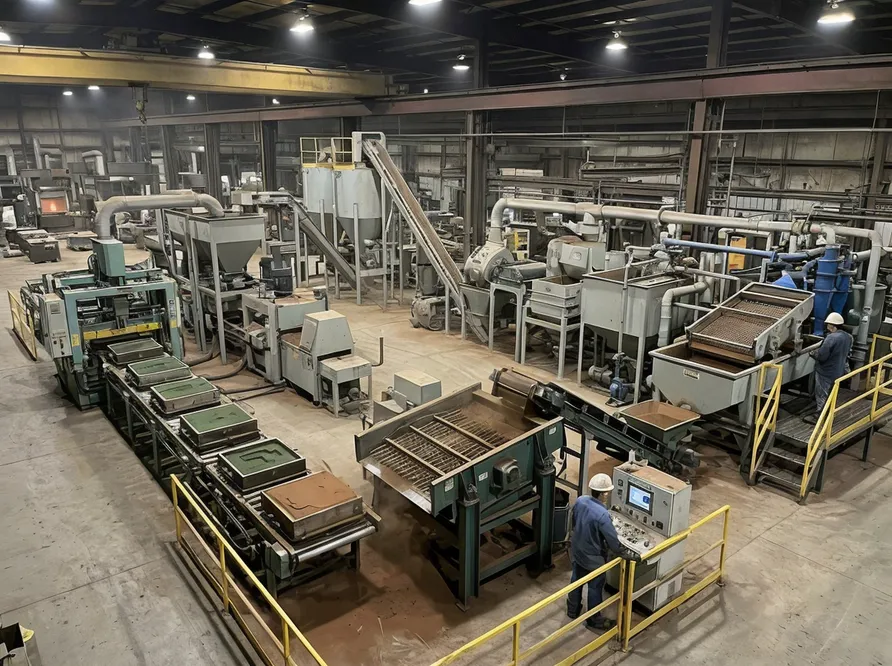
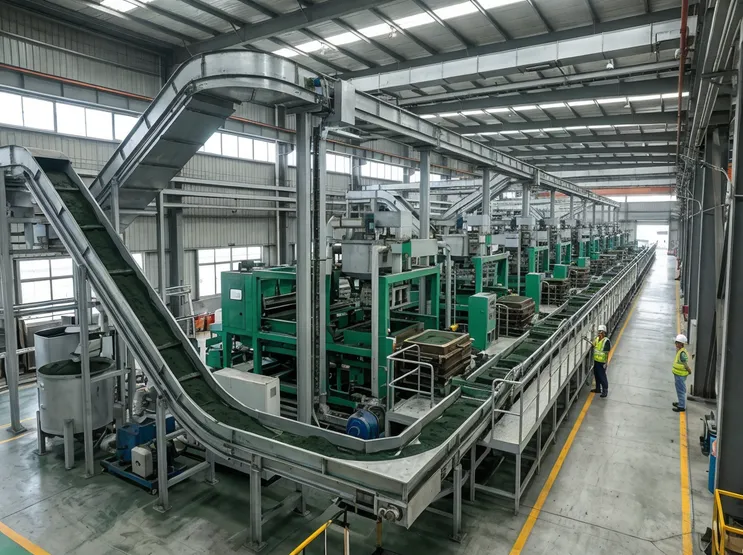
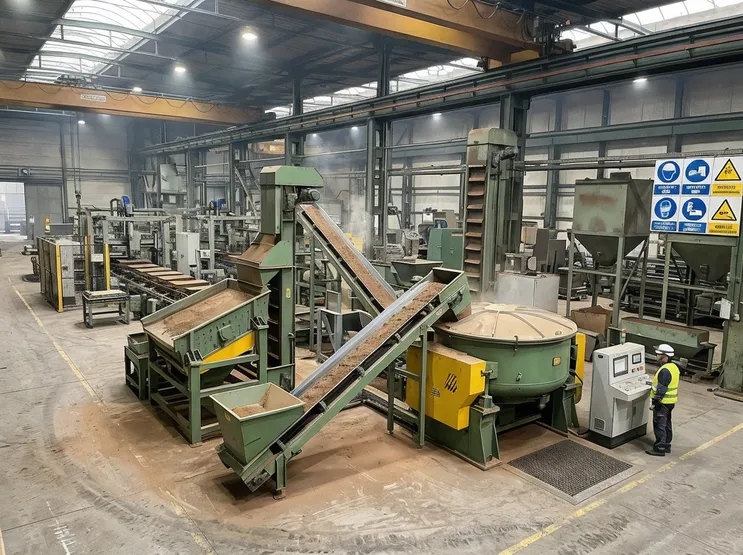
A clay sand processing line isn't one machine — it's an integrated system that handles molding, sand reclamation, and washing in a continuous loop. When you order from us, you're specifying a complete production chain that fits your foundry's throughput requirements and floor space constraints.

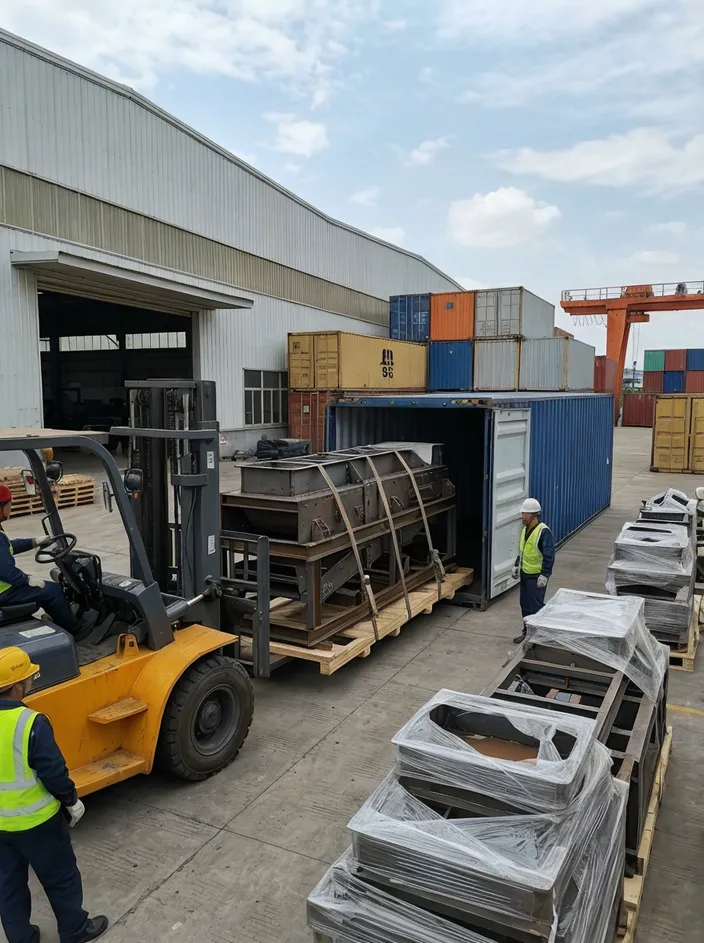
We design every line to ship in standard 20-foot or 40-foot containers — equipment frames break down into modules that clear container door dimensions, then bolt together on your factory floor.

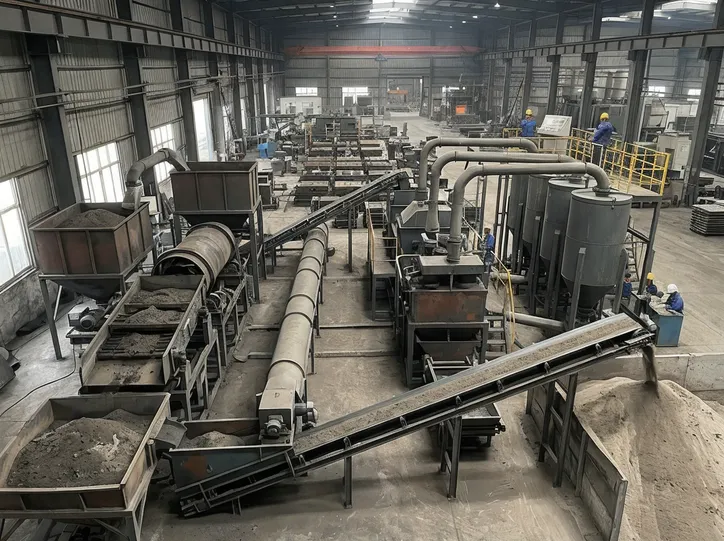
TZFoundry clay sand processing line — integrated molding, reclamation and washing system in a foundry facility
Three-Stage Production Loop

Core System Components

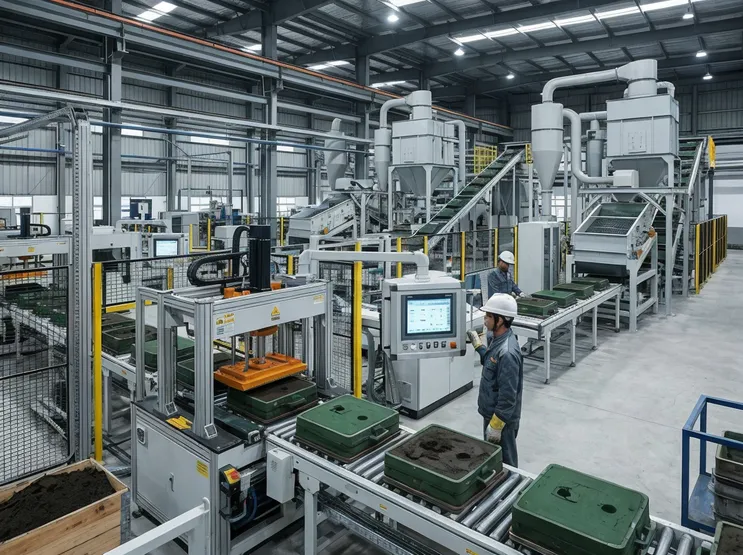
The core system includes three components that work in a continuous loop — each stage feeds the next, maintaining sand quality and production throughput without manual intervention between cycles.

1

Molding Station

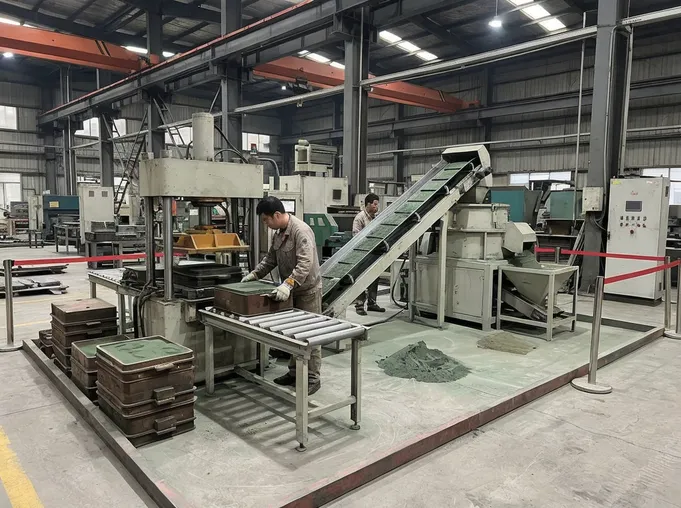
Where sand is compacted into mold shapes. This station sets your production pace — throughput here determines the capacity rating of your entire line.

2

Reclamation Unit

Strips used sand of binders and contaminants. Can process mixed sand types if you install the optional dual-filter module (adds about 15% to base system cost, but cuts sand disposal volume by 40–60%).

3

Washing System

Removes clay fines and restores sand grain quality. The output loops back to the molding station, closing the reclamation cycle and reducing raw material consumption.

Modular Add-Ons

Optional Modules & Existing Equipment Integration

Optional modules include automated sand transport conveyors, moisture control units, and PLC-based monitoring systems. Most buyers add at least the conveyor system because manual sand handling creates bottlenecks at higher production volumes.

Integration with your existing equipment matters more than the line's standalone specs. Our clay sand systems connect to most melting furnaces via standard ladle transfer systems, and the mold output stage accommodates both manual and automated pouring stations.

If you're running a lost foam or resin sand line alongside clay sand production, we'll configure shared reclamation loops to reduce your floor space and capital cost. The reclamation unit can process mixed sand types if you install the optional dual-filter module — adds about 15% to the base system cost, but cuts your sand disposal volume by 40–60%.

15% Dual-filter cost add
40–60% Disposal volume cut
2×40 ft Mid-cap shipping
3–5 days Assembly time
Modular clay sand processing line equipment loaded into shipping containers for transport
From Deposit to First Production Shift

Shipping, Lead Time & Commissioning

Container-Ready Modular Design

We design every line to ship in standard 20-foot or 40-foot containers — equipment frames break down into modules that clear container door dimensions, then bolt together on your factory floor.

A typical mid-capacity line (100–150 molds per hour) fits in two 40-foot containers. Assembly takes 3–5 days with our commissioning team on-site, plus another 2–3 days for calibration and operator training.

Build-to-Order Lead Time

Lead time runs 45–60 days from deposit to factory departure. We build to order, not from stock, because every buyer's capacity target and site constraints differ.

Commissioning happens within 10 days of equipment arrival at your facility — we send two technicians who stay until your first production shift runs at target output. After that, remote diagnostics handle most troubleshooting (our PLC systems log to a cloud dashboard you can access from any device).

Configuration Guide

System Configurations by Production Scale

Clay sand processing lines scale across three capacity ranges, and the equipment differences between them aren't just about speed — they're about control precision and operational flexibility. A 50–100 molds-per-hour system uses manual sand feeding and single-loop reclamation. A 100–200 molds-per-hour line adds PLC control and dual reclamation loops. A 200+ molds-per-hour system runs full automation with predictive maintenance sensors and zero-operator sand handling.

Small-Batch

50–100 molds/hr

Manual feed · Single-loop reclamation

  • 45 kW total power
  • 12 m × 8 m footprint
  • 2 operators / shift

Mid-Volume

100–200 molds/hr

PLC control · Dual reclamation loops

Details in next section

High-Volume

200+ molds/hr

Full automation · Predictive sensors

Details in next section

1

Small-Batch Configuration

50–100 molds/hour

This setup works for foundries running 1–2 shifts with frequent product changeovers. The molding station uses hydraulic compaction with manual pattern changes, so you can switch mold designs in under 10 minutes. Reclamation runs a single attrition mill that processes 3–4 tons of sand per hour — enough to keep pace with molding output without building up a backlog.

Power requirement is 45 kW total, and the system footprint is 12 m × 8 m. You'll need two operators per shift: one managing the molding station, one monitoring reclamation and handling pattern swaps.

Parameter Specification
Output rate50–100 molds/hour
CompactionHydraulic, manual pattern change
Pattern swap time< 10 minutes
ReclamationSingle attrition mill, 3–4 t/hr
Power requirement45 kW total
Footprint12 m × 8 m
Operators per shift2
Moisture variation±2–3% across batches (manual feed)
TZFoundry small-batch clay sand processing configuration — 50 to 100 molds per hour with hydraulic compaction molding station and single-loop attrition mill reclamation

Best Fit

This configuration makes sense when your order volumes don't justify continuous production, or when you're casting a wide product mix that requires different mold geometries. We see this setup in job shops and prototype foundries where flexibility beats throughput.

Trade-off: Sand quality consistency drops slightly during shift changes because manual feeding introduces moisture variation (±2–3% across batches). If your castings tolerate that range, you're fine. If not, step up to the mid-volume system with PLC-controlled moisture dosing.

02 PLC-Controlled

Mid-Volume Configuration (100–200 Molds/Hour)

PLC control enters here, which means automated sand feeding, real-time moisture adjustment, and data logging for every batch. The molding station upgrades to servo-driven compaction with programmable pressure curves — you can store 20+ mold recipes in the controller and recall them with a touchscreen tap. Dual reclamation loops let you process used sand and prepare fresh batches simultaneously, so there's no waiting for reclamation to catch up with molding output.

18m × 12m

Footprint

85 kW

Power Demand

2

Operators / Shift

5–10

Core Mold Designs

You'll still run two operators per shift, but their role shifts from manual control to exception handling — they intervene only when the PLC flags an out-of-spec condition. This configuration suits foundries running 2–3 shifts with moderate product variety (5–10 core mold designs). The PLC's batch tracking integrates with ISO 9001 quality systems, which matters if you're exporting to buyers who audit your production records.

Upgrade Economics

Upgrade cost from small-batch to mid-volume runs about 60% more than the base system price, but the operational payoff is faster: energy cost per mold drops 20–25% because the PLC optimizes compaction cycles, and your sand reclamation rate improves from 70% to 85% (less fresh sand purchasing). Most buyers recover the premium within 18–24 months of continuous operation.

PLC-controlled mid-volume clay sand processing line with servo-driven compaction station and dual reclamation loops — 100 to 200 molds per hour capacity

Mid-volume line with PLC panel and dual reclamation circuit visible at rear

Fully automated high-volume clay sand processing line with enclosed conveyors, parallel molding stations, and closed-loop reclamation — 200+ molds per hour

High-volume installation with enclosed conveyor system and parallel molding stations

03 Full Automation

High-Volume Configuration (200+ Molds/Hour)

Full automation — sand moves through the system on enclosed conveyors, molding stations run in parallel, and reclamation operates as a closed-loop system with zero manual intervention. This setup is for foundries running 24/7 production with narrow product ranges (1–3 mold designs that rarely change). The system includes predictive maintenance sensors on all rotating equipment, so you get 48-hour advance warning before a bearing or motor fails.

25m × 15m

Footprint

150 kW

Power Demand

3

Operators / Shift

1–3

Mold Designs

The molding stations use pneumatic pattern changes that complete in under 60 seconds, and the PLC coordinates all three stations to maintain consistent output even when one unit pauses for pattern swaps.

Investment & Performance

This configuration costs roughly 2.5× the small-batch system, but it's the only option that holds ±0.5mm mold tolerance across 12-hour shifts. The closed-loop reclamation system eliminates contamination from external sand sources, so batch chemistry stays stable month after month.

Field-Proven Reliability

We built one of these for a European buyer in 2015 — it's still running at their facility, producing 220 molds per hour with 98% uptime. The key to that reliability: the closed-loop reclamation system eliminates contamination from external sand sources, so batch chemistry stays stable month after month.

Upgrade Path — Scaling Without Starting Over

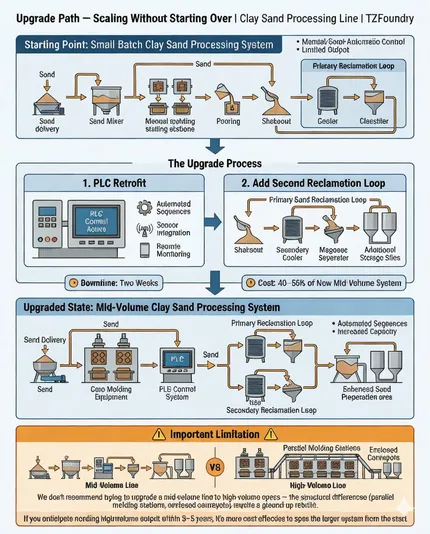
If you start with a small-batch system and later need more capacity, you can retrofit PLC control and add a second reclamation loop without replacing the core molding equipment. The upgrade takes about two weeks of downtime and costs 40–50% of a new mid-volume system.

Important Limitation

We don't recommend trying to upgrade a mid-volume line to high-volume specs — the structural differences (parallel molding stations, enclosed conveyors) require a ground-up rebuild. If you anticipate needing high-volume output within 3–5 years, it's more cost-effective to spec the larger system from the start.

Small → Mid Upgrade

40–50%

of new mid-volume system cost

Estimated Downtime

~2 Weeks

for PLC retrofit + reclamation loop

Mid → High Upgrade

Not Viable

ground-up rebuild required

Not sure which scale fits your production goals?

Share your mold-per-hour target and casting types — our engineers will recommend the right configuration and map the upgrade path if you plan to scale later.

Get Configuration Advice
Performance Engineering

Technical Performance Parameters That Affect Your Mold Quality

Specifications that directly influence your sand costs, casting surface finish, and throughput — with the real-world numbers behind each parameter.

Sand Reclamation Rate

Sand reclamation rate determines how much fresh sand you're buying every month. Our clay sand processing lines hit 80–85% reclamation in mid-volume configurations and 90–92% in high-volume systems. That percentage represents the weight of used sand that returns to production-ready condition after one pass through the attrition mill and washing system. The remaining 10–20% exits as waste fines (clay particles too small to reuse) and contaminated sand (metal splash, burnt clay, foreign debris).

Reclamation rate drops if you're casting high-carbon alloys or running sand temperatures above 200°C — thermal degradation breaks down clay binders faster than mechanical attrition. In those cases, plan for 70–75% reclamation and budget accordingly for fresh sand purchases.

Annual Cost Impact Example

A mid-volume line processing 50 tons of sand per day at 80% reclamation needs 10 tons of fresh sand weekly. At 75% reclamation, that jumps to 12.5 tons. Over a year, the difference is 130 tons of additional sand cost plus disposal fees for the extra waste.

Configuration Typical Reclamation High-Carbon Alloy
Mid-Volume Systems 80–85% 70–75%
High-Volume Systems 90–92% ~75%
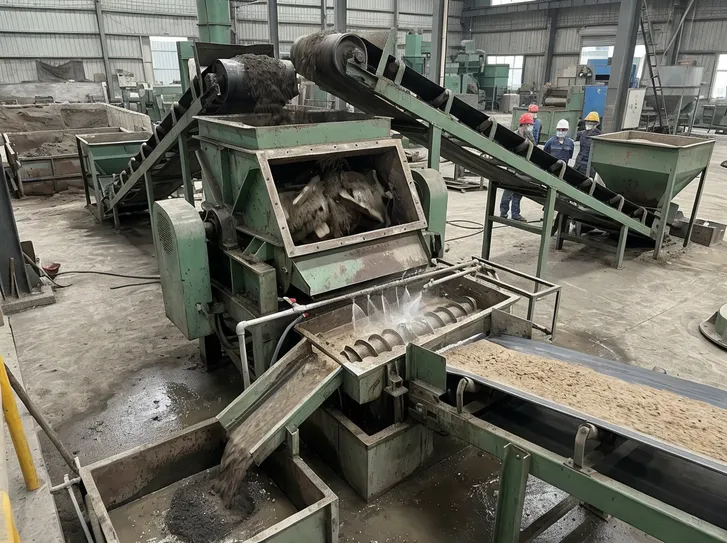
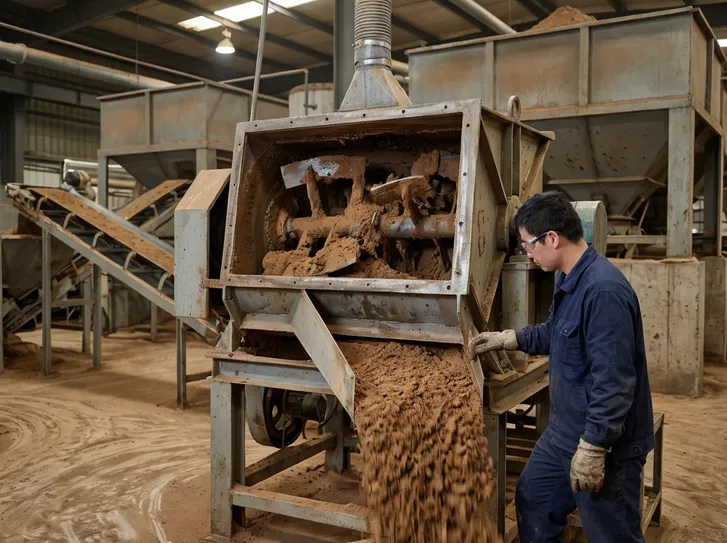
Clay sand reclamation process showing sand passing through attrition mill and washing system

Sand exiting the attrition mill — waste fines and contaminated particles are separated before reclaimed sand returns to production.

Inline clay analyzer integrated with PLC mixing system for real-time clay content monitoring

Optional inline clay analyzer provides real-time feedback to the PLC mixing algorithm for ±1% tolerance.

Clay Content Consistency

Clay content consistency matters because it controls mold strength and permeability. Our systems hold clay content at ±1.5% of target across continuous production. If you're targeting 8% clay by weight, the system delivers 6.5–9.5% in every batch.

Tighter tolerance (±1%) is possible with the optional inline clay analyzer, which costs about $8,000 and adds real-time feedback to the PLC's mixing algorithm. Most buyers skip this unless they're casting thin-wall parts where mold permeability directly affects defect rates.

Standard (±1.5%)

Sufficient for most gray iron and ductile iron work. Included in base system.

Inline Analyzer (±1%)

~$8,000 add-on. Recommended for thin-wall castings, aluminum, or bronze where permeability is critical.

Mixing Uniformity

Mixing uniformity shows up in mold surface finish. Poorly mixed sand creates density variations that telegraph through to the casting surface as rough patches or dimensional inconsistencies. Our paddle mixers run at 45 RPM with a 90-second dwell time, which produces sand with less than 5% density variation across the batch (measured by core sampling at six points in the mixer discharge).

That's sufficient for most gray iron and ductile iron castings. If you're doing aluminum or bronze work where surface finish drives your pricing, consider the high-shear mixer option — it cuts density variation to under 2% but adds 10 kW to your power consumption.

Mixer Type Speed Dwell Time Density Variation Power Add
Standard Paddle 45 RPM 90 sec < 5%
High-Shear (Optional) < 2% +10 kW

Standard paddle mixer density variation measured by core sampling at six points in mixer discharge.

Paddle mixer producing uniform clay sand with consistent density for mold quality

Paddle mixer discharge — uniform sand density translates directly to consistent mold surface finish.

Cycle Time per Mold

Cycle time per mold depends on compaction method and mold size. These times include pattern insertion, sand filling, compaction, and mold ejection — but not pattern changes, which add 8–12 minutes per changeover depending on pattern complexity.

Small-Batch

Hydraulic Compaction

45–60 sec/mold

For 500mm × 400mm flask. Best for low-volume or job-shop environments with frequent pattern changes.

Popular
Mid-Volume

Servo-Driven Compaction

30–40 sec/mold

Balanced throughput and flexibility. Ideal for foundries running multiple alloys with moderate changeover frequency.

High-Volume

Pneumatic Compaction

18–25 sec/mold

Maximum throughput for dedicated production lines. Best when running long batches of the same pattern.

All cycle times based on 500mm × 400mm flask size. Pattern changeovers add 8–12 minutes depending on complexity.

Reclamation Throughput & Bottleneck Prevention

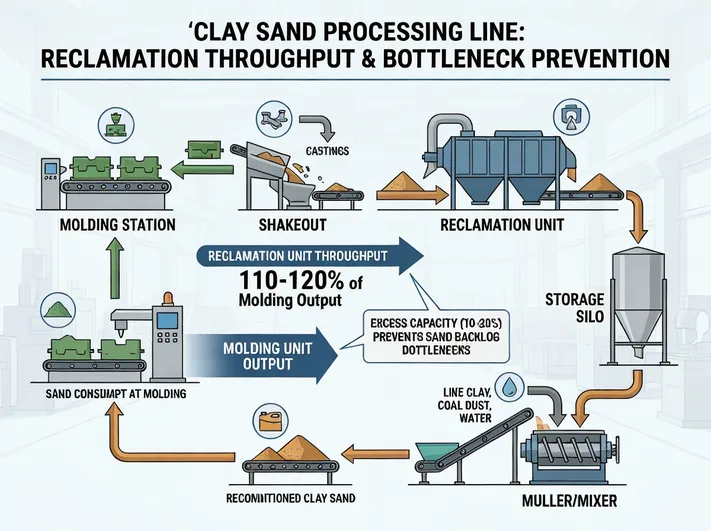
Throughput bottlenecks usually appear in reclamation, not molding. If your molding station can produce 150 molds per hour but your reclamation unit only processes 120 molds' worth of sand per hour, you'll build up a backlog of used sand that eventually forces you to slow down molding or dump sand as waste.

We size reclamation capacity at 110–120% of molding output to maintain buffer capacity during peak production periods. If you're planning to run overtime shifts or seasonal volume spikes, tell us during the quotation phase so we can oversize the reclamation unit accordingly.

Sizing Rule of Thumb

Reclamation capacity should be 110–120% of your molding output rate. Running overtime or seasonal spikes? Disclose this during quotation so we can oversize appropriately.

Diagram showing reclamation throughput sized at 110-120% of molding output to prevent sand backlog bottlenecks in a clay sand processing line

Reclamation unit sizing relative to molding throughput prevents costly production slowdowns.

Temperature Stability During Continuous Operation

Temperature stability during continuous operation affects clay activation and moisture retention. Sand temperature rises 15–20°C after reclamation (friction heat from the attrition mill) and needs to cool before remixing with fresh clay. Our systems include a cooling conveyor that drops sand temperature back to ambient over a 3–4 minute transit time.

If you're in a hot climate (35°C+ ambient), you may need the optional water-cooled conveyor, which holds sand temperature at 25–30°C regardless of factory conditions. This matters because clay binder performance degrades above 40°C — your molds lose 10–15% of their green strength, which increases breakage during handling and pouring.

Standard Cooling Conveyor

Returns sand to ambient temperature over a 3–4 minute transit time. Included with all TZFoundry clay sand processing lines.

Included

Water-Cooled Conveyor

Holds sand at 25–30°C regardless of factory ambient temperature. Recommended for environments exceeding 35°C ambient.

Optional Upgrade

Above 40°C Threshold

Clay binder performance degrades above 40°C. Molds lose 10–15% green strength, increasing breakage during handling and pouring.

Critical Threshold

Dimensional Accuracy — Compaction Pressure Consistency

Dimensional accuracy of molded parts traces back to pattern fit and compaction pressure consistency. The drive system you choose directly determines how tight your tolerances will be across an entire production shift.

Parameter Servo-Driven System Hydraulic System
Pressure Variation ±2% of setpoint ±5% of setpoint
Mold Dimensional Variation ±0.3 mm ±0.7 mm
Best Suited For Pump housings, valve bodies, aerospace components General-purpose castings with standard tolerances
Recommendation Required for precision work Acceptable for most castings

Our servo-driven systems hold compaction pressure at ±2% of setpoint across an entire shift, which translates to ±0.3 mm dimensional variation in the finished mold (assuming your patterns are machined to proper tolerances). Hydraulic systems run at ±5% pressure variation, which gives you ±0.7 mm mold variation.

For most castings, the hydraulic system's ±0.7 mm is acceptable. For precision work — pump housings, valve bodies, aerospace components — you need the servo system. If you're unsure which applies to your product mix, send us your part drawings and tolerance specs and we'll recommend the right configuration.

Total Cost of Ownership

Operational Cost Structure — Beyond the Purchase Price

Equipment price is one line item. Energy, consumables, water, and filter maintenance define your real cost-per-ton — and determine whether the line pays for itself.

Energy Consumption Per Ton of Processed Sand

Energy consumption per ton of processed sand runs 18–22 kWh in mid-volume systems and 15–18 kWh in high-volume configurations. The efficiency gain at higher volumes comes from continuous operation — startup and shutdown cycles waste energy heating equipment and stabilizing process parameters.

A mid-volume line processing 50 tons per day consumes roughly 900–1,100 kWh daily. At $0.12 per kWh (typical industrial rate in export markets), that's $108–132 per day or $3,240–3,960 per month in electricity cost.

Mid-Volume

18–22 kWh/ton

~$3,240–3,960/month at 50 t/day

High-Volume

15–18 kWh/ton

Lower per-ton cost via continuous operation

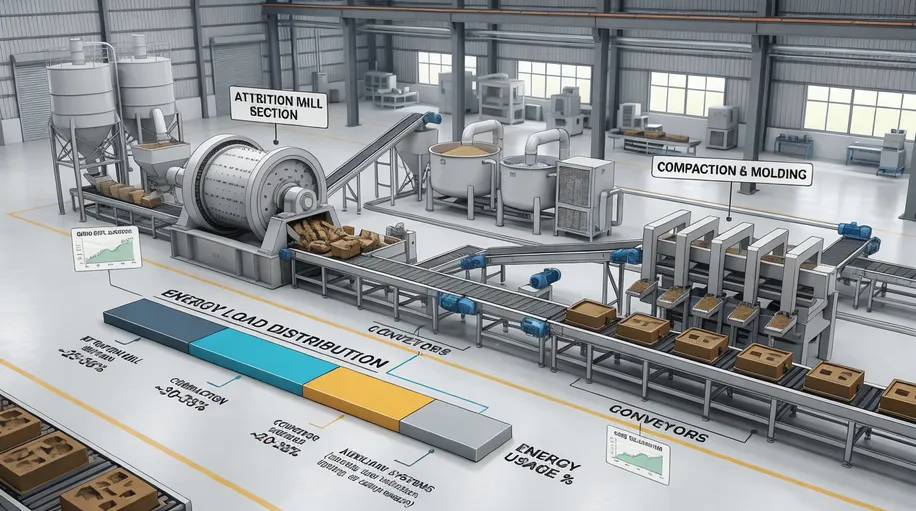
Where the Energy Goes — Load Distribution

Energy Load Breakdown

Attrition Mill 40%
Compaction System 30%
Conveyor Motors 20%
PLC, Sensors & Auxiliary 10%

Key Insight for Energy-Sensitive Markets

If energy cost is a major concern in your market, focus on reclamation efficiency — every percentage point improvement in sand reuse cuts your fresh sand purchasing and waste disposal costs, which often exceed the energy savings from running a smaller motor.

Energy load distribution across a clay sand processing line showing attrition mill, compaction, conveyor motors, and auxiliary systems

Consumables — Clay, Water & Filters

Consumables break down into three categories: clay additives, water, and filter replacements. Each carries different cost weight depending on your reclamation rate and local supply conditions.

Clay Additives (Bentonite)

Clay addition rate depends on reclamation efficiency and target clay content. At 80% reclamation with 8% target clay content, you're adding roughly 1.6 kg of fresh clay per ton of processed sand (to replace clay lost in waste fines).

Daily use (50 t/day): 80 kg

Monthly use: 2.4 tons

Bentonite cost: $200–300/ton delivered

Monthly clay budget: $480–720

Water Usage

Water usage runs 50–80 liters per ton of processed sand, mostly in the washing system where water flushes clay fines from sand grains. A 50-ton-per-day line uses 2,500–4,000 liters daily.

If you're on municipal water, that's negligible cost. If you're trucking water or operating in a water-scarce region, consider the closed-loop water recycling option — it captures 85–90% of wash water, filters out suspended solids, and returns clean water to the system.

Recycling module cost: ~$12,000

With recycling: 5–10 L/ton (makeup only)

Filter Replacements

Reclamation unit dust collector filters need replacement every 3–6 months in typical foundry environments (more often if you're casting high-silicon alloys that generate fine dust). Each filter set costs $400–600 and takes about two hours to swap.

The washing system's settling tank requires sludge removal every 2–3 months — you can do this in-house with a shovel and wheelbarrow, or hire a waste service to pump it out.

Filter set: $400–600 per swap

Sludge disposal: $200–400 per removal

Monthly Operating Cost Snapshot — 50 t/day Mid-Volume Line

Based on typical industrial rates in export markets

Electricity

$3,240–3,960

at $0.12/kWh

Clay (Bentonite)

$480–720

2.4 t/month at $200–300/t

Filters

$130–200

Prorated from 3–6 month cycle

Sludge Disposal

$70–200

Prorated from 2–3 month cycle

Maintenance Schedule — Tiered Approach

Maintenance follows a tiered approach that scales effort to frequency. Daily checks are operator-level tasks; weekly and quarterly work requires progressively more skilled labor and longer windows.

Daily Checks

Lubrication points, belt tension, sensor calibration.

Duration 15–20 minutes
Personnel Production operators
Weekly Inspections

Bearing temperature, motor vibration, hydraulic fluid levels.

Duration 2–3 hours
Personnel Maintenance technician
Quarterly Overhauls

Gearbox oil changes, conveyor chain replacement, PLC backup.

Duration 8–12 hours (full shutdown)
Scheduling Low-volume periods / between shifts

Spare Parts Availability for Export Installations

Shipping delays can idle your entire production line. We stock high-wear components — conveyor belts, mixer paddles, compaction cylinders, sensor modules — at our Qingdao facility and ship via DHL or FedEx for 5–7 day delivery to most export markets.

Longer-lead items (motors, gearboxes, PLC controllers): We recommend keeping one spare on-site. The cost is 5–8% of the original equipment price, but it eliminates the risk of a 3–4 week production shutdown waiting for a replacement part to clear customs.

Labor Requirements by Automation Level

Staffing scales with system complexity. Headcount stays lean across all tiers — the real difference is skill level, not team size.

System Tier Operators / Shift Skill Requirement Training Provided
Small-Batch 2 (one on molding, one on reclamation) + periodic maintenance tech Foundry experience, no specialized training 2–3 days on-site during commissioning
Mid-Volume (PLC) 2 per shift + periodic maintenance tech PLC troubleshooting — interpret alarm codes, adjust setpoints, read ladder logic diagrams, navigate touchscreen Standard commissioning + extra week if team lacks PLC background
High-Volume 3 (third manages parallel molding stations, coordinates upstream/downstream) PLC skills + one shift supervisor with mechanical or electrical trade certification recommended (not mandatory with responsive maintenance support) Comprehensive commissioning program

Reclamation Efficiency — The Largest Operational Variable You Control

Moving from 75% to 85% reclamation cuts your fresh sand purchasing by 40% and your waste disposal volume by the same proportion. The math is straightforward on a 50-ton-per-day operation:

5 fewer tons/day

Fresh sand you don't need to purchase

5 fewer tons/day

Waste you don't need to haul away

Over a year, the savings run $15,000–$25,000 depending on your local sand and disposal costs.

Payback period: The equipment investment to achieve that efficiency gain — upgrading from single-loop to dual-loop reclamation — pays back in 12–18 months.

Clay sand reclamation system showing dual-loop configuration for improved sand recovery and reduced waste disposal costs

Dual-loop reclamation configuration delivers 85%+ sand recovery rates.

Equipment That Impacts Your Cost Structure

These product lines directly affect reclamation efficiency, maintenance overhead, and labor requirements:

Batch Consistency Control

Quality Control Integration — Maintaining Batch Consistency

Automated monitoring points in our clay sand processing lines track four parameters that directly affect mold quality: moisture content, clay percentage, compaction pressure, and sand temperature. Each parameter gets measured in real time, logged to the PLC's internal memory, and compared against your preset tolerance bands.

Moisture Content

Target 3–5% by weight. Auto-corrects via PLC-controlled water injection when readings drift outside tolerance.

Auto-Corrected

Clay Percentage

Real-time clay content measured via optional inline near-infrared spectroscopy analyzer. Auto-corrects clay addition.

Auto-Corrected

Compaction Pressure

Peak pressure, hold time, and decay rate logged per mold. Molds >5% below target auto-rejected to reject conveyor.

Operator Alert

Sand Temperature

Monitored in real time. Out-of-range readings trigger operator alert for manual review and process adjustment.

Operator Alert

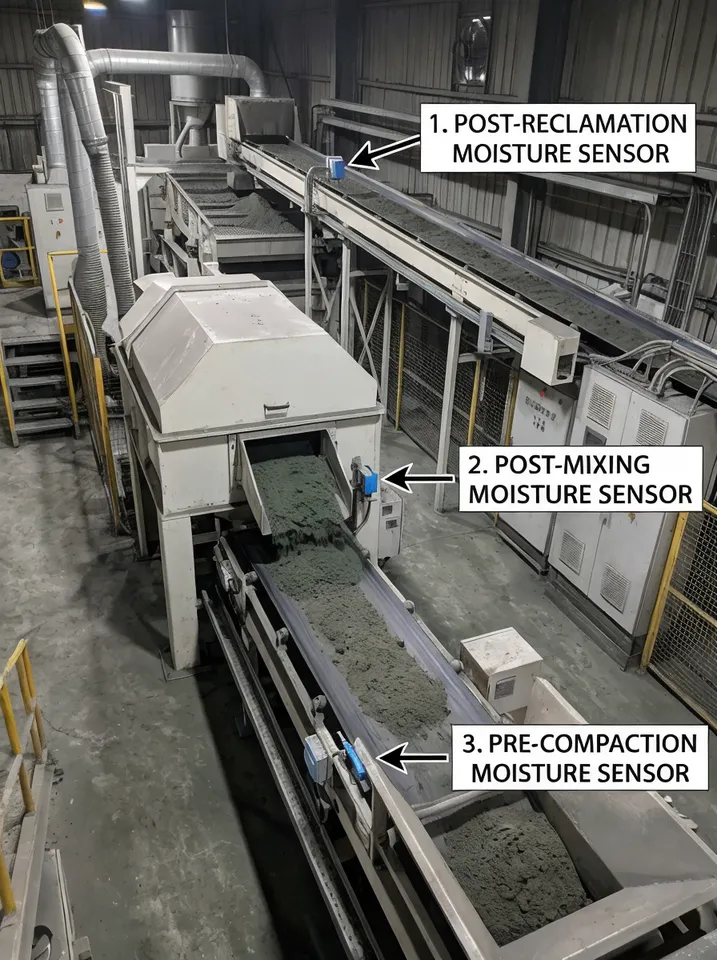
Three-Point Moisture Sensing — Capacitance Measurement

Moisture sensors sit at three locations along the processing line, giving you progressive visibility from reclamation through to molding:

1

Post-Reclamation

Where sand exits the washing system. Establishes baseline moisture after recovery.

2

Post-Mixing

After fresh clay addition. Confirms water-clay balance before sand advances.

3

Pre-Compaction

Final check before sand enters the molding station. Last opportunity for automatic correction.

Capacitance measurement responds in under 2 seconds and doesn't require consumable test strips or calibration chemicals. If post-mixing moisture reads 5.8%, the PLC reduces water injection on the next batch cycle. If it reads 2.3%, water injection increases. The adjustment happens automatically — no operator input required.

Three-point capacitance moisture sensing locations along a clay sand processing line — post-reclamation, post-mixing, and pre-compaction positions

Sensor placement at post-reclamation, post-mixing, and pre-compaction stations ensures continuous moisture tracking through the production cycle.

Inline Clay Analyzer — Real-Time vs. Lab Testing

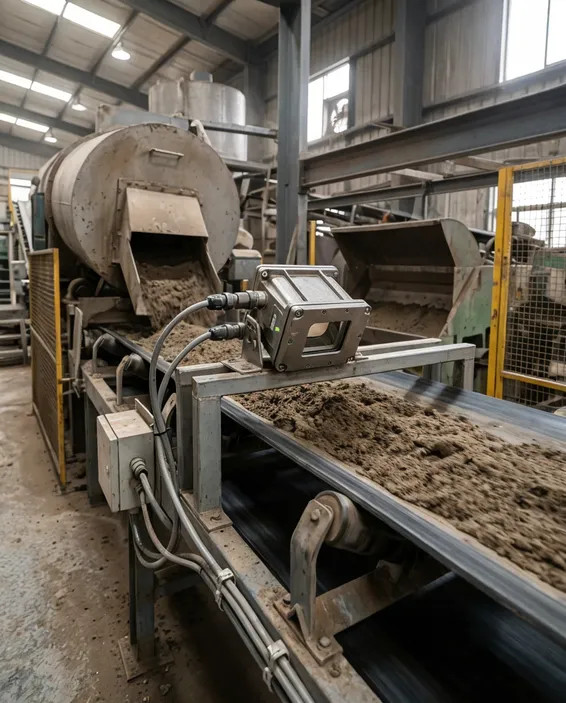
Clay content testing traditionally requires lab analysis: pull a sample, dry it, burn off organics, weigh the residue — which gives you results 30–60 minutes after the batch has already moved into production. Our optional inline clay analyzer uses near-infrared spectroscopy to measure clay percentage in real time as sand moves through the mixer discharge conveyor.

Attribute Traditional Lab Analysis Inline NIR Analyzer
Result Delay 30–60 minutes Real time (<5 seconds)
Correction Lag Batch may already be in production Immediate next-cycle correction
Consumables Test strips, chemicals, lab labor None
Sensor Cost Ongoing lab operating costs ~$8,000 one-time

Investment logic: The sensor costs about $8,000. If you're running high-value castings where a single bad mold costs more than the sensor, it's worth the investment. The payback period is often a single prevented scrap event.

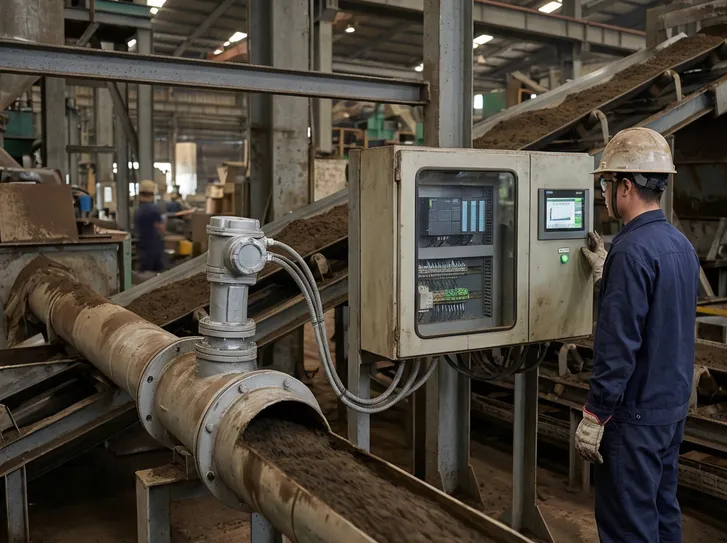
Inline near-infrared clay analyzer installed at mixer discharge conveyor on a clay sand processing line

NIR spectroscopy sensor mounted at the mixer discharge conveyor provides real-time clay content data directly to the PLC.

Compaction Pressure Monitoring — Dual-Purpose Data

Compaction pressure monitoring happens at the hydraulic or pneumatic actuator that drives the compaction ram. The PLC logs peak pressure, hold time, and pressure decay rate for every single mold. This data serves two purposes:

Immediate Quality Control

Flags molds that didn't reach target pressure. Molds falling more than 5% below target pressure are auto-rejected — shunted to a reject conveyor instead of moving to the pouring station. No defective molds reach production.

Predictive Maintenance

Gradual pressure decay over weeks indicates seal wear or hydraulic fluid contamination. Trending this data lets you schedule maintenance before a failure disrupts production — rather than reacting to an unplanned breakdown.

Peak Pressure
Hold Time
Pressure Decay Rate

PLC Data Logging for Traceability

The PLC creates a permanent record of every batch's process parameters — timestamped and linked to your production order numbers. This matters for ISO 9001 compliance and for customer audits.

If a casting fails in service and the buyer wants to trace it back to the mold batch, you can pull up the exact moisture, clay content, compaction pressure, and temperature data from the day that mold was made.

12 mo

Internal Storage

~2 GB

Onboard Capacity

CSV/PDF

Export Formats

What Gets Logged Per Batch

  • Moisture content at all three sensor points
  • Clay percentage (lab or inline NIR reading)
  • Compaction peak pressure, hold time, decay rate
  • Sand temperature reading
  • Timestamp linked to production order number
  • Reject/pass status per mold

Export to CSV or PDF for long-term archival beyond the 12-month onboard window.

Remote Diagnostics — Cutting Troubleshooting From Days to Hours

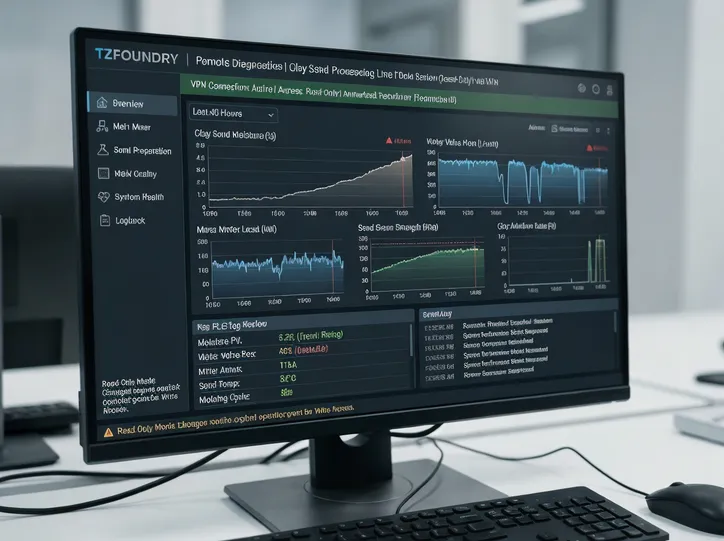
Remote diagnostics capability means our technicians can log into your PLC via VPN and see the same data your operators see on the factory floor. When you report a problem — say, inconsistent mold strength — we can review the last 48 hours of process data, identify the parameter drift (often moisture creeping up due to a partially clogged water valve), and walk your team through the fix over a phone call.

This cuts troubleshooting time from days (waiting for a technician to fly to your facility) to hours.

Security by Default

The VPN connection is read-only by default — we can view data and download logs, but we can't change setpoints or control equipment unless you explicitly grant write access. Your operators stay in control at all times.

TZFoundry remote diagnostics interface showing PLC data review via VPN for clay sand processing line troubleshooting

Sensor Calibration Intervals & Procedures

Calibration intervals for sensors follow the manufacturer's specs. Each sensor type has a different service cycle, and calibration requires specific reference standards. We provide a calibration kit with each system and include the procedures in your operations manual.

Moisture Sensors

  • Calibration interval: every 6 months
  • Reference standard: known-moisture sand samples
  • Time required: 1–2 hours per sensor

Pressure Transducers

  • Calibration interval: annually
  • Reference standard: deadweight pressure calibrator
  • Time required: 1–2 hours per sensor

Temperature Sensors

  • Calibration interval: every 2 years
  • Reference standard: certified thermometer
  • Time required: 1–2 hours per sensor

Open Standard Signals — No Vendor Lock-in

If you'd rather outsource calibration, most industrial instrumentation service companies can handle it — the sensors use standard 4-20mA output signals, not proprietary protocols. You're never locked into a single service provider.

Validating New Mold Recipes

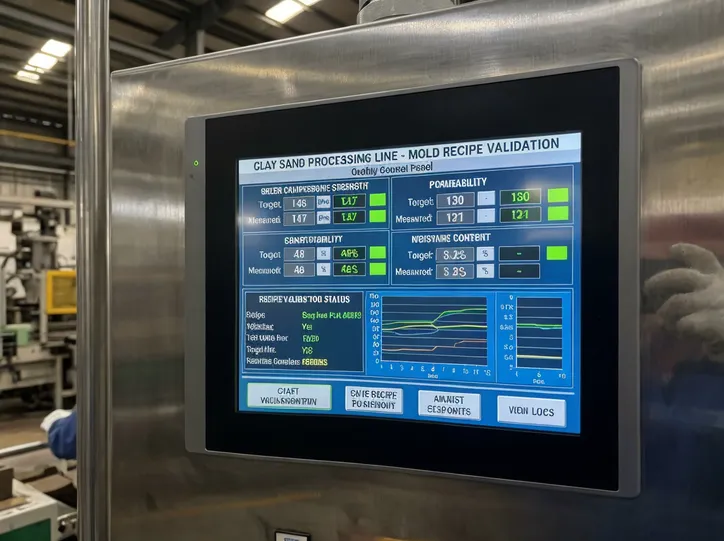
Validation procedures for new mold recipes — when you're setting up a different product — involve running 10–20 test molds at your target parameters, measuring the resulting mold properties (green strength, permeability, dimensional accuracy), and adjusting the PLC setpoints until you hit your quality targets.

We recommend doing this during a scheduled maintenance window or low-volume shift, not in the middle of a production run.

Recipe Storage Best Practice

Once you've validated a recipe, save it to the PLC's memory with a descriptive name — customer part number, mold size, alloy type — so operators can recall it instantly when that order comes back. No re-tuning required; just load the saved recipe and start production.

PLC interface showing mold recipe validation parameters for clay sand processing line quality control

Off-Spec Batch Handling — Automated Detection, Operator Decision

When the system detects a parameter violation — moisture too high, clay content too low, compaction pressure insufficient — it marks that batch in the PLC log and triggers an operator alert. The PLC doesn't make the disposition decision; it flags the problem and waits for operator input.

Option 1: Rework

Send the sand back through reclamation and remixing. Recommended for minor violations within tolerances.

Option 2: Non-Critical Use

Use the off-spec sand for internal test castings, prototype work, or other non-critical molds where tight tolerances aren't required.

Option 3: Waste Disposal

Dump the batch entirely. Reserved for severe violations that can't be economically reworked.

Common Tolerance Threshold Practice

Most foundries set a simple decision rule: minor violations (within 10% of target) get reworked through reclamation and remixing, while major violations (beyond 10%) get dumped as waste. This threshold is configurable in the PLC — adjust it based on your casting quality requirements and sand cost economics.

Partnership Advantages

Why Foundries Choose TZFoundry Clay Sand Lines

We've been building clay sand processing equipment since 2010, and the shift from standalone machines to integrated production lines happened because export buyers needed systems that worked together, not collections of components they had to figure out themselves. A European foundry ordered our first complete line in 2015 — they needed 200 molds per hour with ±0.5mm tolerance across 12-hour shifts, and manual systems couldn't hold that spec.

That line is still running in their facility, same core equipment, same output. What we learned from that project: overseas buyers need repeatable performance, remote support, and parts availability more than they need the absolute lowest purchase price.

Complete TZFoundry clay sand processing line installed in a European foundry facility, running integrated production

Integrated clay sand line — operational since 2015 with original core equipment.

In-House R&D — No Outsourced Design Work

Our in-house R&D team handles custom configurations without outsourcing design work to third-party engineering firms. When you need a non-standard mold size, a different compaction method, or integration with unusual upstream equipment, we're modifying our own designs — not coordinating between multiple vendors who each have their own lead times and compatibility issues.

This matters most when you're adapting a clay sand line to fit an existing foundry layout with space constraints or utility limitations.

Compact Layout Adaptation

Built systems that fit 10m × 8m floor spaces — normally we'd spec 12m × 10m — to accommodate existing foundry footprints with structural or utility constraints.

Electrical Compatibility

Systems configured for 380V three-phase power instead of our standard 415V, because that's what the buyer's facility provided. No third-party adapters or converter costs.

Certifications That Satisfy Your Supply Chain Audits

ISO 9001:2015, CE, and SGS certifications mean our manufacturing process gets audited annually by third-party inspectors who verify that we're following documented procedures for material sourcing, fabrication, assembly, and testing. The certifications themselves don't make the equipment better, but they create a paper trail that satisfies your own quality audits and customer requirements.

If you're selling castings to automotive or aerospace buyers who require supplier traceability, you'll need to show that your foundry equipment came from a certified manufacturer. We provide the documentation package (material certs, test reports, calibration records) with every system shipment.

ISO 9001:2015 CE Certified SGS Verified

Documentation Included With Every Shipment

  • Material certificates for all structural and wear components
  • Factory test reports with dimensional and performance data
  • Calibration records for precision instrumentation
  • Full traceability documentation for end-customer audits

Manufacturing Capacity That Protects Your Lead Time

Our facility runs 8 production lines across 15,000 square meters, producing 500,000 units annually. That capacity number matters because it determines our lead time stability — we're not a job shop that gets backlogged when a large order comes in.

8
Production Lines
15K
m² Facility
500K
Units / Year
4–6
Parallel Systems

Typical Lead Time

A typical clay sand processing line order (mid-volume configuration) consumes about 3–4 weeks of production time across multiple lines — frame fabrication, machining, electrical assembly, testing. We can run 4–6 systems in parallel, so even with a queue of orders, your lead time stays in the 45–60 day range.

Industry Reality Check

Smaller manufacturers often quote shorter lead times but then push your delivery when they get a bigger order — we've seen buyers wait 90–120 days after being promised 30. Our multi-line capacity means we don't have to bump your order for someone else's.

Flexible MOQ & Customization Services

We don't have a minimum order quantity for complete systems — some manufacturers won't quote unless you're buying 3+ lines. We'll modify standard designs without charging engineering fees unless the changes require new tooling or outside components.

No-Cost Customizations

  • Different motor voltages
  • Metric-to-imperial fastener conversions
  • PLC interface language changes
  • Custom paint colors

Customizations That Add Cost

  • Non-standard mold sizes (requires new pattern plates)
  • Special materials for corrosive environments (stainless vs. carbon steel)
  • Third-party component integration (specific PLC or sensor brands not normally stocked)
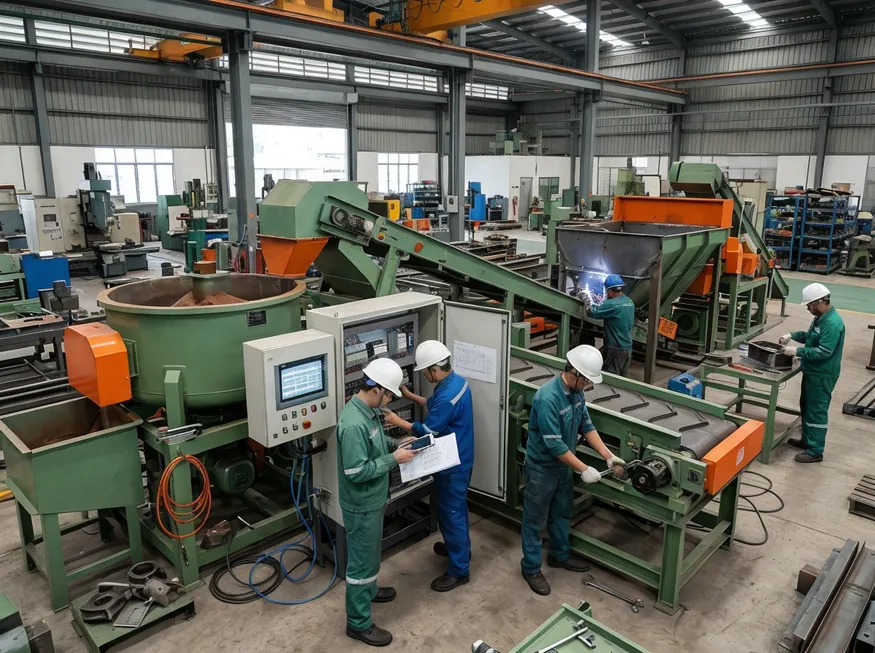
TZFoundry engineering workshop performing clay sand processing line customization work

Professional Export Experience — 40+ Countries Served

We handle documentation, shipping logistics, and customs coordination as part of the standard service — you're not hiring a separate freight forwarder and hoping the paperwork matches up.

CE Certification

European markets

GOST Certification

Russian markets

SASO Certification

Saudi Arabian markets

Customs Documentation

Commercial invoice expertise

What Ships With Every System

English-language operations manual
Electrical schematics
Spare parts list
Maintenance schedule

Need documentation in another language? Translation adds 1–2 weeks to delivery and costs $500–800 depending on language and document length.

Equipment is packed specifically to survive ocean freight without damage — we know which markets require specific certifications, what information customs officials need on commercial invoices, and how to route shipments efficiently from our Qingdao facility.

After-Sales Support Structure

Most buyers never need an on-site visit after the initial commissioning — the combination of operator training, detailed documentation, and remote diagnostics handles the majority of issues.

1

Remote Troubleshooting

VPN access to your PLC lets us diagnose 70–80% of issues without a site visit. Our engineers connect remotely, review error logs, and walk your operators through fixes in real time.

Resolution rate

70–80% remote

2

Spare Parts — Qingdao Facility

Parts stocked at our Qingdao facility with 5–7 day shipping to most export markets. No waiting for third-party procurement or cross-docking delays.

Delivery window

5–7 days global

3

On-Site Service When Needed

If remote support doesn't resolve the problem, we send a technician. You cover travel costs, we cover labor. Usually needed for major component replacement (motor swap, gearbox rebuild) or capacity upgrades — not routine troubleshooting.

Cost model

Travel only

Inquiry to Production

Getting Started — From Inquiry to Commissioning

A clear procurement path from first contact to your first production mold — typically 70–100 days total elapsed time.

Information We Need for an Accurate Quotation

To quote accurately, we need specifics — not ballpark ranges. The more precise you are here, the fewer revision rounds before we lock a configuration.

Target Production Capacity

Molds per hour — drives every downstream sizing decision.

Mold Size Range

Flask dimensions that define your compaction station and conveyor widths.

Available Floor Space

Length × width, plus ceiling height if you have overhead cranes.

Electrical Supply Specs

Voltage, phase, and available amperage at the installation point.

Replacing an older system? Tell us what's not working with your current setup — bottlenecks, capacity constraints, quality issues. That helps us avoid specifying the same problems into the new line.

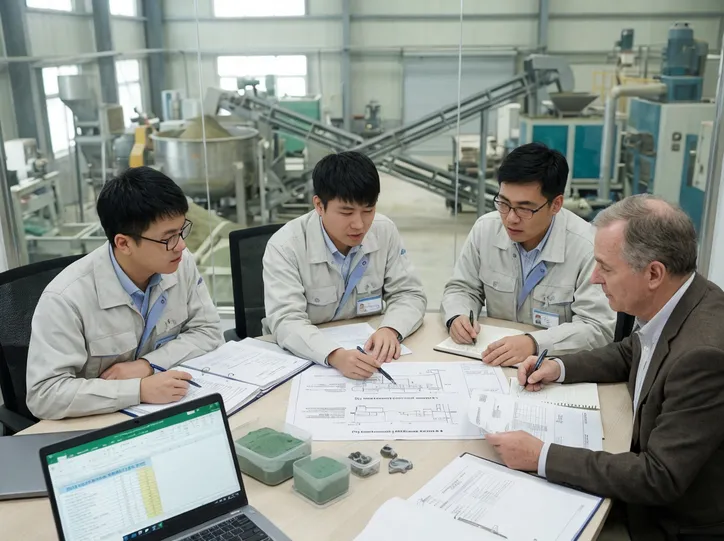
TZFoundry engineering team reviewing clay sand processing line quotation requirements with foundry client

Engineering review during the pre-quotation phase ensures accurate system sizing.

Site Preparation — Foundation Requirements

Clay sand processing lines generate vibration from compaction rams and rotating equipment, so foundation work isn't optional — it's structural.

200mm+
Minimum Slab Thickness

Reinforced concrete slab with rebar reinforcement. This is the baseline — not a recommendation, a requirement.

8–12 t
System Weight (Loaded)

A mid-volume system fully loaded with sand. Dynamic loads during compaction can spike to 1.5× static weight.

Pre-Shipment Package

We provide foundation drawings with anchor bolt locations and load distribution maps as part of the documentation package.

Upper-floor installations: Check your building's load rating before proceeding. Dynamic loads during compaction spike to 1.5× the static weight, which can exceed floor ratings that look adequate on paper.

Utility Requirements by System Scale

Most buyers install a dedicated circuit breaker and transformer for the clay sand line rather than tapping into existing foundry power — it simplifies troubleshooting and prevents voltage sags from affecting other equipment.

Utility Small-Batch Mid-Volume High-Volume
Electrical Power (rated) 45 kW 85 kW 150 kW
Electrical Power (w/ 20% surge) 54 kW 102 kW 180 kW
Compressed Air (pneumatic compaction) 0.8–1.0 MPa supply pressure at 2–4 m³/min
Water Supply (washing system) 0.3–0.5 MPa pressure at 50–80 L/min (less with closed-loop recycling)

Ventilation & Dust Management

The reclamation process generates dust even with enclosed conveyors and dust collectors. Plan for 2,000–3,000 m³/hr of exhaust airflow to keep your facility's air quality within occupational health limits.

Cold-climate tip: Consider heat recovery from the exhaust stream. The reclamation unit's attrition mill generates enough waste heat to preheat incoming ventilation air, which cuts your facility heating costs during winter months.

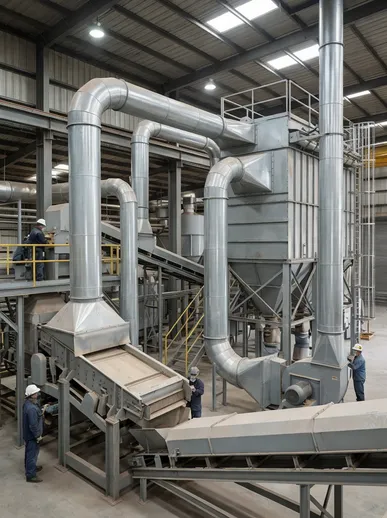
Industrial dust collection and ventilation system integrated with clay sand reclamation line

Shipping & Installation Timeline

Total elapsed time from order to first production mold: 70–100 days. Here's how that breaks down.

1

Factory Production

45–60 days

From deposit confirmation to factory departure. System assembly, QC testing, and pre-shipment inspection.

2

Ocean Freight

15–30 days

Transit time depends on destination port. Containerized shipping with full insurance coverage.

3

Customs & Inland Transport

3–5 days

Customs clearance and overland delivery to your facility.

4

On-Site Assembly

3–5 days

Mechanical installation, electrical hookup, and alignment of all conveyor and compaction stations.

5

Commissioning & Operator Training

2–3 days

System startup, parameter tuning, test mold runs, and hands-on training for your operators.

Need faster delivery? Air freight is available for the small-batch configuration only — cuts shipping time to 5–7 days but costs 4–5× more than ocean freight. Contact us with your timeline requirements and we'll quote both options.

Training & Documentation

On-Site Hands-On Training

2–3 Days During Commissioning

Your operators run the equipment under our technician's direct supervision — not classroom instruction, but real production scenarios. Training covers:

  • Startup procedures and normal operation routines
  • Parameter adjustment for different sand formulations
  • Routine maintenance tasks and schedules
  • Basic troubleshooting for common exception scenarios

Training continues until your team is comfortable handling all normal and exception scenarios independently.

Documentation Package

Included With Every Line
  • Operations Manual — 100–150 pages covering full system operation
  • Electrical Schematics — complete wiring diagrams for all subsystems
  • PLC Program Backup — recoverable copy of all automation logic
  • Spare Parts Catalog — with part numbers and supplier contacts
  • Maintenance Schedule — preventive maintenance intervals and procedures

All documents ship in English. Other languages available on request for additional cost.

After-Sales Support

Remote Diagnostics via VPN

We can log into your PLC and review process data directly when you report an issue — faster root-cause identification without waiting for a site visit.

Spare Parts Ordering

Order via email or WhatsApp. We quote price and lead time within 24 hours so you can plan maintenance windows with certainty.

On-Site Service

If remote support doesn't resolve the problem, our technicians come to your facility. We exhaust remote options first to minimize your downtime.

Response Time — China Business Hours (UTC+8)

4–8 Hours

Remote support response for standard inquiries

Response Time — Outside Business Hours

12–24 Hours

Inquiries received outside UTC+8 working hours

Urgent Production Issues?

Contact us directly via WhatsApp at +86 13335029477 — this number reaches our technical team directly, not a general customer service queue.

Ready to Configure Your Clay Sand Processing Line?

Contact us at sales@tzfoundry.com with your capacity requirements and site constraints. Include photos of your existing foundry layout if you're integrating the clay sand line with current equipment — that helps us spot potential installation issues before we finalize the quotation.

Preliminary specs & pricing within 24 hours Detailed proposal in 3–5 business days