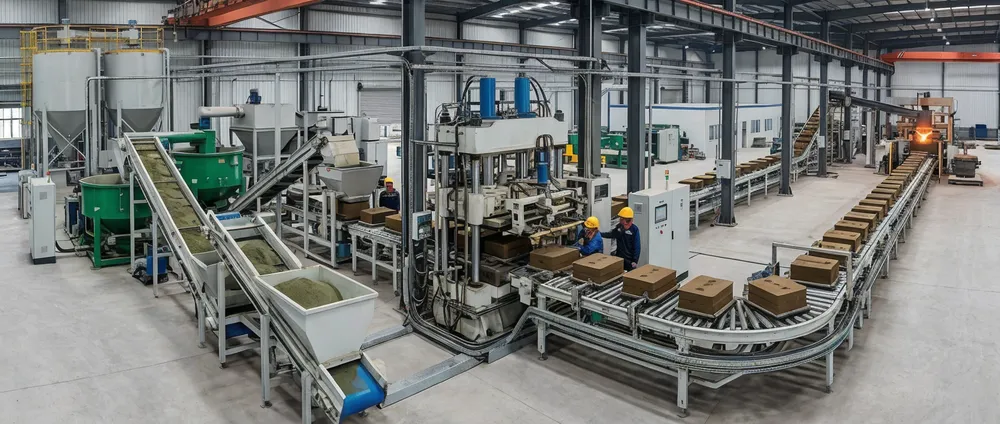
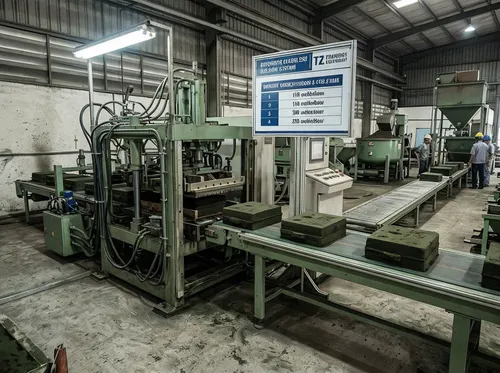
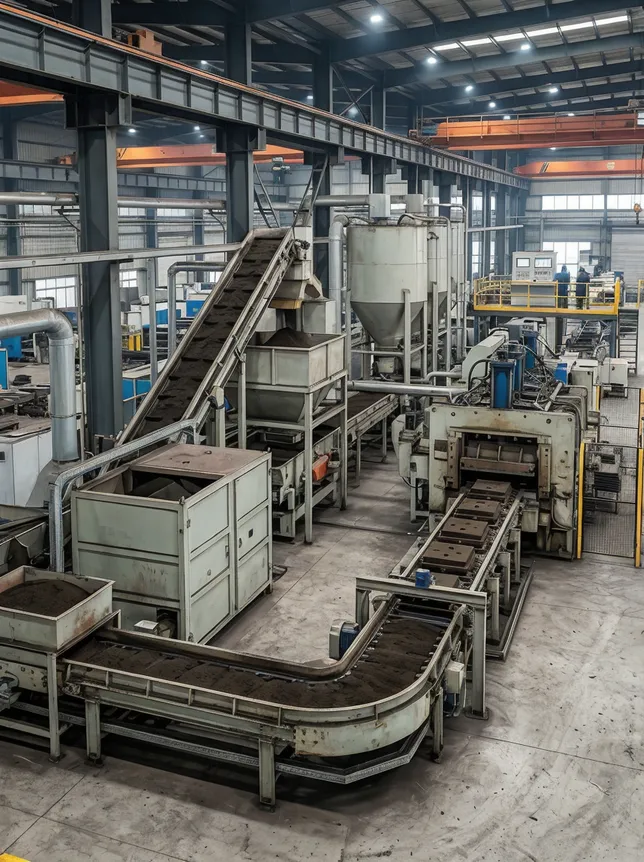
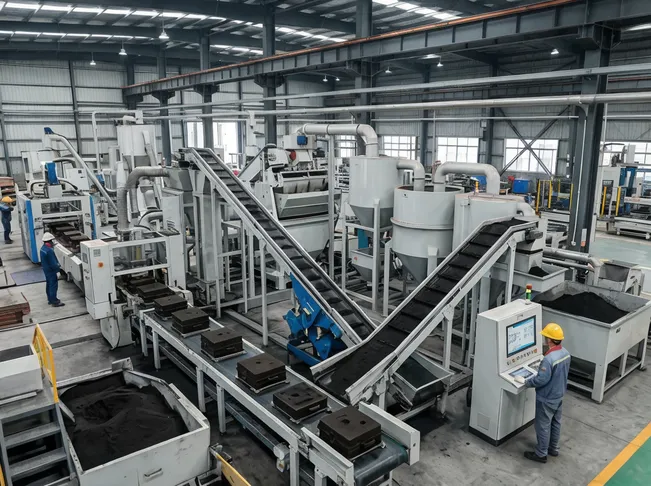
An automatic flaskless clay sand processing line combines two operational advantages: it eliminates the metal flask containers that traditional molding systems require (cutting mold weight by 30–40%), and it runs under PLC control with automated sand feeding, compaction, and parameter monitoring. You're specifying a system that produces 100–250 molds per hour with minimal operator intervention — typically 2 operators per shift instead of the 4–5 that semi-automated systems need at the same capacity.
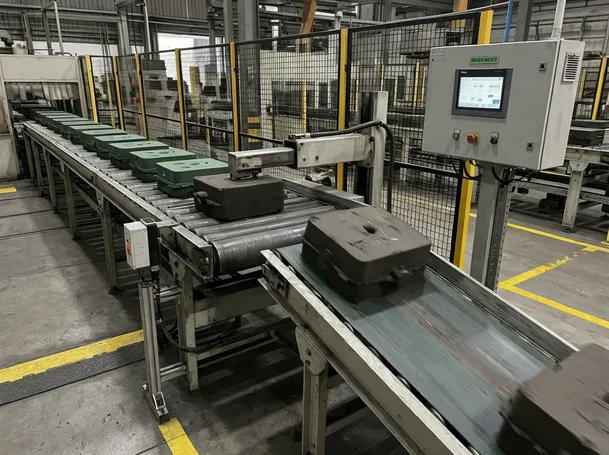
"Flaskless" means the sand mold is self-supporting after compaction. No metal frame to place, remove, clean, or maintain. The molding station compacts sand directly into the mold shape, ejects it onto a conveyor, and the mold moves to pouring without any flask handling steps. This cuts cycle time by 15–20% compared to flask-based systems and simplifies your material flow — molds go straight from molding to pouring to shakeout.
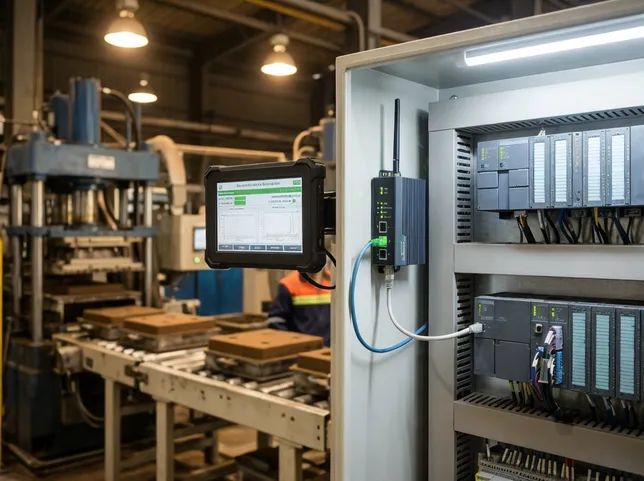
"Automatic" means PLC-controlled operation. The system manages sand feeding rates, moisture adjustment, compaction pressure, and cycle timing without manual intervention. Operators monitor the HMI touchscreen and handle exception conditions (pattern changes, material replenishment, quality checks), but the PLC runs the production cycle. This delivers throughput consistency that manual systems can't match — ±2% output variation versus ±8% in operator-dependent systems, which matters when you're running high-volume contracts with tight delivery windows.
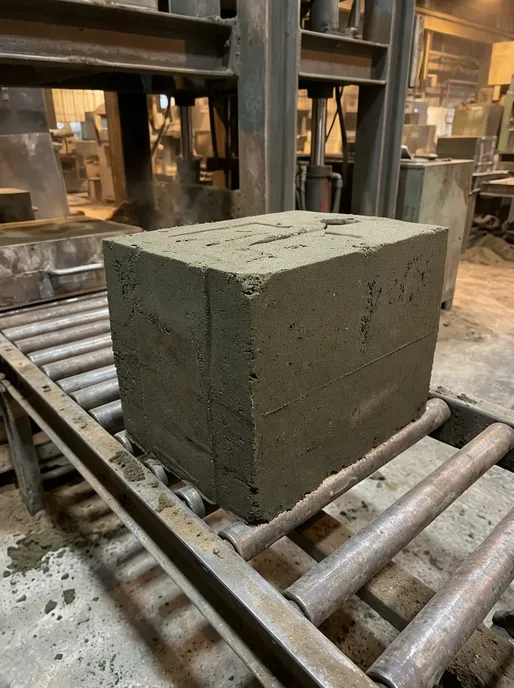
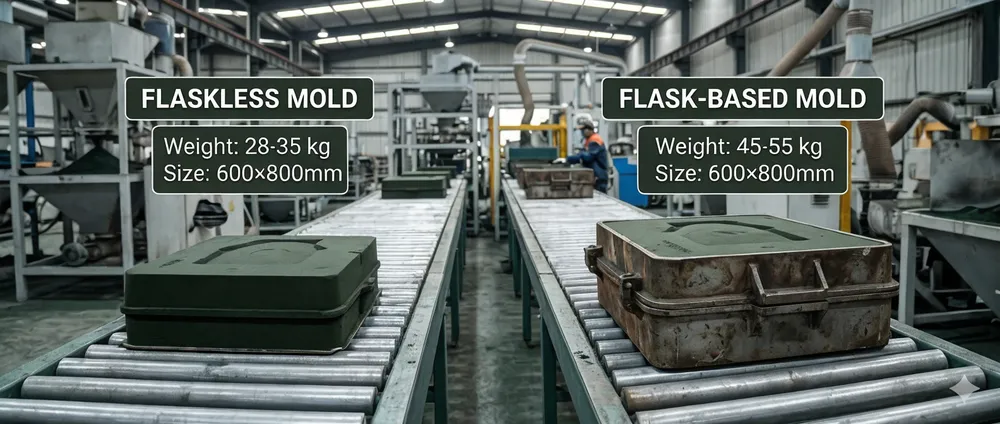
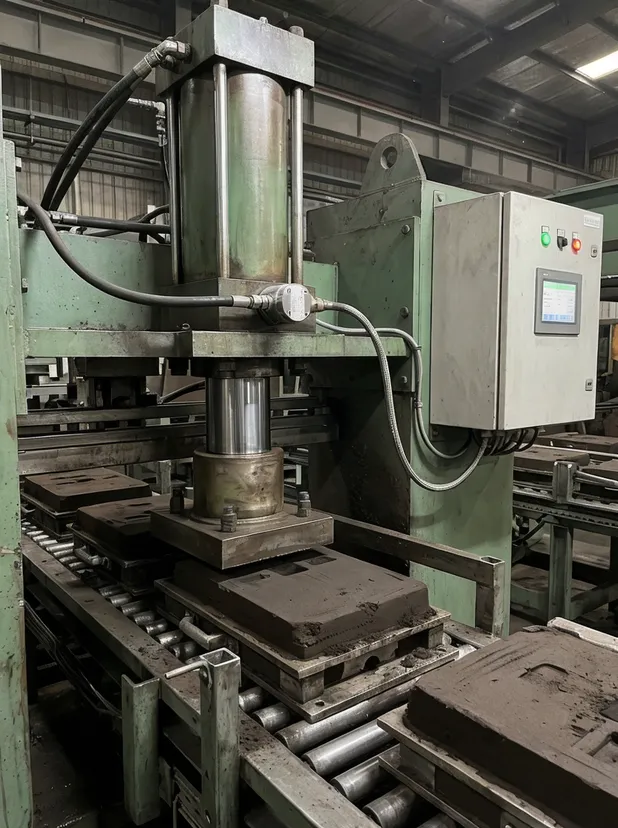
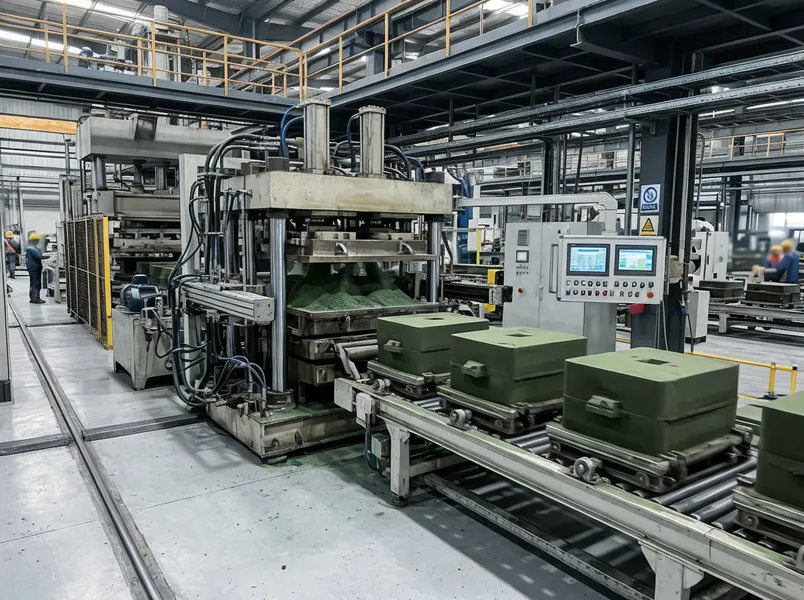
A flaskless mold after compaction: the sand is self-supporting, eliminating flask placement, removal, and cleaning.
No metal flask container means lighter molds, simpler handling, and reduced material flow complexity from molding to pouring to shakeout.
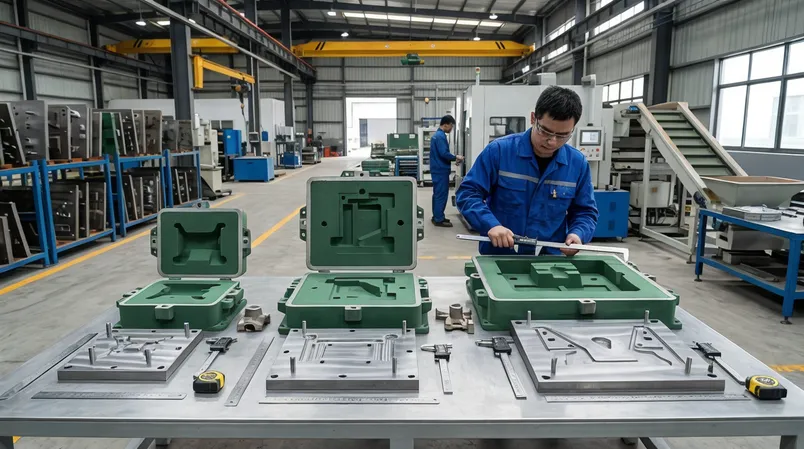
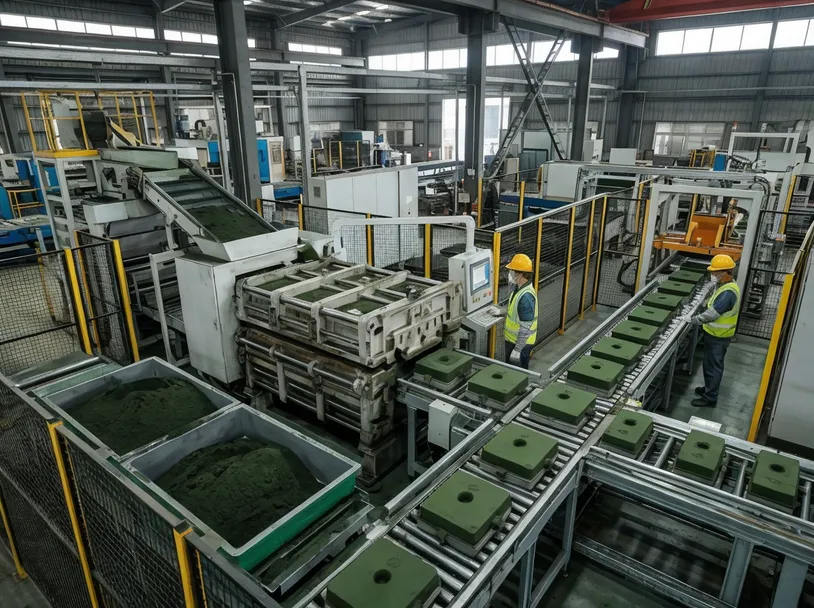
Sand feeding, moisture adjustment, compaction pressure, and cycle timing run automatically. ±2% output variation vs. ±8% in manual systems.
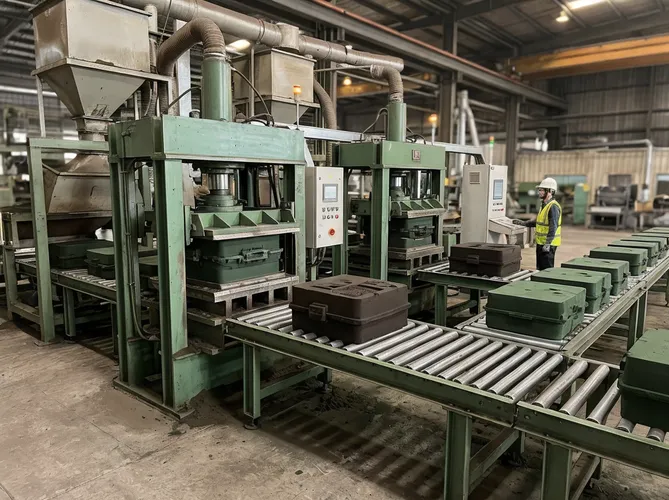
Compared to 4–5 operators for semi-automated systems at equivalent 100–250 molds/hour output, cutting direct labor cost per mold.
We position this system for foundries targeting 100+ molds per hour where labor cost and output consistency justify the automation premium. If you're currently running 60–80 molds per hour and growing, this system provides headroom. If you're at 30–40 molds per hour, our Clay Sand Molding Line offers better cost fit — you can always upgrade to automation later as volume scales.
The parent clay sand processing category page covers general clay sand processing principles (sand reclamation, mixing, quality parameters). This page focuses on what makes automated flaskless systems different: the ROI calculation for automation, the operational advantages of eliminating flasks, and the integration requirements for getting PLC-controlled equipment operational in your facility.
Automatic flaskless clay sand processing lines scale across four capacity tiers. The differences aren't just throughput — they're about control precision, molding station count, and reclamation loop architecture.
| Specification | 100 molds/hr | 150 molds/hr | 200 molds/hr | 250 molds/hr |
|---|---|---|---|---|
| Cycle time per mold | 28–32 sec | 22–26 sec | 18–22 sec | 18–20 sec |
| Molding stations | Single | Single | Dual parallel | Dual parallel |
| Mold size range (L×W) | 400–800 mm × 500–1000 mm | 400–800 mm × 500–1000 mm | 400–800 mm × 500–1000 mm | 400–800 mm × 500–1000 mm |
| Compaction method | Servo-driven hydraulic | Servo-driven hydraulic | Pneumatic | Pneumatic |
| Power requirement | 85 kW | 100 kW | 135 kW | 150 kW |
| Footprint (L×W) | 18 m × 12 m | 20 m × 12 m | 25 m × 15 m | 25 m × 15 m |
| PLC control | Siemens S7-1200 / Mitsubishi FX5U | Siemens S7-1200 / Mitsubishi FX5U | Siemens S7-1500 / Mitsubishi iQ-R | Siemens S7-1500 / Mitsubishi iQ-R |
| HMI interface | 10″ touchscreen, multilingual | 10″ touchscreen, multilingual | 15″ touchscreen, multilingual | 15″ touchscreen, multilingual |
| Operators per shift | 2 | 2 | 3 | 3 |
Specifications shown are typical for this system type. Actual specifications vary based on mold size, alloy type, and site constraints. Contact us for detailed configuration matching your production requirements.
Mold size ranges are customizable beyond the standard 400–800 mm × 500–1000 mm envelope, but custom sizes require pattern plate tooling (adds 2–3 weeks to lead time, costs vary by size). Flaskless molding works best for mid-size molds producing 5–50 kg castings.
Very large molds (>1000 mm) or very small molds (<300 mm) are better suited to flask-based systems due to structural support requirements — the sand needs enough mass to be self-supporting after compaction.
PLC brand selection depends on your existing equipment ecosystem. If you're already running Siemens PLCs on your melting furnace or other foundry equipment, we'll match that platform for easier integration and spare parts consolidation.
Both Siemens and Mitsubishi options support standard industrial protocols (Modbus RTU/TCP, Profibus) for interfacing with upstream and downstream equipment.
Entry Tier (100–150/hr)
Siemens S7-1200
Mitsubishi FX5U
High Tier (200–250/hr)
Siemens S7-1500
Mitsubishi iQ-R
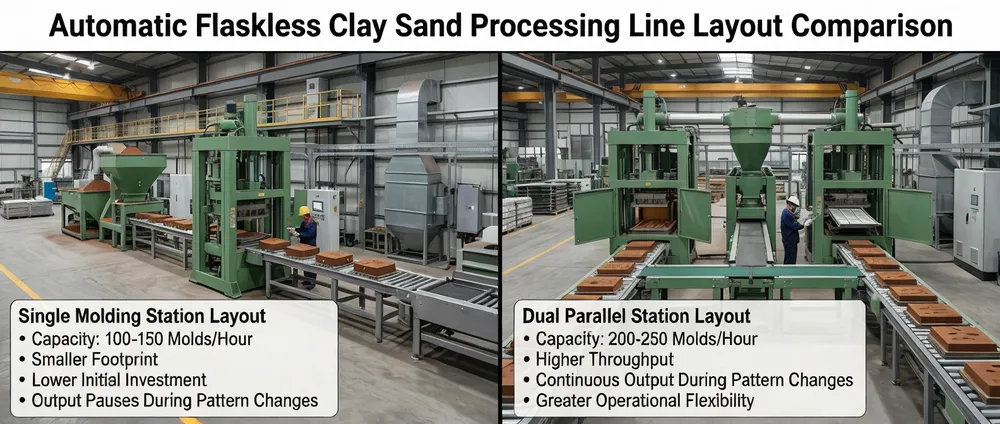
The jump from 150 to 200 molds per hour involves adding a second molding station that runs in parallel. The PLC coordinates both stations to maintain consistent output even when one unit pauses for pattern changes (which take 8–12 minutes).
Single-station systems can't hold steady throughput during pattern swaps — output drops to zero until the changeover completes. Dual-parallel architecture means you maintain 50%+ throughput even during changeovers.
For automatic flaskless clay sand processing line manufacturers, the control system architecture is the key differentiator. We use industrial-grade PLCs with 12-month data logging, remote VPN access for diagnostics, and modular I/O that simplifies future capacity upgrades.
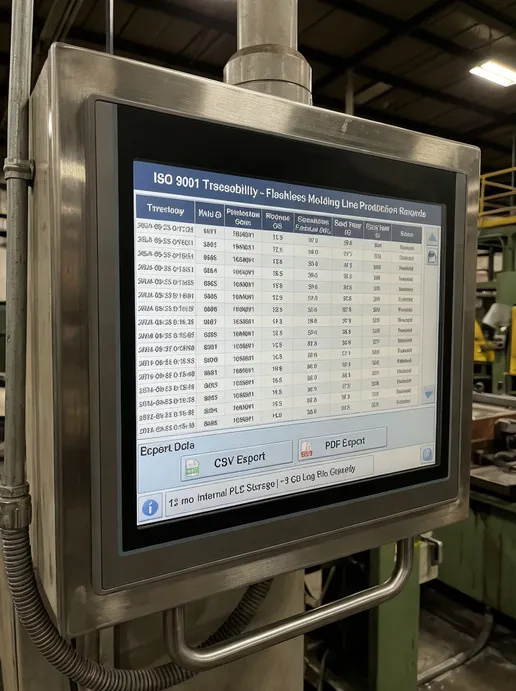
Full production data retained for traceability, quality audits, and process optimization.
Our engineers access your PLC remotely for troubleshooting, reducing service response time to hours, not days.
Add sensors, stations, or peripheral equipment without re-engineering the control cabinet.
HMI stores compaction pressure curves, cycle timing, and sand moisture targets — recall with one tap, no manual parameter adjustment.
The cost premium for automation over semi-automated systems pays back through two mechanisms: direct labor reduction and throughput consistency gains that reduce defect-related rework costs.
Labor Headcount Reduction
4–5 → 2operators/shift
At the same 150 molds/hour capacity, automated systems cut 2–3 operators per shift — or 6–9 fewer operators across a 3-shift operation. At $3,000/month average foundry labor cost (typical in export markets), annual savings run $216,000–$324,000.
Automation Payback Period
18–30 months
The automation premium typically adds 40–60% to the base system cost. Most buyers targeting 2-shift or 3-shift operation hit payback within 24 months.
Use this formula to estimate ROI for your specific operation:
Most buyers targeting 2-shift or 3-shift operation hit payback within 24 months.
Automated systems deliver ±2% throughput variation versus ±8% in operator-dependent systems.
Manual systems slow down as operators fatigue across a 12-hour shift — output drops 10–15% in hours 8–12 compared to hours 1–4. Automated systems maintain the same cycle time from shift start to shift end because the PLC doesn't get tired.
That consistency matters when you're running high-volume contracts with penalty clauses for late delivery.
Automated parameter monitoring (compaction pressure, sand moisture, temperature) catches out-of-spec conditions before they produce defective molds.
Systems auto-reject molds that fail tolerance checks — shunted to a reject conveyor instead of moving to pouring. This prevents defective castings from consuming metal, energy, and finishing labor.
Buyers report 30–40% defect rate reduction after switching from manual to automated molding, translating to less scrap cost and fewer customer returns.
Freed-up labor can be redeployed to higher-value tasks — quality inspection, preventive maintenance, upstream sand preparation — rather than standing at a molding station managing cycle timing.
This is margin protection, not just cost reduction. Your per-unit labor cost drops, but production capacity stays the same or increases, so you can take on more orders without adding headcount.
Manual System
75–80%
Effective utilization across a shift, accounting for slowdowns during shift changes, break periods, attention lapses, and micro-stoppages.
Automated System
90–95%
Utilization with proper maintenance. PLC maintains consistent cycle discipline — runs continuously without productivity dips from operator shift changes or break periods.
We'll model payback based on your labor costs and production volume.
Eliminating the metal flask container isn't just about removing a component — it changes the operational economics of your molding process in four ways.
A typical 600mm × 800mm mold with flask weighs 45–55 kg. The same mold without flask weighs 28–35 kg.
That weight reduction means:
If you're installing this system on an upper floor or in a facility with load-bearing constraints, the lighter mold weight can be the deciding factor.
You eliminate the flask placement and removal steps entirely. Those eliminated steps save 8–12 seconds per mold cycle, which compounds across thousands of molds per shift.
Flask-based cycle:
Position empty flask → fill with sand → compact → lift flask with mold → transfer to pouring → after pouring and cooling, separate mold from flask → return empty flask
Flaskless cycle:
Compact sand → eject mold directly onto conveyor → move to pouring
Metal flasks wear out — they warp from thermal cycling, develop cracks at weld joints, and accumulate sand buildup that requires periodic cleaning.
A foundry running 150 molds/hour needs 40–60 flasks in rotation (accounting for flasks in use at pouring, cooling, and return transit). Flask refurbishment runs $50–80 per flask every 12–18 months.
Annual flask maintenance for a mid-volume operation:
$2,000–$4,800/year. Flaskless systems: $0 — the cost line item doesn't exist.
Flask-based systems contaminate reclaimed sand with residue from flask cleaning (metal particles, burnt-on sand, cleaning compound traces). This lowers your reclamation rate by 3–5 percentage points compared to flaskless systems where sand never contacts metal surfaces except during pouring.
Higher reclamation rates mean less fresh sand purchasing and less waste disposal cost — the savings compound over time.
Molds move directly from molding station to pouring without intermediate flask handling steps. This reduces your floor space requirement (no flask storage area, no flask return conveyor) and simplifies your production layout.
Fewer material handling steps mean fewer opportunities for mold damage during transfer — foundries switching from flask-based to flaskless systems see 5–8% reduction in pre-pour mold breakage.
Eliminated Infrastructure
Best fit: Mid-to-high volume production with standardized mold sizes (1–3 core designs that rarely change).
Consider flask-based instead if: You're changing mold sizes more than 3–4 times per shift. Pattern changes on flaskless systems take 8–12 minutes because you're swapping the entire pattern plate assembly. For job shops running dozens of different mold designs weekly, the pattern change overhead can offset the cycle time advantages.
Automatic flaskless systems fit three foundry profiles. Each represents a profitable market segment where automation protects your margin through labor efficiency and output consistency.
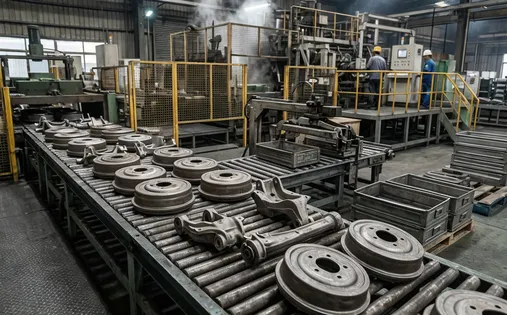
Typical parts: Brake drums, suspension components, engine brackets, transmission housings.
Order profile: 500–2,000 units per order, reorders every 4–8 weeks. Repeatable, high-volume runs with tight dimensional tolerances (±0.5mm typical).
Why automation fits: Automotive buyers audit your quality systems and require batch traceability — the PLC's data logging satisfies those requirements without manual record-keeping. Labor cost pressure is high because automotive contracts have thin margins, so the 2-operator shift structure protects profitability.
Payback timeline: Most buyers in this segment run 2–3 shifts and hit automation payback within 20–24 months.
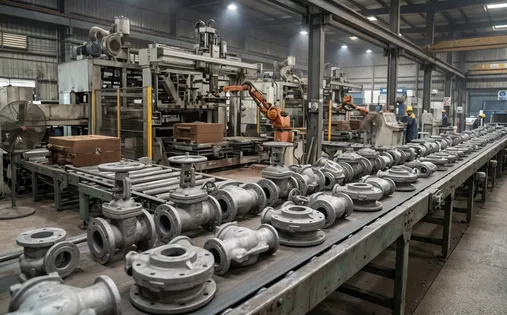
Typical parts: Industrial valve bodies, pump casings, manifold blocks for hydraulic systems.
Production profile: Standardized product lines with minimal design variation (1–2 core mold designs account for 80% of volume), 24/7 operation, tight tolerance requirements (±0.3mm for machined surfaces).
Why automation fits: Consistency across shifts — night shift output matches day shift output, which matters when you're shipping 10,000+ units per month to buyers who measure your defect rate in parts per million. The dual molding station configuration handles pattern changes without stopping production — one station swaps patterns while the other continues running.
Alloy types: Both ductile iron and gray iron are well-suited to clay sand molding, with typical casting weight ranges of 5–50 kg per mold.
Ductile iron advantage: Requires tighter sand quality control (consistent nodularity depends on stable sand chemistry), which the automated moisture and clay content monitoring delivers.
Gray iron advantage: More forgiving on sand chemistry, but benefits from throughput consistency — you can commit to fixed delivery schedules because your daily output doesn't vary with operator performance.
Geometry note: Both alloy types work well in flaskless molds if the casting geometry doesn't require complex cores. Flaskless excels at simple to moderate complexity shapes.
Currently at 60–80 molds/hour and growing? The 100–150 molds/hour configuration provides headroom for volume expansion without requiring a second system purchase.
Currently at 30–40 molds/hour? The automation cost doesn't justify the labor savings yet. Consider our Clay Sand Molding Line for better cost fit, then upgrade to automation when volume crosses 60 molds/hour.
Automotive Components
High-volume repeat orders (good for amortizing automation investment), but margins are thin — labor efficiency is critical.
Industrial Components (Valves, Pumps)
Better margins and premium pricing for tight tolerances — automation's consistency justifies the price.
Choose your target segment based on your existing customer relationships and your facility's quality control capabilities.
We'll recommend the configuration that fits your growth trajectory.
Automated flaskless systems integrate with your existing foundry equipment through three connection points: upstream sand preparation, downstream pouring and cooling, and the PLC network that coordinates everything.
Connects to your sand preparation systems — mixers, reclamation units, storage silos. Automated sand feeding via enclosed conveyors or pneumatic transport, with PLC-controlled feed rate matched to molding cycle timing so sand arrives exactly when needed.
Capacity check: If your reclamation capacity is undersized for the molding output (common when upgrading from manual to automated molding), you'll build up a backlog of used sand that eventually forces you to slow down molding or dump sand as waste. We flag this during the quotation phase and recommend capacity upgrades before it becomes a production bottleneck.
Interfaces with your pouring stations (manual ladle pouring or automated pouring systems), cooling conveyors, and shakeout equipment. Molds exit the molding station on a roller conveyor connecting to your pouring line.
Sync modes: The PLC can coordinate with automated pouring systems to synchronize mold arrival with pouring cycle timing, or maintain a buffer queue of molds for manual pouring operations. After pouring, molds move through your existing cooling and shakeout process — no changes required unless your current conveyors can't handle the increased throughput.
Our control systems speak standard industrial protocols (Modbus, Profibus) and interface with most melting furnaces, material handling systems, and upstream preparation equipment without custom programming.
Platform matching: Running Siemens? We'll use Siemens PLCs and Profibus. Mitsubishi or Allen-Bradley? We match that platform. Goal: minimize PLC brands in your facility — simplifies troubleshooting, reduces spare parts inventory, and makes it easier to find technicians who can service everything.
Typical integration layout: sand preparation feeds the molding station via PLC-coordinated conveyors; molds exit to your existing pouring and shakeout line.
Reinforced concrete slab at least 200mm thick with rebar reinforcement. The molding station generates dynamic loads during compaction — impact forces spike to 1.5× static weight — so the foundation must absorb vibration without cracking.
We provide foundation drawings with anchor bolt locations and load distribution maps as part of the pre-shipment documentation package.
Before your system ships, get your facility infrastructure aligned with these specifications. Addressing these early prevents commissioning delays.
Practical tip: Most buyers install a dedicated circuit breaker and transformer for the molding line rather than tapping into existing foundry power. This isolates the system electrically, which simplifies troubleshooting and prevents voltage sags from affecting other equipment on your floor.
Total elapsed time from equipment arrival to full production: 8–12 days. Here's how that breaks down.
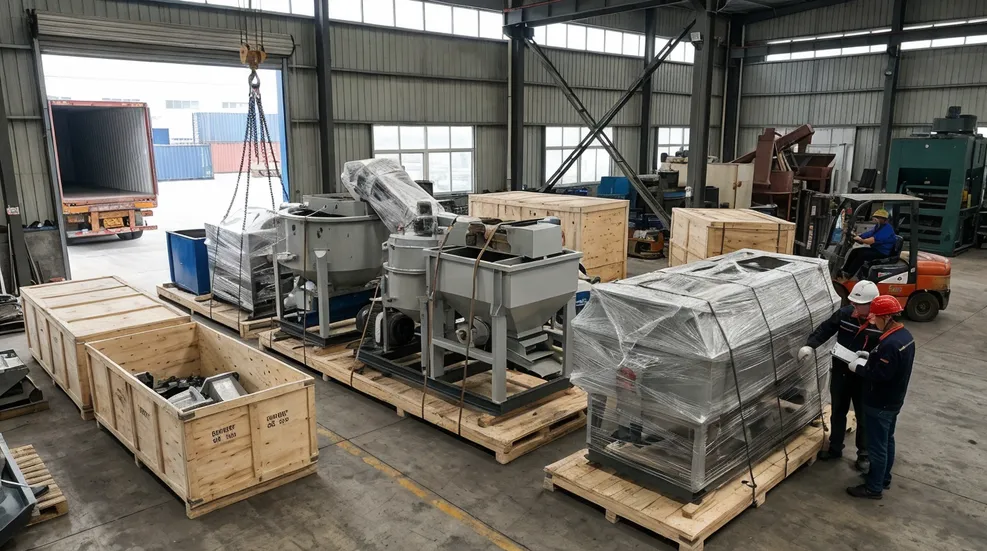
Equipment arrives in 2–3 × 40HQ containers. Modules bolt together on your factory floor — no welding or specialized rigging required.
We run test molds, adjust parameters, and train your team on startup procedures and exception handling. Your operators get hands-on time before going live.
Ramp up to target output, verify quality parameters, and confirm integration with your upstream and downstream equipment. Production-ready sign-off at the end.
8–12 Days Total
From container unloading to production-ready sign-off
This timeline assumes your foundation, utilities, and sand supply infrastructure are ready before equipment arrives. We provide a pre-commissioning checklist 4–6 weeks before shipping.
We install a VPN module that lets our technicians log into your PLC and view the same data your operators see on the factory floor. When you report a problem — inconsistent mold strength, cycle time drift, parameter alarms — we can review the last 48 hours of process data, identify the issue, and walk your team through the fix over a phone call.
This cuts troubleshooting time from days (waiting for a technician to fly to your facility) to hours.
Security by Default
The VPN connection is read-only by default — we can view data and download logs, but we cannot change setpoints or control equipment unless you grant write access.
Common Remote Diagnoses
Moisture creeping up due to a partially clogged valve, compaction pressure dropping due to hydraulic fluid contamination, sensor drift on sand temperature probes — issues we identify from data patterns before they cause scrap.
VPN module enables secure remote access to PLC process data for rapid troubleshooting.
Systems break down into container-friendly modules — frame sections, conveyor segments, PLC cabinet, hydraulic power unit — that fit in standard 40HQ containers. Module dimensions are designed to clear container door openings (2.34 m width, 2.28 m height), so there's no need for special handling or oversized freight.
Single-station configuration. Standard international shipping, no oversized freight surcharges.
Dual-station configuration. Still fits standard containers — no special permits or escort vehicles required.
Share your floor plan dimensions and utility specs. We'll send back a commissioning timeline, foundation drawing, and utility pre-check list specific to your capacity tier.
Every foundry operates differently. These are the configuration levers available to match the system to your specific production profile — capacity, mold size, station layout, reclamation integration, and control system preferences.
100
molds/hour
150
molds/hour
200
molds/hour
250
molds/hour
Capacity scales in 50 molds/hour increments. The capacity for each tier is determined by molding station count (single vs. dual parallel stations) and cycle time optimization:
Servo-Driven Hydraulic Compaction
28–32 seconds
per mold cycle
Pneumatic Compaction
18–22 seconds
per mold cycle
Need an intermediate target? If you need capacity between these tiers — say, 175 molds/hour — we'll configure a single-station system with faster cycle time or a dual-station system with longer cycle time. The PLC's flexibility lets us hit intermediate targets without custom hardware.
Available from stock / short lead-time
Length Range
400–800 mm
Width Range
500–1,000 mm
Available for orders over 1 complete system. Custom sizing requires pattern plate tooling and adds 2–3 weeks to lead time.
Flaskless molding works best for molds producing 5–50 kg castings.
Below 5 kg
Sand mass isn't sufficient to be self-supporting after compaction — you'll get mold collapse during transfer.
Above 50 kg
Mold becomes difficult to handle and the compaction force requirements push you toward flask-based systems with external support.
100–150 molds/hour
200–250 molds/hour
The molding system can connect to your existing reclamation equipment or we can supply an integrated reclamation module as part of the complete line.
We'll verify that its capacity matches the molding output. Reclamation should be sized at 110–120% of molding capacity to maintain buffer during peak periods.
Supplied as part of the complete line — pre-sized and matched to the molding system output from day one.
If your reclamation is undersized: We'll recommend either upgrading it or adding a second reclamation loop — otherwise you'll build up used sand faster than you can process it.
Reclamation loop sized at 110–120% of molding capacity ensures uninterrupted operation.
PLC configured to export batch data in whatever format your quality management system requires:
Access via web browser or mobile app — check production status, view real-time parameter trends, and download logs from any device with internet access.
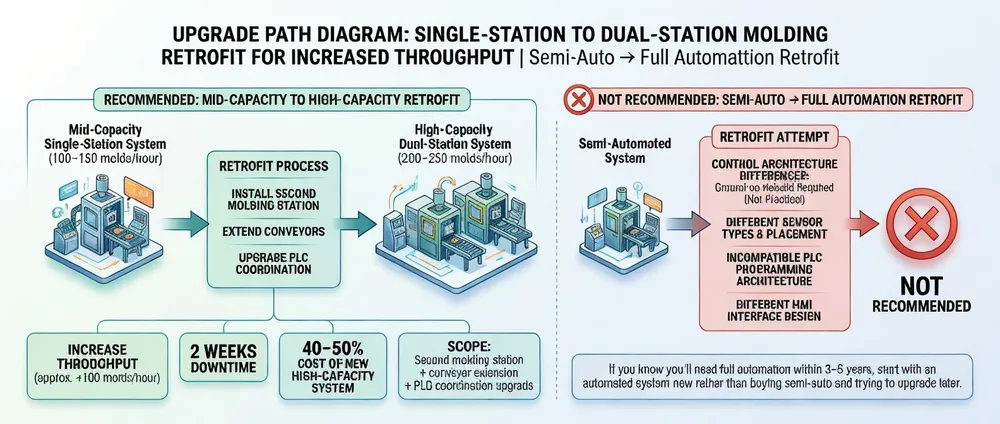
Mid-capacity single-station systems (100–150 molds/hour) can be retrofitted with a second molding station to increase throughput to 200–250 molds/hour.
Upgrading a semi-automated system to full automation is not a practical retrofit path. The control architecture differences require a ground-up rebuild:
Planning tip: If you know you'll need full automation within 3–5 years, start with an automated system now rather than buying semi-auto and trying to upgrade later.
No minimum order quantity for complete systems. Some manufacturers won't quote unless you're buying 3+ lines — we'll build one system if that's what your capacity planning requires.
Customization engineering fees are waived for standard modifications:
Modifications that require new tooling or outside components add engineering cost, quoted separately during the proposal phase:
Non-Standard Mold Sizes
Custom tooling required
Special Materials
Outside sourcing needed
Third-Party Sensor Integration
External components
Get detailed configuration options and pricing for your specific requirements — from mold sizes and PLC preferences to throughput targets and facility constraints.
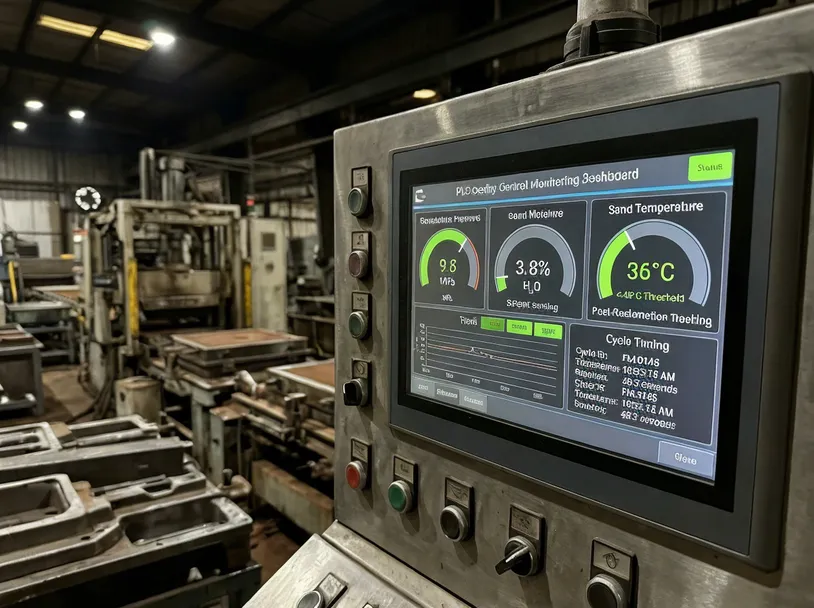
Automated monitoring points track four parameters that directly affect mold quality: compaction pressure, sand moisture content, sand temperature, and cycle timing. Each parameter gets measured in real time, logged to the PLC's internal memory, and compared against your preset tolerance bands.
8–12 MPa typical · ±2% tolerance
3–5% by weight · 3-point sensing
< 40°C threshold · post-reclamation tracking
Per-mold timestamped logging
Compaction pressure monitoring happens at the hydraulic or pneumatic actuator that drives the compaction ram. The PLC logs peak pressure, hold time, and pressure decay rate for every single mold. Target pressure depends on mold size and sand type — typically 8–12 MPa for clay sand — and the system holds ±2% tolerance across an entire shift.
If a mold falls more than 5% below target pressure, the PLC auto-rejects it — the mold gets shunted to a reject conveyor instead of moving to the pouring station. This prevents defective molds from consuming metal and finishing labor.
Sand moisture content gets measured at three locations: post-reclamation (where sand exits the washing system), post-mixing (after fresh clay addition), and pre-compaction (final check before sand enters the molding station). The sensors use capacitance measurement, which responds in under 2 seconds and doesn't require consumable test strips or calibration chemicals. Target moisture range for clay sand is typically 3–5% by weight.
Where sand exits the washing system. First moisture checkpoint establishes baseline before remixing.
After fresh clay addition. Confirms water injection achieved target moisture before sand moves to the hopper.
Final check before sand enters the molding station. Last gate to catch any moisture drift before mold formation.
If post-mixing moisture reads 5.8%, the PLC reduces water injection on the next batch cycle. If it reads 2.3%, water injection increases. The adjustment happens automatically — no operator input required. Capacitance sensors respond in under 2 seconds, eliminating consumable test strips and calibration chemicals.
Sand temperature monitoring tracks thermal conditions post-reclamation and pre-compaction. Sand temperature rises 15–20°C after reclamation (friction heat from the attrition mill) and needs to cool before remixing with fresh clay. The system includes a cooling conveyor that drops sand temperature back to ambient over a 3–4 minute transit time.
If sand temperature exceeds 40°C at the pre-compaction checkpoint, the PLC flags an alert — clay binder performance degrades above that threshold, and your molds lose 10–15% of their green strength.
+15–20°C from attrition mill friction. Cooling conveyor returns sand to ambient in 3–4 minutes.
Clay binder performance degrades above 40°C. Molds lose 10–15% green strength. PLC flags alert automatically.
PLC data logging creates a permanent record of every mold's process parameters, timestamped and linked to your production order numbers. This matters for ISO 9001 compliance and customer audits.
If a casting fails in service and the buyer wants to trace it back to the mold batch, you can pull up the exact moisture content, compaction pressure, sand temperature, and cycle timing from the day that mold was made.
Automated reject handling prevents defective molds from reaching the pouring station. When the system detects a parameter violation — compaction pressure below tolerance, moisture content outside range, temperature too high — it marks that mold in the log and physically diverts it to a reject conveyor. You're not relying on operator vigilance to catch bad molds. The PLC makes the decision based on measured data and executes the rejection automatically.
Every rejected mold is logged with the specific violation, timestamp, and associated production order — no manual tagging required.
The data logging structure links every mold to a production order number, shift identifier, operator ID, and timestamp. This isn't optional record-keeping — it's audit-ready documentation baked into the system architecture.
Show auditors the PLC logs with 12 months of parameter data demonstrating ±2% variation. Continuous, timestamped records — not spot checks.
Show them the auto-reject records proving that non-conforming molds never reached production. Every deviation is logged and acted on automatically.
Our technicians can VPN into your PLC and see the same data your operators see on the factory floor. When you report a problem — say, inconsistent mold strength over the past 3 days — we log in, review the parameter trends, and usually identify the root cause within an hour.
Calibration needed. Detected remotely through trending data before it affects mold quality.
Identified through pressure decay pattern changes. The trend data reveals contamination before catastrophic failure.
Too fast — sand temperature not dropping enough before remixing. Adjusted remotely or guided via call.
We walk your team through the fix over a phone call or video session — most issues resolve without a site visit. Remote access means faster diagnosis and less production downtime while waiting for a service technician to arrive.
Calibration intervals follow sensor manufacturer specs. We provide a calibration kit with each system and include the procedures in your operations manual. Calibration takes 1–2 hours per sensor and can be handled by your maintenance technician — no need to hire outside calibration services unless you prefer it.
| Sensor Type | Interval | Method |
|---|---|---|
| Moisture Sensors | Every 6 months | Drift check against known-moisture reference samples |
| Pressure Transducers | Annually | Deadweight calibrator verification |
| Temperature Sensors | Every 2 years | Certified thermometer comparison |
Calibration kit included with system delivery. All procedures documented in the operations manual provided during commissioning.
Equipment cost is the down payment. Energy, consumables, and maintenance define your real per-mold economics. Here's the full breakdown so you can model costs before committing.
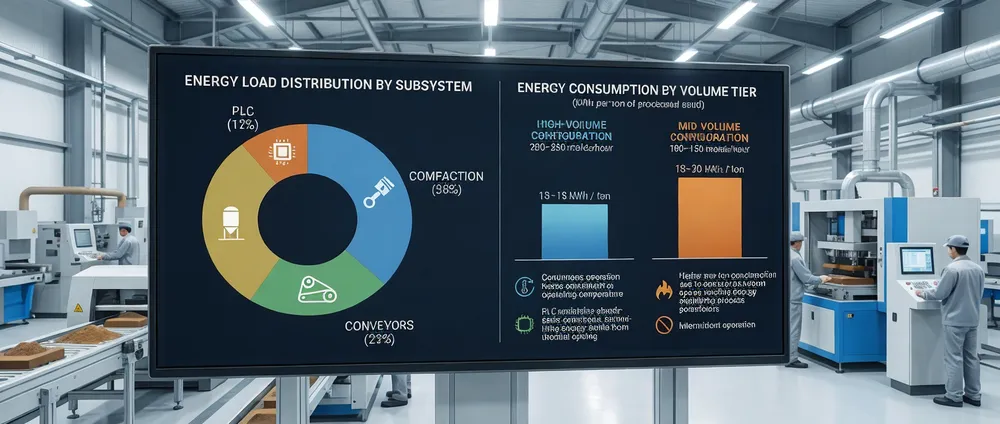
Energy consumption runs 15–18 kWh per ton of processed sand in high-volume configurations (200–250 molds/hour). Mid-volume systems (100–150 molds/hour) consume slightly more per ton (18–20 kWh) because startup and shutdown cycles waste energy stabilizing process parameters. The efficiency gain at higher volumes comes from continuous operation — the equipment stays at operating temperature and the PLC maintains steady-state conditions.
Continuous operation keeps equipment at operating temperature. PLC maintains steady-state conditions, minimizing energy waste from thermal cycling.
Higher per-ton consumption due to startup/shutdown cycles wasting energy stabilizing process parameters. Intermittent runs reduce thermal efficiency.
Scale that to your local electricity rate and daily sand throughput to estimate your operating cost. Markets with industrial rates above $0.15/kWh should weigh reclamation efficiency more heavily in the ROI model.
Understanding where energy goes helps you target cost reduction. If energy cost is a major concern in your market, focus on reclamation efficiency rather than motor sizing — every percentage point improvement in sand reuse cuts your fresh sand purchasing and waste disposal costs, which often exceed the energy savings from running smaller motors.
Largest single consumer. Hydraulic compaction requires sustained high-pressure output.
Continuous movement of sand through the system demands steady motor output.
Sand recovery and thermal management. Higher reclamation efficiency offsets fresh sand costs.
Minimal draw. Sensors, HMI, and logic controllers use a fraction of total load.
Cost optimization tip: Focus on reclamation efficiency rather than motor sizing. Every percentage point improvement in sand reuse cuts your fresh sand purchasing and waste disposal costs — which often exceed the energy savings from running smaller motors.
Consumables break down into three categories: clay additives, water, and filter replacements. Each has different cost dynamics depending on your region, reclamation efficiency, and casting alloys.
If you're trucking water or operating in a water-scarce region, the closed-loop water recycling module captures and filters wash water, returning 85–90% back to the system. Cuts water consumption from 50–80 liters/ton down to just 5–10 liters/ton (only makeup water to replace evaporation losses). Module cost: approximately $12,000.
Maintenance follows a tiered structure that keeps your line running without requiring a dedicated maintenance crew. Production operators handle daily checks; a maintenance technician covers weekly inspections; quarterly overhauls are scheduled during low-volume periods or between shifts.
Motors, gearboxes, PLC controllers. The cost is 5–8% of the original equipment price, but it eliminates the risk of a 3–4 week production shutdown waiting for a replacement part to clear customs and ship to your facility.
Conveyor belts, compaction cylinder seals, sensor modules — stocked at our Qingdao facility and shipped via DHL or FedEx for 5–7 day delivery to most export markets.
Risk trade-off: 5–8% of equipment price in spare parts inventory vs. potential 3–4 week production shutdown if a long-lead component fails without backup. For most foundries running two shifts, the math strongly favors stocking spares.
| System Configuration | Operators / Shift | Role Breakdown | Maintenance Budget |
|---|---|---|---|
| Up to 200 molds/hour | 2 operators | 1 — Molding station & pattern changes 1 — Reclamation & quality parameters | 4–6 hours/week routine tasks; more during quarterly overhauls |
| 250 molds/hour (dual-station) | 3 operators | 1 — Molding station A 1 — Molding station B 1 — Reclamation & downstream coordination |
On a 50-ton-per-day operation, moving from 75% to 85% reclamation means 5 fewer tons of fresh sand to buy and 5 fewer tons of waste to haul away — every single day.
Depends on local sand cost and disposal fees. Calculated on a 50-ton/day operation moving from single-loop to dual-loop reclamation.
Payback period: Upgrading from single-loop to dual-loop reclamation typically pays back in 12–18 months through material cost savings alone — before accounting for reduced waste handling labor and improved casting surface finish from cleaner sand.
Contact us for a detailed operating cost analysis based on your local utility rates, material costs, labor rates, and production volume. We model total cost of ownership before you commit.
Direct answers to the technical and financial questions foundry engineers ask before specifying an automatic flaskless clay sand processing line.
Typical payback runs 18–30 months depending on labor costs in your market. The calculation is straightforward once you map your shift structure:
Labor Savings Calculation
The automation premium typically adds 40–60% to base system cost. Divide that premium by annual savings to get your payback period. Factor in throughput consistency gains — fewer defects means less rework cost — and the payback accelerates. Most buyers report 20–24 month actual payback versus the 24–30 month calculation.
Standard range is 400–800mm length × 500–1,000mm width, producing castings in the 5–50 kg weight range. Flaskless molding works best for mid-size molds where the sand mass is sufficient to be self-supporting after compaction.
| Mold Range | Suitability | Why |
|---|---|---|
| < 300mm | Not recommended | Insufficient sand mass to maintain structural integrity without a flask |
| 400–800mm | Optimal range | Self-supporting after compaction, standard tooling available |
| > 1,000mm | Flask-based preferred | Sand mass too heavy to move without deformation; requires external support |
Custom sizes outside the standard range are available but require pattern plate tooling — adds 2–3 weeks to lead time and costs $3,000–$8,000 depending on complexity.
Yes, via standard conveyor interfaces and PLC communication protocols. Our control systems support Modbus RTU/TCP and Profibus, which cover 90% of industrial reclamation equipment.
The PLC coordinates sand flow rates to match molding cycle timing — used sand exits the molding station at the same rate that reclaimed sand returns from your reclamation unit.
Capacity mismatch warning: If your reclamation capacity is undersized for the molding output (common when upgrading from manual to automated molding), we'll recommend capacity upgrades during the quotation phase. Otherwise you'll build up a backlog of used sand that eventually forces you to slow down molding or dump sand as waste.
2 operators per shift for systems up to 200 molds/hour. 3 operators for 250 molds/hour dual-station systems.
Handles pattern changes, monitors cycle timing, replenishes materials.
Checks PLC logs, responds to alarms, coordinates with downstream pouring.
Semi-automated comparison: At the same capacity, semi-automated systems require 4–5 operators per shift because manual sand feeding and parameter adjustment require constant attention. The automatic system cuts operator count by 40–60%.
The system includes manual override controls for safe shutdown — operators can stop the compaction cycle, halt conveyors, and isolate the equipment without PLC control.
>50,000 hrs
MTBF — PLC Controllers
Siemens S7-1500 & Mitsubishi iQ-R units in high-capacity systems
70–80%
Issues Caught Remotely
Parameter drift, sensor faults, and communication errors identified before hardware failure
$2–3K
Spare PLC Controller Cost
Recommended stock to avoid multi-week hardware replacement lead times
Remote diagnostics: We can identify parameter drift, sensor faults, or communication errors and walk your team through fixes before the PLC stops functioning — preventing most unplanned shutdowns before they happen.
Moderate suitability. Pattern changes take 8–12 minutes (manual pattern plate swap, PLC recipe recall, test mold verification). If you're changing mold designs more than 3–4 times per shift, the pattern change overhead starts to offset the cycle time advantages — you're spending 30–50 minutes per shift on changeovers, which drops your effective utilization.
Changeover Comparison
Automatic Flaskless
8–12 min per pattern change
Best at 1–3 core mold designs running hours or days
Semi-Automated Systems
5–7 min per pattern change
Better for frequent changeovers with simpler tooling
Automatic flaskless excels at high-volume production with 1–3 core mold designs that run for hours or days before changing. Job shops with dozens of different mold designs weekly are better served by flexible manual or semi-automated systems.
If your production mix is uncertain, standard flaskless systems offer faster changeover for mixed-run shops.
Manufactured under ISO 9001:2015 quality management (third-party audited annually by SGS), CE certified for European markets (machinery directive compliance, electrical safety standards), SGS factory audited (production process verification, material traceability). Electrical components meet IEC 60204-1 standards for industrial machinery.
ISO 9001:2015
Quality Management
CE Certified
EU Machinery Directive
SGS Audited
Factory Verification
IEC 60204-1
Electrical Safety
We provide technical files and commissioning reports with every system shipment — you'll need these for your facility's safety compliance documentation and for satisfying customer audits if you're supplying castings to automotive or aerospace buyers.
We've been building clay sand processing equipment since 2010, and the shift to automated lines happened in 2015 when a European buyer needed 200 molds per hour with ±0.5mm tolerance across 12-hour shifts. Manual systems couldn't hold that spec — operator fatigue caused parameter drift in hours 8–12, and the dimensional variation exceeded their quality requirements.
We built our first PLC-controlled flaskless line that year. It's still running in their facility, same core equipment, same output.
That project taught us what export buyers actually need: repeatable performance that doesn't depend on operator skill, remote support that resolves issues without site visits, and parts availability that prevents extended downtime.
Our in-house R&D team handles custom configurations without outsourcing design work to third-party engineering firms. When you need a non-standard mold size, a different compaction method, or integration with unusual upstream equipment, we're modifying our own designs — not coordinating between multiple vendors who each have their own lead times and compatibility issues.
This matters most when you're adapting an automated system to fit an existing foundry layout with space constraints or utility limitations. We've built systems that fit 16m × 10m floor spaces (normally we'd spec 18m × 12m) and systems that run on 380V three-phase power instead of our standard 415V — because that's what the buyer's facility provided.
Annual third-party audits verifying documented procedures for material sourcing, fabrication, assembly, and testing.
European conformity marking ensuring equipment meets EU health, safety, and environmental protection standards.
Independent inspection and verification supporting your own quality audits and downstream customer requirements.
Traceability for your supply chain: The certifications themselves don't make the equipment better, but they create a paper trail that satisfies your own quality audits and customer requirements. If you're selling castings to automotive or aerospace buyers who require supplier traceability, you'll need to show that your foundry equipment came from a certified manufacturer. We provide the documentation package — material certs, test reports, calibration records — with every system shipment.
That capacity matters because it determines lead time stability — we're not a job shop that gets backlogged when a large order comes in. A typical automated flaskless system order consumes about 4–5 weeks of production time across multiple lines (frame fabrication, machining, electrical assembly, PLC programming, testing).
We can run 4–6 systems in parallel, so even if we have a queue of orders, your lead time stays in the 45–60 day range. Smaller manufacturers often quote shorter lead times but then push your delivery when they get a bigger order — we've seen buyers wait 90–120 days after being promised 30.
We don't have a minimum order quantity for complete systems — some manufacturers won't quote unless you're buying 3+ lines. We'll modify standard designs without charging engineering fees unless the changes require new tooling or outside components.
We handle documentation, shipping logistics, and customs coordination as part of the standard service — you're not hiring a separate freight forwarder and hoping the paperwork matches up.
Market-specific certifications: CE for Europe, GOST for Russia, SASO for Saudi Arabia — we know which markets require what.
Customs-ready documentation: We know what information customs officials need on commercial invoices and how to pack equipment to survive ocean freight without damage.
Every system ships with: English-language operations manual, electrical schematics, spare parts list, and maintenance schedule.
Need documentation in another language? We can arrange translation for any supported language.
Depends on language and document length
VPN access to your PLC allows us to diagnose issues without a site visit.
70–80% of issues resolved remotely
No travel cost, no scheduling delays
Parts stocked at our Qingdao facility, shipped via DHL or FedEx to most export markets.
5–7 day shipping to most markets
International courier, tracked delivery
Available when remote support can't resolve the issue. You cover travel costs, we cover labor.
Typically for major component work
Motor swaps, gearbox rebuilds, capacity upgrades
Most buyers never need an on-site visit after initial commissioning. The combination of operator training, detailed documentation, and remote diagnostics handles the majority of issues. When we do send a technician, it's usually for major component replacement or capacity upgrades — not routine troubleshooting.
From flexible customization to professional export handling and long-term remote support — TZFoundry automated flaskless systems are built for foundries that need a reliable, well-supported production line, not just a machine.
Get Started — Request a QuoteEvery installation starts with accurate information. Here's what we need from you, what your facility needs to prepare, and the realistic timeline from deposit to first production mold.
Provide these details upfront and we can return a spec-matched quotation without back-and-forth delays. If you're replacing an older clay sand system, tell us what's not working with your current setup — that helps us avoid specifying the same bottlenecks.
Molds per hour — determines which system configuration and drive power you need.
Length × width × depth — defines the molding machine frame size and pattern plate dimensions.
Length × width, plus ceiling height if you have overhead cranes. Layout clearance affects conveyor routing.
Voltage, phase, and available amperage — ensures the system matches your plant's power infrastructure.
Whether you're starting from scratch or integrating with existing foundry equipment changes the engineering scope significantly.
If replacing an older line, describe what isn't working — bottlenecks, quality issues, labor constraints. We'll engineer around those problems.
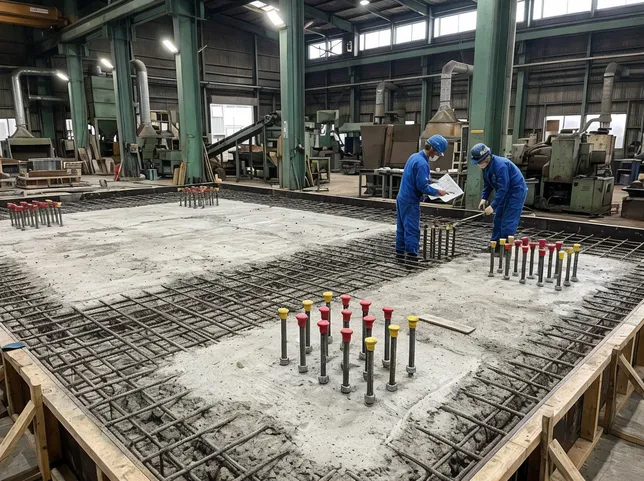
Automated flaskless systems generate vibration from compaction rams and rotating equipment, so you need a reinforced concrete slab at least 200 mm thick with rebar reinforcement. If you're installing on an upper floor, check your building's load rating — a mid-volume system weighs 8–12 tons fully loaded with sand, and dynamic loads during compaction can spike to 1.5× static weight.
We provide foundation drawings with anchor bolt locations and load distribution maps as part of the pre-shipment documentation package.
Foundation slab preparation with anchor bolt layout for automated molding system
Most buyers install a dedicated circuit breaker and transformer for the molding line rather than tapping into existing foundry power — it simplifies troubleshooting and prevents voltage sags from affecting other equipment.
| System Capacity | Rated Power | With 20% Startup Overhead |
|---|---|---|
| 100 molds/hour | 85 kW | 102 kW |
| 150 molds/hour | 100 kW | 120 kW |
| 200–250 molds/hour | 135–150 kW | 162–180 kW |
For pneumatic compaction on high-capacity systems:
For dust suppression and cooling:
Molding and reclamation processes generate dust even with enclosed conveyors and dust collectors. Plan for 2,000–3,000 m³/hour of exhaust airflow to keep your facility's air quality within occupational health limits.
If you're in a cold climate, consider heat recovery from the exhaust stream — compaction and reclamation equipment generates waste heat that can preheat incoming ventilation air, cutting your facility heating costs during winter months.
Total elapsed time from order to first production mold: 70–100 days. Here's the breakdown by phase and destination.
45–60 days
From deposit to factory departure
15–30 days
Varies by destination port
3–5 days
Clearance and inland delivery
3–5 days
Mechanical and electrical setup
2–3 days
Testing and operator training
| Destination | Ocean Freight Duration |
|---|---|
| West Coast North America | 15–20 days |
| Middle East | 20–25 days |
| East Coast North America & Europe | 25–30 days |
Air freight is available for smaller systems (100–150 molds/hour configurations only) — cuts shipping time to 5–7 days but costs 4–5× more than ocean freight. Contact us to evaluate whether the production-time savings justify the premium for your project timeline.
Included with commissioning
Training is hands-on — your operators run the equipment under our technician's supervision until they're comfortable with all normal and exception scenarios. No classroom-only sessions.
English standard; other languages on request
100–150 pages with photos and diagrams
Single-line and control circuit diagrams
USB drive plus cloud storage
Part numbers and supplier contacts included
Daily, weekly, and quarterly task checklists
We can log into your PLC and review process data when you report an issue — no waiting for a site visit to begin troubleshooting.
Order via email or WhatsApp. We'll quote price and lead time within 24 hours. On-site service dispatched if remote support doesn't resolve the problem.
Email us at sales@tzfoundry.com with your capacity requirements and site constraints. Include photos of your existing foundry layout if you're integrating the molding line with current equipment — that helps us spot potential installation issues before we finalize the quotation.
Other clay sand processing solutions from TZFoundry
Standard flaskless molding systems
Vertical parting flaskless systems
Horizontal parting flaskless systems
Complete molding line configurations
Sand recovery and recycling systems
Sand mixing and preparation equipment