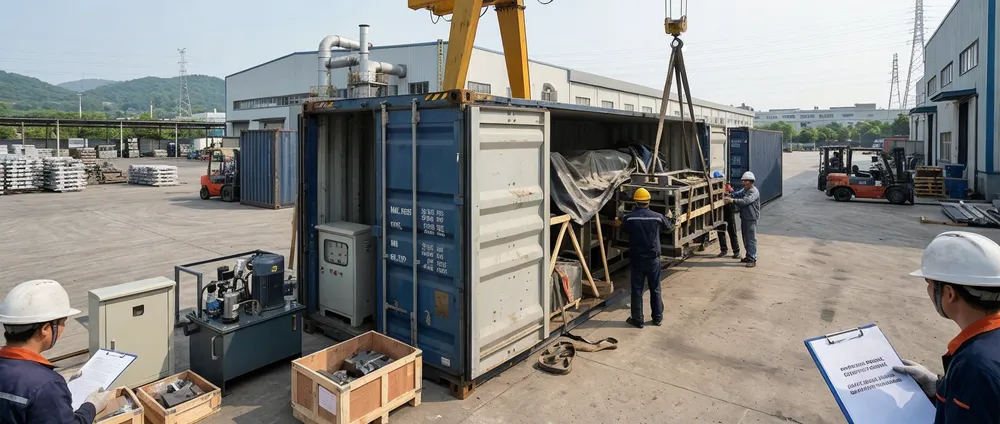
We manufacture foundry equipment — clay sand processing lines, lost foam casting systems, and resin sand production equipment. Since 2010, we've built complete production lines for foundries in North America, Europe, the Middle East, and Southeast Asia.
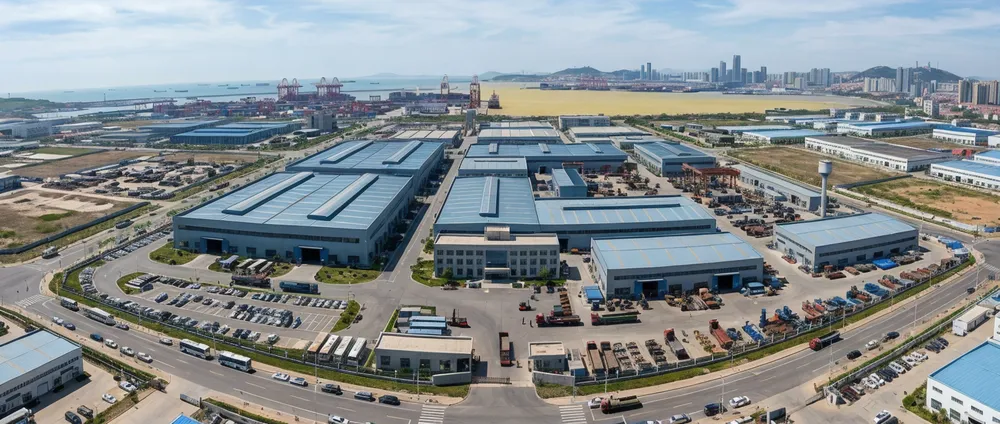
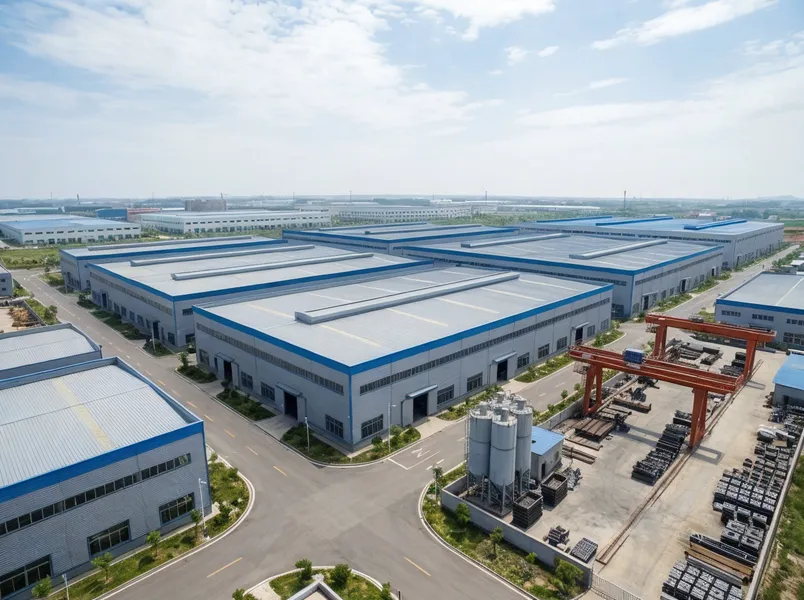
Our facility in Qingdao runs 8 production lines across 15,000 square meters, producing 500,000 units annually. We work directly with overseas buyers who need factory pricing, custom configurations, and reliable delivery schedules.
Molding, reclamation, and washing systems — complete clay sand production lines.
Vacuum systems, coating equipment, and pattern handling for lost foam production lines.
Mixing, coating, and reclamation plants — modular systems that fit standard container dimensions.
We started in 2010 building individual molding machines for domestic foundries. Export orders pushed us toward complete production line systems — buyers needed integrated solutions, not standalone equipment. By 2015, we'd shifted to automated lines because batch consistency became critical for international quality standards.
The transition to full automation happened when a European buyer needed 200 molds per hour with ±0.5mm tolerance across a 12-hour shift. Manual systems couldn't hold that spec. We built our first PLC-controlled clay sand line that year, and it's still running in their facility.
That project taught us what export buyers actually need: repeatable output, remote diagnostics, and spare parts availability.
Started building individual molding machines for domestic foundries.
Shifted to integrated production line systems as international orders demanded complete solutions over standalone equipment.
Built first PLC-controlled clay sand line — 200 molds/hour, ±0.5mm tolerance, 12-hour shifts. That line is still running at the original European customer's facility.
15,000 m² facility, 8 production lines, 500,000 units annually — serving foundries across North America, Europe, the Middle East, and Southeast Asia.
Our 15,000-square-meter facility in Pingdu Zone runs 8 dedicated production lines with 200 employees. Annual capacity sits at 500,000 units across all equipment categories. The factory layout separates heavy fabrication (welding, machining) from precision assembly (hydraulic systems, electrical controls) to prevent contamination and maintain tolerance control.
CNC machining centers handle all precision components — mold plates, guide rails, hydraulic cylinder bodies. We hold ±0.02mm on critical dimensions because sand molding equipment operates under 150-bar hydraulic pressure and any misalignment causes seal failure.
Robotic welding stations run the structural frames for clay sand mixers and lost foam vacuum chambers. Automated welding gives us consistent penetration depth and eliminates the porosity issues that show up in manual welds after 6 months of vibration stress.
Hydraulic assembly stations build the power units for molding presses and sand compactors. Each unit goes through pressure testing at 1.5x rated capacity before installation.
Lesson learned (2012): A batch of cylinder seals failed at a customer site. Now every hydraulic component gets bench-tested under load before it leaves the assembly area.
The electrical control workshop integrates PLC systems, HMI touchscreens, and sensor networks. Control systems use Siemens or Mitsubishi PLCs (buyer's choice) with English/Spanish/Arabic interface options.
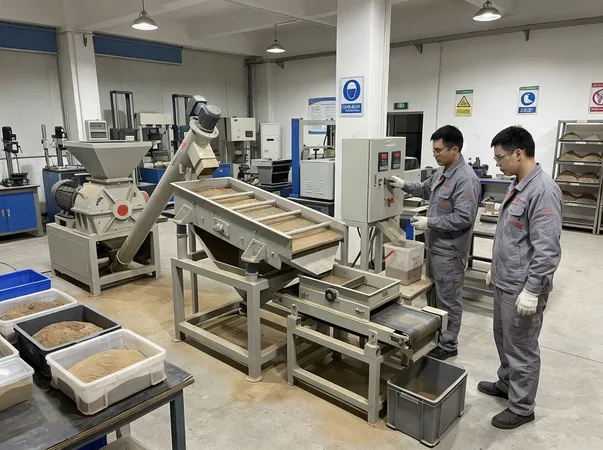
We maintain an in-house sand reclamation testing lab where we run sample batches through crushing, screening, and magnetic separation to verify equipment performance before shipment.
If you're buying a reclamation line rated for 95% sand recovery, we'll show you the test data from your specific unit.
We hold ISO 9001:2015, CE, and SGS certifications. ISO 9001 covers our quality management system from incoming inspection through final commissioning. CE certification applies to all equipment exported to European markets — we maintain technical files with risk assessments, EMC testing reports, and machinery directive compliance documentation. SGS conducts annual factory audits and pre-shipment inspections for buyers who require third-party verification.
Full quality management system coverage from incoming inspection through final commissioning.
All equipment exported to European markets. Technical files include risk assessments, EMC testing reports, and machinery directive compliance documentation.
Annual factory audits and pre-shipment inspections for buyers who require third-party verification.
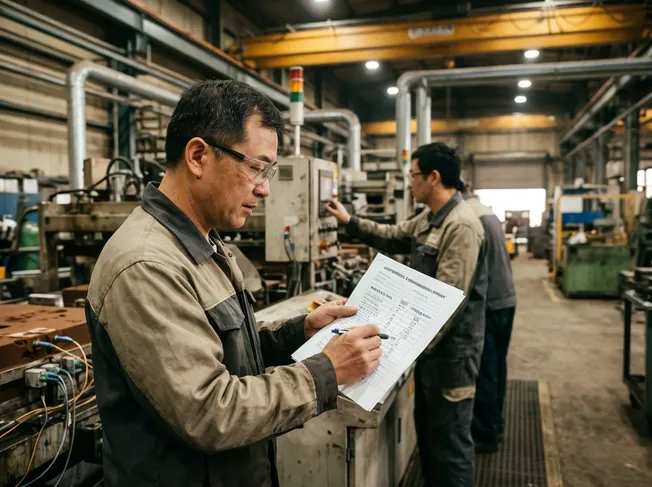
Checks raw materials — steel plate thickness, hydraulic component pressure ratings, electrical parts to specification. Any batch that falls outside tolerance is rejected.
Happens at each production stage: dimensional checks after machining, weld integrity testing with dye penetrant, hydraulic pressure testing at assembly.
Full system commissioning — we run each production line through a complete cycle, load-test all hydraulic functions, and verify control system operation before crating.
Every machine ships with a commissioning report that documents the test results from your specific unit. If your clay sand molding line is rated for 80 molds per hour, the report shows the actual cycle time we measured during factory testing. This isn't a spec sheet — it's the performance data from the equipment you're receiving.
Our facility operates under ISO 14001 environmental management practices. Responsible manufacturing isn't optional — it's built into our daily operations from material sourcing through waste disposal.
Scrap steel from fabrication goes to certified recyclers — approximately 40 tons monthly from offcuts and rejected components.
Machining operations use water-based cutting fluids instead of petroleum-based oils, reducing VOC emissions and simplifying waste disposal.
Waste hydraulic oil gets collected in sealed drums and picked up quarterly by licensed disposal contractors.
Enforced for all equipment maintenance operations across the facility.
Required in all fabrication zones: welding helmets, cut-resistant gloves, and steel-toe boots.
All production staff complete annual safety training. We haven't had a lost-time injury since 2019.
Zero Lost-Time Injuries Since 2019
Our safety record reflects a workforce that takes compliance seriously — from lockout/tagout discipline on the floor to the management systems that support it.
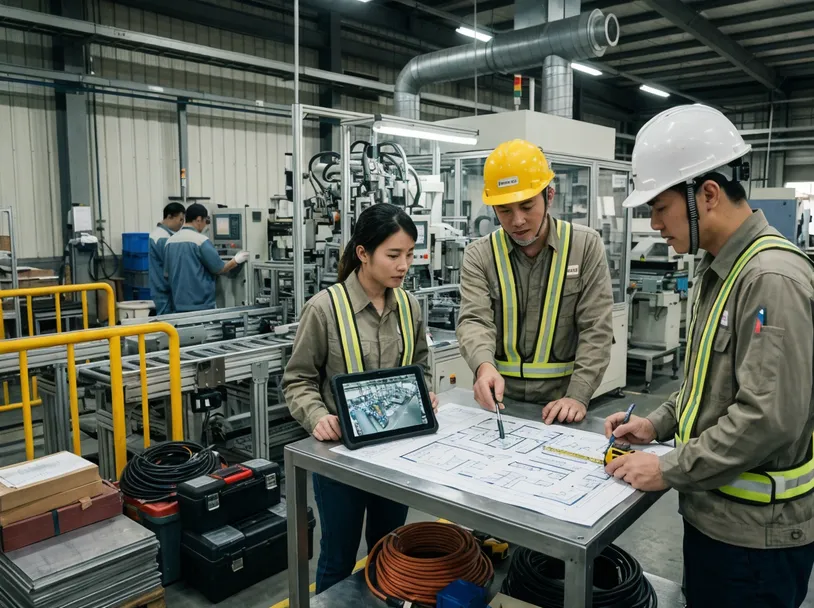
Our in-house engineering team (18 engineers, about 10% of total workforce) handles production line layout optimization, custom capacity configurations, and integration with existing foundry systems. If you're adding a resin sand line to a facility that already runs clay sand molding, our engineers will design the material flow, calculate floor loading requirements, and program the control system to interface with your current equipment.
Our engineering work focuses on adapting standard production lines to your space constraints and process requirements — not theoretical research. Every project starts from your actual facility dimensions, existing equipment, and production targets.
Configured for a 6-meter ceiling height where the standard design assumes 8 meters. Full production capability in a facility with significant vertical constraints.
Modified to handle EPS densities from 18 to 28 kg/m³ instead of the standard 20–24 kg/m³ range — a 67% wider operating window for diverse casting applications.
Control system programming covers specific casting processes. If you're running ductile iron with 3–5 minute shakeout times, we'll adjust the conveyor speeds and cooling zone lengths accordingly. These aren't off-the-shelf parameters — they're calculated based on your alloy composition and production rate.
Our engineering leadership brings deep, specialized foundry automation experience — not generalists reassigned from other industries. Each leader's background directly shapes the reliability and serviceability of your equipment.
Started with manual molding machines in the late 1990s and moved into fully automated lines around 2008. He's the one who designed our modular frame system that lets us ship a 12-meter molding line in three 40HQ containers.
Modular frame system — 12m molding line ships in 3× 40HQ containers
Came from hydraulic systems testing at a construction equipment manufacturer — 18 years of pressure testing experience means he catches seal problems and cylinder misalignment before assembly.
Pre-assembly defect detection for seals & cylinder alignment
16 years programming PLCs for casting equipment. Wrote the diagnostic routines that let your maintenance team troubleshoot sensor failures without reading ladder logic.
Plain-language diagnostics — no ladder logic expertise needed
Combined 56+ years of specialized experience across mechanical design, quality assurance, and electrical controls — all focused specifically on foundry automation equipment, not transferred from unrelated industries.
We ship to North America, Europe, the Middle East, and Southeast Asia. Export execution runs through modular design, knock-down packaging, and multilingual documentation — built to get heavy equipment to your facility without surprises.
Equipment breaks down into container-friendly sections. Hydraulic units and control cabinets ship separately from structural frames, enabling efficient packing and safer transit.
Hydraulic units and control cabinets ship separately from structural frames — reducing damage risk and simplifying customs handling at destination ports.
Operation manuals in English, Spanish, Arabic, or Russian — your operators work from documentation they can actually read, not machine-translated guesswork.
Remote commissioning support happens via video call — your installation team follows our engineer's instructions to connect hydraulic lines, wire control panels, and run initial test cycles. We've commissioned equipment in 14 countries this way, and it works as long as your team can read hydraulic schematics and use a multimeter.
Spare parts kits ship with every order, covering the consumables you'll need for the first year: hydraulic seals, proximity sensors, solenoid valves, and PLC I/O modules.
Container optimization matters when you're shipping a 15-ton molding line. Our engineers design equipment frames to fit 40HQ dimensions:
A complete clay sand processing line typically ships in 2–3 containers depending on capacity — that's the landed cost difference between viable and uneconomical for most buyers.
We've been building molding lines, casting systems, and sand processing equipment since 2010, with installations across four continents.
8 production lines producing 500,000 units annually means your order doesn't wait for capacity to free up.
18 engineers handle custom layout design, capacity configurations, and control system programming for your specific facility requirements.
Three-stage QC from incoming materials through final commissioning, with third-party verification available.
We adapt standard production lines to your space constraints, process requirements, and existing equipment interfaces.
Modular design for container optimization, knock-down packaging, multilingual documentation, remote commissioning support, and first-year spare parts kits.
Address
Tianzhuang Industrial Park, Pingdu Zone, Qingdao City, China
Company Name
Qingdao Tianzhuang Casting Machine Industry and Trade Co., Ltd.
Send us your production requirements — including casting type, output rate, and available floor space — and we'll provide equipment recommendations with factory pricing.
Get Factory Quote