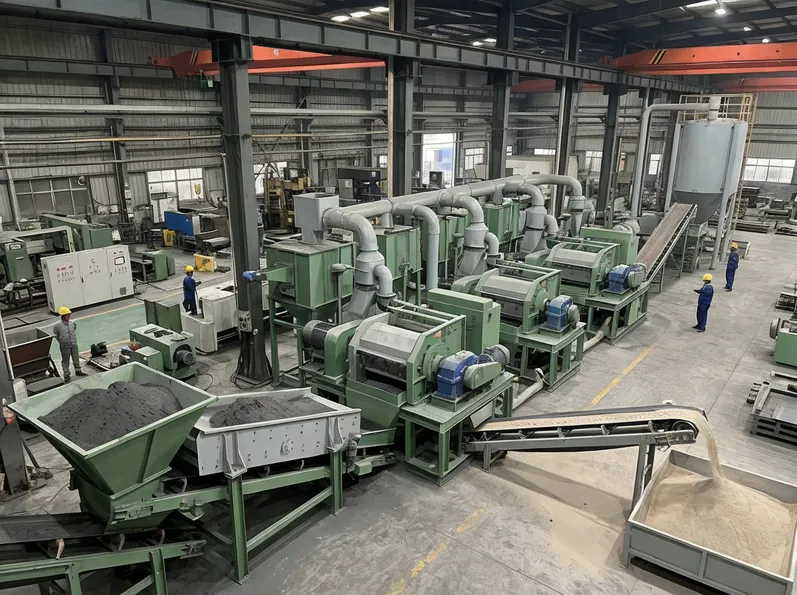
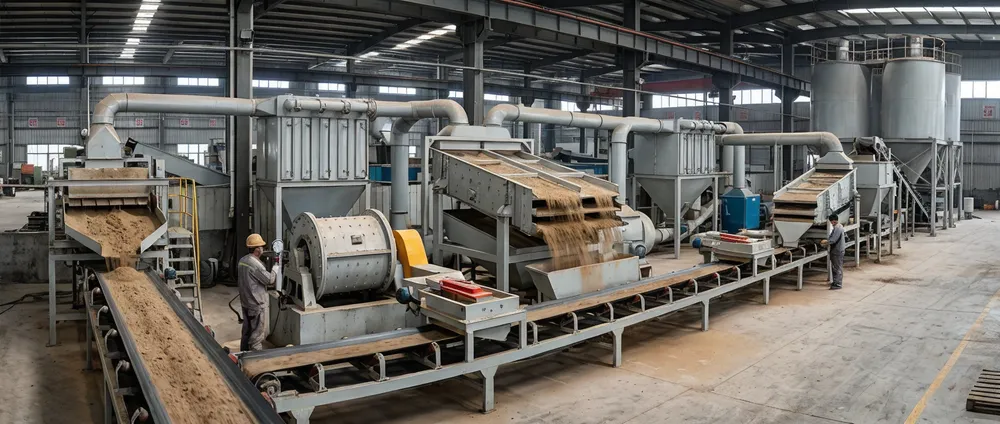
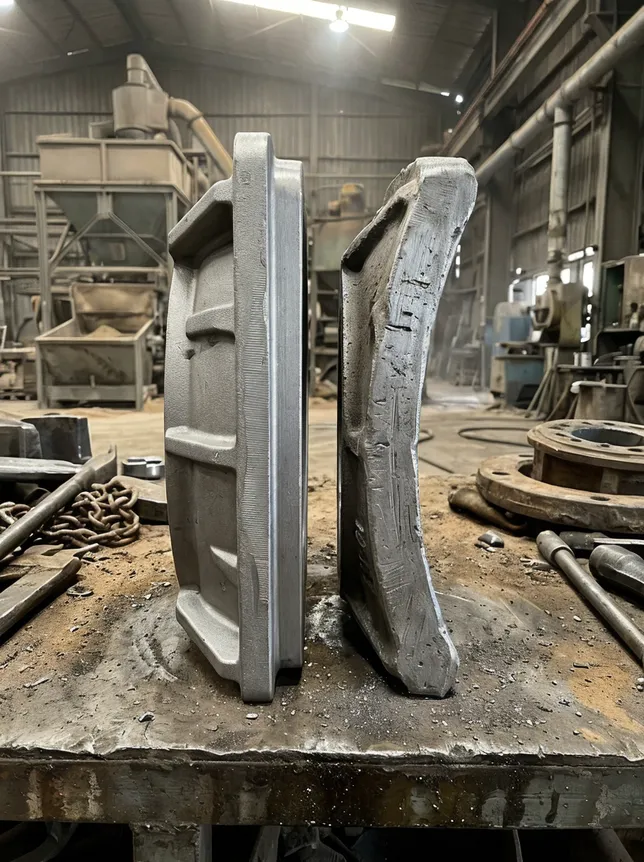
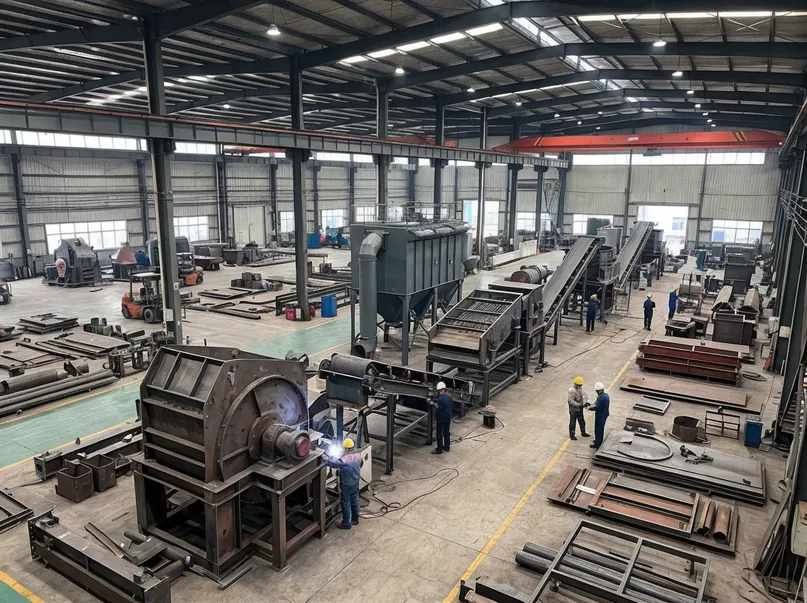
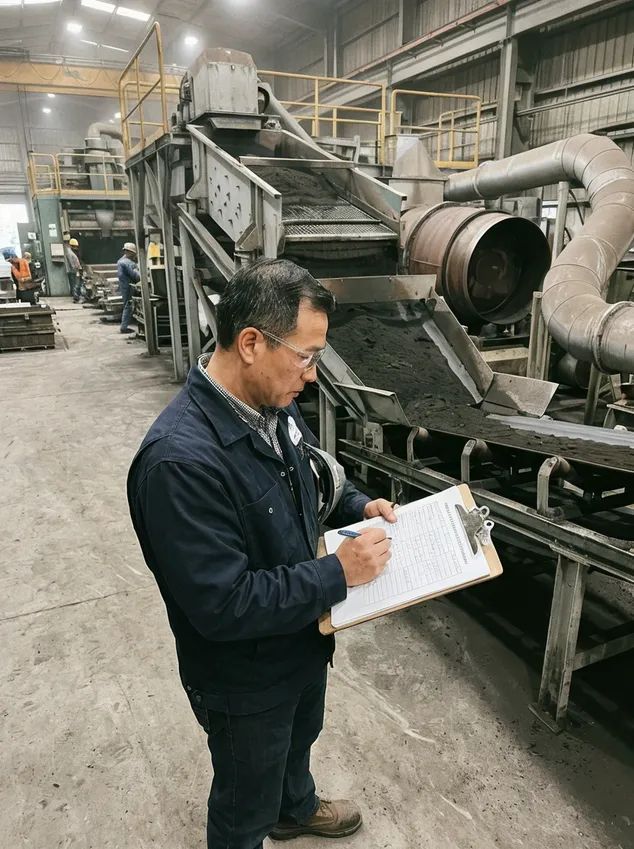
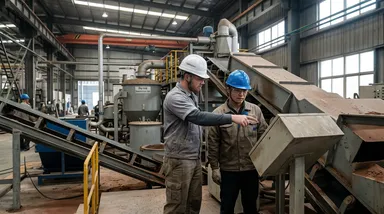
Mechanical attrition process strips binders from used sand and returns it to production-ready condition — reducing fresh sand costs and waste disposal fees simultaneously.
A clay sand reclamation line isn't optional equipment when you're processing 30+ tons of sand daily — it's the difference between buying 15 tons of fresh sand per month versus 3 tons. The system takes used sand from your shakeout station, strips off spent clay binders through mechanical attrition, removes contamination, and returns 80–92% of it to production-ready condition. The remaining 8–20% exits as waste fines (clay particles too degraded to reuse) and metal contamination.
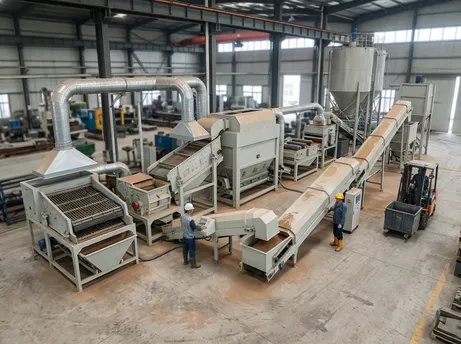
For job shops running 50–100 molds per hour. Compact footprint, standard container shipping.
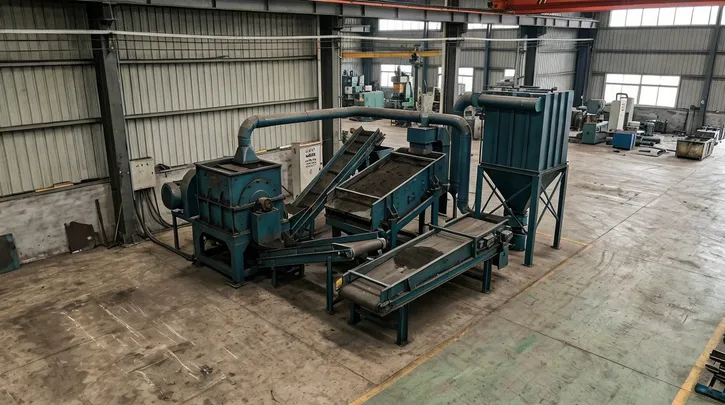
For mid-volume foundries at 100–200 molds per hour. Balanced throughput and investment.
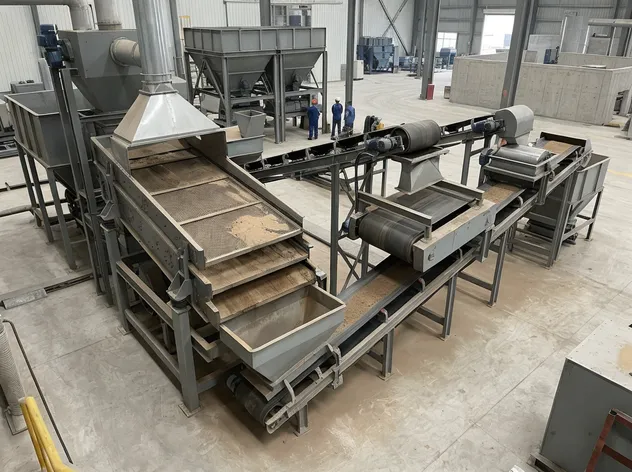
For continuous production lines above 200 molds per hour. Maximum reclamation throughput.
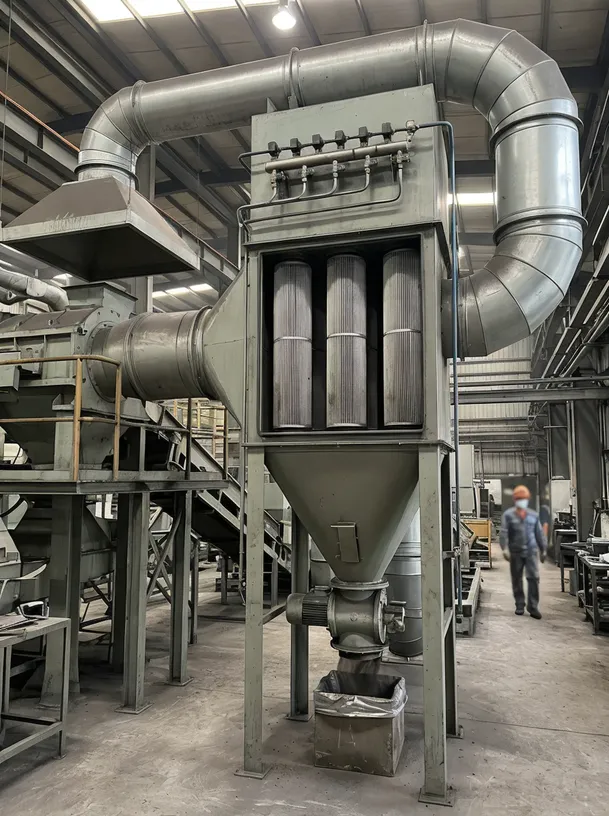
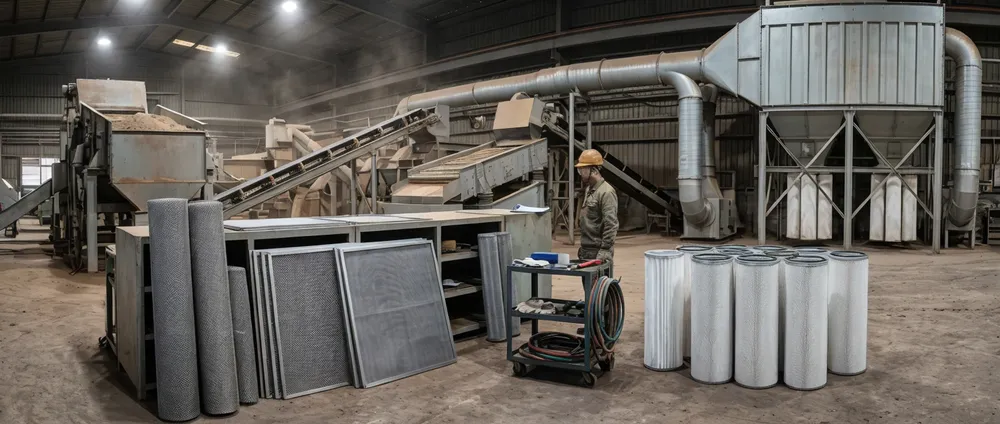
Each system includes an attrition mill (strips binders via mechanical friction), vibrating screens (separate by grain size), magnetic separator (removes metal splash), and dust collection (captures airborne particles). The components ship as modular units that fit standard 20-foot or 40-foot containers, then bolt together on your factory floor.
Reclamation rate — the percentage of input sand that returns to usable condition — determines your monthly sand purchasing budget. At 75% reclamation, a foundry processing 50 tons per day buys roughly 12.5 tons of fresh sand weekly. At 85% reclamation, that drops to 7.5 tons weekly. Over a year, the difference is 260 tons of sand cost plus the disposal fees you're not paying for the extra waste. Most buyers see payback in 18–36 months depending on local sand prices and disposal costs.
| Metric | 75% Reclamation | 85% Reclamation |
|---|---|---|
| Fresh sand purchased / week | ~12.5 tons | ~7.5 tons |
| Annual difference | 260 tons saved + reduced disposal fees | |
| Typical payback period | 18–36 months | |
The system integrates into your existing sand loop between shakeout and remixing. Used sand enters the reclamation line, exits as cleaned sand (ready for washing or direct remixing), and returns to your molding station.
Shakeout Station
Used sand enters reclamation
Reclamation Line
Attrition, screening, separation, dust collection
Cleaned Sand Output
Ready for washing or direct remixing
Molding Station
Reclaimed sand returns to production
Capacity Matching Is Critical
If your molding line produces 150 molds per hour but reclamation only processes 120 molds' worth of sand per hour, you'll build up a backlog of used sand that eventually forces you to slow down molding or dump sand as waste. We size reclamation capacity at 110–120% of molding output to maintain buffer capacity during peak production.
The purchase decision for a clay sand reclamation line comes down to one calculation: how much are you spending on fresh sand and waste disposal each month, and how fast does the equipment pay for itself through those savings?
Here's the math for a mid-volume foundry processing 50 tons of sand per day (roughly 1,250 tons per month at 25 working days). Without reclamation, you're buying fresh sand to replace what's lost in every casting cycle — call it a 20–30% loss rate depending on your alloy type and sand handling practices. That's 250–375 tons of fresh sand per month.
At $40–60 per ton delivered (typical range for bentonite-bonded molding sand in export markets), you're spending $10,000–22,500 monthly on sand purchases alone. Add waste disposal at $20–40 per ton, and you're paying another $5,000–15,000 to haul away the used sand.
Now add a reclamation system running at 85% recovery rate. Your fresh sand purchasing drops to 187.5 tons per month (15% of 1,250 tons), costing $7,500–11,250. Waste disposal drops to the same 187.5 tons, costing $3,750–7,500. Total monthly operating cost: $11,250–18,750.
Compare that to the no-reclamation scenario ($15,000–37,500 monthly), and you're saving $3,750–18,750 per month depending on your local sand and disposal costs.
A mid-volume reclamation system (8–12 tons/hour capacity) typically costs $80,000–120,000 installed. At the conservative end of the savings range ($3,750/month), payback takes 21–32 months. At the higher end ($18,750/month), payback happens in 4–6 months. Most buyers land somewhere in the middle — 12–18 month payback periods are common for foundries in regions with moderate sand costs and strict waste disposal regulations.
Reclamation makes economic sense when your monthly fresh sand purchasing exceeds 150–200 tons. Below that volume, the equipment cost takes too long to recover. Above that volume, every month you delay installation is money left on the table.
Buyers in high-sand-cost regions (Middle East, parts of Europe) hit payback in under 12 months because their fresh sand costs run $80–100 per ton delivered.
Three variables move the payback calculation significantly — covered in the next section of this cost analysis.
If you're paying $30/ton, reclamation is a slower payback than if you're paying $70/ton. Coastal foundries often pay premium prices because local sand sources are depleted and material ships long distances.
Foundries in regions with strict environmental rules pay $40–60 per ton for waste sand disposal — it's classified as industrial waste in most jurisdictions. Foundries in less-regulated areas might pay $10–20 per ton or even dump on-site if they have land. The disposal cost delta directly affects ROI.
If you're already running a basic reclamation process (even manual screening and reuse), you're not starting from zero. The incremental improvement from 60% manual reclamation to 85% automated reclamation is smaller than the jump from 0% to 85%. Calculate the delta, not the absolute savings.
Manual or low-efficiency reclamation produces sand with variable clay content and contamination levels, which shows up as inconsistent mold strength and higher defect rates. Automated reclamation with proper screening and magnetic separation delivers consistent sand quality batch after batch, which reduces your scrap rate.
We can't give you a universal number for that benefit — it depends on your current defect rate and the value of your castings — but several buyers have told us the quality improvement alone justified the investment before the sand cost savings even factored in.
Share your sand costs, disposal fees, and current reclamation rate — we'll model the payback for your specific operation.
Clay sand reclamation systems scale across three capacity ranges, and the differences aren't just throughput — they're about process control, automation level, and how tightly you can match reclamation output to molding demand.
This setup handles foundries running 50–100 molds per hour in 1–2 shift operations. The system includes a single attrition mill processing 3–4 tons of sand per hour, a two-deck vibrating screen for grain size separation, magnetic separator, and bag-type dust collector.
This configuration works when your molding output is intermittent — job shops, prototype foundries, or facilities with frequent product changeovers. The single-loop design means reclamation runs in batches: you accumulate used sand from several hours of molding, run it through reclamation, then feed the cleaned sand back to remixing.
There's no continuous flow, so you need buffer storage for both used sand (before reclamation) and reclaimed sand (before remixing). Plan for 5–8 tons of storage capacity on each side.
Reclamation rate in this configuration typically hits 80–82% because the single-pass attrition process doesn't catch every grain. Sand that's heavily contaminated or thermally degraded (from high-temperature alloys) exits as waste.
This is the most common configuration for export buyers — it matches foundries running 100–200 molds per hour in 2–3 shift operations. The system upgrades to a larger attrition mill (8–10 tons/hour capacity), three-deck vibrating screen (finer separation), dual magnetic separators (one before screening, one after), and pulse-jet dust collector with automatic filter cleaning. Footprint expands to 12m × 8m, power consumption is 70–85 kW.
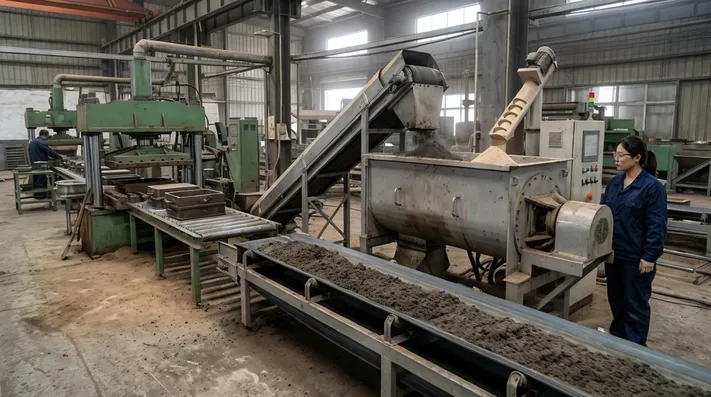
The key difference: continuous operation. Used sand feeds into the system at a steady rate, and reclaimed sand exits at the same rate, so you can run molding and reclamation simultaneously without batch delays. This requires automated sand transport — typically a belt conveyor from shakeout to reclamation input, and another conveyor from reclamation output to the remixing station. TZFoundry includes the conveyors in the system package because manual sand handling at this throughput creates bottlenecks.
Mid-volume system layout: 12m × 8m footprint, 70–85 kW
Three-deck screening separates reusable grains from fines more effectively, and dual magnetic separation catches metal contamination that single-pass systems miss.
Critical at this capacity — bag-type collectors can't handle the dust volume, and you'll spend more time changing clogged filters than running production. Pulse-jet units feature automatic filter cleaning for uninterrupted operation.
Optional at this capacity level (adds $8,000–12,000 to the base price). Monitors sand flow rates, attrition mill motor load, screen vibration frequency, and dust collector pressure drop — flags operator alerts when parameters drift out of range.
This isn't full automation — operators still manage the system — but it prevents the common failure modes: overloading the attrition mill, running with a blinded screen, or operating with a saturated dust filter. Each of these scenarios damages equipment or degrades output sand quality, and each is avoidable with real-time parameter monitoring.
For foundries running 200+ molds per hour in continuous 24/7 operations
At this scale, reclamation becomes a fully closed-loop system. Sand never leaves the production floor — it cycles from molding to shakeout to reclamation to washing to remixing to molding in a continuous flow.
Adds water during reclamation to prevent dust generation throughout the process
Sand exits the attrition mill 15–20°C hotter than it entered due to friction heat — continuously tracked
Inline sensors perform continuous grain size analysis to maintain output quality
The four-deck screen and triple magnetic separation catch nearly everything reusable. The 8–10% waste consists of:
Pushing reclamation rates above 92% requires thermal regeneration — a different technology that uses heat to burn off binders. If your process demands higher recovery, we can discuss thermal regeneration options separately.
This configuration requires two operators per shift, with responsibilities split between:
Watches attrition mill performance, screen deck separation, and magnetic separator output
Manages the integrated sand loop — washing, remixing, and moisture control
PLC control is mandatory at this scale — manual operation isn't feasible when processing 300+ tons of sand per day.
Size your reclamation system to process 110–120% of your molding line's sand consumption. If your molding line uses 10 tons of sand per hour, spec an 11–12 ton/hour reclamation system. The buffer capacity handles production surges, maintenance downtime, and the reality that reclamation efficiency drops slightly when processing heavily contaminated sand.
Under-sizing by even 10% creates a bottleneck that forces you to either slow down molding or dump sand as waste — both of which defeat the purpose of installing reclamation in the first place.
110–120%
Buffer over molding capacity
10%
Under-sizing threshold that creates bottlenecks
Closed-Loop
Sand management when integrated
Integrated Sand Management
Reclamation integrates with our clay sand processing line systems to create a closed-loop sand management system that minimizes fresh sand purchasing and waste disposal costs.
Side-by-side engineering parameters across three standard capacity tiers — small-volume, mid-volume, and high-volume — so you can match the right clay sand reclamation line to your molding output and facility constraints.
| Parameter | Tier 1 Small-Volume (3–5 t/h) | Tier 2 Mid-Volume (8–12 t/h) | Tier 3 High-Volume (15–20+ t/h) |
|---|---|---|---|
| Processing capacity | 3–5 tons/hour | 8–12 tons/hour | 15–20+ tons/hour |
| Reclamation rate | 80–82% | 85–88% | 90–92% |
| Power consumption | 35–45 kW | 70–85 kW | 120–150 kW |
| Footprint (L × W) | 8 m × 6 m | 12 m × 8 m | 15 m × 10 m |
| Attrition mill type | Single-pass, 3–4 t/h | Continuous, 8–10 t/h | Heavy-duty, 15–20 t/h |
| Screening system | 2-deck vibrating screen | 3-deck vibrating screen | 4-deck vibrating screen |
| Magnetic separation | Single-pass | Dual-pass | Triple-pass |
| Dust collection | Bag-type, manual cleaning | Pulse-jet, auto cleaning | Modular, redundant filters |
| Output grain size | 40–70 mesh (retained) | 40–70 mesh (retained) | 40–70 mesh (retained) |
| Residual clay content | <2% (after reclamation) | <2% (after reclamation) | <1.5% (after reclamation) |
| Dust collection airflow | 3,000–4,000 m³/h | 6,000–8,000 m³/h | 10,000–12,000 m³/h |
| Estimated weight | 4–5 tons | 8–10 tons | 15–18 tons |
All three tiers deliver 40–70 mesh retained output — the standard grain distribution for production-grade clay sand molding.
Recovery rates increase from 80–82% at small volume to 90–92% at high volume through multi-pass magnetic separation and advanced screening.
Airflow ranges from 3,000 m³/h (small) to 12,000 m³/h (high-volume), with dust collection upgrading from manual bag-type to modular redundant filters.
Specifications shown are industry-standard values for this equipment type. Actual specifications vary based on your sand type, contamination levels, and integration requirements. Contact us at sales@tzfoundry.com for detailed engineering data specific to your facility.
Used sand enters the reclamation line directly from your shakeout station — it's hot (often 80–120°C depending on your casting temperature and cooling time), contaminated with metal splash and burnt clay, and the grain surfaces are coated with spent binder that needs to be stripped off before the sand can be reused.
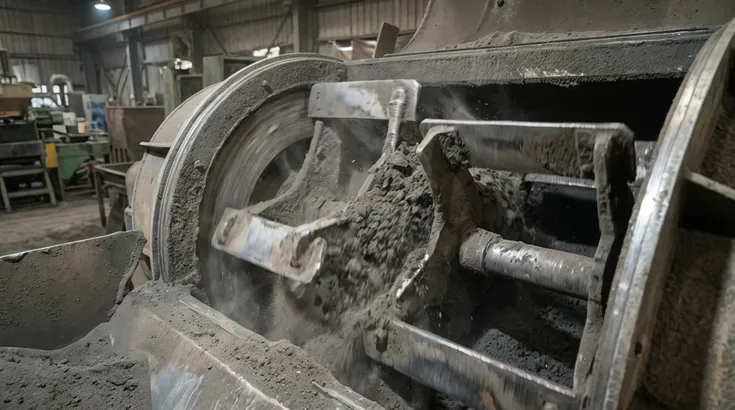
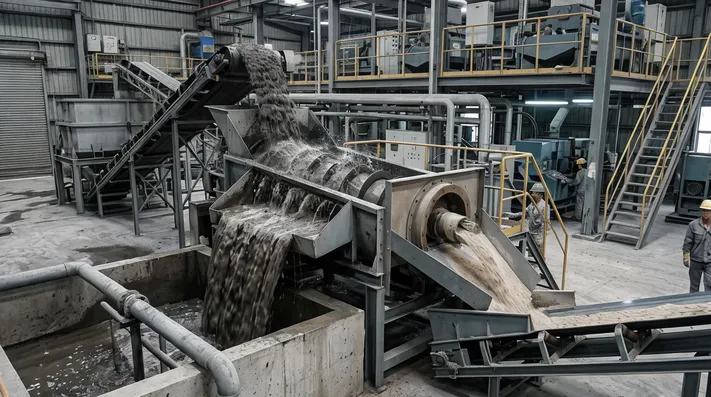
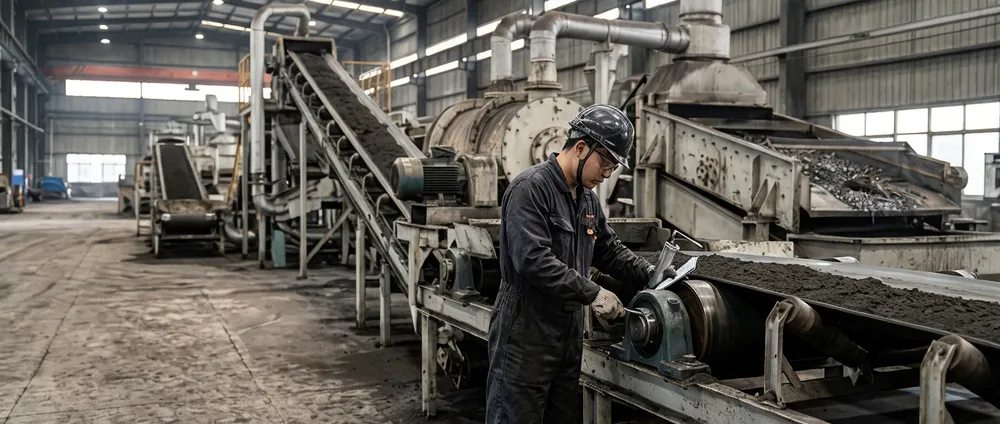
This is where the actual reclamation happens. The mill is a cylindrical chamber with rotating paddles or arms that create high-speed particle-on-particle collisions. Sand grains smash into each other at velocities high enough to fracture the clay coating and strip it from the grain surface, but not so high that the grains themselves shatter.
Higher speeds for heavily coated sand, lower speeds for lightly used sand
Batch mode in small-volume systems; continuous flow in mid- and high-volume configurations
The attrition process generates heat — friction between grains raises sand temperature by 15–20°C. If your input sand is already at 100°C from casting operations, it exits the mill at 115–120°C. This matters because clay binder performance degrades above 40°C, so you'll need a cooling stage before remixing.
Most buyers use a simple belt conveyor with ambient air cooling — 3–4 minutes of transit time drops sand temperature back to 30–35°C.
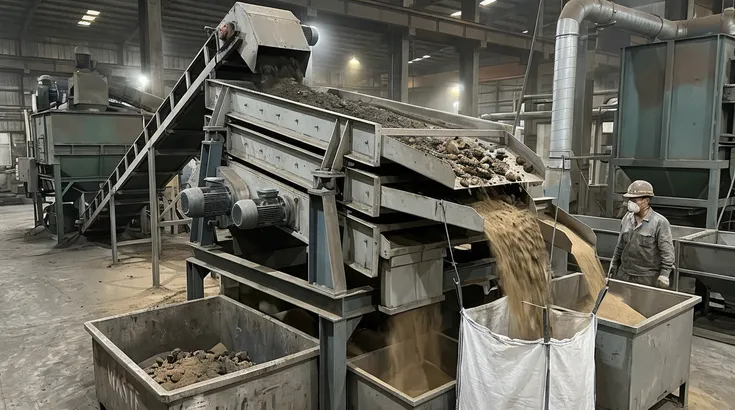
Sand exits the attrition mill as a mixture of cleaned grains (40–70 mesh, the reusable fraction), clay fines (under 200 mesh, too small to reuse), and oversized particles (lumps of burnt clay, agglomerated grains, occasional metal chunks). The vibrating screen separates these fractions by passing sand over multiple decks with progressively finer mesh sizes.
Catches oversized material (lumps, metal chunks) and routes it to waste.
Retains the coarse fraction of reusable sand.
Retains the fine fraction of reusable sand. Material passing through (under 70 mesh) is mostly clay fines — exits to waste.
A two-deck system combines the middle and bottom functions into one deck, which is why reclamation rates are slightly lower — you lose some borderline-reusable grains that get classified as fines.
Clay fines stick to the mesh and reduce effective screen area, which drops throughput and sends reusable sand to waste.
Pulse-jet cleaning system — blasts compressed air through the mesh every 30–60 seconds to dislodge stuck particles.
Manual screen cleaning required every 4–8 hours depending on sand contamination levels.
Ferrous Metal Removal
Even after screening, sand contains metal contamination from casting operations: metal splash (droplets that land on the mold surface during pouring), broken-off casting fins, and occasional chunks of scrap that made it into the sand system. Metal contamination as low as 0.5% by weight causes mold defects — the metal particles create hard spots that prevent proper compaction, leading to mold cracks and dimensional inaccuracies in the finished casting.
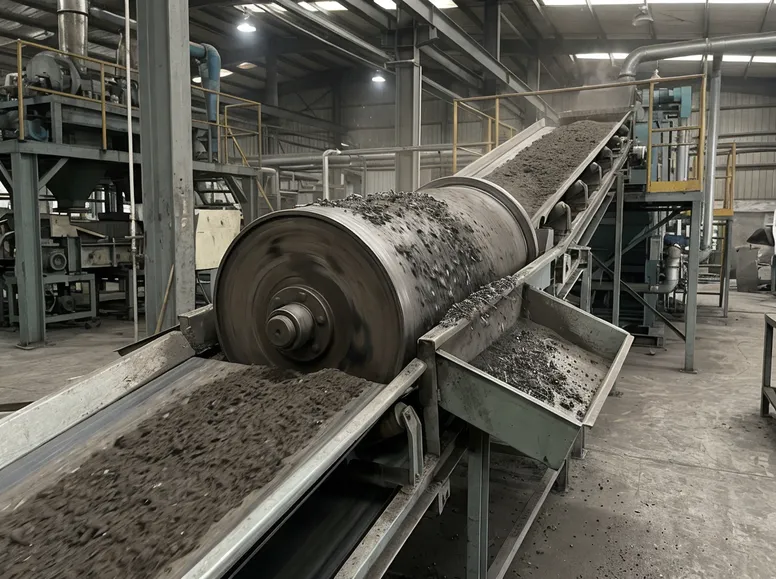
The magnetic separator is a rotating drum or belt with permanent magnets (or electromagnets in high-volume systems) that pulls ferrous metal particles out of the sand stream.
Separation Efficiency by Pass Configuration
Non-ferrous limitation: The remaining 1–2% is non-ferrous contamination (aluminum, bronze, brass from your casting operations) that magnetic separation can't remove. You'll need manual inspection or optical sorting if non-ferrous contamination is a problem in your process.
Air Quality & Particulate Control
Every stage of reclamation generates airborne dust: the attrition mill creates clay fines, the screens vibrate particles into the air, and sand transport conveyors produce dust at transfer points. Without dust collection, your facility's air quality degrades to unsafe levels within hours.
Regulatory threshold: Silica dust exposure limits are 0.05 mg/m³ in most jurisdictions — you'll exceed that in 30 minutes of uncontrolled reclamation operation.
The dust collector pulls air from enclosed hoods over each process stage, passes it through filter media (fabric bags or cartridge filters), and returns clean air to the facility. Collected dust accumulates in a hopper below the filters and gets discharged periodically (usually into the same waste stream as the screen fines).
Airflow Requirements by System Capacity
3,000–4,000
m³/h
Small-volume
6,000–8,000
m³/h
Mid-volume
10,000–12,000
m³/h
High-volume
Filter maintenance is the operational cost most buyers underestimate. The choice between bag-type and pulse-jet systems has a significant impact on your total cost of ownership.
Bag-Type Filters
Pulse-Jet Systems
Automatically cleans filters with compressed air. At mid- and high-volume throughput, pays for itself in saved filter replacement costs within 18–24 months.
Reclaimed sand exits the system with grain surfaces stripped of spent binder, metal contamination removed, and fines separated out. Residual clay content is typically 1.5–2% by weight (down from 6–8% before reclamation). The sand is now ready for either washing — to remove the residual clay and restore grain surface cleanliness — or direct remixing with fresh clay binder if your process tolerates the residual clay.
Most foundries route reclaimed sand to a washing system before remixing. The washing step removes residual clay fines and improves sand grain surface quality, which translates to better mold strength and permeability in production.
If your process tolerates the residual 1.5–2% clay content, reclaimed sand can bypass washing and go directly to remixing with fresh clay binder before returning to the molding station. This shortens the loop but may require tighter monitoring of sand properties over multiple reclamation cycles.
Residual Clay Reduction
From 6–8% before reclamation down to 1.5–2% after — a 70–75% reduction in residual clay content by weight.
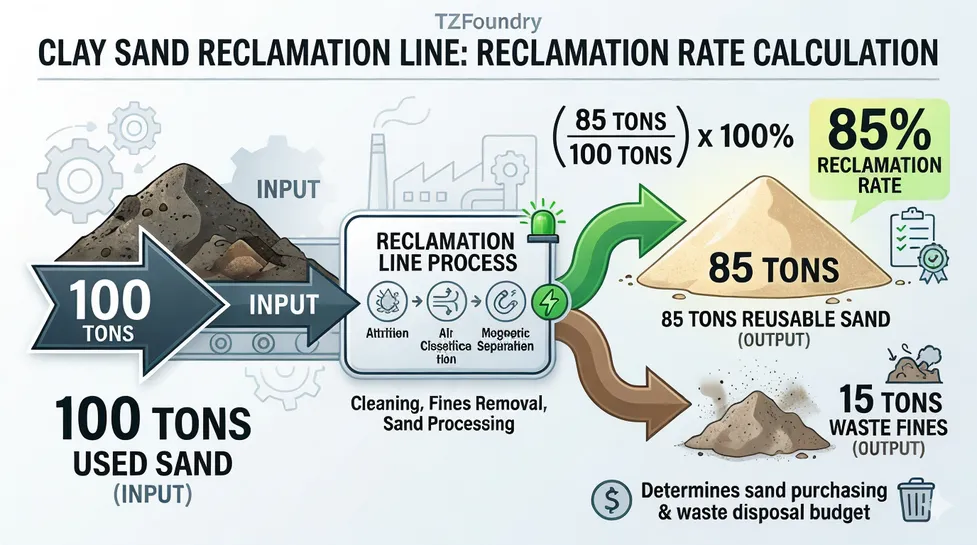
Reclamation rate is the percentage of input sand that exits the system in reusable condition. If you feed 100 tons of used sand into the reclamation line and get 85 tons of cleaned sand out (with 15 tons exiting as waste fines and contamination), your reclamation rate is 85%. This number determines your monthly sand purchasing budget and waste disposal costs, so understanding what affects it matters.
Reclamation Rate =
(Reusable Sand Out ÷ Total Sand In) × 100%
80–92% — typical range for clay sand reclamation lines
85–90% — achievable with lower-temperature alloys (aluminum, bronze)
75–80% — common for high-carbon alloy foundries (cast iron >3.5% C)
High-carbon alloys (cast iron above 3.5% carbon, some steel grades) generate more thermal degradation of sand during casting. The sand near the mold-metal interface reaches 400–600°C, which breaks down clay binders and fuses sand grains together into hard lumps.
Key issue: These lumps don't break apart in the attrition mill — they exit as oversized waste. Foundries casting high-carbon alloys typically see 75–80% reclamation rates instead of the 85–90% achievable with lower-temperature alloys like aluminum or bronze.
If used sand enters reclamation above 150°C (common when shakeout happens immediately after casting with minimal cooling time), thermal degradation continues during the reclamation process. Clay binders lose binding capacity above 200°C, and sand grains start to sinter (fuse together) above 300°C.
Recommended fix: Install a cooling conveyor between shakeout and reclamation to drop sand temperature to 80–100°C before processing.
Metal splash, core sand (if you're using resin-bonded cores in clay sand molds), and foreign debris — floor sweepings, packaging materials, anything that accidentally enters the sand system — all exit as waste.
Clean Operation
Good housekeeping practices keep contamination below 2–3% of sand weight.
Sloppy Operation
Can hit 8–10% contamination, which directly reduces reclamation rate.
The magnetic separator catches ferrous metal, but everything else — resin core sand, non-ferrous metal, organic debris — exits through the screens as waste.
The mill's rotating paddles or arms wear down over time — 6–12 months of continuous operation depending on sand abrasiveness. Worn paddles reduce impact velocity, which means incomplete binder removal: sand grains exit with clay coating still attached, fail the screening stage, and get classified as waste.
Replacement Schedule
Mid-Volume Systems
Replace mill liners every 6–9 months
High-Volume Systems (Abrasive Sand)
Replace mill liners every 4–6 months
Verified through sieve analysis — the benchmark for production-ready reclaimed sand.
Reclaimed sand should match the grain size distribution of fresh molding sand. The following targets apply to production-ready output:
85–95%
Grains in 40–70 mesh range
(0.21–0.42 mm particle size)
< 5%
Oversized grains
(above 40 mesh)
< 10%
Fines
(below 70 mesh)
Take a 100-gram sample of reclaimed sand and pass it through a stack of sieves:
Weigh the retained fraction on each sieve and calculate the distribution.
Red Flag: More Than 15% Fines
If your reclaimed sand shows more than 15% fines, either your screening system isn't working properly or your input sand is too degraded to reclaim effectively. In either case, investigate before continuing production — running high-fines sand through your molding line will degrade casting surface finish and increase defect rates.
After reclamation, sand should contain less than 2% clay by weight — measured by washing a sample and weighing the clay fines that wash out. This is the clay coating that the attrition mill didn't fully remove.
Above 3% residual clay: Your attrition mill isn't running aggressively enough — increase rotor speed or residence time.
Below 1% residual clay: You're over-processing the sand (wasting energy and generating excessive fines) — dial back the mill intensity.
Reclaimed sand exits the system at 0.5–1.5% moisture (absorbed water from ambient humidity and any water injection used for dust suppression during reclamation).
Important: This is too dry for molding. Clay sand molding requires 3–5% moisture for proper compaction. You'll add water during the remixing stage when you blend reclaimed sand with fresh clay binder.
Most foundries test reclaimed sand quality once per shift (every 8 hours) or once per day in low-volume operations.
Pull a 500-gram sample from the reclamation output conveyor
Run sieve analysis for grain size distribution
Measure clay content via wet sieving (wash through a 200-mesh screen, weigh retained material)
Check moisture content with a moisture analyzer or oven-dry method
If any parameter falls outside your target range, adjust the reclamation process before the off-spec sand reaches your molding station.
If your castings show defects — surface roughness, dimensional inaccuracy, mold cracking — trace back to sand quality. Often the root cause is inconsistent reclaimed sand: either the reclamation rate is dropping (worn mill liners, blinded screens) or contamination is creeping up (poor housekeeping, inadequate magnetic separation).
Fix the reclamation process, and the casting defects disappear.
A reclamation line doesn't operate standalone — it's one component in your foundry's sand loop. Understanding the material flow and how reclamation connects to your existing equipment determines whether the system becomes a productivity asset or a bottleneck.
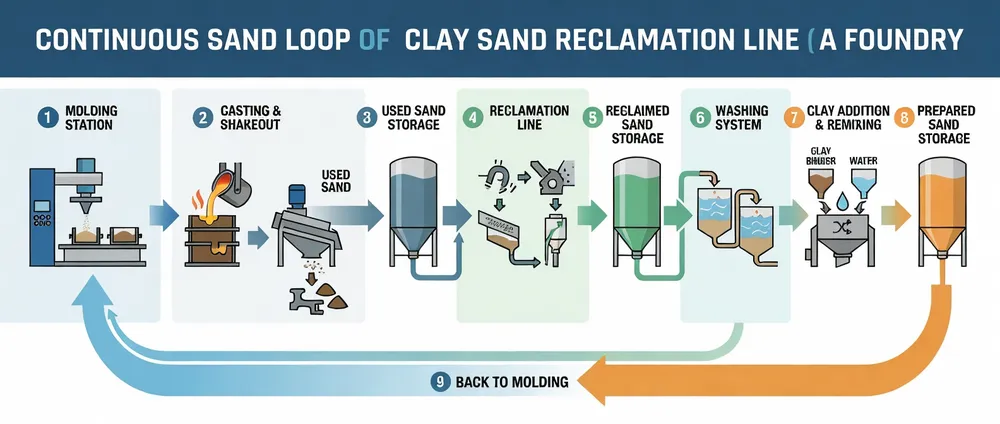
The complete sand loop runs continuously through these stages:
Sand enters the production cycle at the molding station.
Sand separates from finished castings during shakeout.
Buffer before reclamation absorbs production surges.
Cleaning and contamination removal restores sand quality.
Buffer before washing/remixing prevents line backup.
Removes residual clay fines from reclaimed sand.
Fresh clay binder added to reclaimed sand for reuse.
Final buffer before sand returns to molding station.
The loop repeats continuously throughout production.
The two buffer storage points — before reclamation and after reclamation — are critical for continuous operation.
If your molding line produces sand faster than reclamation can process it — even temporarily during a production surge — the pre-reclamation buffer absorbs the excess. Without adequate buffer capacity, excess used sand has nowhere to go, forcing you to slow production or dump sand as waste.
If reclamation produces cleaned sand faster than your remixing station can consume it, the post-reclamation buffer prevents the reclamation line from backing up and shutting down. This buffer ensures continuous throughput regardless of downstream processing speed.
Size each buffer for 2–4 hours of production volume. If you're processing 10 tons of sand per hour, plan for 20–40 tons of storage capacity on each side of the reclamation line.
Your reclamation system must process at least 110% of your molding line's sand consumption rate. Here's how to calculate it:
Measure sand consumption rate
Molding line output (molds/hour) × sand weight per mold (typically 20–50 kg depending on mold size) = sand consumption rate in kg/hour.
Convert to tons/hour
Divide kg/hour by 1,000 to get your base rate in tons/hour.
Apply buffer multiplier
Multiply by 1.1–1.2 for buffer capacity. This is your minimum reclamation system capacity.
150 molds/hour × 30 kg/mold = 4,500 kg/hour = 4.5 tons/hour sand consumption.
Multiply by 1.15 for buffer = 5.2 tons/hour minimum reclamation capacity.
You'd spec a 5–6 ton/hour system (small-volume configuration) or step up to an 8–10 ton/hour system (mid-volume) if you're planning production expansion within the next 2–3 years.
Under-sizing reclamation by even 10% creates compounding problems: used sand accumulates faster than you can reclaim it, your pre-reclamation buffer fills up, and eventually you're forced to either slow down molding (losing production capacity) or dump used sand as waste (defeating the purpose of reclamation). We've seen buyers try to save money by under-sizing reclamation, then spend more money later upgrading to a larger system — plus the lost revenue from production constraints in the interim.
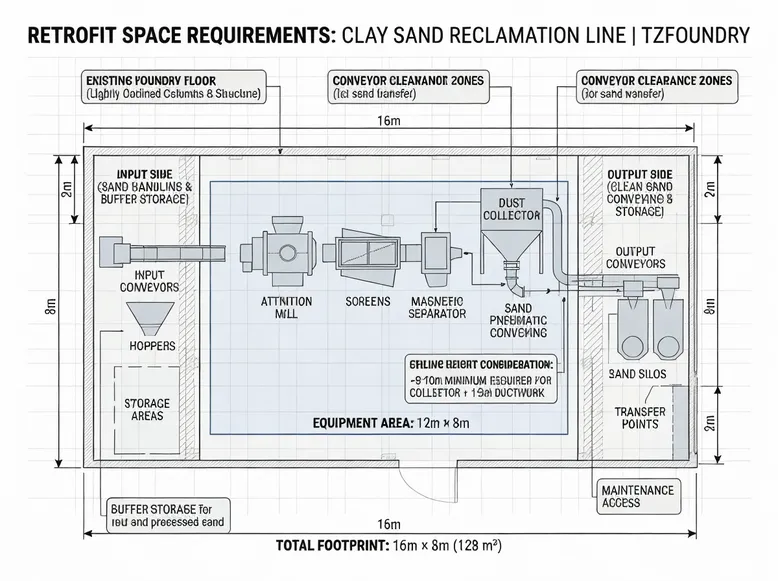
If you're adding reclamation to an existing foundry rather than designing a new facility with reclamation included from the start, floor space is usually the limiting factor. A mid-volume reclamation system needs 12m × 8m of floor space for the equipment itself, plus another 4–6m of clearance on the input and output sides for sand conveyors and buffer storage.
Total footprint: roughly 16m × 8m (128 m²). If you don't have that much contiguous floor space, you can split the system into two levels — attrition mill and screens on the main floor, dust collector and magnetic separator on a mezzanine — but that adds structural steel cost and complicates maintenance access.
Ceiling Height Consideration
Ceiling height matters for dust collection — the dust collector typically stands 4–5 meters tall, and you need another 1–2 meters of clearance above it for ductwork connections. If your facility has low ceilings (under 6 meters), you'll need a horizontal dust collector configuration, which increases floor space requirements by 20–30%.
Most foundries already have some form of sand transport between shakeout and remixing. The reclamation line needs to tap into this flow — here's how we handle each transport type.
We provide a diverter gate that routes used sand from the main conveyor into the reclamation input hopper. Simple integration with your existing belt conveyor infrastructure.
We add a discharge chute at the appropriate height to redirect sand flow from your bucket elevator system into the reclamation input.
Common in small job shops — we design the reclamation input hopper for forklift or front-loader dumping, eliminating the need for conveyor infrastructure.
Output Side Integration
Output side is simpler — reclaimed sand exits via a discharge conveyor that feeds into your existing washing or remixing system. The discharge conveyor runs at a controlled rate matching your downstream capacity to prevent overloading the washing system.
Reclamation systems draw 35–150 kW depending on capacity (see the specifications table earlier). Most foundries install a dedicated circuit breaker and transformer for the reclamation line rather than tapping into existing foundry power — it simplifies troubleshooting and prevents voltage sags from affecting other equipment.
You'll need 380–415V three-phase power (standard industrial supply in most export markets). If your facility runs 440V or 480V (common in North America), we can supply motors wound for those voltages at no additional cost — specify your voltage during the quotation phase.
The reclamation system's PLC (if you're specifying the mid- or high-volume configuration with PLC control) can communicate with your existing foundry control system via Modbus TCP, Profibus, or Ethernet/IP protocols.
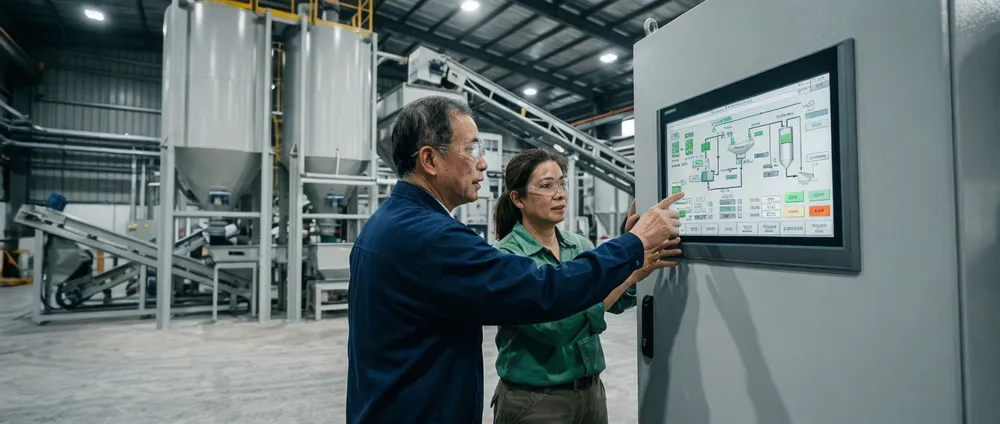
This allows your central control room to monitor reclamation status, receive alarm notifications, and log production data. If you're not running a centralized control system, the reclamation PLC operates standalone with a local HMI touchscreen for operator interface.
If your facility already has a central dust collection system serving multiple process areas, you can tie the reclamation line's dust pickup points into the existing ductwork — saves the cost of a dedicated dust collector for reclamation.
This works if your central system has spare capacity — add up the reclamation line's airflow requirement (3,000–12,000 m³/h depending on system size) and verify your central collector can handle the additional load without dropping below the minimum transport velocity in the ductwork (typically 18–20 m/s for sand dust).
Dust Collection Capacity Warning
If your central dust collection system is already running near capacity, install a dedicated dust collector for reclamation. Trying to force too much airflow through an undersized central system means neither system works properly.
Need an Integrated System Instead of a Retrofit?
See our complete clay sand processing line systems for integrated molding + reclamation configurations designed as unified systems rather than retrofitted components.
The purchase price is one number. The cost to run the system for the next 10 years is another number — often larger. Here's what you're actually paying for after the equipment arrives.
The single largest ongoing cost line for most installations
A mid-volume reclamation system (8–12 tons/hour) consumes 70–85 kW during operation. The largest energy consumers break down as follows:
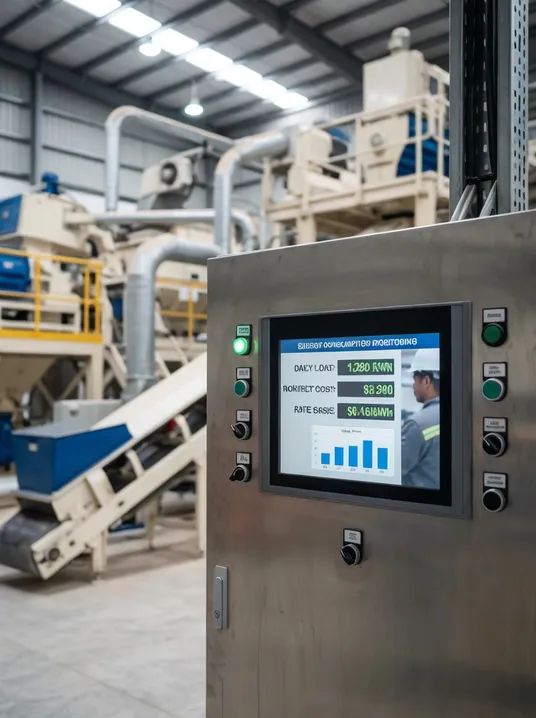
At 80 kW average load running 16 hours per day (two shifts), that's 1,280 kWh daily. At $0.10 per kWh (typical industrial rate in many export markets), you're spending $128 per day or $3,200 per month in electricity cost (assuming 25 working days).
Mid-Volume Benchmark
| System Class | Throughput | Power Draw | Monthly Electricity | kWh / Ton |
|---|---|---|---|---|
| Small-Volume | 3–5 tons/hour | 35–45 kW | $1,400–1,800 | 9–11 kWh/ton |
| Mid-Volume | 8–12 tons/hour | 70–85 kW | ~$3,200 | — |
| High-Volume | 15–20+ tons/hour | 120–150 kW | $5,000–6,000 | 7–9 kWh/ton |
The per-ton energy cost drops as you scale up because larger equipment runs more efficiently — a high-volume system uses 7–9 kWh per ton processed versus 9–11 kWh per ton for small-volume systems.
Energy cost matters most in regions with expensive electricity. In those markets, the energy cost can approach 20–30% of your total reclamation operating cost. In regions with cheap power, energy is a minor line item compared to consumables and labor.
High-Cost Regions
$0.20–0.25/kWh
Parts of Europe
Very High-Cost
>$0.30/kWh
Some island markets
Low-Cost Regions
$0.05–0.08/kWh
Middle East, parts of Asia
The primary wear part in any sand reclamation system
The mill's rotating paddles or chamber liners wear down from constant sand abrasion. Liner life depends on sand hardness and throughput volume.
Mid-Volume Liner Set
$1,200–1,800
High-Volume Liner Set
$2,500–3,500
Installation takes 4–6 hours and requires a maintenance shutdown — you can't swap liners while the mill is running. Most buyers schedule liner replacement during planned maintenance windows or between production shifts to minimize downtime.
The symptom of worn liners: reclamation rate drops gradually over weeks or months. You're feeding the same sand into the system, but output volume decreases and waste volume increases. If your reclamation rate drops from 85% to 78–80% and you haven't changed anything else in your process, check the mill liners — they're probably worn down to 40–50% of original thickness.
Quick Reference
Screen meshes wear from sand abrasion and from the mechanical stress of constant vibration. Mesh life runs 6–12 months depending on sand abrasiveness and screen loading — overloading the screen accelerates wear significantly.
Replacement Cost by System Size
Mesh replacement is faster than liner replacement — 2–3 hours per deck, and you can do one deck at a time without shutting down the entire system. Bypass that deck temporarily and accept slightly lower separation efficiency while the swap is in progress.
Practical tip: Most buyers keep one spare mesh set on-site so they can swap immediately when a mesh tears or blinds beyond cleaning.
| Filter Type | Lifespan | Cost per Set |
|---|---|---|
| Bag-type (small-volume) | 6–12 months | $400–600 |
| Pulse-jet (mid & high-volume) | 12–18 months | $800–1,200 |
Filter life depends on dust loading and how well you maintain the pulse-cleaning system. If the compressed air supply drops below 0.6 MPa or the pulse valves stick, filters clog faster and need earlier replacement.
Saturated Filter Symptoms
Don't wait until you see visible dust. Check pressure drop weekly and replace filters when pressure drop exceeds 1,500–2,000 Pa (bag-type threshold) or 2,000–2,500 Pa (pulse-jet threshold).
These tasks take 20–30 minutes total and can be handled by your production operators as part of their routine equipment checks. No specialized skills required — just basic mechanical awareness and a checklist.
Lubrication Points — Every 8–12 Hours
Bearing housings on the attrition mill, screen motors, conveyor drive rollers need greasing every 8–12 hours of operation. Most buyers do this at shift changes — takes 10–15 minutes with a grease gun.
Belt Tension Check
Check belt tension on conveyors. Loose belts slip and reduce throughput — a quick visual and manual check catches this before it affects production.
Magnetic Separator Inspection
Metal particles accumulate on the magnet surface and need to be scraped off daily, otherwise separation efficiency drops. A simple wipe-down keeps extraction rates consistent.
Dust Collector Discharge Valve
Verify the dust collector is discharging collected dust properly. If the discharge valve sticks, the hopper fills up and dust backs up into the filters — catching this early avoids costly filter damage.
Weekly tasks take 2–3 hours and need a maintenance technician with basic mechanical skills. You're not disassembling anything — just inspecting and measuring to catch problems before they cause breakdowns.
Bearing Temperature Checks
Use an infrared thermometer to scan all rotating equipment. Bearings running above 70–80°C indicate inadequate lubrication or impending failure — early detection here prevents catastrophic bearing seizure.
Motor Vibration Checks
Excessive vibration indicates misalignment, worn bearings, or unbalanced rotating components. A handheld vibration meter gives you a quick baseline reading to trend over time.
Hydraulic Fluid Level
Applicable if your system uses hydraulic drives. Most configurations don't, but some high-volume setups use hydraulic motors for the attrition mill. Check fluid level and look for leaks at fittings.
Screen Mesh Inspection
Look for tears, holes, or areas where the mesh is sagging — these are early warning signs that replacement is coming soon. Catching mesh degradation early prevents oversized particles from contaminating your reclaimed sand output.
Operator Skill Level Required
Daily tasks — production operators with basic mechanical awareness and a checklist. Weekly tasks — maintenance technician with basic mechanical skills. No specialized training beyond standard foundry equipment familiarity is needed for either tier.
Quarterly overhauls cover the deeper mechanical and control-system checks that keep your reclamation line running at rated capacity between major service intervals.
Attrition mill gearbox and screen drive gearboxes — drain, flush, and refill with manufacturer-specified lubricant. Inspect for metal particulate in old oil (early warning of bearing or gear wear).
Inspect chain links, sprockets, and tensioners across all conveyor runs. Replace chains showing elongation or worn link plates before they fail under load.
The PLC uses a battery to retain program memory when powered off — batteries last 2–3 years, but checking them quarterly catches failures before you lose your program. A dead battery during an unexpected power outage means reprogramming from backup.
Verify all pulse valves are firing properly. A stuck valve means one section of filters isn't getting cleaned, which accelerates clogging and reduces dust extraction efficiency across the entire system.
Downtime Planning
Quarterly overhauls require a full production shutdown — plan for 8–12 hours of downtime. Schedule these during low-volume periods, between major production runs, or during facility-wide maintenance shutdowns. You'll need a maintenance technician plus one helper (some tasks like gearbox oil changes are two-person jobs).
Staffing needs scale with throughput — not linearly, but in discrete steps as monitoring demands shift from periodic checks to dedicated oversight.
| System Volume | Operators per Shift | Attention Level |
|---|---|---|
| Small-Volume | 1 operator (shared with molding line) | Periodic checks — operator monitors both reclamation and molding, not stationed full-time at the reclamation system |
| Mid-Volume | 1 operator per shift | More time on reclamation monitoring — higher throughput means problems develop faster and need quicker response |
| High-Volume | 1 dedicated operator per shift | Focused on the reclamation system and integrated sand loop (washing, remixing, moisture control) |
Basic systems require foundry experience but no specialized training. Operators need to recognize normal operation versus abnormal conditions — unusual noises, vibration, dust leakage, throughput drops — and know when to call maintenance versus when to adjust process parameters themselves.
Commissioning Training Included
We provide 2–3 days of on-site training during commissioning covering startup procedures, normal operation, parameter adjustment, routine maintenance, and basic troubleshooting.
Mid- and high-volume PLC-controlled systems need operators who can read alarm codes and navigate touchscreen interfaces. This isn't advanced programming — it's the ability to interpret what the PLC is telling them and respond appropriately.
Additional Control System Training
If your team doesn't have PLC interface experience, plan for an extra 2–3 days of training focused on the control system — alarm interpretation, parameter navigation, and response protocols.
High-wear components — mill liners, screen meshes, dust filters — should be stocked on-site as one complete set of each. The investment is 5–8% of the original equipment price, but it eliminates the risk of a 1–2 week production shutdown waiting for parts to ship from China and clear customs.
TZFoundry stocks these items at our Qingdao facility and ships via DHL or FedEx for 5–7 day delivery to most export markets — though customs delays can add another 3–7 days depending on your country's import procedures.
Recommended On-Site Stock
Longer-lead items — motors, gearboxes, PLC controllers, magnetic separator assemblies — are expensive to stock as spares, running 15–25% of equipment cost for a full spare set. Most buyers don't keep them on-site.
Instead, TZFoundry maintains a rapid-response parts program: if a critical component fails, we ship a replacement within 24–48 hours and provide remote technical support to guide your team through the installation.
Slow-Customs Regions — Extra Precaution
For buyers in regions with slow customs (some African and South American markets where industrial equipment can sit in customs for 2–4 weeks), we recommend stocking at least one spare motor and one spare gearbox — the two most likely failure points in continuous operation.
Need a detailed cost breakdown for your specific capacity? Our engineering team can model energy, consumable, and maintenance costs based on your molding line output and sand type.
Request operational cost projectionReclamation effectiveness shows up in two places: the output sand quality (grain size distribution, contamination levels, residual clay content) and the reclamation rate (percentage of input sand that exits as reusable material). Both need regular monitoring to catch problems before they affect your molding operation.
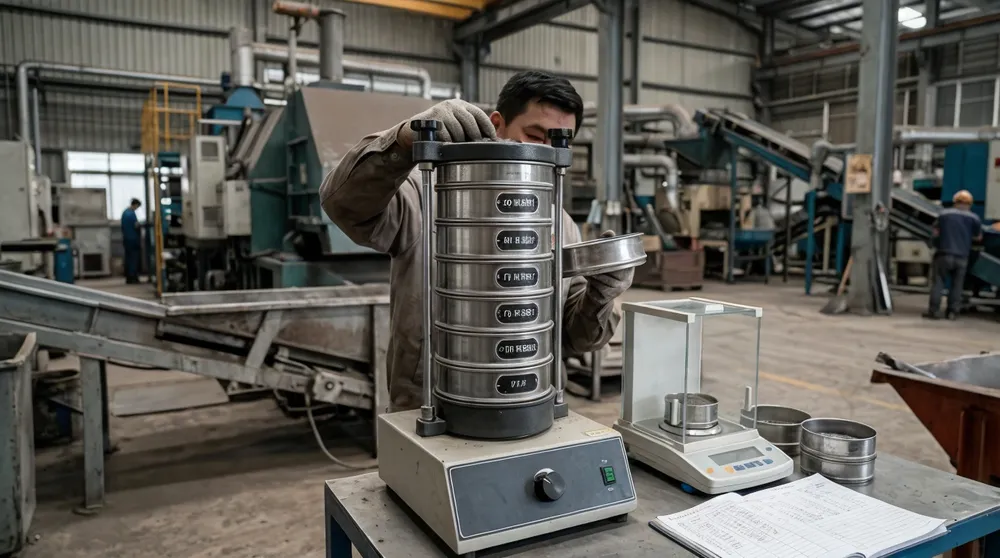
Pull a 500-gram sample from the reclamation output conveyor once per shift (every 8 hours) or once per day in low-volume operations. Pass the sample through a stack of sieves (20, 40, 50, 70, 100, 140, 200 mesh) using a mechanical sieve shaker (10 minutes of shaking at standard amplitude). Weigh the retained fraction on each sieve and calculate the percentage distribution.
85–95% in the 40–70 mesh range (reusable fraction)
Less than 5% oversized (above 40 mesh)
Less than 10% fines (below 70 mesh)
If your distribution shifts — for example, you're seeing 15–20% fines instead of 10% — either your input sand is more degraded than usual (thermal damage from high-temperature casting) or your screening system isn't working properly. Check for blinded meshes, insufficient vibration amplitude, or overloading.
Wash a 100-gram sample through a 200-mesh screen with running water until the wash water runs clear (usually 3–5 minutes). Dry the retained material in an oven at 105–110°C for 2 hours, then weigh it. The weight loss is the clay content that washed out.
Clay by weight after reclamation. This is your pass/fail threshold for production-ready reclaimed sand.
If you're seeing 3–4% residual clay, your attrition mill isn't stripping binders effectively. Corrective action: increase rotor speed or residence time in the attrition stage to improve clay separation from the grain surface.
Run sieve analysis and clay content tests once per shift (every 8 hours) for standard production volumes, or at minimum once per day for low-volume operations. Consistent testing catches drift before it reaches your molding line.
Grab a handful of reclaimed sand and look at it under good lighting. Clean reclaimed sand should be uniform in color (typically tan to light brown for silica sand), free-flowing (not clumpy), and free of visible metal particles or burnt clay lumps.
Your magnetic separator isn't working — check for magnet strength degradation or buildup on the magnet surface.
Your screening system is letting oversized material through — check for torn meshes or insufficient screen amplitude.
Weigh your input sand (used sand entering the reclamation line) and output sand (cleaned sand exiting to washing/remixing) over a full shift or full day of operation.
Formula
Reclamation Rate = (Output Weight ÷ Input Weight) × 100%
Most systems don't have continuous weighing, so you're doing this as a periodic check (weekly or monthly) rather than real-time monitoring.
If your reclamation rate drops by more than 3–5 percentage points from baseline (e.g., from 85% to 80%), investigate immediately.
Worn Mill Liners
Insufficient binder removal — sand exits with clay coating still attached.
Blinded Screen Meshes
Reusable sand classified as waste — reduces output volume.
Magnetic Separator Failure
Metal contamination routed to waste stream instead of being captured.
Increased Input Sand Degradation
Thermal damage from process changes in your casting operation.
Almost always worn mill liners. The attrition mill's impact force decreases as liners wear down, so binder removal becomes less effective. Sand grains exit with clay coating still attached, fail the screening stage, and get classified as waste.
Fix
Replace mill liners.
Prevention
Track liner wear by monitoring reclamation rate — when it drops 3–5 points from baseline, schedule liner replacement before it drops further.
Root Cause
Screen blinding. Clay fines stick to the screen mesh and reduce effective screen area, which backs up the system and reduces throughput.
Immediate Fix
Check for screen blinding first. If you have pulse-jet cleaning, verify the compressed air supply is working — check the pressure gauge, which should read 0.6–0.8 MPa. If you have bag-type screens, shut down and manually clean the meshes (takes 30–60 minutes).
Prevention
Maintain proper dust suppression — a light water spray on the screen feed reduces fines adhesion. Do not overload the system beyond rated capacity.
Root Cause
Saturated dust collector filters. When filters clog, airflow drops below the minimum needed to capture dust at generation points, and dust escapes into your facility.
Immediate Fix
Replace filters immediately — do not wait for the scheduled replacement interval.
Prevention
Monitor dust collector pressure drop weekly. Replace filters when pressure drop exceeds the manufacturer's threshold — typically 1,500–2,500 Pa depending on filter type.
Root Cause
Magnetic separator not working. Either the magnets have lost strength (rare — permanent magnets last 10–15 years, electromagnets last indefinitely if powered properly) or metal buildup on the magnet surface is preventing new particles from being captured.
Immediate Fix
Clean the magnet surface daily — scrape off accumulated metal particles. If cleaning doesn't restore separation effectiveness, check magnet strength with a gauss meter. It should read 1,200–1,800 gauss at the surface for permanent magnets.
Prevention
Daily magnet cleaning as part of routine maintenance.
Pulse-Jet Air Pressure
0.6–0.8 MPa
Filter Pressure Drop Limit
1,500–2,500 Pa
Magnet Surface Strength
1,200–1,800 Gauss
Usually caused by inconsistent input sand. If your casting operation varies — different alloys, different pouring temperatures, different cooling times before shakeout — the used sand entering reclamation has variable contamination and degradation levels. The reclamation system processes whatever you feed it; if input quality varies, output quality varies.
Fix
Either standardize your casting process (not always possible) or adjust reclamation parameters — mill speed, residence time, screen amplitude — based on input sand condition. High-volume systems with PLC control can automate this adjustment using feedback from output sand sensors.
If output sand testing shows you're outside target ranges (grain size distribution, clay content, contamination levels) for more than one consecutive test, adjust the reclamation process:
Don't adjust parameters based on a single out-of-spec test — sand quality varies naturally, and one outlier doesn't indicate a process problem. Wait for two or three consecutive tests showing the same trend, then adjust.
Make one change at a time and monitor results for at least 4–8 hours before making another change — multiple simultaneous adjustments make it impossible to know which change had what effect.
We started with standalone attrition mills for domestic foundries and evolved into complete integrated systems for export buyers who need equipment that works together — without coordination headaches between multiple vendors.
A European foundry ordered one of our first complete reclamation lines in 2016. They needed 10 tons/hour capacity to match their molding output, and they wanted one supplier responsible for the entire system: mill, screens, magnetic separation, dust collection, conveyors, and controls.
That line is still running in their facility — same core equipment — processing 150+ tons per day with an 87% average reclamation rate.
Our in-house R&D team handles custom capacity sizing and integration engineering without outsourcing to third-party design firms. When you need a non-standard throughput — say, 7 tons/hour instead of our standard 8–10 ton/hour mid-volume configuration — we're modifying our own designs: adjusting mill chamber size, screen deck area, and dust collection airflow to match your specific requirement.
This matters most when you're retrofitting reclamation into an existing foundry with space constraints or unusual sand characteristics.
We've built systems that fit 10m × 7m floor spaces where the standard spec would call for 12m × 8m — engineered for foundries with real-world space constraints.
Systems configured for high-silica sand that's more abrasive than standard molding sand — requires upgraded mill liner materials and more frequent maintenance intervals, but achieves the same reclamation rates.
Our manufacturing process gets audited annually by third-party inspectors who verify we're following documented procedures for material sourcing, fabrication, assembly, and testing.
The certifications don't make the equipment run better — but they create a paper trail that satisfies your own quality audits and customer requirements if you're selling castings to buyers who require supplier traceability.
Every system shipment includes: material certificates, test reports, and calibration records — the full documentation package.
That capacity determines our lead time stability — we're not a job shop that gets backlogged when a large order comes in.
A typical reclamation system order consumes 3–4 weeks of production time across multiple lines (frame fabrication, machining, electrical assembly, testing).
We can run 3–4 systems in parallel, so even with a queue of orders, your lead time stays in the 45–60 day range from deposit to factory departure.
No minimum order quantity for complete systems. We modify standard designs for non-standard requirements without charging engineering fees unless changes require new tooling or outside components.
We handle documentation, shipping logistics, and customs coordination as part of standard service. Shipped to 40+ countries — we know which markets require specific certifications, what customs officials need on commercial invoices, and how to pack equipment to survive ocean freight without damage.
Need documentation in another language? We arrange translation — adds 1–2 weeks to delivery, costs $400–600 depending on language and document length.
Remote troubleshooting via phone and email — we can diagnose 60–70% of issues without a site visit by walking through symptoms and process data with your operators.
Most buyers never need an on-site visit after initial commissioning. The combination of operator training, detailed documentation, and remote troubleshooting handles the majority of issues.
Typically for major component replacement (motor swap, gearbox rebuild, mill liner installation if your team isn't comfortable doing it themselves) or capacity upgrades — not routine troubleshooting.
Learn More About TZFoundry
Explore our manufacturing capabilities, certifications, and how we've built foundry equipment systems for overseas buyers since 2010.
Everything you need to prepare before requesting a quotation — sizing guidance, site preparation, utility requirements, and the details that prevent costly installation mistakes.
Providing complete project details upfront eliminates back-and-forth and ensures the first quotation reflects your actual requirements — not a generic estimate.
Current Molding Line Output
Molds per hour or tons of sand per day — this determines the minimum reclamation throughput.
Sand Type & Characteristics
Silica, chromite, olivine, or synthetic — this affects mill liner material selection and attrition parameters.
Available Floor Space
Length × width × ceiling height — needed to confirm equipment fit and maintenance access clearances.
Electrical Supply Specifications
Voltage, phase, and available amperage ��� critical for motor and control panel configuration.
New Facility or Retrofit?
Whether you're installing in a new facility or retrofitting into an existing foundry changes layout planning. If replacing an older reclamation system, tell us what's not working with your current setup — that helps us avoid specifying the same limitations.
Buyers calculate based on current molding output without accounting for future expansion. If you're planning to add molding capacity within the next 2–3 years, size the reclamation system for your future throughput, not your current throughput.
Oversizing by 20–30%
Adds 10–15% to the purchase price but gives you growth headroom without replacing equipment.
Under-sizing to Save 10–15%
Costs you 100% of the equipment price when you need to upgrade — a complete system replacement.
Reclamation systems generate vibration from the attrition mill and screens, so you need a reinforced concrete slab at least 200mm thick with rebar reinforcement.
If you're installing on an upper floor, check your building's load rating — a mid-volume system weighs 8–10 tons fully loaded with sand, and dynamic loads during operation can spike to 1.3–1.5× static weight.
We provide foundation drawings with anchor bolt locations and load distribution maps as part of the pre-shipment documentation package.
Reinforced concrete slab: ≥ 200mm thick with rebar
Mid-volume system loaded weight: 8–10 tons
Dynamic load factor: 1.3–1.5× static weight
Pre-shipment docs include: foundation drawings, anchor bolt locations, load distribution maps
Electrical service needs to deliver the system's rated power plus 20% overhead for startup surge current. Most buyers install a dedicated circuit breaker for the reclamation line rather than tapping into existing foundry power — simplifies troubleshooting and prevents voltage sags from affecting other equipment.
Small-Volume
35–45 kW
+ 20% surge overhead
Mid-Volume
70–85 kW
+ 20% surge overhead
High-Volume
120–150 kW
+ 20% surge overhead
Required if specifying pulse-jet dust collection:
Required if using water spray for dust suppression:
The dust collection system exhausts 3,000–12,000 cubic meters per hour of air depending on system capacity. How you handle this exhaust air has significant implications for facility climate control and regulatory compliance.
Common in cold climates to avoid heating losses. Verify your facility's makeup air system can supply the equivalent volume of the exhaust — 3,000–12,000 m³/hr depending on system size.
May require a discharge stack extending above your roof line to meet local air quality regulations. Check regional environmental requirements before finalizing ductwork routing.
Production — From deposit to factory departure
Ocean Freight — Depends on destination port
Customs Clearance & Inland Transport
On-Site Assembly
Commissioning & Operator Training
Total: 75–110 days from order to first production run
Need faster delivery? Air freight is possible for small-volume systems only — equipment breaks down into pieces small enough for air cargo. Cuts shipping time to 5–7 days but costs 5–6× more than ocean freight.
We provide 2–3 days of on-site training during commissioning, covering:
Hands-on approach: Your operators run the equipment under our technician's supervision until they're comfortable with all normal and exception scenarios.
Operations Manual
80–120 pages — system description, operating procedures, maintenance schedules, troubleshooting guides
Electrical Schematics
Single-line diagrams, control circuit diagrams, terminal connection tables
PLC Program Backup
If your system includes PLC control
Spare Parts Catalog
Part numbers and supplier contacts
Maintenance Schedule
Daily, weekly, monthly, quarterly tasks with estimated time requirements
All documents ship in English. Other languages available on request — $400–600 additional cost for translation depending on language.
Our commissioning engineers stay on-site through the full training cycle, ensuring your team is confident with every operating and maintenance scenario before sign-off.
Remote Troubleshooting
Phone and email support for reported problems — inconsistent reclamation rate, throughput drop, unusual noise or vibration. We ask for symptoms and recent operating history, then guide you through diagnostic steps to identify the root cause.
Response Times
Spare Parts Ordering
Email or WhatsApp with the part description or part number from your spare parts catalog. We quote price and lead time within 24 hours, usually ship within 2–3 business days via DHL or FedEx (5–7 day delivery to most export markets).
Recommendation: For high-wear items (mill liners, screen meshes, dust filters), order 2–3 sets at once to reduce per-unit shipping cost and ensure you have spares on hand.
Quick Support Contacts
WhatsApp (Urgent)
+86 13335029477
Email / Parts Orders
Email or WhatsApp with part number
Parts Shipping
DHL / FedEx — 5–7 days
When remote troubleshooting doesn't resolve the issue
If remote troubleshooting doesn't resolve the problem, we send a technician to your facility. Typical on-site service visit: 3–5 days including travel time, diagnostic work, repair or component replacement, and verification testing.
Cost Split
You cover: Travel costs (airfare, visa, accommodation, local transport)
We cover: Labor and technical expertise
Most Buyers Never Need On-Site Service
Resolved by remote support
Handled by your maintenance team with our guidance (bearing replacement, belt changes, sensor calibration)
Contact us at sales@tzfoundry.com with your molding output, sand processing volume, and available floor space. Include photos of your existing foundry layout if you're retrofitting reclamation into current operations — helps us spot potential installation issues before we finalize the quotation.
We'll respond within 24 hours with preliminary system recommendations and pricing, followed by a detailed proposal within 3–5 business days after we've clarified technical requirements.