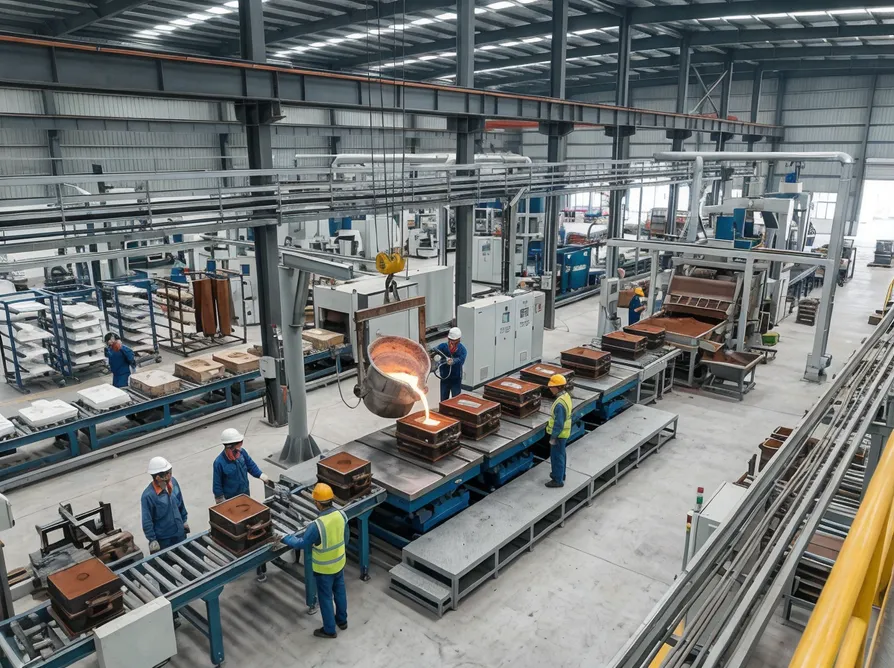
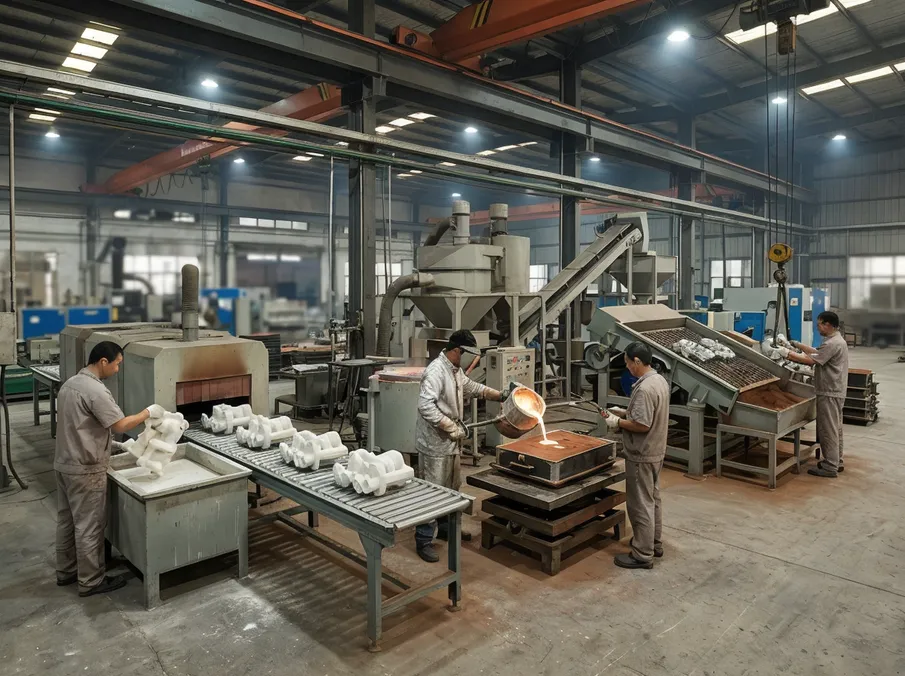
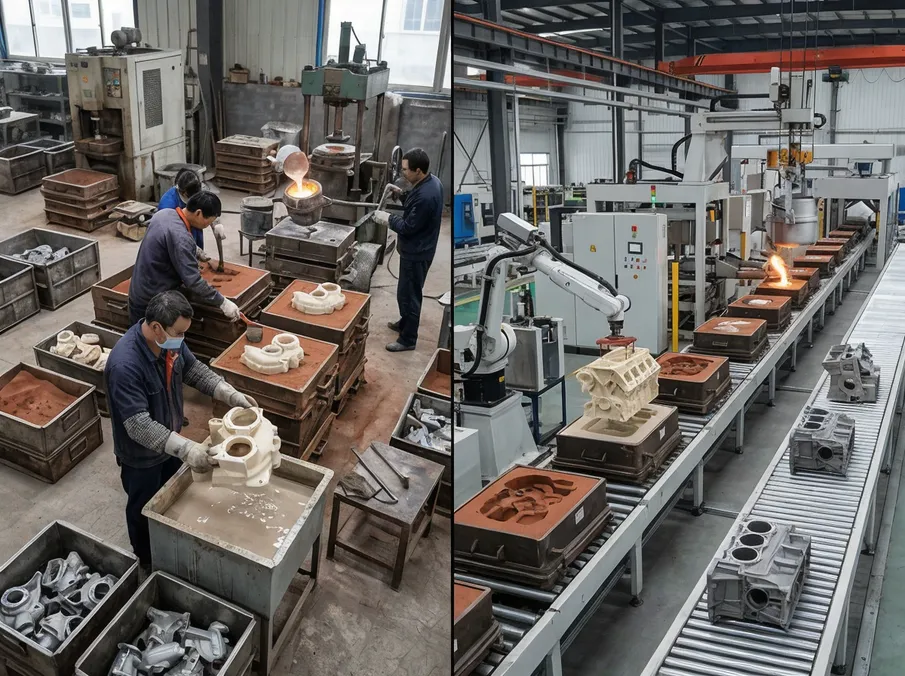
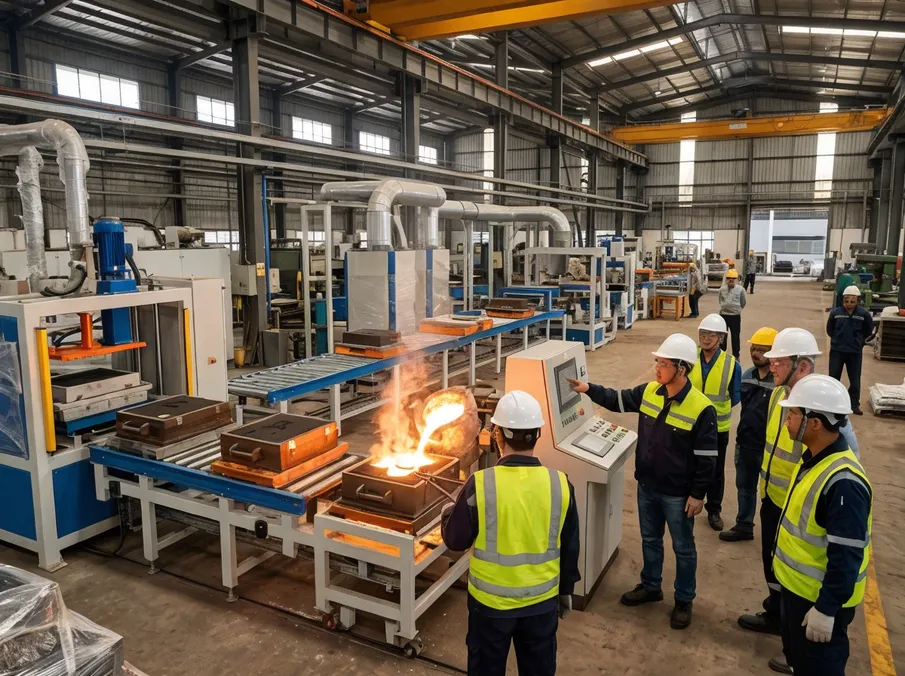
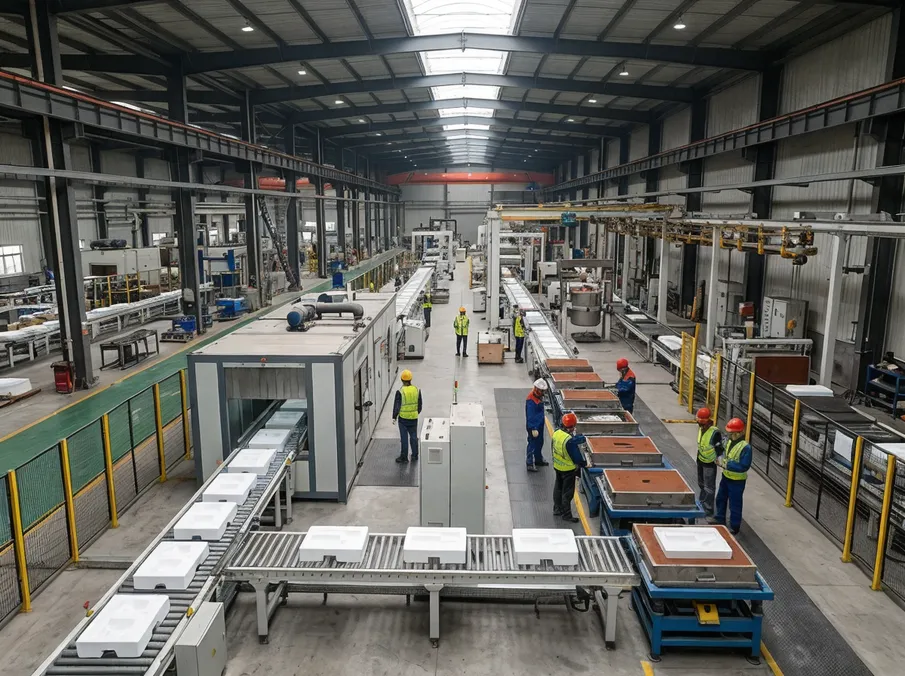
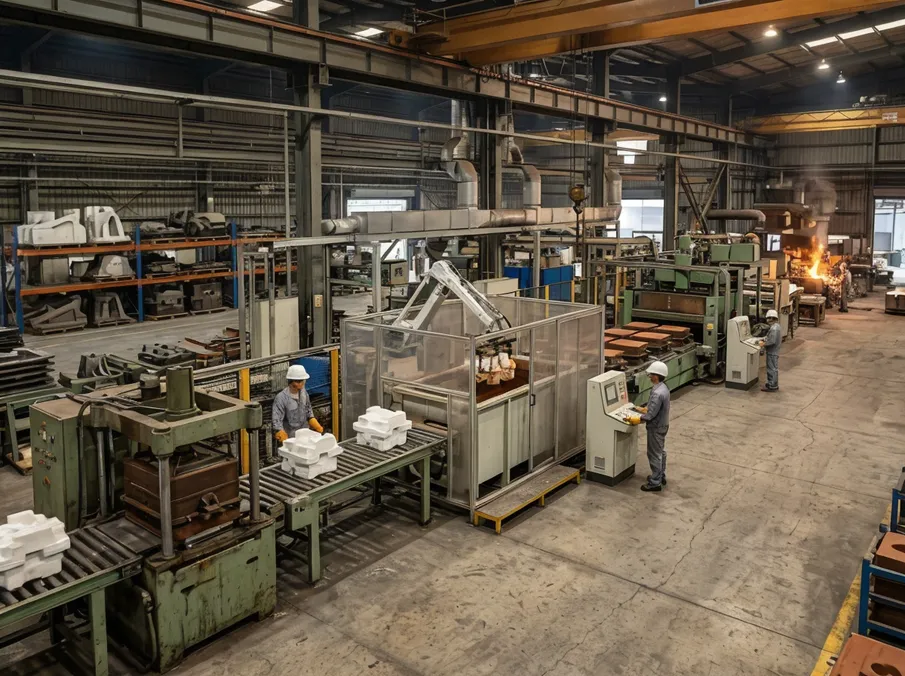
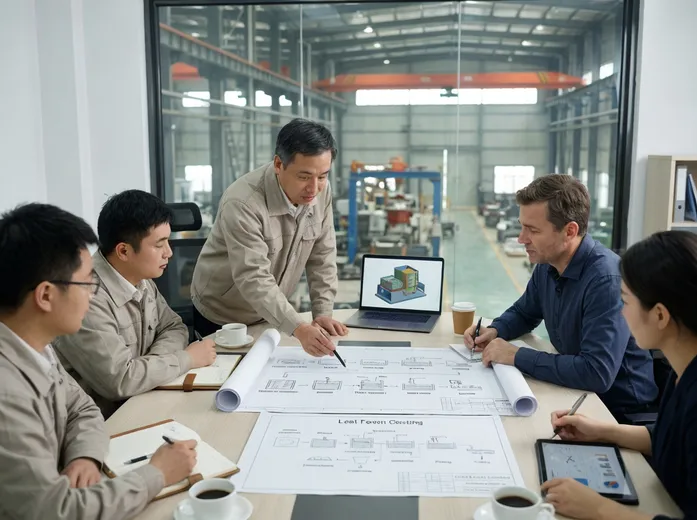
A Lost Foam Casting Production Line converts EPS patterns into finished castings through coating, molding, pouring, and shakeout — delivering near-net-shape accuracy that cuts machining time by 40-60%. If you run a foundry producing complex aluminum or iron castings, this equipment reduces your per-ton costs through material savings (no risers, minimal gates) and labor efficiency (2-3 operators per shift vs. 5-7 for green sand lines at equivalent tonnage).
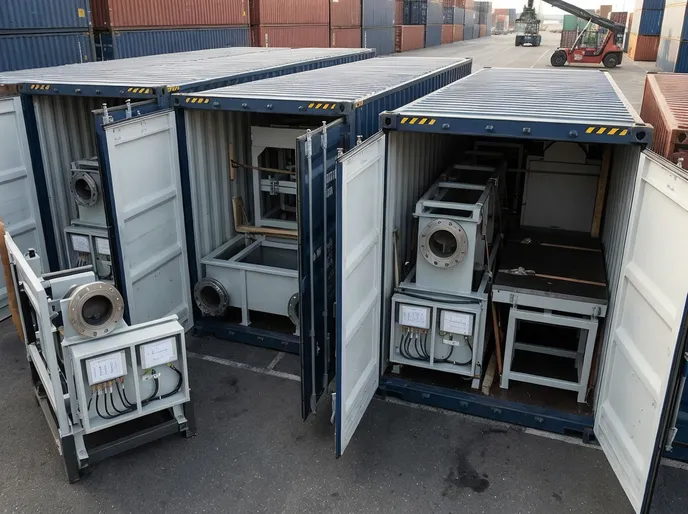
We build modular lost foam systems for foundries handling 50-5000 tons annually. Each line ships in standard containers and connects on-site in 4-6 weeks. Our systems handle aluminum and iron alloys, with vacuum control tuned to your casting mix and PLC integration for process parameter logging. Since 2010, we've installed lines in North America, Europe, the Middle East, and Southeast Asia — foundries that needed factory pricing, custom configurations, and reliable delivery schedules.
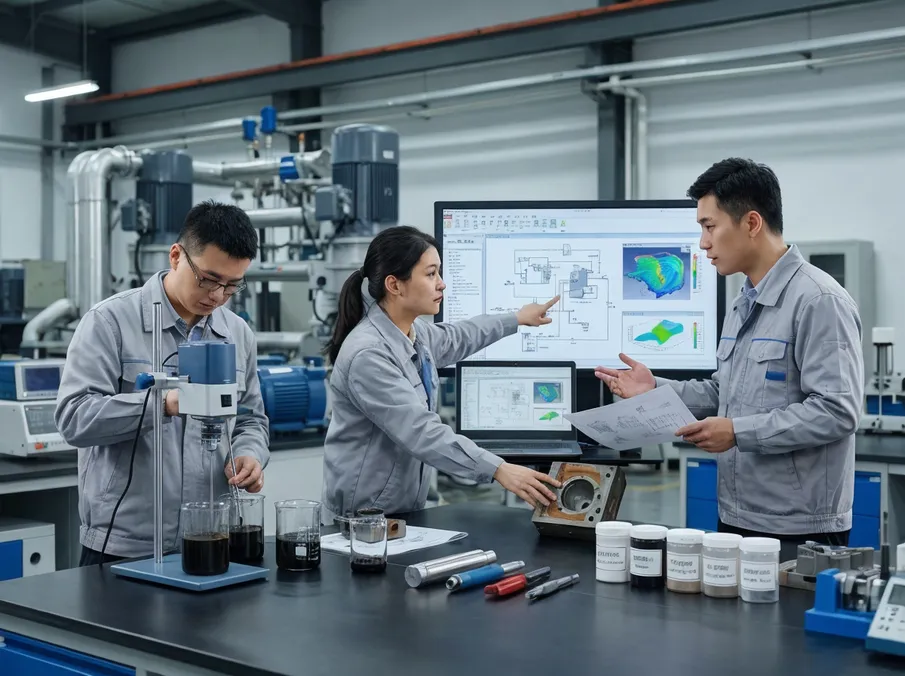
TZFoundry operates 8 production lines across 15,000 square meters in Qingdao. We manufacture the complete system in-house: pattern handling equipment, coating tanks, molding lines, vacuum systems, and sand reclamation plants. ISO 9001:2015, CE, and SGS certified. Our in-house R&D team sizes vacuum systems, supports coating formulation, and optimizes process parameters for your specific casting portfolio. You work directly with the factory — no distributor markup, flexible MOQ for custom configurations.
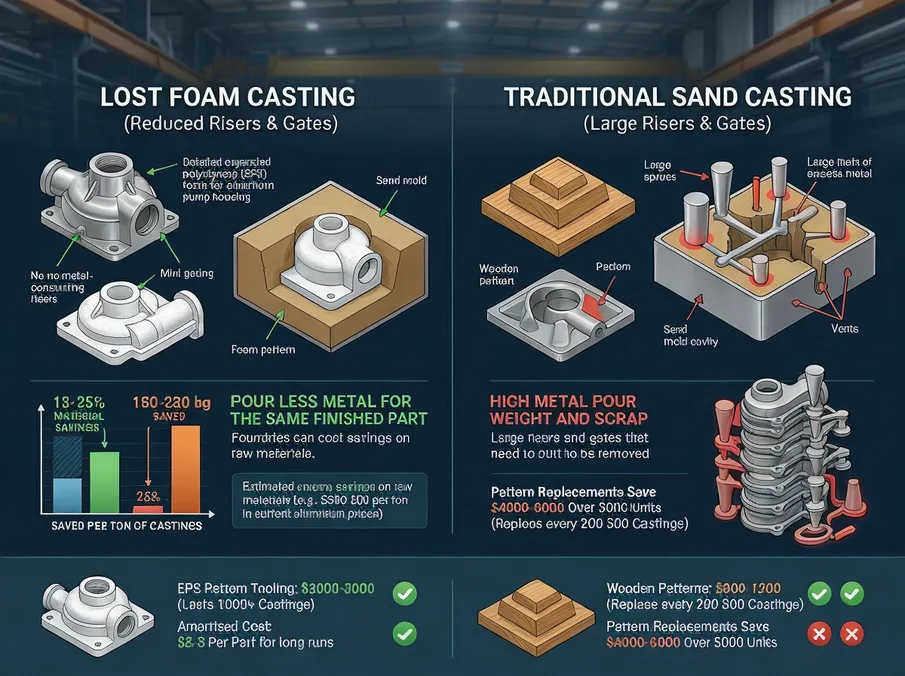
Lost foam casting eliminates risers and minimizes gates, so you pour less metal for the same finished part. Foundries typically see 15-25% material savings vs. traditional sand casting. That's 150-250 kg saved per ton of finished castings — at current aluminum prices, that's $300-500 per ton in raw material cost alone.
EPS pattern tooling costs more upfront than wooden patterns, but it amortizes over 500-2000 castings depending on complexity. For a 10 kg aluminum pump housing, pattern tooling runs $2000-3000 and lasts 1000+ castings — that's $2-3 per part. Wooden patterns for the same part cost $800-1200 but need replacement every 200-300 castings due to wear and moisture damage. Over a 5000-unit production run, lost foam tooling saves $4000-6000 in pattern replacement costs.
Labor efficiency comes from process simplification. A lost foam line producing 100 tons/month runs with 2-3 operators per shift: one handling pattern coating and drying, one managing molding and pouring, one running shakeout and reclamation. A green sand line at the same tonnage needs 5-7 operators because you're making and breaking molds continuously, managing core setting, and dealing with more complex sand handling. At $15-20/hour labor cost, that's $60,000-100,000 annual savings on a two-shift operation.
Dimensional accuracy is where machining cost avoidance shows up. Lost foam castings hold ±0.5-1mm tolerance on most features, so you're removing 2-4mm of stock instead of 5-10mm with conventional sand castings. For a complex aluminum manifold with 20 machined surfaces, that's 40-60% less CNC time — 15 minutes per part instead of 35 minutes. At $80-120/hour machine rates, you're saving $25-40 per casting in machining cost.
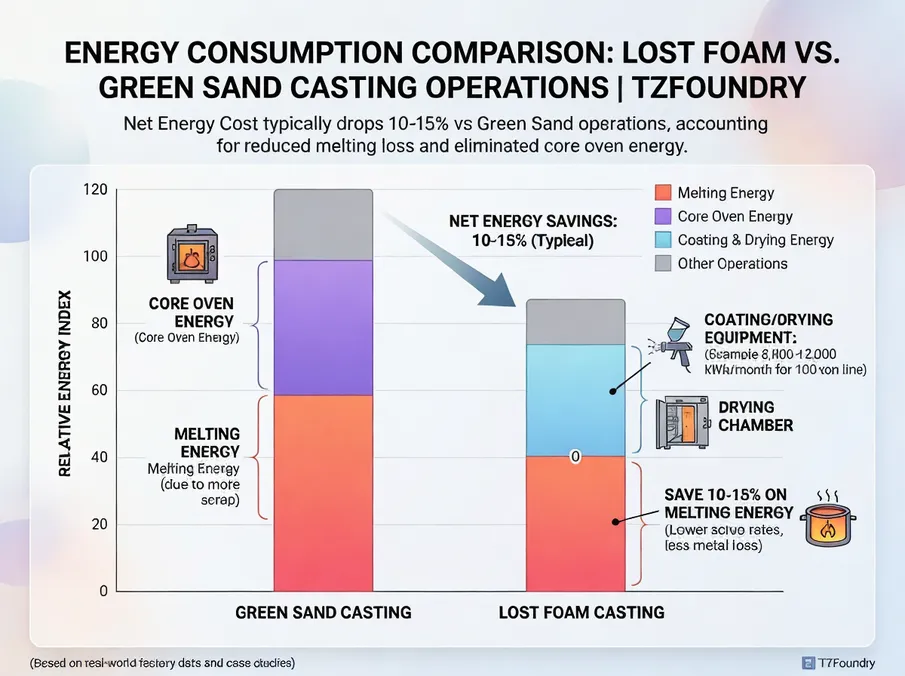
Energy consumption shifts rather than disappears. You save 10-15% on melting energy because lower scrap rates mean less metal loss, but coating and drying equipment adds energy load. A 100-ton/month line uses 8000-12,000 kWh/month for coating drying chambers (gas or electric). Net energy cost typically drops 10-15% vs. green sand operations when you account for reduced melting loss and eliminated core oven energy.
We worked with a 1000-ton/year aluminum foundry in Eastern Europe that switched from green sand to lost foam for automotive suspension components. Their per-ton cost dropped from $4200 to $3600 — $600 savings driven by 20% material reduction, 35% machining time cut, and 40% labor reduction. Payback on the line investment was 18 months. (They're still running that line six years later, now at 1400 tons/year capacity.)
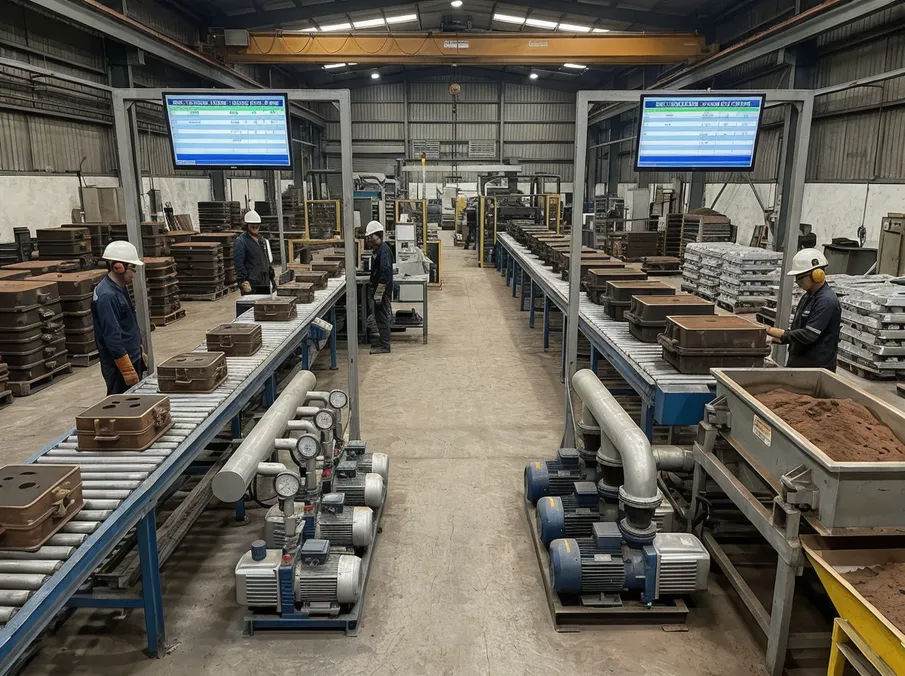
A complete lost foam line arrives as six integrated subsystems. Each ships in standard 20ft or 40ft containers and connects on-site through mechanical interfaces and PLC wiring. Here's what you're installing:
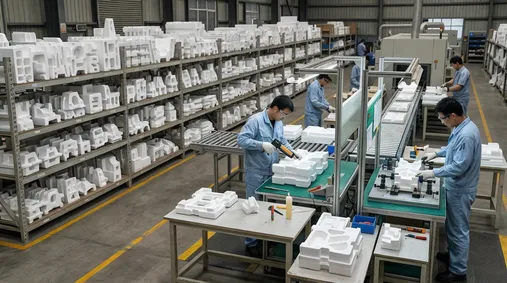
Manages EPS pattern storage, gluing, and assembly. Storage racks hold 500-2000 patterns depending on your casting size range. Gluing stations use hot-melt or solvent adhesives to bond pattern sections — cycle time 30-90 seconds per joint. Assembly fixtures position patterns for coating, with adjustable clamps for different geometries. For high-volume production, we add automated pattern feeders that stage patterns into coating equipment without manual handling.
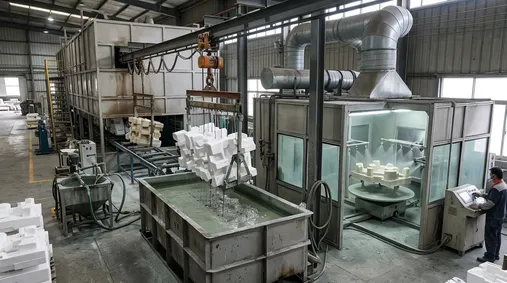
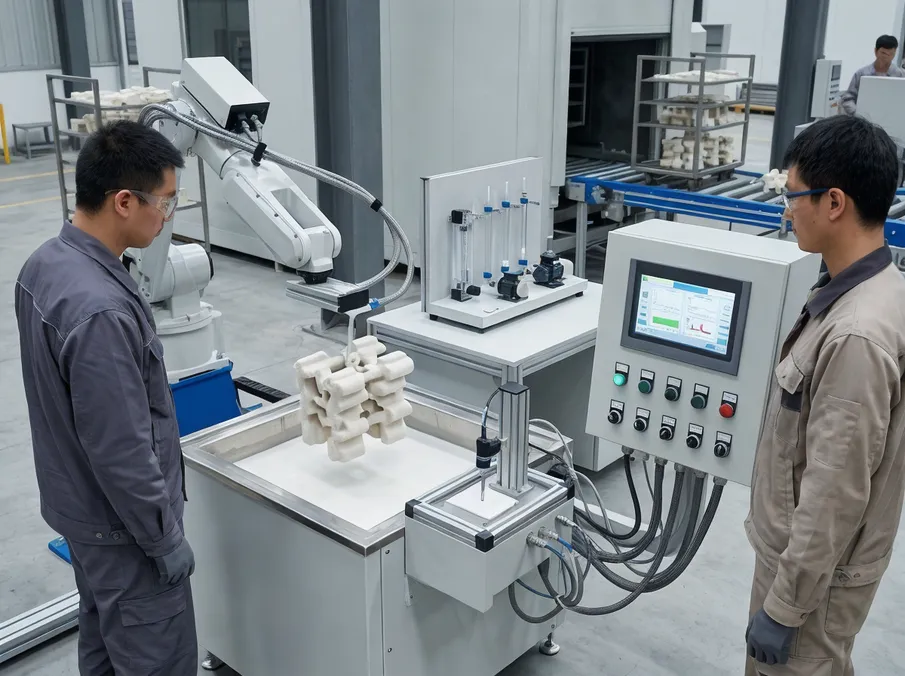
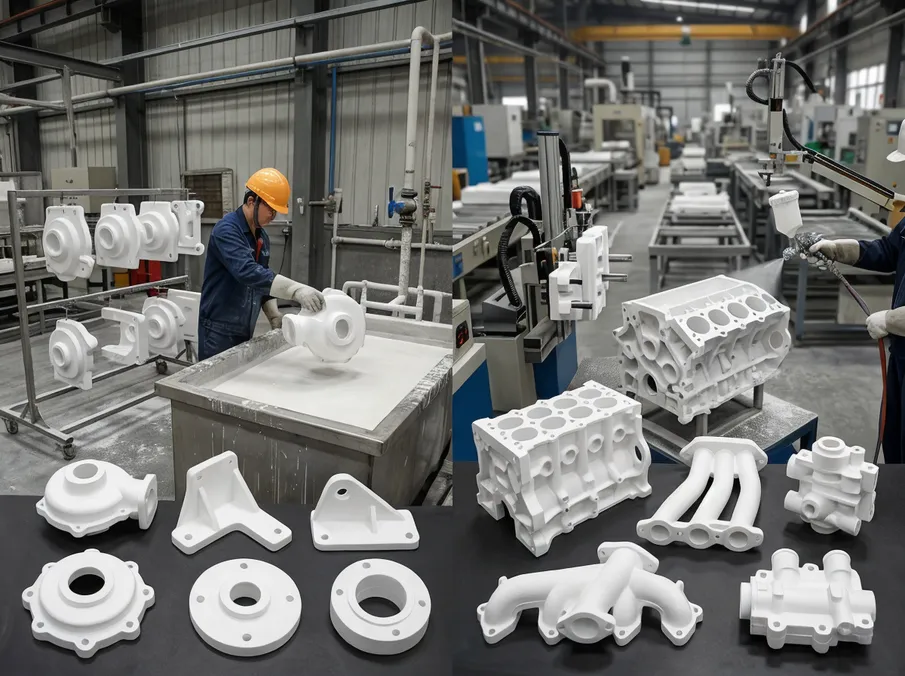
Applies refractory slurry to pattern surfaces — this layer controls metal-to-mold interface quality and gas permeability. Dip tanks work for most applications: patterns submerge in slurry, drain for 2-5 minutes, then move to drying. Tank capacity 200-800 liters depending on your largest casting. Spray booths handle patterns too large or complex for dipping — automated spray guns apply uniform coating thickness while patterns rotate on turntables. Viscosity control systems monitor slurry density and add water or refractory powder to maintain 1.4-1.8 specific gravity. Drying chambers use gas burners or electric heating elements to cure coating in 4-12 hours at 40-60°C. We size drying capacity to match your daily coating volume so patterns don't queue.
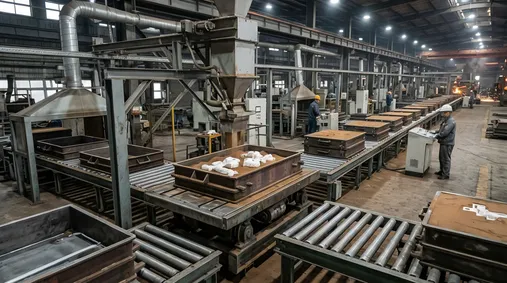
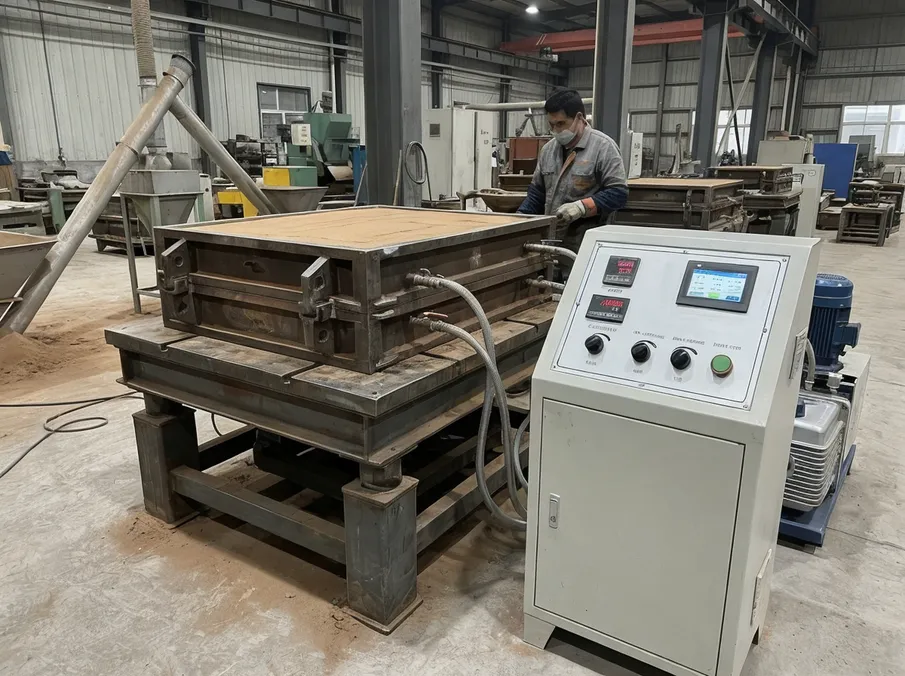
Fills flasks with sand around coated patterns and compacts to target density. Vibration tables operate at 50-100 Hz frequency, 0.5-2mm amplitude — tuned to your sand type and flask size. Flask handling equipment positions empty flasks, transfers filled flasks to pouring stations, and returns empty flasks after shakeout. Sand filling systems meter sand flow to prevent pattern damage during filling — critical for thin-wall patterns. Compaction control monitors vibration time and sand settlement to ensure consistent mold rigidity. For automated lines, we integrate conveyor systems that move flasks through filling, compaction, and pouring without manual transfer.
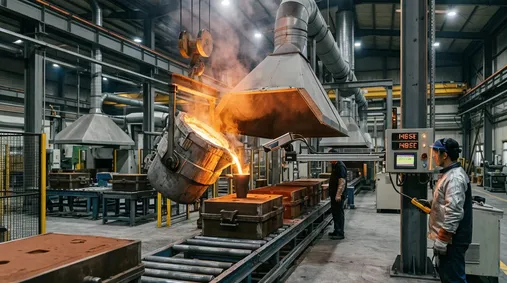
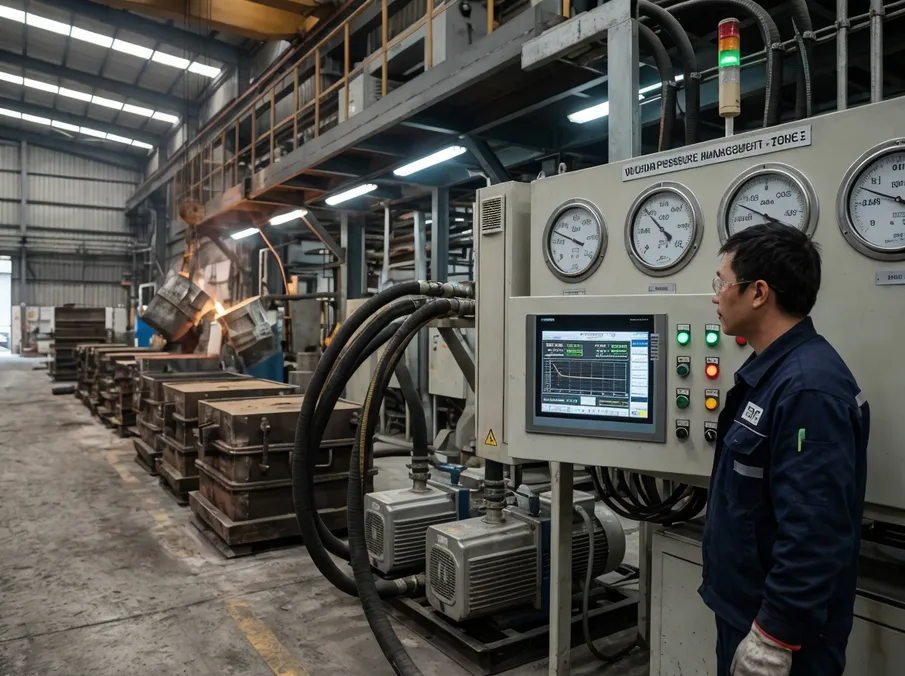
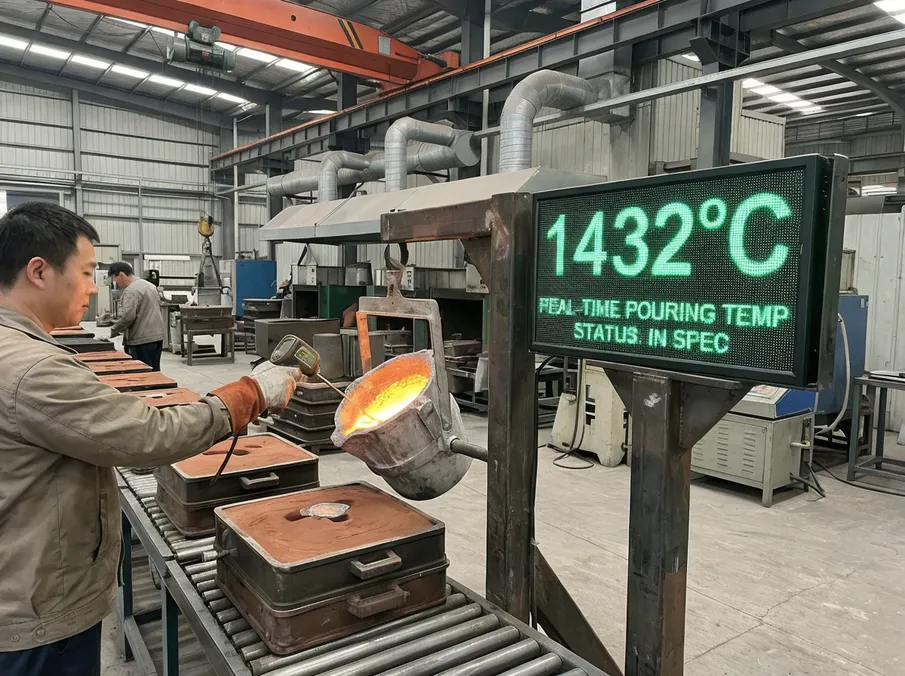
Delivers molten metal at controlled temperature and rate. Ladle transfer equipment moves metal from holding furnaces to pouring stations — manual ladles for low-volume operations, overhead cranes or automated ladle cars for high-volume lines. Pouring rate control uses tilt mechanisms or stopper rods to regulate metal flow — prevents cold shuts and misruns. Pyrometer feedback monitors metal temperature and alerts operators when temperature drops below spec. Fume extraction hoods capture EPS decomposition gases during pouring — these gases are combustible and need proper ventilation (we design extraction systems to local safety codes).
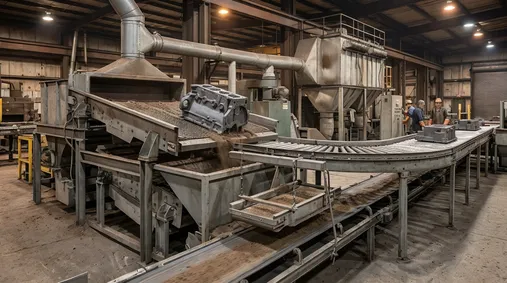
Separates castings from sand after solidification. Cooling conveyors allow castings to cool to handling temperature — 15-60 minutes depending on casting mass and alloy. Shakeout equipment vibrates or tumbles flasks to release castings and break up sand. Sand separation screens remove casting debris and pattern residue. Magnetic separators pull iron particles from sand (critical for iron foundries to prevent contamination). Dust collection systems capture fine particles during shakeout — typically baghouse filters sized for 5000-15,000 m³/hour airflow.
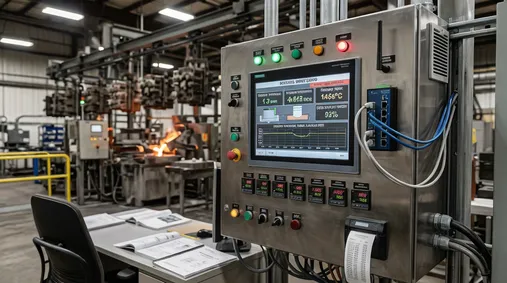
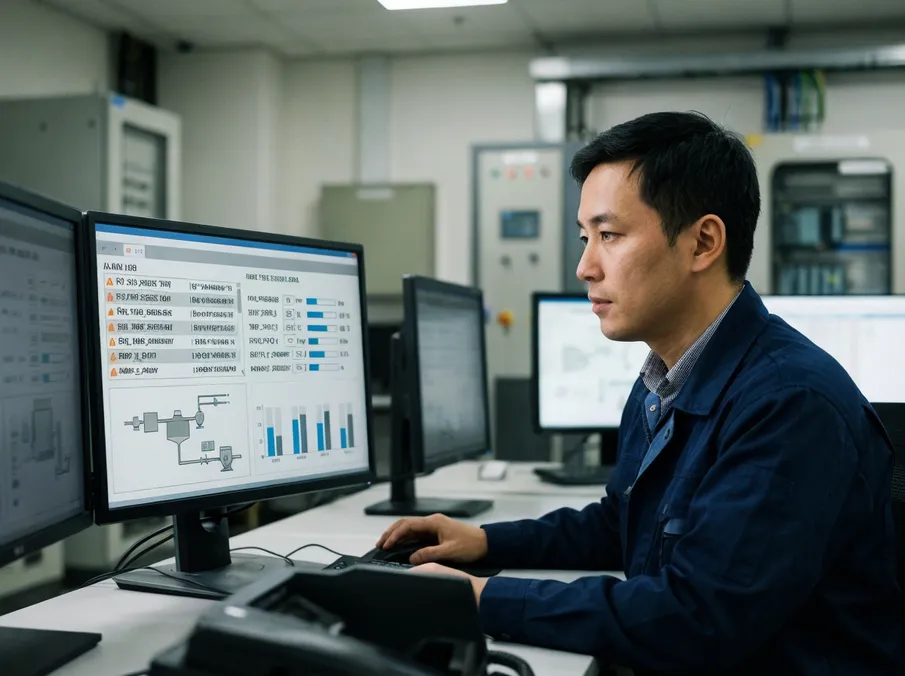
Integrates all subsystems through PLC programming. Process parameter logging tracks coating thickness, vacuum pressure, pouring temperature, and sand quality metrics. Remote diagnostics capability lets our technical team access your system via Ethernet or 4G connection — we can troubleshoot PLC faults, adjust process parameters, and update control logic without site visits. Alarm systems notify operators when parameters drift out of spec. For multi-line facilities, we provide centralized monitoring so one supervisor can oversee multiple production lines.
Our modular design means you can start with manual coating and batch molding, then add automated coating lines and continuous molding as production volume grows. A 50-ton/month starter line fits in three 40ft containers. A 500-ton/month automated line ships in twelve containers. On-site assembly takes 4-6 weeks— mechanical connections use standard flanges and bolt patterns, electrical connections terminate at junction boxes with labeled wiring diagrams.
Equipment quality matters, but process control determines whether you're running 85% yield or 95% yield. Here are the four control points that separate consistent production from trial-and-error casting:
Coating thickness directly controls gas escape rate during pouring. Too thin (under 0.5mm) and metal penetrates the coating, creating surface defects. Too thick (over 2mm) and decomposition gases can't escape fast enough, causing porosity. Target range is 0.8-1.5mm depending on casting geometry and alloy type. Our coating equipment maintains thickness within ±0.2mm through viscosity monitoring and controlled drain time.
Permeability testing should happen every batch — we include a permeability test fixture with every coating system. If permeability drops below spec, it usually means slurry composition has drifted (water evaporation concentrates refractory particles). The viscosity control system catches this before it affects casting quality.
Vacuum pressure during pouring controls metal fill rate and gas evacuation. Aluminum castings typically need -0.04 to -0.06 MPa; iron castings run -0.03 to -0.05 MPa. Our vacuum systems maintain pressure within ±0.005 MPa during the entire pour cycle — that's the difference between consistent fill and random misruns.
Vacuum pump sizing depends on flask volume and sand permeability. We calculate required pump capacity based on your largest flask size and target evacuation time (typically 30-60 seconds to reach operating vacuum). Undersized pumps can't maintain vacuum during pouring when gas generation peaks — this is the most common equipment sizing error we see in competitor installations.
Sand compaction affects both casting dimensional accuracy and surface finish. Under-compacted sand shifts during pouring, causing dimensional errors. Over-compacted sand restricts gas flow and causes porosity. Vibration frequency, amplitude, and duration all need to match your sand grain size and flask dimensions.
Our vibration tables use variable-frequency drives that let you tune compaction parameters for each casting type. We provide starting parameters based on your sand specification and flask size, then fine-tune during commissioning. The PLC logs vibration parameters for each flask so you can correlate compaction settings with casting quality data.
Pouring temperature affects pattern decomposition rate and metal fluidity. Too hot and the EPS decomposes too fast, generating gas faster than the vacuum can evacuate — result is porosity. Too cold and metal freezes before filling thin sections — result is misruns. The optimal window is typically 30-50°C above the alloy's liquidus temperature, but it varies with casting geometry and wall thickness.
Our pouring systems include pyrometer feedback that displays real-time metal temperature at the pouring station. Operators see temperature on a large display and know immediately if metal is within spec. The PLC logs pouring temperature for every flask — when you get a defective casting, you can check whether temperature was in range and narrow down root cause.
There's no universal lost foam line — configuration depends on four variables: casting complexity, production volume, alloy type, and casting size range. Here's how each variable drives equipment selection:
Casting complexity drives pattern handling and coating method selection. Simple geometries like pump housings, brackets, and flanges use straightforward EPS patterns with minimal gluing — these coat well in dip tanks and dry quickly. Intricate cores like engine blocks, manifolds, and valve bodies require multi-piece patterns with precise glue joints — spray coating works better because dip tanks can trap air in complex cavities.
If 80% of your castings are simple geometries, we configure the line with dip tanks and manual pattern assembly. If you're producing complex cores, we add spray booths and automated gluing fixtures.
Production volume determines automation level. Prototype and low-volume foundries (50-200 tons/year) run manual coating, batch molding, and hand-poured ladles — capital cost $150,000-250,000 for a complete line. Serial production foundries (500-2000 tons/year) need automated coating lines, continuous molding conveyors, and ladle transfer systems — capital cost $600,000-1,200,000.
The economic breakpoint is around 300 tons/year: below that, labor cost savings don't justify automation investment; above that, automation pays back in 18-24 months through reduced labor and higher throughput.
Alloy type affects vacuum system sizing, cooling time, and shakeout equipment. Aluminum castings solidify faster (5-15 minutes for most geometries) and need higher vacuum during pouring. Iron castings take longer to solidify (20-60 minutes) and generate more heat during shakeout.
If you're running aluminum only, we size cooling conveyors for 15-minute cycles and specify higher-capacity vacuum pumps. If you're running iron, cooling conveyors extend to 60-minute cycles and we add magnetic separation to your sand reclamation system. Mixed-alloy foundries get configurable vacuum control and longer cooling conveyors to handle both alloy types without line changeovers.
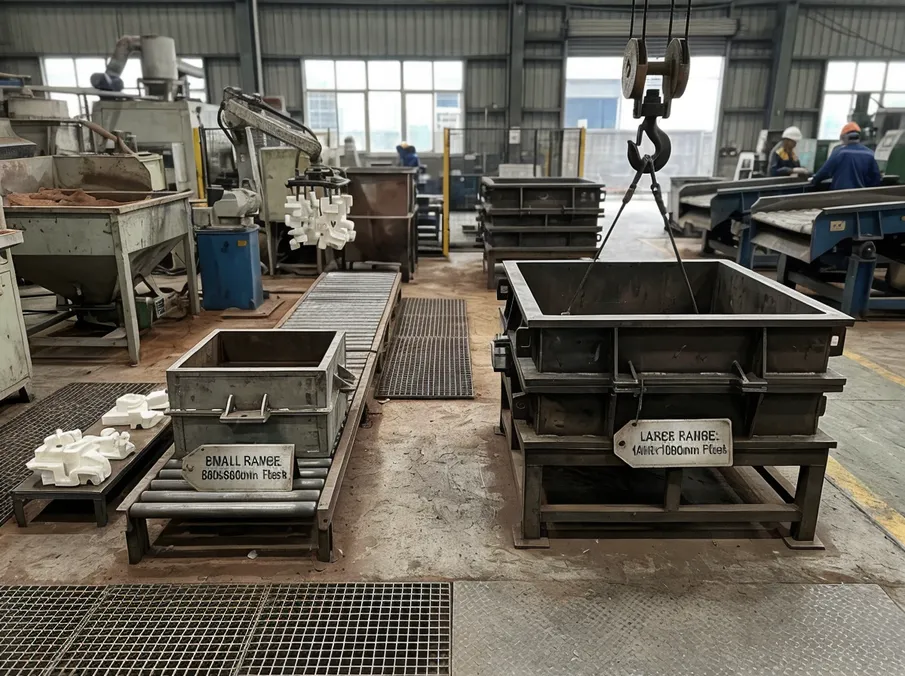
Casting size range determines flask dimensions, crane capacity, and sand handling throughput. Small parts (<5 kg) typically mold in 500x500mm flasks with 50-100 kg sand fill — you can handle these manually or with light-duty conveyors. Large castings (>100 kg) need 1000x1000mm or larger flasks with 500-1000 kg sand fill — these require overhead cranes and heavy-duty shakeout equipment.
If your casting portfolio spans 2-50 kg, we configure the line with 600x600mm standard flasks and 2-ton overhead crane. If you're producing 50-200 kg castings, flasks go to 1000x1000mm and crane capacity increases to 5 tons.
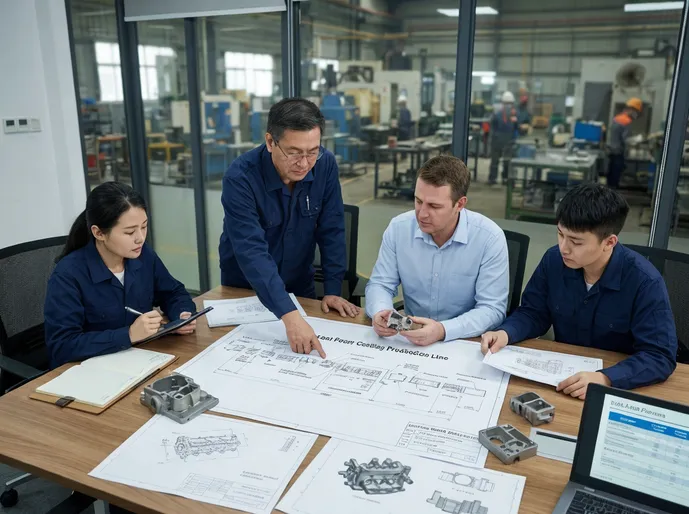
Our line audit process starts with your current casting portfolio: part drawings, annual volumes, alloy types, and quality requirements. We analyze which castings suit lost foam (complex geometries, tight tolerances, low-to-medium volume) vs. which should stay on green sand or permanent mold lines. Then we map your 3-year growth plan — if you're adding new product lines or expanding into new markets, we size the equipment for future capacity.
The goal is a modular expansion path: start with core equipment that handles today's volume, then add coating capacity, molding stations, or reclamation throughput as production grows. You're not buying excess capacity upfront, but you're not locked into a system that can't scale.
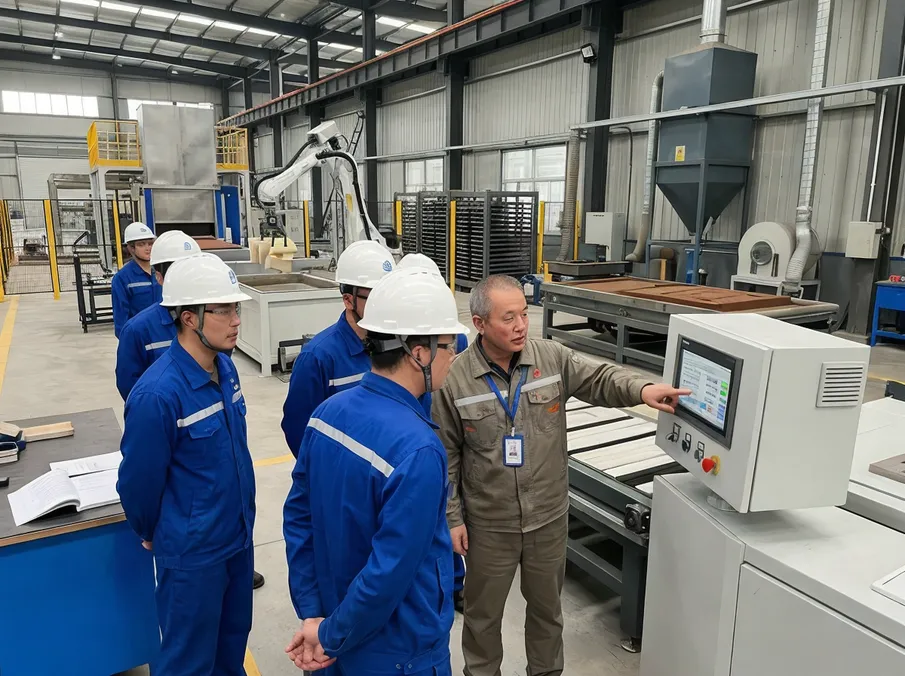
Lead time and installation support determine when your line starts producing revenue. Our production schedule runs 12-16 weeks from order confirmation to container loading — that includes equipment fabrication, PLC programming, factory testing, and export documentation. On-site commissioning takes 4-6 weeks: mechanical assembly, electrical hookup, vacuum system testing, process parameter calibration, and operator training.
Total timeline from order to first production casting is 18-24 weeks. Verify your equipment manufacturer has installation teams or certified partners in your region — if they're shipping equipment without installation support, you're hiring local contractors who don't know the process and commissioning stretches to 8-12 weeks.
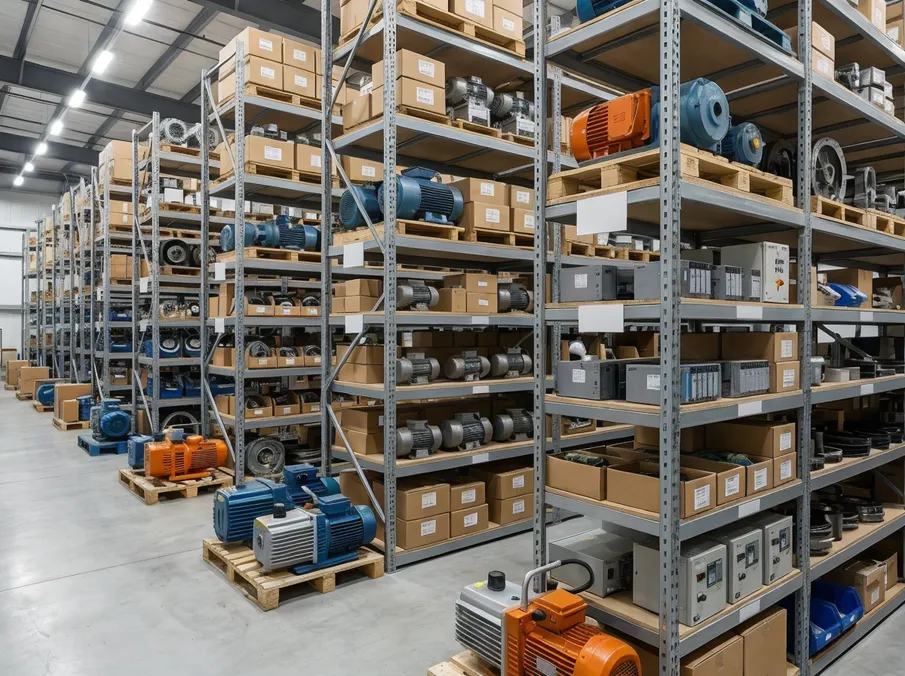
Spare parts availability directly impacts your downtime cost. Critical wear components fail predictably: vacuum pumps (18-24 months), vibration motors (24-36 months), coating pumps (12-18 months), PLC I/O modules (rare failures but no advance warning). If your supplier stocks these parts and ships within 3-5 days, a vacuum pump failure costs you 1-2 days of downtime. If they're manufacturing parts on demand with 4-6 week lead times, that same failure costs you a month of lost production.
Ask about inventory policy and shipping speed for the top 20 wear components — that tells you whether they're supporting installed equipment or just selling new lines.
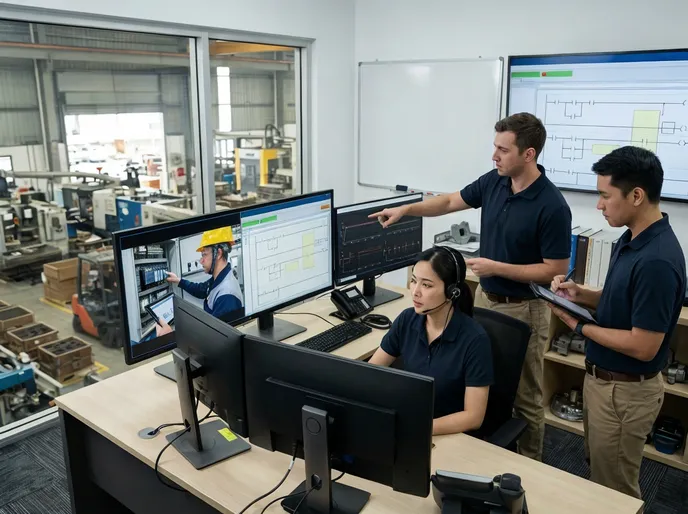
Remote diagnostics capability reduces troubleshooting time from days to hours. Modern PLC systems connect via Ethernet or 4G and allow remote access to control logic, parameter settings, and alarm logs. When your line faults, our technical team logs into your PLC, reviews the alarm history, checks sensor readings, and identifies the root cause — usually within 2-4 hours.
Without remote access, you're describing symptoms over email, we're guessing at causes, and you're swapping components until something works. We've resolved 60-70% of technical issues remotely without site visits. The remaining 30% need physical inspection or component replacement, but remote diagnostics tells us exactly which parts to bring.
Training and documentation quality determines how fast your team becomes self-sufficient. Operator training covers equipment operation, process parameter adjustment, routine maintenance, and basic troubleshooting — typically 3-5 days on-site during commissioning. Maintenance manuals include mechanical drawings, electrical schematics, PLC ladder logic, spare parts lists, and preventive maintenance schedules.
Process parameter guides explain how coating viscosity, vacuum pressure, and vibration settings affect casting quality — this is the knowledge transfer that lets your team optimize the line for new casting designs. We provide documentation in English; other languages available on request but add 2-3 weeks to delivery schedule.
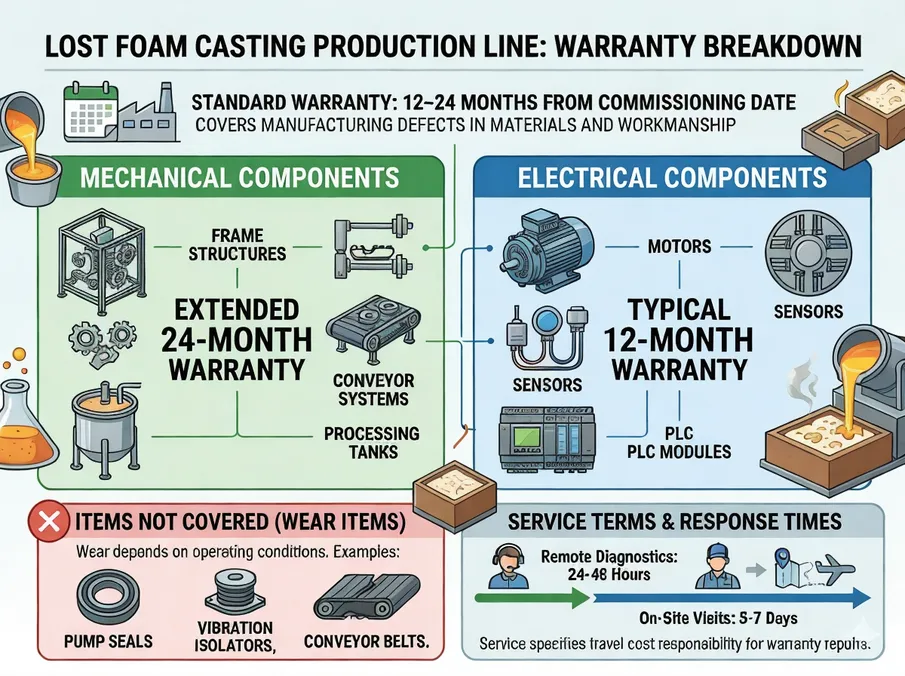
Warranty and service terms define who pays when equipment fails. Standard warranty is 12-24 months from commissioning date, covering manufacturing defects in materials and workmanship. Clarify what's included: electrical components (motors, sensors, PLC modules) typically carry 12-month warranty, mechanical components (frames, conveyors, tanks) extend to 24 months. Wear items (pump seals, vibration isolators, conveyor belts) usually aren't covered because failure rate depends on your operating conditions.
Service terms should specify response time for technical support (24-48 hours for remote diagnostics, 5-7 days for on-site visits) and travel cost responsibility for warranty repairs.
Payment and shipping terms affect your cash flow and landed cost. FOB pricing means you arrange ocean freight, customs clearance, and inland transport — you control logistics but assume all shipping risk. CIF pricing includes ocean freight and insurance to your destination port — simpler for you but typically 8-12% higher than FOB.
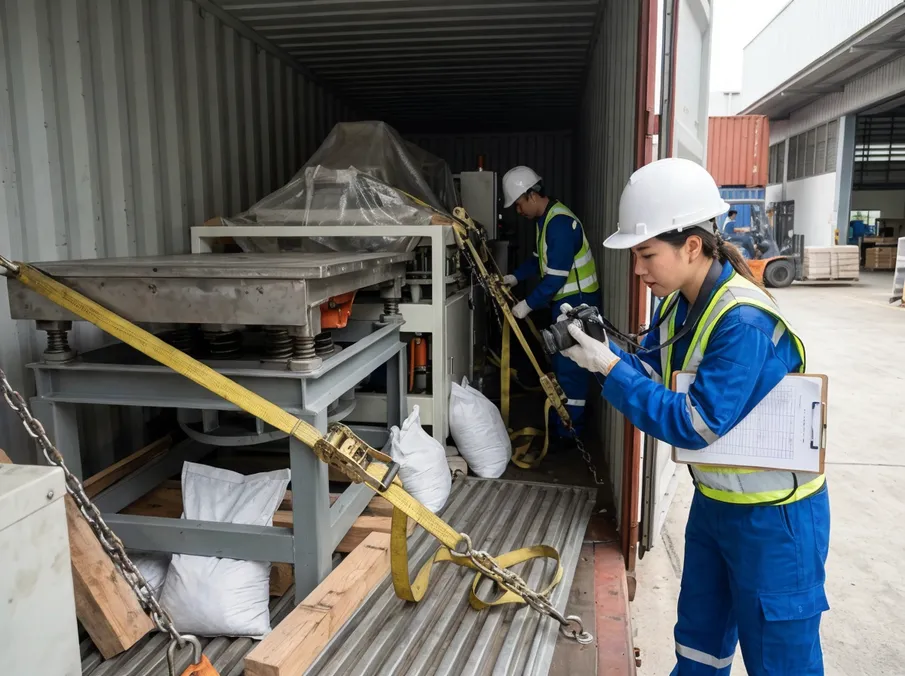
Container loading supervision matters: we photograph equipment positioning, secure tie-down points, and verify desiccant placement to prevent moisture damage during transit. Export documentation (commercial invoice, packing list, certificate of origin, CE/SGS certificates) must match your customs requirements — missing or incorrect documents delay clearance by 1-2 weeks.
TZFoundry's service model includes English-speaking technical support (email and WhatsApp response within 24 hours), video commissioning assistance for remote installations, 18-month warranty on mechanical components and 12-month on electrical systems, and spare parts warehouse in Qingdao with 3-5 day international shipping. We maintain stock of the top 30 wear components for lost foam lines. Remote diagnostics is standard on all PLC-controlled equipment. Installation support available through our own team (North America, Europe, Middle East) or certified local partners (Southeast Asia, South America).
We've been manufacturing foundry equipment since 2010 — started with individual molding machines for domestic foundries, shifted to complete production line systems when export orders demanded integrated solutions. Our facility in Qingdao runs 8 production lines across 15,000 square meters, producing 500,000 units annually. ISO 9001:2015, CE, and SGS certified. We build clay sand processing lines, lost foam casting systems, and resin sand production equipment — all three categories manufactured in-house.
Our modular design philosophy means lines ship in standard containers and expand without replacing core equipment. A foundry in Ontario started with a 100-ton/month manual line in 2018, added automated coating equipment in 2020, and upgraded to continuous molding in 2023 — same base equipment, incremental capacity additions. They're now running 350 tons/month on equipment that cost $280,000 initially and $180,000 in upgrades, vs. $650,000 for a new automated line.
Modular expansion reduces capital risk when you're entering lost foam or testing new markets.
In-house R&D team handles custom vacuum system sizing, coating formulation support, and process parameter optimization. When a Middle Eastern foundry needed to run both aluminum and ductile iron on the same line, we designed a dual-vacuum system with automatic pressure switching based on alloy selection. When a European buyer's local refractory supplier couldn't match our coating spec, we reformulated using their available materials and tested samples until we hit target permeability.
These aren't standard catalog offerings — they're engineering responses to specific buyer situations.
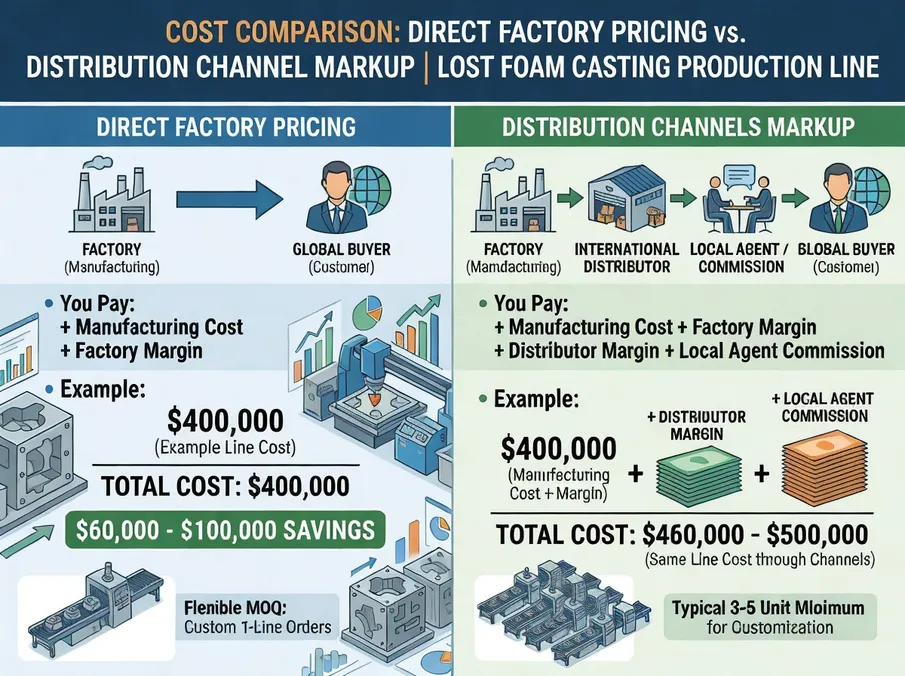
Direct factory pricing eliminates distributor markup. You're paying manufacturing cost plus our margin, not manufacturer's margin plus distributor's margin plus local agent's commission. For a $400,000 lost foam line, that's typically $60,000-100,000 in savings vs. buying through distribution channels.
Flexible MOQ for custom configurations — we'll build a single line to your specifications without forcing you into standard packages. Most equipment manufacturers require 3-5 unit minimum orders for custom work; we configure one-off systems because export buyers need equipment that fits their specific casting mix and facility layout.
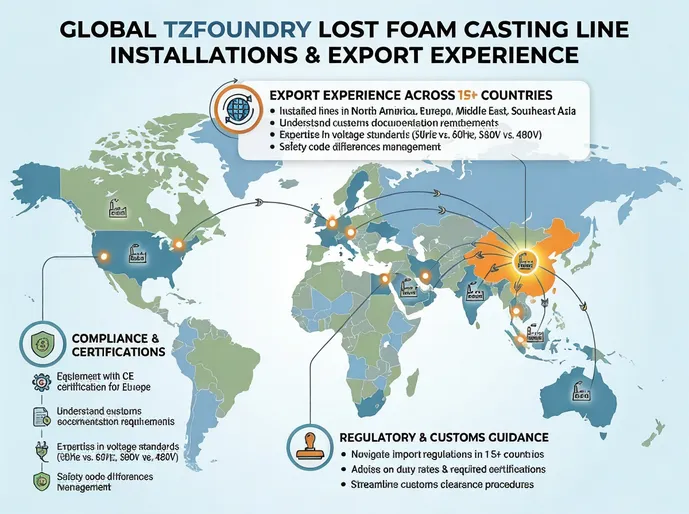
Export experience matters when you're buying cross-border. We've installed lines in North America, Europe, the Middle East, and Southeast Asia — we understand customs documentation requirements, voltage standards (50 Hz vs. 60 Hz, 380V vs. 480V), and safety code differences.
Equipment ships with CE certification for European buyers, UL-recognized components for North American installations, and voltage conversion options for any market. We've navigated import regulations in 15+ countries and can advise on duty rates, required certifications, and customs clearance procedures.
Our lost foam casting category covers specialized equipment and complete production line configurations. Each product page provides detailed specifications, configuration options, and application guidance for your specific casting requirements.
Core equipment modules for lost foam casting operations — pattern handling, coating, and molding components.
View DetailsSpecialized machinery for automated lost foam production — vibration tables, vacuum systems, and conveyor integration.
View DetailsRefractory coating systems — dip tanks, spray booths, viscosity control, and drying chambers for pattern preparation.
View DetailsEPS pattern production and handling equipment — pre-expanders, molding machines, gluing stations, and storage systems.
View DetailsComplete EPS-based casting lines optimized for polystyrene foam pattern production and integration.
View DetailsVacuum-assisted casting systems with precision pressure control for high-integrity aluminum and iron castings.
View DetailsLines configured for cast iron alloys — extended cooling conveyors, magnetic separation, and high-heat shakeout.
View DetailsSpecialized ductile iron configurations with nodularization-compatible pouring systems and process control.
View DetailsMulti-alloy casting production lines for foundries running diverse metal types on integrated systems.
View DetailsTraditional sand casting line systems — green sand and resin sand configurations for high-volume production.
View DetailsDie casting production systems for high-volume, high-precision aluminum and zinc alloy components.
View DetailsInvestment casting equipment for precision components requiring superior surface finish and tight tolerances.
View DetailsContact us at sales@tzfoundry.com or WhatsApp +86 13335029477. Provide your casting portfolio (part drawings or photos, annual volumes, alloy types) and we'll configure a line that matches your production requirements and budget.
Lead time is 12-16 weeks production plus 4-6 weeks installation. We work directly with foundry owners and procurement managers — no distributor layers, no sales quotas, just factory-to-buyer communication.