ISO 9001:2015 · CE · SGS Certified

Lost Foam Casting Machinery Equipment Selection by Operation

Lost foam casting machinery includes the individual equipment units that execute pattern handling, coating, molding, vacuum control, and shakeout operations. If you're upgrading capacity on an existing line, replacing aging equipment, or building a custom configuration instead of buying a complete turnkey system, you need machinery that integrates with what you already have and scales as production grows.

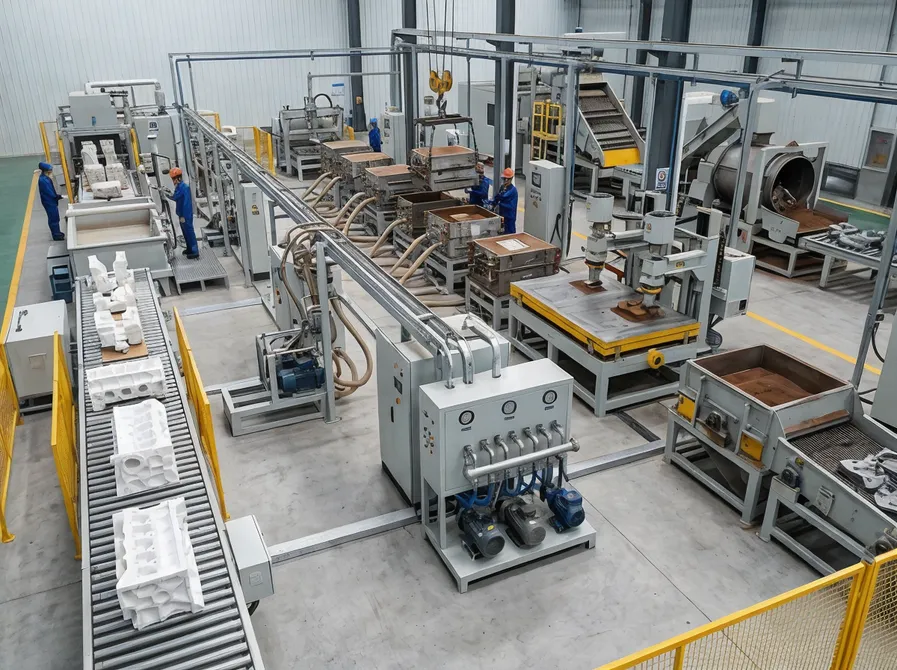
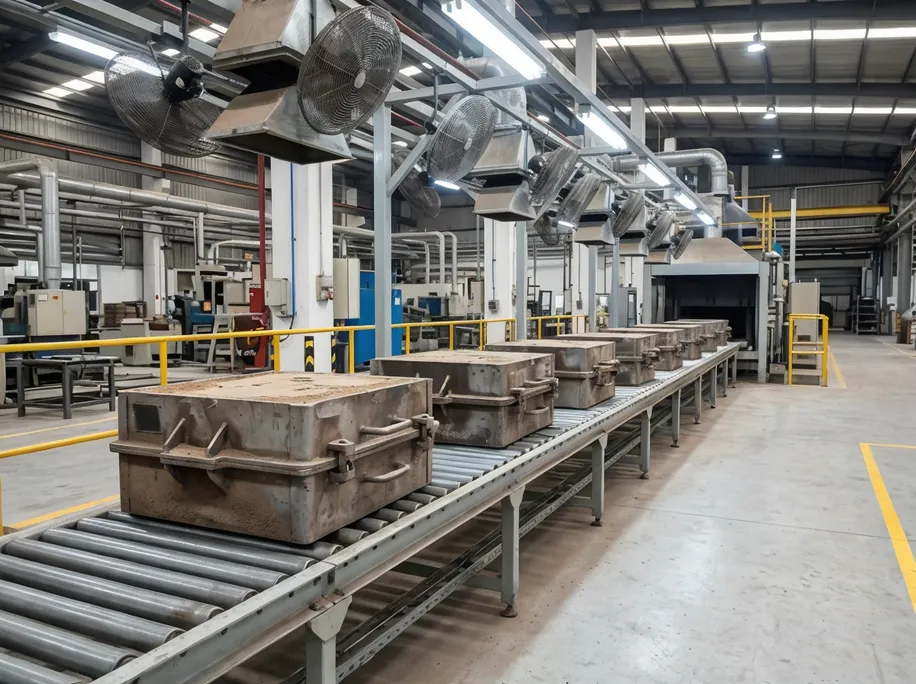
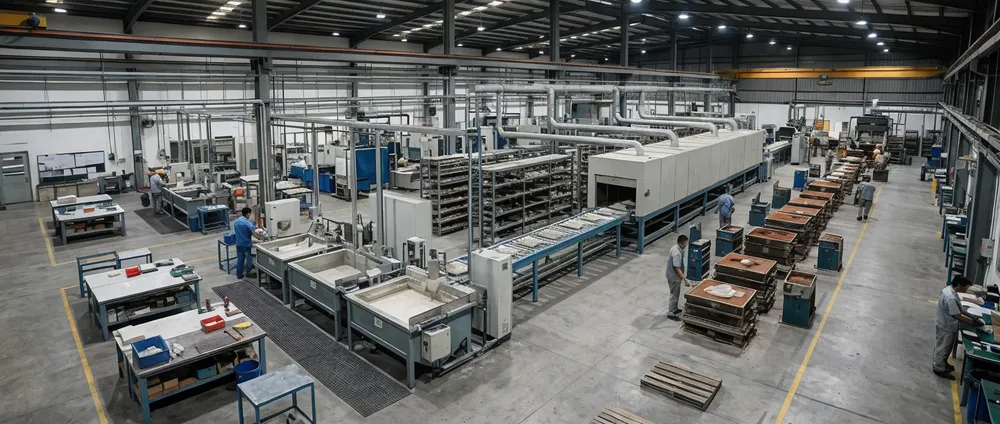
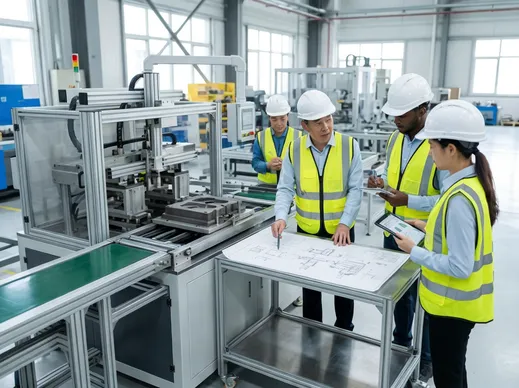
Lost foam casting machinery — pattern handling, coating, molding, vacuum, and shakeout equipment units on a production floor

What We Manufacture

We manufacture pattern handling equipment, coating tanks and spray booths, molding machines with vibration control, vacuum systems with PLC regulation, and shakeout machinery with sand reclamation. Each machine ships as a standalone unit or as part of a modular configuration — you buy what you need now and add capacity later without replacing core equipment.

Pattern Handling Equipment

Storage, assembly, and coating prep systems for EPS and STMMA foam patterns.

Coating Tanks & Spray Booths

Dip tanks, spray booths, and drying systems for refractory coating application.

Molding Machines

Vibration tables and flask handling with precision compaction control.

Vacuum Systems

PLC-regulated pressure control for mold stability during pour.

Shakeout & Sand Reclamation

Casting separation and sand recovery for closed-loop reuse.

PLC Control & Remote Diagnostics

Siemens or Mitsubishi PLC integration with remote troubleshooting capability.

Integration & Modularity

Our machinery integrates with Siemens or Mitsubishi PLCs, adapts to 380V/480V power standards, and ships with remote diagnostics capability so our technical team can troubleshoot without site visits.

PLC Compatibility

Siemens or Mitsubishi PLC integration standard on all machinery. Adapts to your existing control architecture without rewiring.

Power Standards

380V and 480V configurations available. Machines ship configured for your facility's power standard — no third-party electrical conversion needed.

Remote Diagnostics

Built-in remote diagnostics on every unit. Our technical team can troubleshoot without site visits, reducing downtime on critical equipment.

Which Machines Do You Need?

Which machines you need depends on what you're doing. Here's how different foundry situations map to equipment priorities:

Upgrading Capacity

Eliminate Bottlenecks First

Foundries upgrading capacity typically add coating equipment or molding stations to eliminate bottlenecks.

Example: If your coating line runs 8 hours to prep patterns for a 6-hour molding shift, you need more coating throughput, not more molding capacity.

Replacing Equipment

Target Highest Failure Rates

Foundries replacing aging equipment prioritize machines with the highest failure rates.

Typical failures: Vacuum pumps and coating drying systems fail first because they run continuously.

Entering Lost Foam

Start Manual, Automate Later

Foundries entering lost foam from green sand or permanent mold need the full machinery set.

Strategy: Start with manual equipment and automate incrementally as volume justifies the investment.

About TZFoundry

TZFoundry operates 8 production lines across 15,000 square meters in Qingdao, manufacturing foundry equipment since 2010. We build lost foam casting machinery, clay sand processing equipment, and resin sand production lines — all in-house.

8 Production Lines
15,000 m² Factory Floor
Since 2010 Manufacturing
ISO 9001:2015 CE Certified SGS Certified

Factory Direct Advantage

  • You work directly with the factory — no distributor markup
  • Single-unit orders configured to your specifications
  • 12–16 weeks production, 2–4 weeks installation for standalone machinery
  • Buy what you need now, add capacity later without replacing core equipment

Need a complete system?

View complete lost foam production line systems if you need an integrated turnkey solution instead of individual machines.

Core Process Stage

Pattern Handling Machinery — Storage, Assembly, and Coating Prep

Pattern handling equipment manages EPS pattern flow from storage through gluing, assembly, and staging for coating. Storage racks hold 500–2,000 patterns depending on your casting size range and daily coating volume.

Storage Rack Systems

Storage racks hold 500–2,000 patterns depending on your casting size range and daily coating volume. Aluminum automotive parts (2–8 kg castings) need higher pattern counts because coating cycles are faster, while large iron castings (50–200 kg) use fewer patterns with longer coating and drying times.

Rack design uses adjustable shelving so you can reconfigure for different pattern geometries without custom fabrication.

Aluminum Automotive

2–8 kg castings — higher pattern counts, faster coating cycles

Large Iron Castings

50–200 kg — fewer patterns, longer coating and drying times

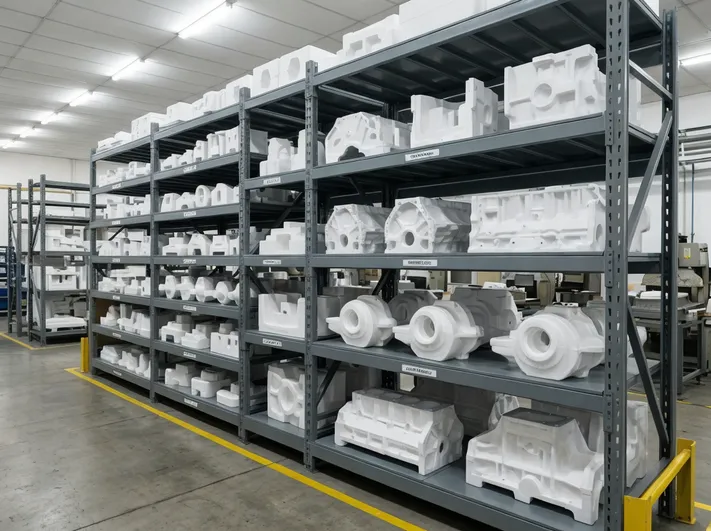
EPS pattern storage rack system with adjustable shelving for multiple casting geometries

Adjustable pattern storage racks configured for mixed casting portfolios

Gluing Stations — Bonding Multi-Piece Patterns

Gluing stations bond multi-piece patterns using hot-melt or solvent adhesives. We size gluing capacity to match your coating line throughput: if you're coating 40 patterns per shift and 60% require gluing, you need gluing stations that handle 24 patterns in 6–7 hours.

Coating prep happens during the first half of the shift, then coated patterns dry while you prep the next batch.

A

Hot-Melt Systems

Adhesive heated to 160–180°C, applied via pneumatic guns. Cycle time 30–60 seconds per joint. Suitable for high-volume production.

B

Solvent-Based Systems

Room-temperature adhesives with 90–180 second cure times. Slower but better for complex geometries where hot-melt can distort thin sections.

Assembly Fixtures

Assembly fixtures position pattern sections for gluing and hold them during cure. Adjustable clamps accommodate different casting geometries — you're not building custom fixtures for every new part design.

Manual clamps — suitable for patterns under 5 kg

Pneumatic clamps — for heavier assemblies where operator fatigue becomes an issue

Alignment pins & registration surfaces — pattern halves mate consistently; misalignment at assembly shows up as parting line defects after casting

Automated Pattern Feeders

Automated pattern feeders stage patterns into coating equipment without manual handling. Conveyor systems with adjustable speed (1–5 meters/minute) move patterns from assembly to dip tanks or spray booths. Sensor-controlled spacing prevents pattern collisions during transfer.

Automation Breakpoint

For high-volume operations (200+ patterns per shift), automated feeding eliminates the labor bottleneck and reduces pattern damage from manual handling.

< 150

patterns/shift

Manual staging cheaper

> 150

patterns/shift

Automation pays back in 12–18 months

Throughput Matching — No Bottlenecks, No Idle Equipment

Pattern handling throughput determines coating line utilization. If your coating equipment can process 50 patterns per shift but pattern prep only delivers 35 patterns, you're paying for unused coating capacity. We map your casting portfolio — part geometries, gluing requirements, daily volumes — and size pattern handling equipment to match coating throughput.

Refractory Coating Systems

Coating Equipment — Dip Tanks, Spray Booths, and Drying Systems

Coating machinery applies refractory slurry to pattern surfaces — this layer controls metal-to-mold interface quality, surface finish, and gas permeability during pouring.

Dip Tanks

Dip tanks work for most casting geometries: patterns submerge in slurry, drain for 2–5 minutes, then transfer to drying. Tank capacity ranges from 200 liters for small parts and low volume up to 800 liters for large castings and high throughput. Slurry depth needs to exceed your largest pattern dimension by 100–150 mm so patterns fully submerge without touching the tank bottom.

Tank Construction: Stainless vs. Epoxy-Coated Mild Steel

Stainless Steel
  • Eliminates corrosion with acidic or alkaline slurries
  • 30–40% higher initial cost
Epoxy-Coated Mild Steel
  • Lower initial cost, works for neutral pH slurries
  • 5–7 year lifespan before recoating needed
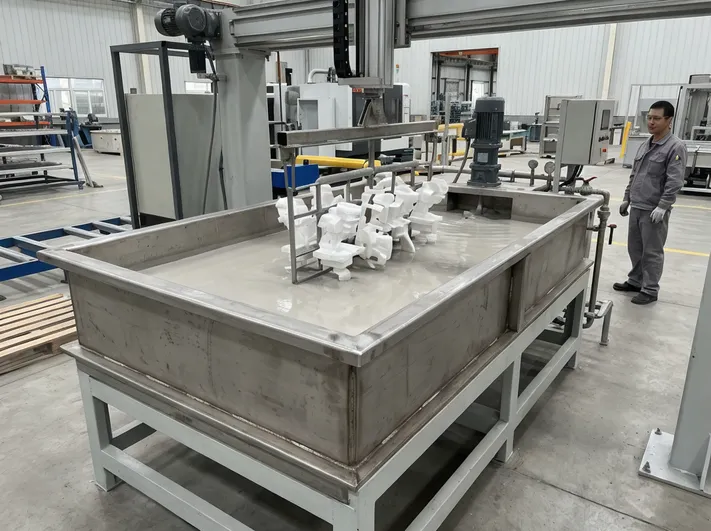
Industrial refractory dip tank for lost foam casting pattern coating

Dip tank capacity: 200–800 liters. Slurry depth exceeds largest pattern dimension by 100–150 mm.

Slurry Agitation: Paddle Mixers vs. Recirculation Pumps

Paddle Mixers

Run continuously at 20–40 RPM. Simple and reliable mechanical design with minimal moving parts.

Trade-off: Introduces air bubbles that can cause coating defects on finished patterns.

Recirculation Pumps

Pull slurry from the tank bottom and spray it back at the surface — better mixing uniformity with fewer air bubbles.

Trade-off: Pumps wear faster and need seal replacement every 12–18 months.

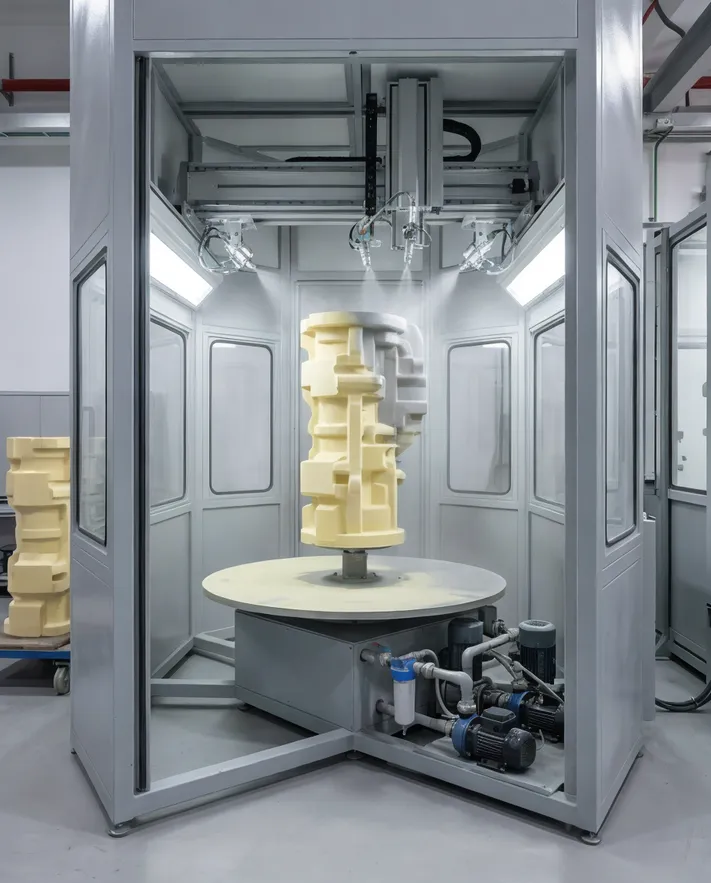
Automated spray booth with rotating turntable for large casting pattern coating

Spray booth with gantry-mounted guns and turntable rotation for uniform coverage on complex geometries.

Spray Booths

Spray booths handle patterns too large or complex for dip tanks — engine blocks, manifolds, intricate cores where dip coating traps air in cavities.

Booth Dimensions

Small parts: 1×1×1.5 m
Large industrial castings: 3×3×4 m

Spray Parameters

Pressure: 2–4 bar
Nozzle size: 1.5–3 mm (viscosity-dependent)

Automated spray guns mount on rotating arms or gantry systems, applying coating while patterns rotate on turntables. Booth ventilation extracts overspray and solvent vapors — typically 1,000–3,000 m³/hour airflow with filter stages to capture refractory particles before exhaust.

Viscosity Control Systems

Viscosity control systems monitor slurry density and adjust refractory powder or water addition to maintain target coating thickness. Target range is 1.4–1.8 specific gravity depending on refractory type and desired coating thickness.

Automated Systems

Density sensors (vibrating tube or ultrasonic) measure specific gravity every 15 minutes. When density drifts outside tolerance, the system adds water (if too thick) or refractory powder (if too thin) via metering pumps.

Consistent coating thickness, minimal operator intervention

Manual Systems

Operators check density with hydrometers every 2–4 hours. Lower upfront cost but less consistent results — and you're paying an operator to babysit slurry instead of doing productive work.

Cheaper upfront, higher long-term labor cost

Drying Chambers — Curing Coating Before Molding

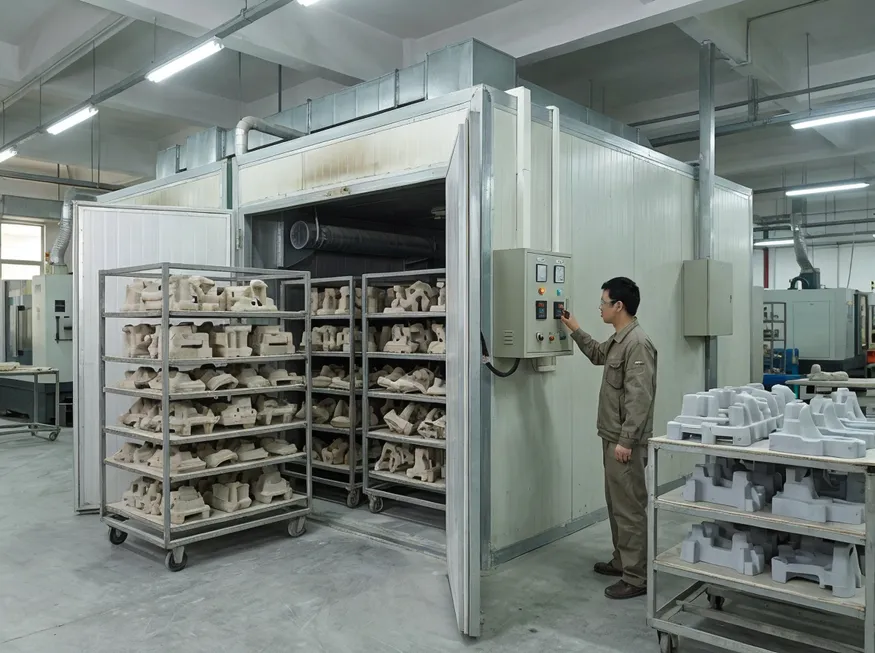
Drying chambers cure coating before patterns enter molding. Gas-fired or electric heating maintains 40–60°C chamber temperature across 4–12 hour drying cycles, depending on coating thickness and humidity. Gas systems cost less to operate — natural gas is cheaper than electricity in most markets — but need ventilation for combustion gases. Electric systems are cleaner and easier to control but add 15–25% to operating cost.

Chamber capacity must match your daily coating volume. If you're coating 40 patterns per shift and drying takes 8 hours, you need chamber space for 40 patterns or you're queuing coated patterns overnight — and humidity exposure degrades coating quality.

Industrial drying chamber for curing refractory coating on lost foam casting patterns at controlled temperature

Drying Capacity Sizing by Production Schedule

Single-Shift Operations

Drying chambers must hold one full shift's output. Patterns coated during the shift dry overnight and are ready for molding at the start of the next production day.

Two-Shift Operations

Either double the drying capacity or accept that patterns coated in shift one dry during shift two. This works if you're running the same casting family both shifts — it doesn't work if you're switching between aluminum and iron because coating formulations differ.

Airflow and humidity control inside drying chambers affects cure uniformity. We include circulation fans and optional dehumidification for high-humidity climates where ambient moisture extends drying time by 30–50%.

Coating Equipment Selection — Geometry and Volume Drive the Choice

Coating equipment selection depends on casting geometry and production volume. Simple shapes coat efficiently in dip tanks. Complex cores need spray booths. Mixed production runs both.

Dip Tank Systems

Best for simple shapes — pump housings, brackets, flanges. Complete dip tank system with agitation and drain racks.

$8,000–$15,000

Capital cost for complete system

Spray Booth Systems

Required for complex cores — engine blocks, manifolds. Includes booth, spray guns, turntable, and ventilation.

$25,000–$45,000

Capital cost for complete system

Mixed Production

Dip tank handles 70–80% of castings (simple geometries). Spray booth covers the complex 20–30%. Most foundries run both.

Combined

Optimized capital allocation

Drying Capacity Cost Reference

Drying capacity scales with coating throughput. Budget $3,000–$5,000 per cubic meter of drying chamber volume. We size drying capacity using your production schedule to ensure chamber space matches daily coating output without overnight queuing.

Molding & Compaction Systems

Molding and Compaction Machinery — Vibration Tables and Flask Handling

Molding machinery fills flasks with sand around coated patterns and compacts to target density. Vibration tables provide the compaction force, while flask handling systems keep your line moving without bottlenecks.

Vibration Table Fundamentals

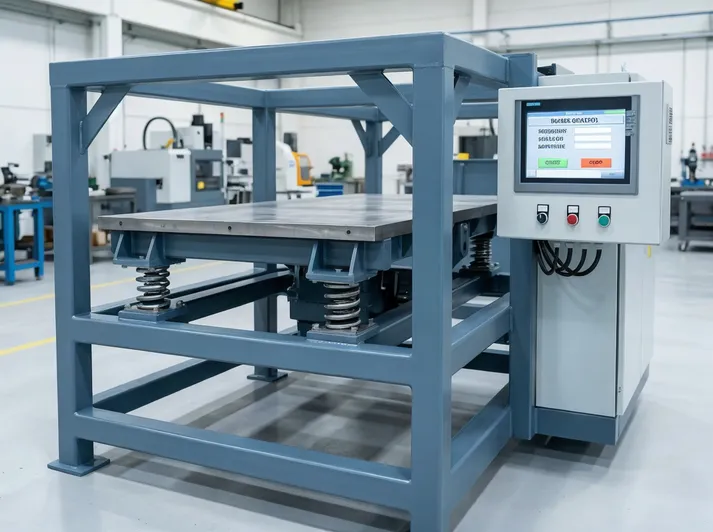
Vibration tables operate at 50–100 Hz frequency with 0.5–2 mm amplitude, adjustable via PLC control. Table size matches your flask dimensions: 500×500 mm tables for small castings, 1000×1000 mm or larger for heavy parts. Table construction uses welded steel frames with spring or rubber isolation mounts to prevent vibration transmission to the building foundation.

PLC-controlled vibration systems store parameter recipes for different casting types. The operator selects the casting ID on the HMI, and the PLC loads the correct frequency, amplitude, and duration — eliminating manual tuning errors and ensuring consistent compaction across shifts. Manual systems use variable-frequency drives with analog dials, which works fine for continuous single-family casting runs but introduces variability when switching between products.

PLC-controlled vibration table with welded steel frame and isolation mounts for lost foam casting compaction

Vibration table with PLC recipe control and spring isolation mounts

Vibration Parameters by Sand Type

Vibration parameters tune to sand type and flask size. Getting these right is the difference between consistent castings and a scrap pile.

Coarse Sand (40–70 Mesh)

  • Higher amplitude: 1.5–2 mm
  • Lower frequency: 50–60 Hz
  • Larger particles need more energy to settle into compact arrangement

Fine Sand (70–140 Mesh)

  • Lower amplitude: 0.5–1 mm
  • Higher frequency: 80–100 Hz
  • Smaller particles pack more easily with rapid, low-displacement vibration

Compaction Time by Flask Size

Flask size directly affects vibration time — sand at the flask center takes longer to reach target density in larger molds.

Flask Size Sand Weight Compaction Time Handling Method
Small (500×500 mm) 50–100 kg 60–120 seconds Manual — operators lift with handles or pallet jacks
Medium (up to 500 kg total) 100–500 kg 120–180 seconds Overhead cranes — 2-ton capacity hoists with lifting fixtures
Large (1000×1000 mm+) 500–1000 kg 180–300 seconds Conveyor systems — roller or chain-driven automated transfer

Flask Handling Equipment

Flask handling equipment positions empty flasks on vibration tables, transfers filled flasks to pouring stations, and returns empty flasks after shakeout. The right handling method depends on your flask weight and production volume.

Manual Handling

For small flasks under 100 kg total weight. Operators lift flasks with handles or use pallet jacks. Lowest capital cost, suitable for low-volume or prototype operations.

Overhead Cranes

For medium flasks (100–500 kg). Typically 2-ton capacity hoists with below-the-hook lifting fixtures. Balances flexibility with safe handling of heavier molds.

Conveyor Systems

Roller conveyors or chain-driven systems move flasks through filling, compaction, and pouring without manual handling. Essential for high-volume automated lines.

Sand Filling Systems

Sand filling systems meter sand flow into flasks to prevent pattern damage. Gravity-fed hoppers with adjustable gates control fill rate — too fast and sand impact crushes thin pattern sections, too slow and you waste cycle time.

Key Fill System Features

  • Pneumatic or mechanical vibrators on hopper walls prevent sand bridging
  • Adjustable gate controls for precise fill rate management
  • Sand level sensors stop filling at target flask height (automated lines)
  • Automatic compaction cycle trigger after fill completion

For automated lines, sand level sensors stop filling when the flask reaches target height, then trigger the compaction cycle automatically — removing operator timing from the equation.

Compaction Uniformity and Quality Control

Compaction uniformity directly affects dimensional consistency and defect rates. Under-compacted sand allows mold shift during pouring, causing dimensional errors. Over-compacted sand restricts gas escape, leading to porosity defects.

Calibrate vibration parameters during commissioning by measuring sand density at multiple flask locations. Target is ±2% density variation across the mold. Density measurement uses nuclear gauges or sand sampling with volumetric testing.

Once parameters are set, the PLC maintains consistency — but verify density weekly because sand properties drift as fines accumulate or moisture content changes.

Capacity Planning: Match Molding to Pouring Rate

Molding machinery capacity must match your pouring rate. If you're pouring 8 molds per hour and molding cycle time is 10 minutes (including flask positioning, sand filling, compaction, and transfer to pouring), you need at least two molding stations to avoid queuing.

Most foundries run 20–30% excess molding capacity as buffer against equipment downtime or process variations. Factor this into your line configuration from the start — adding a molding station after installation is significantly more disruptive than specifying the right count upfront.

Pressure Control Systems

Vacuum Systems — Pressure Control and Mold Stability

Vacuum systems maintain negative pressure in the molding flask during pouring, pulling sand tight against the pattern as EPS vaporizes. This prevents mold collapse and maintains dimensional accuracy.

Iron Castings

0.02–0.04 MPa

Low vacuum requirement — iron's weight naturally compacts sand during pouring, reducing the need for high negative pressure.

Aluminum Castings

0.04–0.06 MPa

Higher vacuum required — aluminum's lower density creates less compaction force. Without sufficient vacuum, sand loosens as EPS vaporizes and the mold shifts.

Pump Capacity

50–200 m³/hr

Per molding station. Capacity depends on flask size and number of simultaneous pouring stations in your line configuration.

Rotary Vane Vacuum Pumps

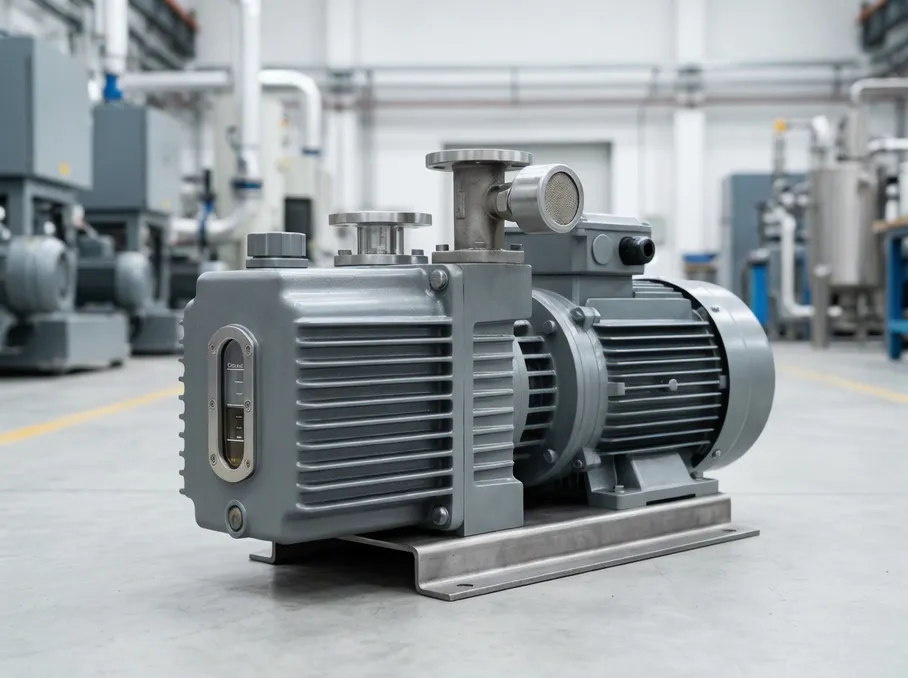
Rotary vane vacuum pumps are standard for lost foam applications. Oil-sealed design, available in single-stage or two-stage configurations depending on your target pressure requirements.

Configuration Pressure Range Best For
Single-Stage 0.04–0.05 MPa Most iron castings
Two-Stage 0.06–0.08 MPa Aluminum & thin-wall castings where higher vacuum prevents mold shift

Maintenance Intervals

  • Oil changes every 500–1,000 operating hours
  • Vane replacement every 2,000–3,000 hours
  • Pumps specified with oil mist filters to reduce environmental impact and extend vane life
Rotary vane vacuum pump for lost foam casting with oil-sealed design

PLC-Controlled Pressure Regulation

PLC-controlled pressure regulators adjust vacuum level based on alloy type and casting size. Casting size directly affects vacuum requirement — here's how alloy and part weight interact:

Small Castings (<5 kg)

Need less vacuum because EPS volume is small and vaporization happens quickly. Mold exposure time is short, reducing the window for sand displacement.

Large Castings (>50 kg)

Need higher vacuum to stabilize the mold during extended pour times. Larger EPS volume means longer vaporization and more opportunity for mold shift without adequate negative pressure.

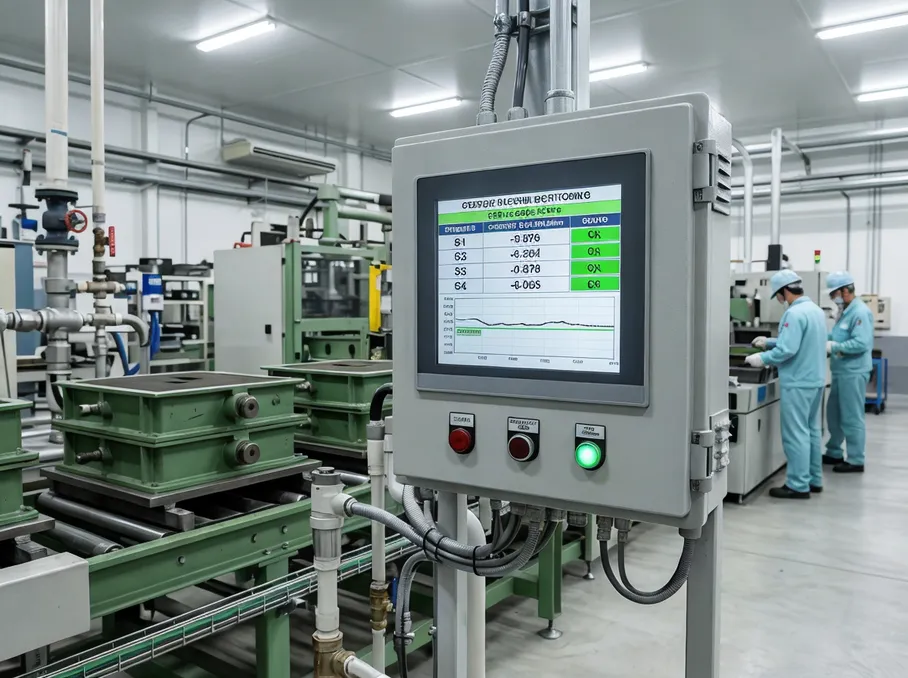
Pressure sensor monitoring panel logging vacuum readings at each molding station

Pressure Monitoring and Data Logging

Pressure sensors at each molding station log vacuum readings every second. Sensor accuracy is ±0.002 MPa — tight enough to detect leaks or pump degradation before they cause casting defects.

If pressure drops below setpoint during pouring, the PLC triggers an alarm and can automatically hold the pour until vacuum recovers. This requires integration with pouring equipment but eliminates the need for operators to monitor vacuum manually during every pour.

90-Day Data Retention

Data logging stores 90 days of pressure readings, so when defect rates spike, you can correlate vacuum stability with casting quality and trace root causes quickly.

Multi-Station Vacuum Distribution

Multi-station vacuum distribution uses manifold systems with individual control valves for each molding station. Central vacuum pump feeds the manifold, and PLC-controlled valves regulate pressure to each station independently.

Lower Cost

Manifold configuration costs less than dedicated pumps per station while providing centralized maintenance access.

Backup Capacity

If one pump fails, you can redistribute vacuum to critical stations and keep producing. Built-in redundancy without duplicating every pump.

Independent Control

PLC-controlled valves regulate pressure to each station independently. Pressure relief valves prevent over-vacuum conditions that can collapse molds or damage pumps.

Vacuum System Integration with Pouring Equipment

Vacuum system integration with pouring equipment prevents defects from pressure loss during metal delivery. Interlock logic holds the pour if vacuum drops below setpoint, then resumes automatically when pressure recovers.

This requires communication between vacuum PLC and pouring control system — either hardwired I/O or industrial network protocols (Profibus, Ethernet/IP). We program and test these interlocks during commissioning so your operators don't need to monitor vacuum manually during every pour.

Communication Protocols Supported

Hardwired I/O

Direct signal connection between vacuum PLC and pouring control

Profibus

Industrial fieldbus for real-time process communication

Ethernet/IP

Industrial Ethernet protocol for networked control integration

Leak Detection and Maintenance

Leak detection and maintenance are critical for vacuum system reliability. We include leak detection procedures in operator training: isolate each station, measure pressure decay rate, identify and repair leaks before they affect production.

Common Leak Sources

  • Flask gaskets — wear out every 6–12 months depending on cycle frequency and thermal exposure
  • Vacuum hose connections — vibration loosens fittings over time, especially at manifold junctions
  • Pump seals — degrade from heat and oil contamination during extended production runs

Preventive Maintenance Schedule

Monthly Leak checks across all stations
Quarterly Pump oil analysis
Annual Pump rebuild or replacement
Post-Pour Processing

Shakeout and Sand Reclamation Machinery

Separating castings from sand after solidification demands equipment matched to your alloy cooling profiles, production throughput, and sand quality targets. Each stage — cooling, shakeout, screening, magnetic separation, and dust collection — feeds directly into the next.

Cooling Conveyors

Cooling conveyors allow castings to reach handling temperature before shakeout. Cooling duration depends on alloy and casting mass — aluminum castings need 15–30 minutes, iron castings need 30–90 minutes.

Capacity Sizing Example

If you're pouring 8 molds per hour with a 30-minute cooling time, you need conveyor capacity for 4 molds (8 molds/hour ÷ 2 cycles/hour). Match conveyor length to your cooling time and production rate.

Belt Conveyors

Light flasks under 200 kg

Roller Conveyors

Heavy flasks where belt wear becomes excessive

Industrial cooling conveyor system transporting cast molds through temperature reduction zone before shakeout processing

Shakeout Machinery — Vibration vs. Tumbler

Shakeout machinery vibrates or tumbles flasks to release castings and break up sand. Castings and sand fall through a grid onto collection conveyors while empty flasks return to the molding line. The choice between vibration and tumbler shakeout depends on your casting fragility and cycle time requirements.

Vibration Shakeout

Uses the same principle as molding compaction but with higher amplitude and lower frequency to fracture sand bonds. Better suited for fragile castings that cannot tolerate aggressive handling.

Amplitude 3–5 mm
Frequency 25–40 Hz
Cycle Time 90–180 seconds

Tumbler Shakeout

Rotates flasks 180° and dumps contents into a hopper. Faster cycle time but more aggressive action — can damage fragile castings. Best for robust geometries and high-throughput lines.

Rotation 180° flask inversion
Cycle Time 30–60 seconds
Suitability Non-fragile castings

Sand Separation Screens

Vibrating screens remove casting debris, pattern residue, and oversized particles. Castings ride over the screen to a collection area while sand falls through to reclamation equipment.

1

Single-Deck Screen

10–20 mm mesh openings separate castings from sand in a single pass. Suitable for operations with uniform sand grain distribution.

2

Multi-Deck Screens

Progressively finer mesh — 20 mm, 10 mm, 5 mm — classifies sand by particle size and removes fines that degrade permeability.

Tuning Parameters

Screen inclination angle (5–15°) and vibration intensity (adjustable via eccentric weights) tune to your sand type and debris characteristics.

Magnetic Separators

Suspended electromagnets or magnetic drums positioned over sand conveyors attract ferrous contamination — metal splashes, broken gates, iron oxide scale.

Critical for Iron Foundries

Even 1–2% iron contamination in sand causes defects in subsequent castings — metal penetration and rough surfaces. Magnetic separation is essential for any iron foundry line.

Aluminum foundries can skip magnetic separation unless they run both alloy types on the same line.

Dust Collection Systems

Baghouse filters capture fine particles during shakeout — EPS residue, coating dust, sand fines. Systems are sized for 5,000–15,000 m³/hour airflow depending on shakeout equipment size and sand handling rate.

Filter bags — polyester or PTFE, trapping particles down to 1–5 microns with automatic pulse-jet cleaning to prevent pressure buildup.

Collected dust composition — typically 30–50% refractory material and 50–70% sand fines.

Disposal options — landfill or cement kiln supplementary fuel (EPS residue has calorific value).

Sand Reclamation Machinery — Thermal and Mechanical Processing

Sand reclamation machinery processes used sand for reuse. The choice between thermal and mechanical reclamation — or a combination of both — depends on your sand consumption rate, casting quality targets, and operating budget.

Thermal Reclamation

Passes sand through rotary kilns at 600–800°C to burn off EPS residue and coating binder. Restores sand permeability and reduces loss on ignition (LOI) to below 3%.

  • Kiln capacity: 500–2,000 kg/hour depending on sand consumption rate
  • Fuel cost (natural gas or propane): $15–30 per ton of reclaimed sand
  • LOI result: 2–3% — best organic contamination removal

Cost offset: You avoid $40–80 per ton for new sand plus disposal cost for used sand.

Mechanical Reclamation

Uses attrition mills to break up coating particles and scrub sand grains. High-speed rotating impellers (1,500–3,000 RPM) impact sand against mill walls, fracturing coating without crushing sand grains.

  • Lower operating cost: electricity vs. fuel
  • LOI result: 4–6% — less effective at removing organic contamination
  • Best for daily sand turnover processing

Typical strategy: Mechanical reclamation for daily turnover, thermal reclamation for periodic deep cleaning every 2–4 weeks.

Sand Testing Equipment — Monitoring Reclaimed Sand Quality

Sand testing equipment monitors reclaimed sand quality across three critical parameters. Consistent monitoring prevents casting defects before they reach the pour.

Permeability Meters

Measure airflow through sand samples. Target is 150–250 permeability units for lost foam applications. Lower permeability traps gases and causes porosity in finished castings.

LOI Analyzers

Burn sand samples and measure weight loss. Target is below 3% for consistent casting quality. LOI above this threshold indicates incomplete reclamation and residual organic contamination.

Grain Size Distribution (Sieve Analysis)

Tracks sand degradation over reclamation cycles. As sand circulates through the system, grains fracture and fines accumulate, eventually requiring fresh sand addition to restore particle size distribution.

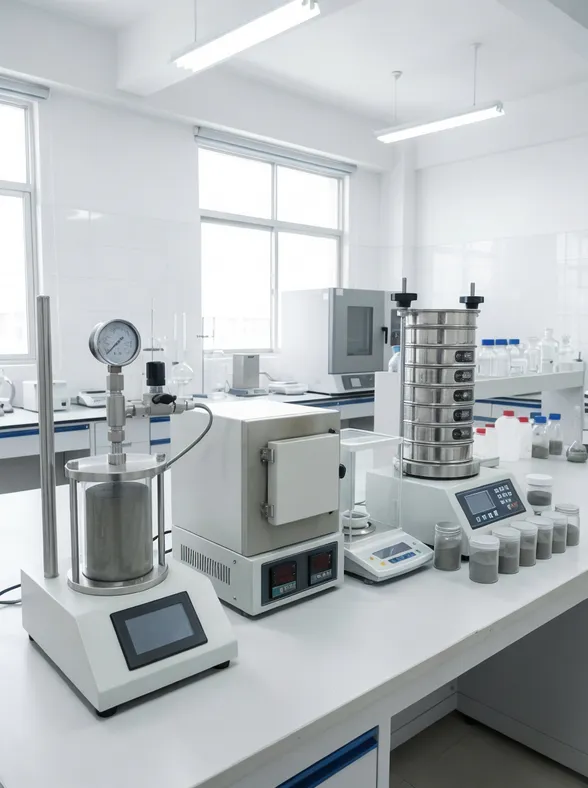
Sand testing equipment for monitoring reclaimed sand quality including permeability meters and LOI analyzers

Sizing Reclamation Capacity to Your Foundry

Reclamation capacity must match daily sand consumption. Under-sized reclamation creates a bottleneck where you're buying new sand continuously instead of reusing what you have.

100 ton/mo

Example foundry output

3–5 ton/day

Sand consumption (varies by casting size and sand-to-metal ratio)

6–8 hrs

Required processing window to avoid stockpiling

Cost impact of under-sizing: A $2,000/month sand cost turns into $8,000/month when reclamation can't keep up with consumption and you're forced to purchase new sand continuously.

Centralized Process Intelligence

Control Systems and Integration — PLC Programming and Remote Diagnostics

Control systems integrate all machinery through PLC programming, providing centralized process monitoring, parameter adjustment, and data logging. We use Siemens or Mitsubishi PLCs depending on your preference and existing equipment base — if you're already running Siemens on other foundry equipment, we match that platform so your maintenance team works with familiar hardware and software.

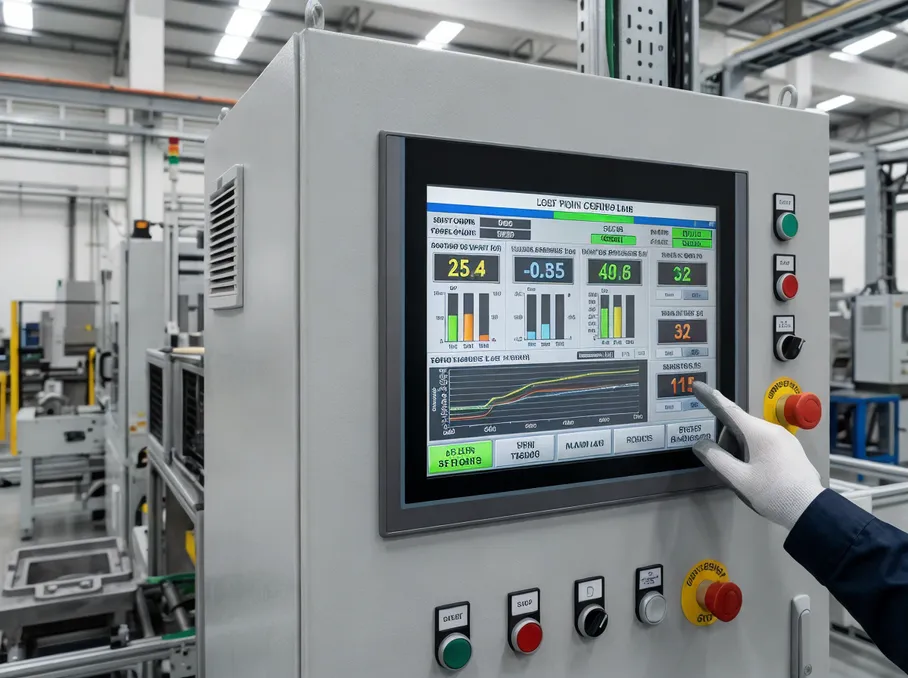
PLC control panel with HMI touchscreen displaying real-time process parameters for lost foam casting line

HMI Operator Interface

HMI touchscreens at each equipment station display process parameters, alarm status, and production counts. Operators adjust coating viscosity setpoints, vacuum pressure targets, vibration parameters, and drying temperatures without accessing PLC code.

HMI screens show real-time sensor readings (pressure, temperature, flow rate) and trend graphs for the last 8–24 hours — this helps operators spot gradual parameter drift before it causes defects.

Process Parameter Logging & Quality Traceability

Every casting gets a unique ID linked to process data: coating batch number, drying time and temperature, vacuum pressure during pouring, sand LOI at molding time. When castings fail inspection, you pull the data logs for those specific molds and identify which parameter was out of spec.

Coating Batch

Batch number linked to each casting for material traceability

Drying Conditions

Time and temperature recorded per drying cycle

Vacuum Pressure

Pressure logged during pouring for mold stability verification

Sand LOI

Loss on ignition measured at molding time for sand quality

Proven Scrap Reduction Through Data Visibility

We've worked with foundries that cut scrap rates from 8–12% to 3–5% within six months just by using data logs to tighten process control — the equipment was capable of better quality, but without data visibility, operators couldn't identify which variables mattered most.

Remote Diagnostics — Resolve Issues Without Site Visits

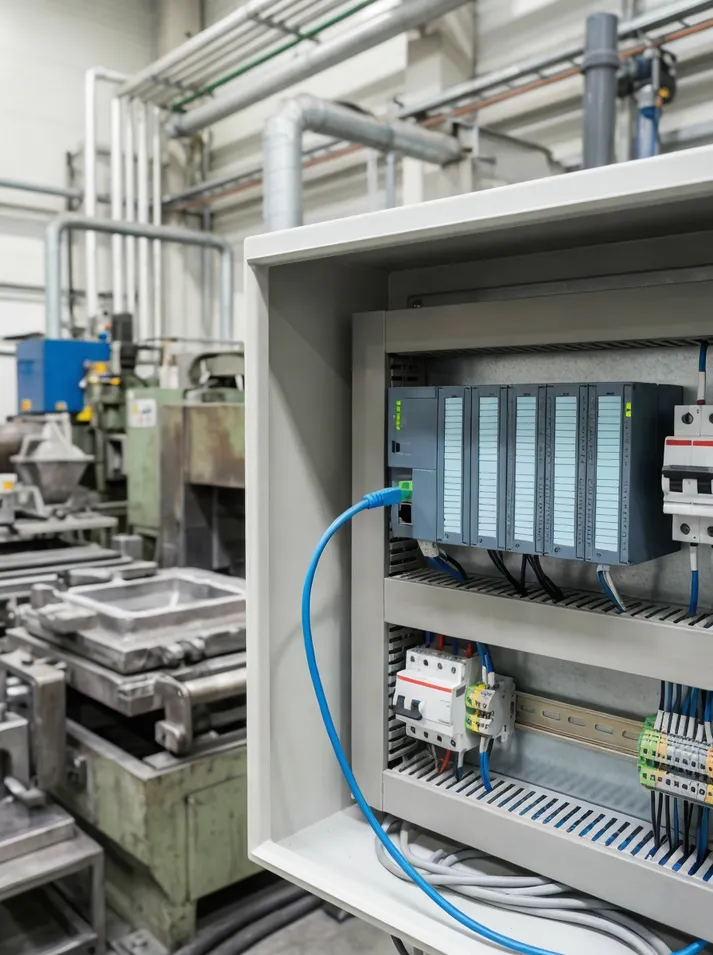
Remote diagnostics capability connects PLCs to our technical support team via Ethernet or 4G cellular. When equipment faults, we log into your PLC remotely, review alarm history, check sensor readings, and identify the root cause — usually within 2–4 hours.

Without remote access, you're describing symptoms over email, we're guessing at causes, and you're swapping components until something works.

60–70%

of technical issues resolved remotely without site visits

2–4 hrs

typical remote root-cause identification time

The remaining 30% need physical inspection or component replacement, but remote diagnostics tells us exactly which parts to bring, so we're not making multiple trips.

Remote diagnostics connection via Ethernet to PLC for foundry equipment troubleshooting

Alarm Systems — Tiered Response for Process Deviations

Alarm systems notify operators when parameters drift out of spec. Alarm priority levels distinguish between conditions that need attention within an hour and situations that require immediate production stoppage.

Attention — Within 1 Hour
  • Coating viscosity drifting outside setpoint range
  • Gradual parameter drift detected on trend graphs

Visual alarms (flashing lights on HMI) and audible buzzers

Critical — Stop Production
  • Vacuum pump failure during active pouring
  • Coating tank empty during production run
  • Drying chamber over-temperature condition

Visual + audible alarms, plus optional SMS/email alerts

We program alarm setpoints during commissioning based on your process tolerances and quality requirements.

Multi-Line Monitoring & SCADA Integration

Multi-line monitoring allows one supervisor to oversee multiple production lines from a central control room. Network architecture connects individual equipment PLCs to a supervisory SCADA system that displays production status, equipment utilization, and alarm summaries for all lines.

This works for foundries running 2–4 lost foam lines or mixed operations (lost foam + green sand + resin sand) where centralized monitoring reduces labor cost and improves response time to equipment issues.

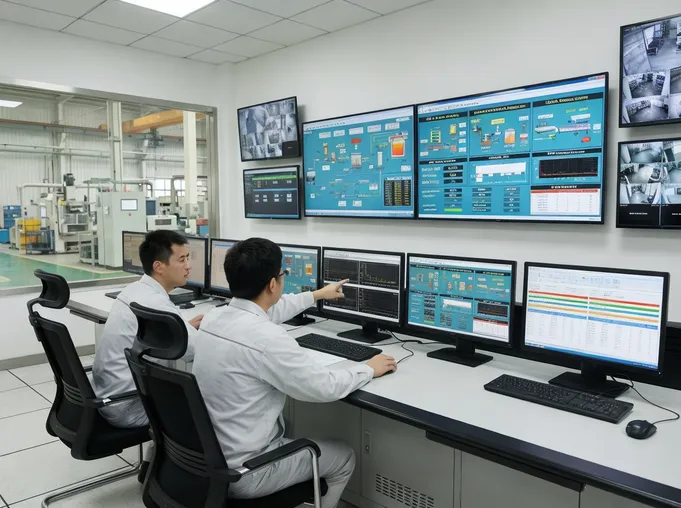
SCADA supervisory system in central control room monitoring multiple lost foam casting production lines

Voltage & Power Configuration

Integration requirements depend on your existing equipment and facility infrastructure. Voltage standards vary by region:

Europe, Asia, Middle East 380V Three-Phase 50 Hz
North America 480V Three-Phase 60 Hz

We configure motor starters, heaters, and control transformers to match your power supply.

Communication Protocols

PLC networking protocols are matched to whatever your existing equipment uses — no protocol converters or gateways required.

Profibus
Ethernet/IP
Modbus RTU

New machinery integrates directly into your existing control network without additional hardware.

Sensor Compatibility

Pressure sensors, temperature probes, and flow meters are specified to match your PLC input modules directly.

Analog 4–20mA signal output
Digital IO-Link, HART protocols

If you're adding a vacuum system to an existing line, the new pressure sensors match the signal type your PLC expects. During commissioning, we verify sensor calibration and scaling so displayed values match actual process conditions.

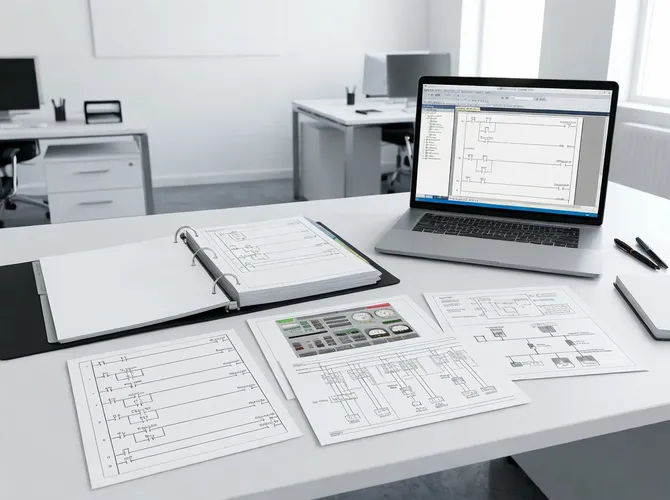
Control system documentation package including PLC ladder logic, HMI screen layouts, and I/O wiring diagrams delivered in editable format
Full Editable Documentation

Control System Documentation — Complete Knowledge Transfer

Control system documentation includes PLC ladder logic source code, HMI screen layouts, I/O wiring diagrams, and network architecture drawings. We provide this in editable format — not just PDFs — so your maintenance team can modify control logic, add new equipment, or troubleshoot faults without calling us for every change.

PLC Ladder Logic

Editable source code for all control sequences and interlocks

HMI Screen Layouts

Operator interface designs with full source files for modification

I/O Wiring Diagrams

Complete input/output mapping for every sensor, actuator, and device

Network Architecture

Communication topology drawings for PLC, HMI, and field device networks

Process Parameter Tables — Operational Knowledge Transfer

Documentation also includes process parameter tables that explain the relationship between settings and casting quality. This is the knowledge transfer that lets your team optimize the line for new casting designs — understanding how adjustments to vacuum pressure, sand compaction frequency, or coating thickness affect final part quality without relying on external support for every product changeover.

Configuration Planning

Matching Machinery Configuration to Your Foundry Operation

Which machines to buy and in what sequence depends on your current situation and growth plan. Four common scenarios guide the decision.

Upgrading Capacity on Existing Lines

You're running a lost foam line that's hitting throughput limits. Identify the bottleneck first — if coating drying takes 12 hours but you're only running 8-hour shifts, you need more drying capacity, not more coating tanks. If molding stations are idle 30% of the time waiting for coated patterns, you need faster pattern handling or additional coating equipment.

How We Approach It

We map your current process cycle times — pattern prep, coating, drying, molding, pouring, shakeout — and identify which stage limits throughput. Then we size additional machinery to eliminate that bottleneck.

Typical investment: $30,000–$80,000 for capacity upgrades (adding one coating line, expanding drying chambers, or adding molding stations).

Replacing Aging Equipment

Vacuum pumps, coating drying systems, and vibration motors fail most frequently because they run continuously under harsh conditions — heat, dust, chemical exposure.

Expected Service Life by Component

Vacuum Pumps
5–8 years
Drying Chamber Heating Elements & Fans
3–5 years
Vibration Motors
4–6 years

Upgrade Recommendation

When planning replacements, consider upgrading to PLC-controlled versions even if your current equipment is manual — the control precision and data logging capability usually justify the 20–30% cost premium. Replacement machinery integrates with existing equipment through mechanical interfaces and electrical connections, so you're not rebuilding the entire line.

Foundry floor layout showing machinery configuration planning for lost foam casting production lines

Building Custom Line Configurations

You need lost foam capability but your casting mix, facility layout, or budget doesn't fit a standard turnkey line. Start with core equipment: coating system (dip tank or spray booth depending on casting geometry), drying chambers sized for daily volume, molding machinery (vibration tables and flask handling), and vacuum system. This gets you producing castings.

Then add automation incrementally: pattern handling conveyors, automated coating viscosity control, PLC integration, remote diagnostics.

Investment Pathway

1

Manual Starter Configuration

$120,000–180,000 — core equipment producing castings from day one

2

Incremental Automation (2–3 Years)

Total investment reaches $250,000–350,000 — same capability as a turnkey automated line but spread over time as production volume and cash flow grow

Entering Lost Foam From Other Casting Methods

You're currently running green sand, permanent mold, or investment casting and want to add lost foam capability for specific product lines. Evaluate which castings suit lost foam — complex geometries with tight tolerances, low-to-medium production volumes (50–2,000 units/year per part), aluminum or iron alloys.

Don't convert your entire operation; run lost foam alongside existing methods and shift products gradually as you build process expertise. Initial machinery investment focuses on proving the process: small coating system, batch molding equipment, manual material handling.

Proof-of-Concept Line

$80K–150K

Initial investment

3–8 T/mo

Production capacity

Once you've validated quality and economics, scale up with additional coating capacity, automated molding, and higher-throughput shakeout equipment.

Integration Considerations

These factors affect machinery selection regardless of your entry scenario. Verify each before committing to equipment specifications.

Power Supply Capacity

Verify your facility has available electrical capacity for new equipment.

80–150 kW

Complete line draw depending on configuration

Floor Space Requirements

Machinery footprint plus clearance for maintenance access and material flow:

  • Coating equipment40–60 m²
  • Molding machinery30–50 m²
  • Shakeout & reclamation50–80 m²

Control System Compatibility

If you're integrating with existing equipment, new machinery must communicate with your current PLC platform — otherwise you're building isolated systems that can't share data.

Modular Expansion Path

Each automation step adds 15–25% to equipment cost but reduces labor by 20–40% and improves process consistency. At $15–20/hour labor rates and 200+ tons/year production, automation pays back in 18–24 months.

1

Manual Baseline

Manual equipment for pattern handling and flask transfer. Lowest capital outlay, highest labor requirement.

2

Semi-Automated

Automated viscosity control with manual pattern loading. Balances investment against labor savings and consistency gains.

3

Fully Automated

Conveyor-fed coating, automated molding, integrated control. Maximum throughput and process repeatability.

Typical Investment Ranges by Machinery Category

Machinery Category Investment Range Includes
Pattern Handling $15,000–40,000 Storage racks, gluing stations, assembly fixtures
Coating Systems $25,000–80,000 Dip tanks or spray booths, viscosity control, drying chambers
Molding Machinery $30,000–70,000 Vibration tables, flask handling, sand filling
Vacuum Systems $20,000–50,000 Pumps, regulators, distribution manifolds, sensors
Shakeout & Reclamation $40,000–100,000 Cooling conveyors, shakeout equipment, sand separation, dust collection, reclamation machinery
Control System Integration $15,000–35,000 Depends on automation level and remote diagnostics capability

Need a complete turnkey configuration?

View complete lost foam production line systems if you're building a new foundry or replacing an entire line rather than upgrading individual machines.

View Production Lines
Equipment Reference Data

Technical Specifications Summary

Typical capacity, power, footprint, control, and lead-time ranges for standard lost foam casting machinery configurations. Exact specifications vary by customization level and production requirements.

Equipment Type Capacity / Throughput Power Requirements Footprint Dimensions Control Options Typical Lead Time
Pattern Storage Racks 500–2,000 patterns None (passive) 3×2×2.5m to 6×3×3m N/A 4–6 weeks
Gluing Stations 20–60 patterns/shift 2–5 kW (hot-melt systems) 1.5×1×1.2m per station Manual or PLC 6–8 weeks
Dip Coating Tanks 200–800L capacity 3–8 kW (agitation) 2×1.5×1.5m to 4×2×2m Manual or automated viscosity control 8–10 weeks
Spray Coating Booths 1–3 m³ work volume 8–15 kW (spray + ventilation) 2×2×2.5m to 4×4×5m PLC with automated spray guns 10–12 weeks
Drying Chambers 2–8 m³ capacity 15–40 kW (electric) or gas-fired 2×2×2.5m to 4×3×3m Temperature control, timers 8–10 weeks
Vibration Tables 500×500mm to 1,200×1,200mm 2–8 kW per table 1×1×1m to 2×2×1.2m Manual VFD or PLC recipes 8–10 weeks
Flask Handling (Cranes) 1–5 ton capacity 3–10 kW Overhead installation Manual or semi-automated 6–8 weeks
Vacuum Pumps 50–200 m³/hr per station 5–15 kW per pump 1×0.8×1.2m per pump PLC pressure regulation 8–10 weeks
Cooling Conveyors 4–12 molds capacity 2–5 kW 6–15m length × 1–1.5m width Variable speed control 8–10 weeks
Shakeout Equipment 6–15 molds/hour 5–12 kW 3×2×2m to 5×3×2.5m Manual or automated cycle 10–12 weeks
Sand Reclamation (Thermal) 500–2,000 kg/hr Gas-fired (200–500 kW thermal) 8–15m length × 2–3m width Temperature control, feed rate 12–14 weeks
Sand Reclamation (Mechanical) 1,000–3,000 kg/hr 15–40 kW 3×2×2.5m to 5×3×3m Variable speed, PLC 10–12 weeks
Dust Collection Systems 5,000–15,000 m³/hr 10–25 kW 2×2×3m to 3×3×4m Automatic pulse cleaning 8–10 weeks

Specifications shown are typical ranges for standard configurations. Exact specs vary by customization. Contact us for detailed machinery data sheets tailored to your foundry's throughput and layout requirements.

Power Range

From passive storage racks to 500 kW thermal reclamation — plan your electrical and gas infrastructure around these baselines.

Footprint Planning

Compact single-station units from 1×0.8m up to 15m-length conveyors and reclamation lines — use these dimensions for facility layout.

Lead Time Window

4–14 weeks depending on equipment complexity. Thermal sand reclamation carries the longest lead; passive storage ships fastest.

Integration & Installation Planning

Integration and Installation Requirements

Getting machinery into your facility is only half the job — matching power supply, floor space, and control architecture to your existing operation determines how fast you reach production quality.

Power Supply Requirements

Per-Machine & Total Capacity

Power supply requirements vary by machinery configuration. Individual machines draw 2–40 kW depending on type and size — pattern handling equipment needs minimal power (2–5 kW for gluing stations), while coating drying chambers and sand reclamation equipment draw 15–40 kW.

50-Ton/Month Foundry Benchmark
80–120 kW

Total electrical capacity for a complete machinery set. Verify your facility has available capacity before ordering.

If you're running near your transformer limit, you'll need electrical service upgrades that add 8–12 weeks to your installation timeline. Factor this into procurement planning.

Voltage & Frequency Standards

Regional Configuration

Voltage and frequency standards must match your regional power supply. Motor starters, heating elements, and control transformers ship pre-wired for your voltage specification.

380V / 3φ / 50 Hz

Europe · Asia · Middle East

480V / 3φ / 60 Hz

North America

Unstable Power Supply Regions

We recommend adding voltage regulators or UPS systems for control equipment — PLC memory corruption from power fluctuations causes more downtime than mechanical failures in our experience.

Facility Space Planning

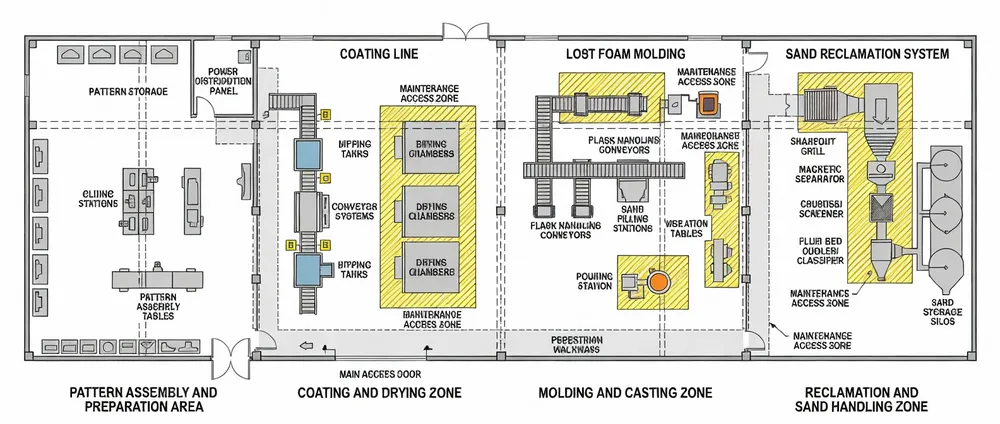
Facility space planning accounts for equipment footprint plus maintenance clearance. Allow 1–1.5 meters clearance on all sides for operator access and maintenance.

Zone A

Coating Equipment

40–60 m²

Includes dip tanks, drain racks, and drying chambers. Allow 1–1.5 m clearance on all sides for operator access and maintenance.

Zone B

Molding Machinery

30–50 m²

Covers vibration tables, sand hoppers, and flask staging areas for molding and compaction operations.

Zone C

Shakeout & Reclamation

50–80 m²

Conveyor systems and dust collection ductwork require more floor space than compact machinery.

Total

Complete Machinery Set

150–250 m²

Total facility requirement depending on production capacity and layout efficiency.

Facility floor plan showing equipment zones for coating, molding, and reclamation machinery with maintenance clearance areas marked

Control System Compatibility

PLC Integration & Communication Protocols

Control system compatibility matters when integrating new machinery with existing equipment. If you're running Siemens PLCs on your current line, we configure new machinery with Siemens controllers so everything communicates on the same network.

Matched PLC Brand

Same-brand controllers communicate on the same network — centralized monitoring and data sharing across your entire line.

Mixed PLC Brands

Requires protocol gateways or separate control systems — this works but eliminates the benefit of centralized monitoring and data sharing.

Profibus Ethernet/IP Modbus RTU

We match your existing protocol during engineering design so network integration happens during commissioning without additional hardware.

Commissioning Timeline

From mechanical assembly through operator training

Commissioning timeline includes mechanical assembly, electrical hookup, parameter calibration, and operator training.

1

Mechanical Assembly

3–7 Days

Pattern handling equipment assembles quickly (2–3 days), while coating systems with drying chambers and reclamation equipment take longer (5–7 days).

2

Electrical Hookup

2–4 Days

Power connections, control wiring, and sensor installation across all machinery stations.

3

Parameter Calibration

3–5 Days

Test batches with your sand and coating materials — tuning vibration frequencies, drying temperatures, vacuum pressures, and reclamation settings to achieve target quality.

4

Operator Training

2–3 Days

Covers equipment operation, parameter adjustment, routine maintenance, and troubleshooting procedures for your team.

Installation Timeline

2–4 Weeks

From equipment arrival to production-ready status

This assumes your facility preparation is complete — power supply installed, floor space cleared, overhead cranes rigged if needed.

Common Delay Factor

Delays typically come from incomplete facility prep. If we arrive and your electrical service isn't ready or floor anchors aren't installed, we're waiting on your contractors before we can proceed.

Operator Training Requirements

Training requirements depend on automation level. Two distinct tracks cover the range of equipment configurations:

Manual Equipment Operators

Operators need to understand process fundamentals — coating viscosity effects, vibration parameter selection, vacuum pressure requirements. Training focuses on parameter adjustment based on casting results.

Automated Equipment Operators

Operators need to interpret HMI displays, respond to alarms, and perform basic PLC troubleshooting. Less process-level adjustment, more system monitoring and diagnostics.

Documentation and Support

Operation Manuals

Complete operating procedures for every machine in your line

Maintenance Schedules

Preventive maintenance intervals and replacement part lists

Troubleshooting Guides

In English, with other languages available on request

Follow-Up Support

Phone/email technical assistance plus optional on-site visits during the first 6–12 months of operation

Get Machinery Specifications and Pricing for Your Operation

Send us your current equipment list, casting portfolio, and facility constraints so we can recommend the right configuration.

Machinery Selection & Operation

FAQ — Lost Foam Casting Machinery Selection and Operation

Technical answers to the questions foundry engineers and procurement teams ask most when specifying, sizing, and integrating lost foam casting machinery.

What power requirements do lost foam casting machines need?

Power requirements range from 2 kW for small pattern handling equipment to 40 kW for large drying chambers and sand reclamation machinery. A typical machinery configuration for 50-ton/month production draws 80–120 kW total. Voltage standards are 380V three-phase 50 Hz (Europe, Asia, Middle East) or 480V three-phase 60 Hz (North America) — we configure equipment to match your regional power supply.

Verify your facility has available electrical capacity before ordering. If you're near your transformer limit, plan for electrical service upgrades that add 8–12 weeks to installation timeline.

Individual Machine Power Draws

Pattern Gluing Stations 2–5 kW
Coating Dip Tanks 3–8 kW
Spray Booths 8–15 kW
Drying Chambers 15–40 kW
Vibration Tables 2–8 kW
Vacuum Pumps 5–15 kW
Shakeout Equipment 5–12 kW
Sand Reclamation 15–40 kW

Can lost foam machinery integrate with existing foundry equipment?

Yes, if control system compatibility is addressed during engineering design. We configure new machinery to match your existing PLC platform (Siemens, Mitsubishi, Allen-Bradley) so equipment communicates on the same network. Mixed PLC brands require protocol gateways or separate control systems — this works but eliminates centralized monitoring benefits.

Physical Integration Requirements

  • Flask dimensions must match between molding and shakeout equipment
  • Vacuum manifolds must connect to existing distribution systems
  • Sand reclamation output must feed back to molding hoppers

We review your current equipment specifications during quoting and identify integration requirements. Most common integration scenario: adding coating capacity or molding stations to existing lines. This requires matching flask sizes, coordinating control signals (start/stop, alarm status), and verifying that upstream/downstream equipment can handle increased throughput.

PLC Platform Note: We configure new machinery to match Siemens, Mitsubishi, or Allen-Bradley platforms. Mixed PLC brands require protocol gateways or separate control systems — functional, but centralized monitoring benefits are lost.

What is the typical lead time for lost foam casting machinery?

Production lead time is 12-16 weeks for most machinery types. The total timeline from order to production-ready runs 16-24 weeks, depending on equipment complexity, shipping distance, and installation scope.

Pattern Handling Equipment

4-8 Weeks

Simpler fabrication requirements allow shorter production cycles.

Coating Systems

8-12 Weeks

Tanks, spray booths, and drying chambers require more manufacturing steps.

Molding & Vacuum Equipment

8-10 Weeks

Mid-range complexity with standard engineering configurations.

Shakeout & Reclamation

10-14 Weeks

Largest and most complex systems in the production line.

Shipping (Ocean Freight)

2-4 Weeks

Covers transit to most export markets worldwide.

Installation & Commissioning

2-4 Weeks

On-site setup, calibration, and production validation.

Expedited production is available for a 15-20% premium, reducing lead time to 8-10 weeks for critical equipment. Custom configurations that require engineering design add 2-4 weeks for design and approval cycles before production starts.

How do I size vacuum systems for my casting mix?

Vacuum system sizing depends on three factors: alloy type, casting size, and number of simultaneous pouring stations. Getting the sizing right ensures mold stability during pouring and consistent casting quality.

Vacuum Pressure by Alloy Type

Aluminum Castings

0.04-0.06 MPa

Aluminum's lower density creates less sand compaction force. Without sufficient vacuum, molds shift during pouring, causing dimensional defects and surface irregularities.

Iron Castings

0.02-0.04 MPa

Iron's higher weight naturally compacts sand around the pattern, so lower vacuum pressure is sufficient to maintain mold integrity during the pour cycle.

Pump Capacity by Casting Size

Casting Size Weight Range Pump Capacity per Station
Small Castings <5 kg 50-80 m³/hour
Large Castings >50 kg 120-200 m³/hour

Larger castings vaporize more EPS and require vacuum maintenance over longer pour times, driving higher pump capacity requirements.

Multi-Station Configuration

Multiple pouring stations require either dedicated pumps per station or a central pump with manifold distribution. For central pump sizing: sum the capacity for all stations, then add 20-30% buffer for leaks and system losses.

Sizing Example

Setup: Three molding stations running aluminum castings, 10-20 kg average weight

Per-station capacity: 100 m³/hour each

Combined capacity: 3 × 100 = 300 m³/hour

With 30% buffer: 300 × 1.30 = 390 m³/hour pump capacity

We size vacuum systems during quoting based on your casting portfolio and production layout.

What maintenance do lost foam machines require?

Maintenance frequency and tasks vary by equipment type. We provide maintenance schedules with recommended service intervals and spare parts lists. Most foundries handle routine maintenance (oil changes, filter cleaning, lubrication) with in-house staff and call us for major repairs (pump rebuilds, motor replacement, PLC troubleshooting).

Vacuum Pumps

Highest-maintenance component — pumps run continuously under harsh conditions.

  • Oil changes every 500–1,000 operating hours
  • Vane replacement every 2,000–3,000 hours
Coating Equipment
  • Daily: Slurry density checks
  • Weekly: Filter cleaning (spray booth ventilation)
  • Quarterly: Pump seal inspection
Vibration Tables
  • Monthly: Motor bearing lubrication
  • Annual: Spring/mount inspection
Drying Chambers
  • Quarterly: Heating element inspection
  • Annual: Circulation fan bearing replacement
Sand Reclamation
  • Weekly: Screen cleaning
  • Monthly: Magnetic separator cleaning (iron foundries)
  • Quarterly: Attrition mill liner inspection
Control Systems

Minimal maintenance required.

  • Annual: PLC battery replacement and sensor calibration checks

Manual vs. automated lost foam machinery: which is right for my volume?

Manual equipment costs 30–40% less than automated systems but requires more labor and produces less consistent results. The economic breakpoint depends on your labor cost and production volume.

Manual Equipment
Below 100 tons/year

Best when you're proving the process or running low volume. Automation cost doesn't justify the savings at this scale.

Semi-Automated
100–200 tons/year

Automated coating viscosity control and vacuum pressure regulation (the parameters that most affect quality) with manual material handling — lower capital cost than full automation.

Full Automation
200+ tons/year

At $15–20/hour labor rates and 200+ tons/year production, automation pays back in 18–24 months through labor savings and reduced scrap rates.

Automation Consistency Advantage

PLC-controlled systems hold tighter parameter tolerances than manual operation, reducing defect rates by 30–50% in our experience.

If you're running high-value castings where scrap cost is significant, automation justifies itself at lower production volumes. Start with manual equipment if you're proving the process or running low volume, then add automation incrementally as production grows.

Factory Direct Since 2010

Why Source Lost Foam Machinery from TZFoundry

We've manufactured foundry equipment since 2010, running 8 production lines across 15,000 square meters in Qingdao. Lost foam casting machinery, clay sand processing equipment, and resin sand production lines — all built in-house with ISO 9001:2015, CE, and SGS certification. You're buying directly from the factory, so there's no distributor markup and we'll configure single-unit orders to your specifications.

Modular Design — Scale Without Replacement

Our machinery uses modular design philosophy — equipment scales without replacement. When your production grows from 50 tons/month to 150 tons/month, you add coating capacity or molding stations without rebuilding the line.

  • Vacuum systems size up through manifold expansion
  • Sand reclamation scales by adding parallel processing units
  • Control systems accommodate new equipment through network expansion

We've worked with foundries that started with 3-machine configurations and expanded to 12-machine lines over 5 years — the original equipment is still running because we designed for growth from the start.

In-House R&D — Custom Vacuum Sizing & Coating Support

Standard vacuum systems cover 80% of applications, but if you're running unusual alloy combinations or casting geometries outside typical ranges, we'll engineer custom pump configurations and pressure control logic.

Coating formulation support helps you match refractory slurry properties to your casting requirements — we've tested 40+ coating recipes across aluminum, iron, and steel alloys and can recommend formulations that work with your pattern materials and drying equipment.

Coating Recipe Library

40+ tested formulations across aluminum, iron, and steel alloys — matched to your pattern materials and drying setup.

Direct Factory Pricing — No Distributor Margins

Direct factory pricing eliminates distributor margins. Machinery that costs $180,000–$220,000 through distributors ships from us at $140,000–$170,000 for equivalent specifications. You're paying for manufacturing cost plus our margin, not three layers of markup.

This matters more on large orders — a complete machinery set saves $40,000–$80,000 compared to distributor pricing, which funds your facility preparation or buys additional automation.

Typical Savings Per Complete Set

$40K $80K

vs. distributor pricing

Distributor

$180K–$220K

Factory Direct

$140K–$170K

Export Experience — 15+ Countries Across 4 Continents

Export experience covers 15+ countries across North America, Europe, Middle East, and Southeast Asia. We handle voltage adaptation (380V/480V, 50Hz/60Hz), control system localization (HMI screens in English, Spanish, Arabic, or other languages), and customs documentation (commercial invoices, packing lists, certificates of origin).

Voltage Adaptation

380V/480V, 50Hz/60Hz

HMI Localization

English, Spanish, Arabic & more

Customs Documentation

Invoices, packing lists, COO

Container Shipping

20GP or 40HQ with protective packaging

Equipment ships in standard containers (20GP or 40HQ depending on machinery size) with protective packaging and installation hardware included. We've shipped to facilities with challenging logistics — remote locations, restricted site access, limited crane capacity — and can advise on rigging and installation planning.

24-Hour Technical Support

Service model includes 24-hour technical support via phone, email, and remote diagnostics. When equipment faults, we log into your PLC remotely (if you've enabled network access), review alarm history and sensor data, and identify root causes within 2–4 hours.

We've resolved 60–70% of technical issues remotely without site visits. For issues requiring physical inspection or component replacement, we dispatch technicians or ship spare parts via express courier (3–5 days to most markets).

Warranty Coverage

18 months from commissioning or 24 months from shipment, whichever comes first — this protects you during the learning curve when operators are still developing process expertise.

Spare Parts Warehouse

Spare parts warehouse stocks wear components for all machinery types:

  • Vacuum pump vanes and seals
  • Vibration motor bearings
  • Coating pump impellers
  • Drying chamber heating elements
  • PLC I/O modules, sensors

3–5 Days

Stocked parts lead time

6–12 Weeks

Custom-manufactured parts

On-Site Spare Parts Recommendation

We recommend stocking critical spares on-site — vacuum pump rebuild kits, spare sensors, motor contactors — so you're not waiting on international shipping when equipment fails. We'll provide recommended spare parts lists during commissioning based on your production schedule and maintenance capabilities.

Get Your Configuration Quote

Get Machinery Specifications and Pricing

Send us your current equipment list, casting portfolio, and facility constraints so we can recommend the right machinery configuration.

Current Equipment

What machinery you're already running (if upgrading existing lines):

  • Equipment age and condition
  • Control system platform (Siemens, Mitsubishi, other)
  • Known bottlenecks or capacity limits

Casting Portfolio

Details about your casting operations and requirements:

  • Part drawings or photos showing casting geometries
  • Weight ranges (kg per casting)
  • Alloy types (aluminum, iron, steel)
  • Annual production volumes per part
  • Quality requirements (dimensional tolerances, surface finish specs)

Facility Constraints

Your site conditions and infrastructure details:

  • Available electrical capacity (kW and voltage)
  • Floor space dimensions
  • Overhead crane capacity (if installed)
  • Power supply stability
  • Environmental conditions (temperature range, humidity, dust levels)

What You'll Receive

We'll respond within 24 hours with machinery recommendations, technical specifications, factory pricing, and lead time estimates. For complex configurations requiring custom engineering, we'll schedule a technical review call to discuss integration requirements and process optimization opportunities.

Lead Time Overview

Production 12–16 weeks
Shipping 2–4 weeks
Installation & Commissioning 2–4 weeks

For standalone machinery units. Expedited production available for critical orders.

Request Machinery Specifications & Pricing

Include your equipment list, casting portfolio, and facility details for the fastest response.