Certified Foundry Equipment Manufacturer

Foundry Equipment Certifications & Quality Assurance

ISO 9001:2015 certified foundry equipment manufacturer with complete quality documentation for export markets.

Three-stage inspection process from incoming materials to pre-shipment commissioning. Every machine ships with test reports documenting actual performance data.

ISO 9001:2015 Certified CE Marked SGS Annual Audits Third-Party Inspection Supported
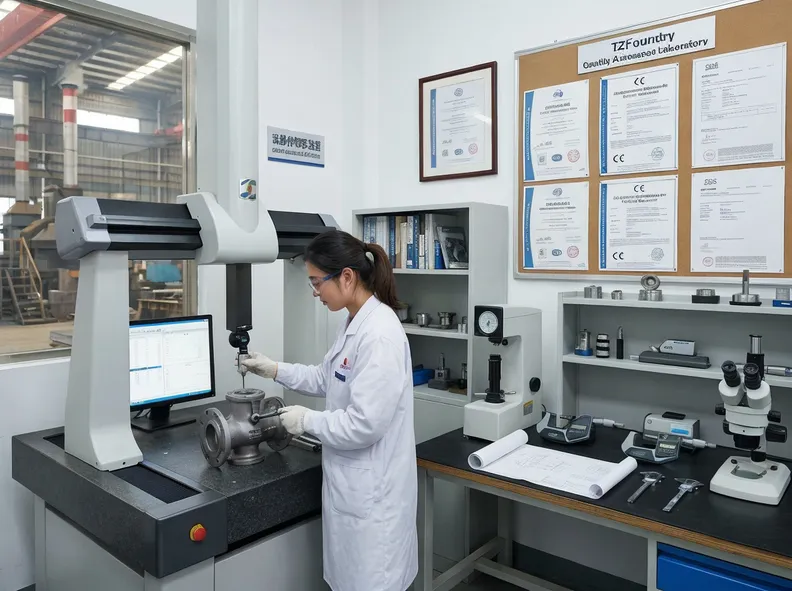
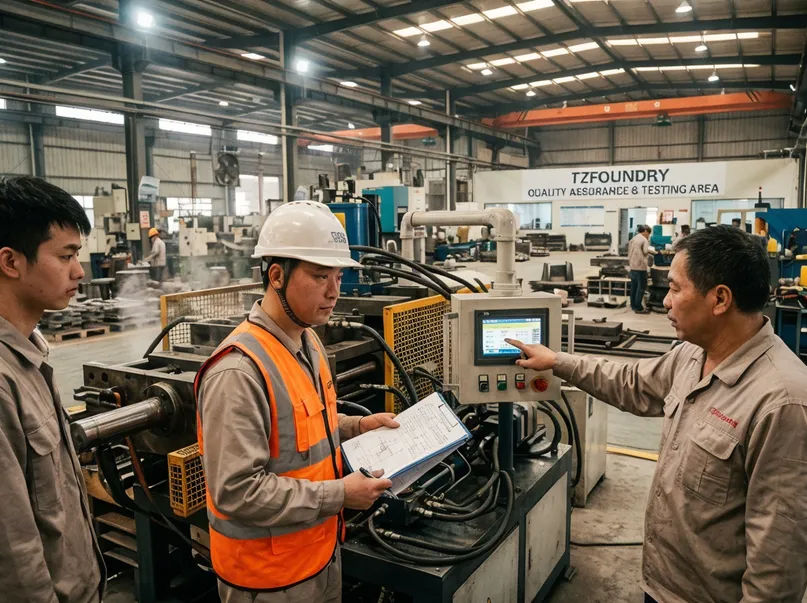
TZFoundry quality assurance laboratory with certification documents and testing equipment
Our Credentials

Quality Certifications We Hold

We maintain three core certifications that cover our manufacturing process and product compliance for export markets. These aren't decorative — they're the documentation your procurement team needs to clear customs and satisfy downstream compliance requirements.

ISO 9001:2015

International Organization for Standardization

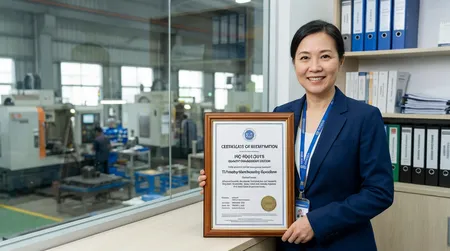
ISO 9001:2015 quality management system certification for TZFoundry manufacturing operations

Coverage Scope

All manufacturing operations — clay sand processing lines, lost foam casting systems, and resin sand production lines

What It Means for You

Quality management system certification. Standardized processes from material procurement through final inspection, reducing batch-to-batch variation in your equipment.

CE Marking

EU Machinery Directive 2006/42/EC

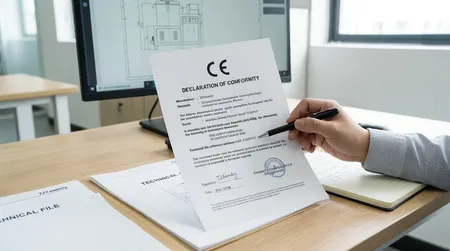
CE marking declaration of conformity documentation for foundry equipment exported to European markets

Coverage Scope

All equipment exported to European markets

What It Means for You

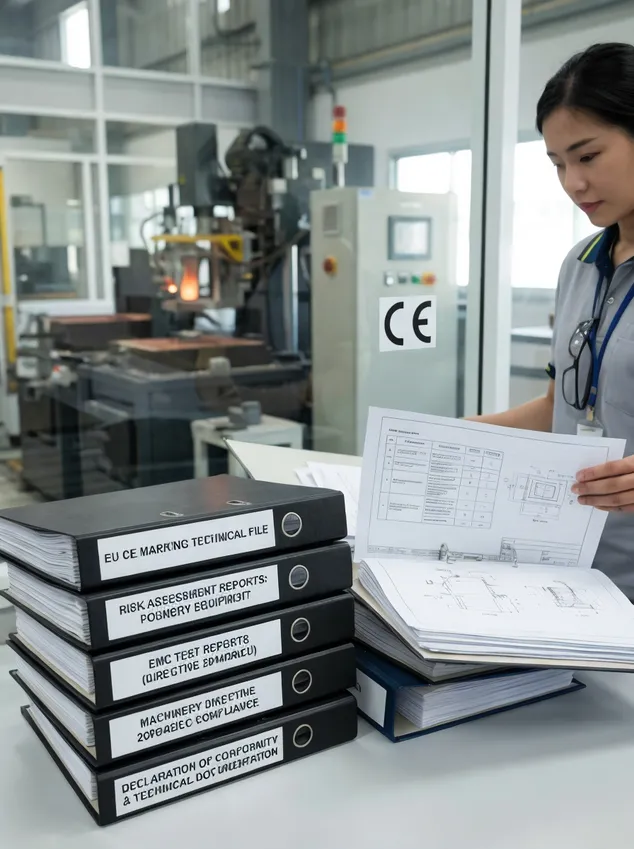
Compliance with EU safety and EMC requirements. Technical files maintained for each product line — risk assessments, test reports, and conformity declarations available for customs clearance.

SGS Certification

SGS Group (Third-Party)

SGS third-party factory audit and pre-shipment inspection certificate for foundry equipment

Coverage Scope

Annual factory audits + optional pre-shipment inspection

What It Means for You

Independent verification of our quality system and product conformity. Buyers use this for payment release and supplier qualification in tenders.

ISO 9001 is the backbone — it's a quality management system that standardizes how we handle everything from supplier selection to final testing. When you order 50 molding machines, ISO 9001 means machine #1 and machine #50 come off the line with the same dimensional tolerances and hydraulic pressure ratings. CE marking handles EU market access — we maintain technical files with risk assessments and EMC test reports for every product line we ship to Europe. SGS conducts annual audits of our facility and offers pre-shipment inspection services when your payment terms require third-party verification before release.

The certification documents (ISO certificate, CE declarations of conformity, SGS audit reports) are available upon request. Most buyers need these for customs clearance or to satisfy their own compliance departments before issuing a purchase order.

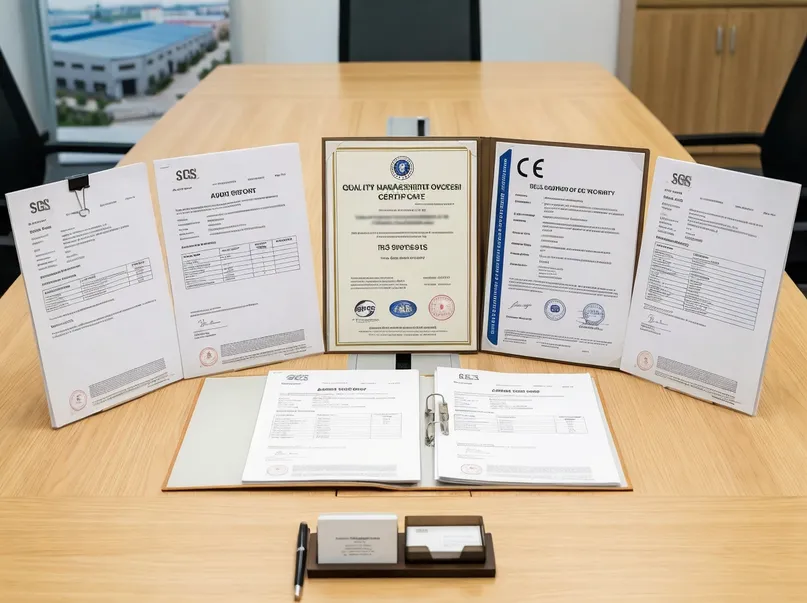
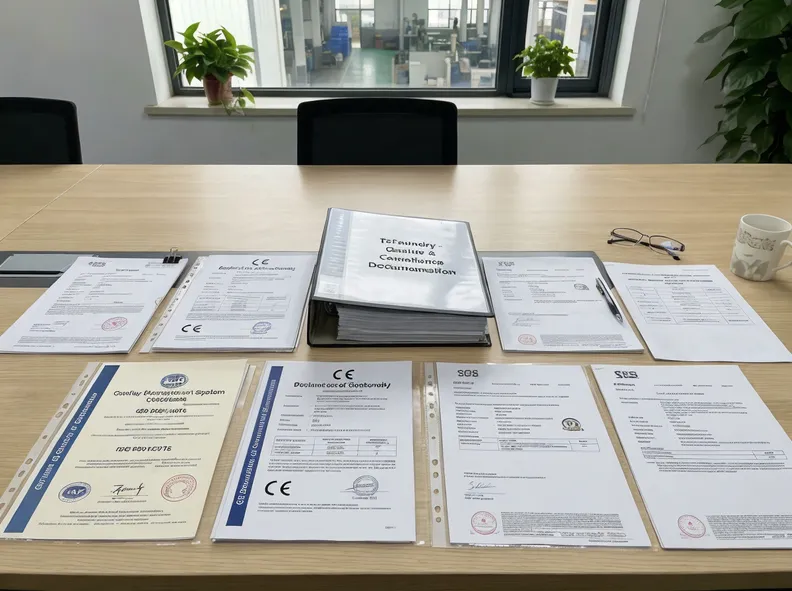
Complete certification document package including ISO certificate, CE declarations, and SGS audit reports
How We Execute

Three-Stage Quality Control Process

Certifications prove we're qualified. The QC process proves how we execute. Every machine passes through three inspection checkpoints before it leaves our facility — incoming material verification, in-process inspection during assembly, and pre-shipment commissioning with documented test results.

1

Incoming Material Inspection

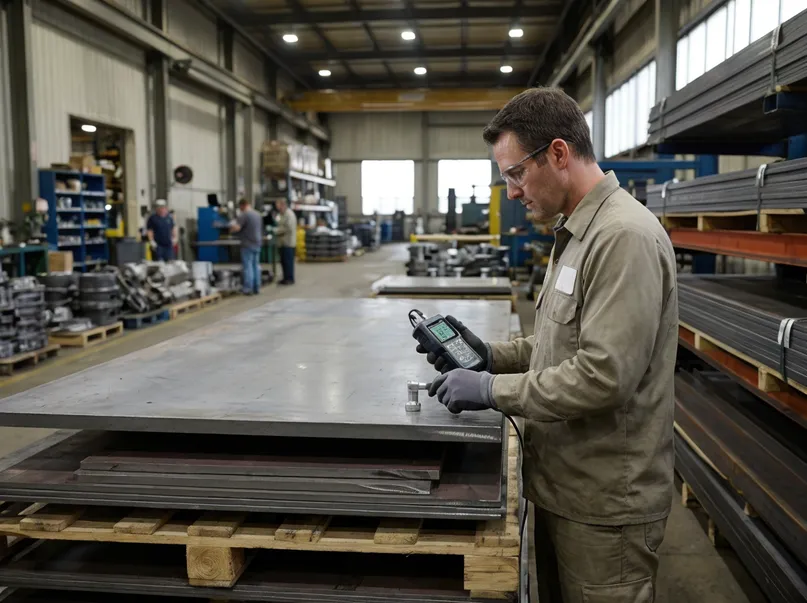
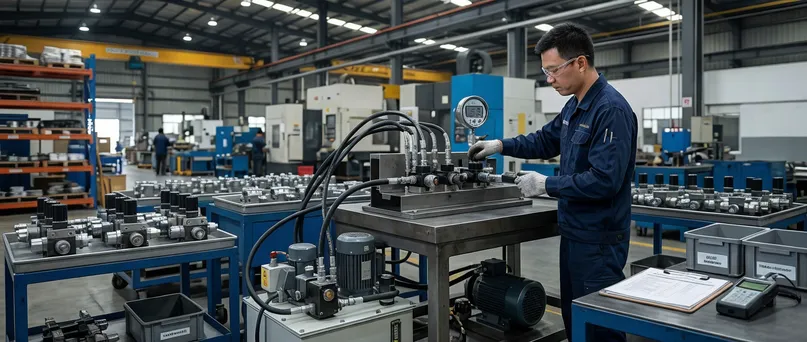
Raw materials and purchased components get verified against specifications before they enter production. Steel plate thickness is measured with ultrasonic gauges (we've caught suppliers shipping 8mm plate labeled as 10mm — that's a structural failure waiting to happen). Hydraulic components are pressure-rated and batch-tested. Electrical parts are checked against the bill of materials to ensure voltage ratings and control specifications match the order. Motors are bench-tested for rated output and insulation resistance.

This checkpoint prevents defective materials from contaminating the production line. When a European buyer orders equipment for 24/7 operation, a failed hydraulic seal or undersized motor becomes your warranty claim and their production downtime. We reject non-conforming materials at receiving, not after assembly.

Incoming material inspection using ultrasonic gauges to verify steel plate thickness and specifications
Hydraulic components undergoing pressure rating and batch testing at the receiving inspection station
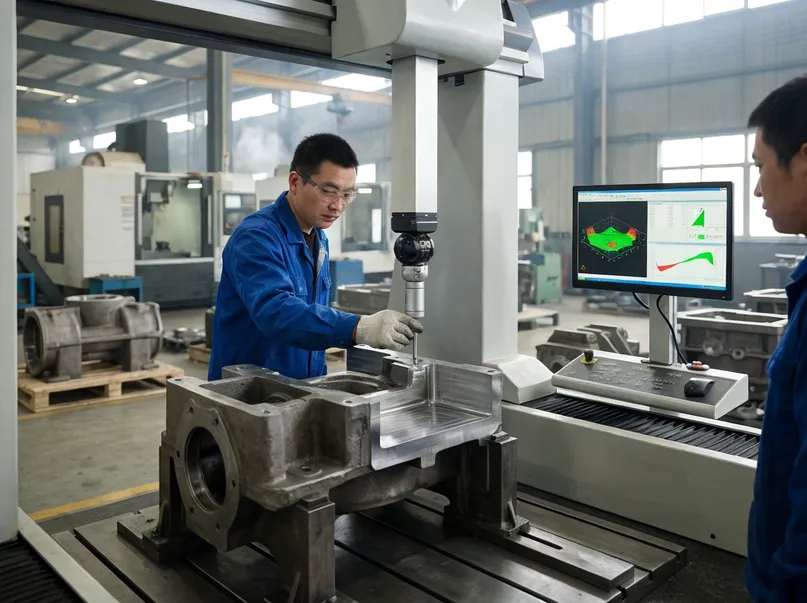
In-process dimensional inspection with coordinate measuring equipment verifying critical machined surfaces
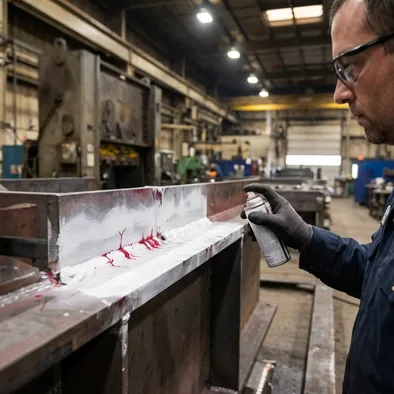
Dye penetrant inspection on structural weld joints checking for porosity and cracks
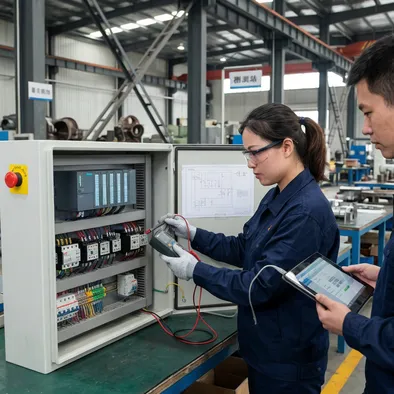
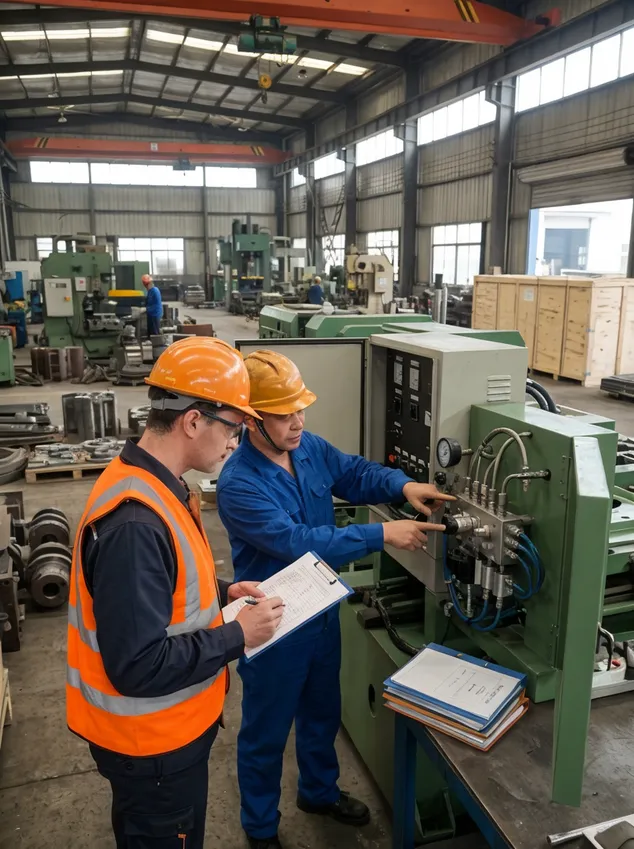
Electrical control panel function testing verifying PLC inputs outputs and emergency stop circuits
2

In-Process Inspection

Dimensional checks happen post-machining, before components move to assembly. Critical dimensions (mounting surfaces, shaft diameters, hydraulic cylinder bores) are verified to ±0.02mm tolerance using coordinate measuring equipment. Weld integrity is tested with dye penetrant inspection on structural joints — we're looking for porosity, cracks, or incomplete fusion that would compromise load-bearing capacity.

Hydraulic systems are pressure-tested at 1.5x rated capacity before installation. A molding machine rated for 16 MPa operating pressure gets tested to 24 MPa for 10 minutes. If it holds pressure without leaks or deformation, it passes. If it doesn't, we find out in our test bay, not in your foundry.

Electrical control panels are function-tested before they're mounted on the machine. Every relay, contactor, and PLC input/output is verified against the wiring diagram. Emergency stop circuits are tested under load to confirm response time meets safety requirements.

3

Pre-Shipment Commissioning

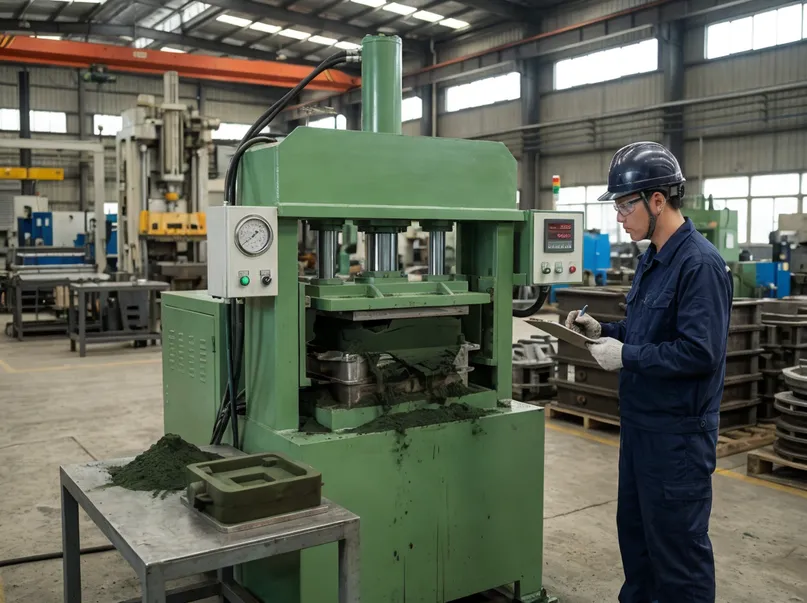
Every machine runs a full test cycle before crating. Molding machines complete 50 cycles with sand to verify compaction pressure, cycle time, and pattern ejection. Reclamation systems process test batches to confirm throughput and separation efficiency. Coating equipment is run with actual coating material to verify spray patterns and drying performance.

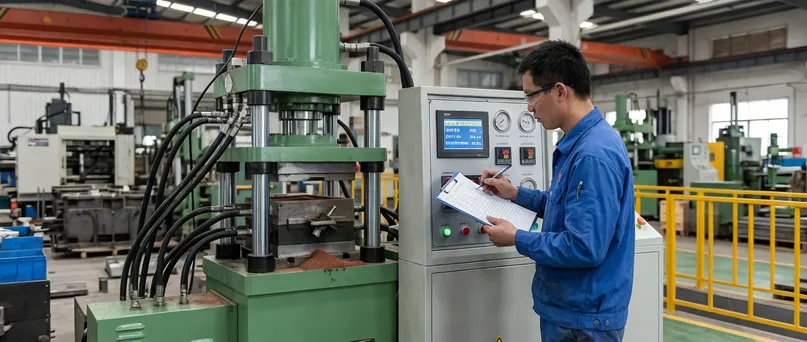
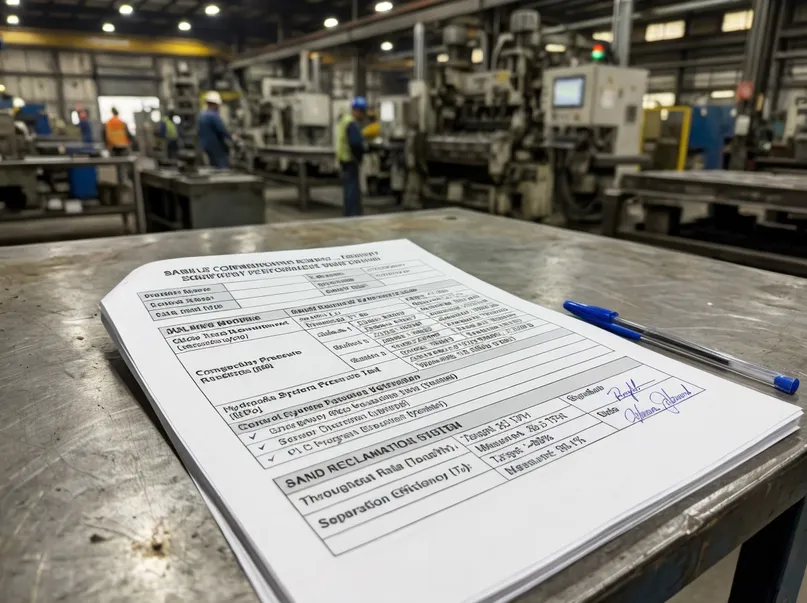
We document the results — cycle times, hydraulic pressure readings, motor current draw, control system function verification. This commissioning report ships with the machine. It's not a generic spec sheet; it's the actual measured performance of your specific unit. When you receive the equipment and run your own commissioning, you have a baseline to compare against. If something doesn't match, you know it happened in transit, not at our factory.

Pre-shipment commissioning of a molding machine running full test cycles with sand to verify performance
Technician recording commissioning test data including cycle times and hydraulic pressure readings

This three-stage process catches defects at the earliest possible point. Material defects are rejected at receiving (cost: material replacement). Manufacturing defects are caught during assembly (cost: rework one component). System-level issues are identified during commissioning (cost: troubleshooting in our facility with our technicians, not at your site with your production schedule at risk). The later you find a problem, the more expensive it becomes — for both of us.

Export Market Compliance

Compliance by Target Market

Export compliance requirements vary by destination. Here's what applies to foundry equipment in the markets we serve — practical information for clearing customs and satisfying your downstream customers' requirements.

European Union

CE marking is mandatory for machinery exported to EU member states. Our equipment complies with Machinery Directive 2006/42/EC (safety requirements for industrial machinery) and EMC Directive 2014/30/EU (electromagnetic compatibility limits to prevent interference with other equipment).

The technical file for each product line includes risk assessments identifying hazards (pinch points, hydraulic pressure, electrical shock), the protective measures we've implemented (guards, pressure relief valves, lockout/tagout provisions), and test reports documenting EMC compliance. We maintain these files for 10 years as required by the directive. When your customs broker or compliance team requests documentation, we provide the declaration of conformity and supporting test reports.

CE marking doesn't require third-party certification for most industrial machinery (it's a self-declaration process), but the technical file must demonstrate compliance with the essential health and safety requirements in the directive. We've had these files reviewed by notified bodies during customer audits — they hold up.

EU CE marking technical file including risk assessments and EMC test reports for foundry equipment
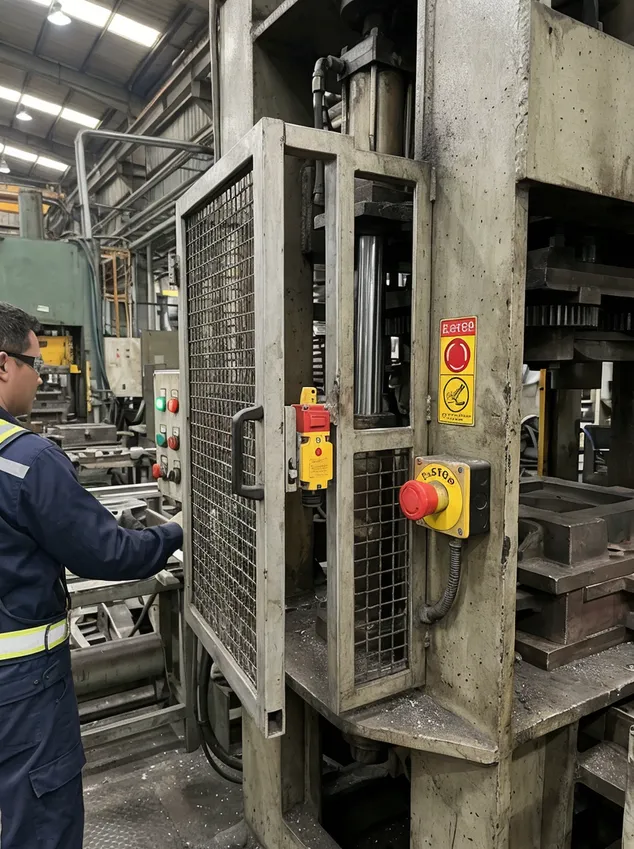
Industrial foundry equipment designed with OSHA safety compliance including guard interlocks and emergency stops

North America

The United States and Canada don't mandate product certification for industrial foundry equipment the way they do for consumer products. There's no UL listing requirement or CSA certification for molding machines and sand processing systems. Buyers typically rely on ISO 9001 certification as evidence of quality system capability, and they may request third-party inspection (SGS or equivalent) for large orders or first-time purchases.

Some buyers specify compliance with OSHA safety standards (machine guarding, lockout/tagout provisions, electrical safety). Our equipment is designed with these requirements in mind — guard interlocks, emergency stop circuits, and electrical enclosures rated for industrial environments. If your facility has specific safety requirements, we can provide documentation showing how the equipment meets them.

Middle East & Southeast Asia

SGS pre-shipment inspection is commonly required by buyers in these markets, particularly for letter-of-credit payment terms. The inspection verifies that the equipment matches the purchase order specifications, operates as described, and is properly packaged for export. We coordinate SGS inspections at our facility before shipment — the inspector witnesses commissioning tests and reviews quality documentation, then issues a certificate of inspection that you use for payment release.

ISO 9001 certification is frequently required for tender qualification in government projects and large industrial contracts. The certificate demonstrates that we operate a documented quality management system, which satisfies procurement requirements even when product-specific certification isn't mandated.

Some countries require certificate of origin and commercial invoice authentication through their embassy or chamber of commerce. We handle this documentation as part of our export process — you receive a complete document package with your shipment.

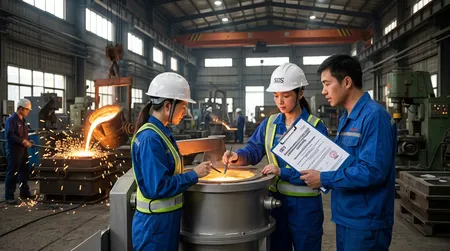
SGS pre-shipment inspection at TZFoundry facility verifying equipment against purchase order specifications
Independent Verification

Third-Party Testing & Factory Audits

SGS conducts annual audits of our quality management system — they review production processes, inspect QC documentation, and perform random product testing to verify that our ISO 9001 implementation is functioning as documented. The audit report confirms that we're maintaining the quality system, not just holding a certificate.

Beyond the annual audit, we support buyer-requested third-party inspections. If your payment terms require SGS pre-shipment inspection, we coordinate the visit, provide access to the equipment during commissioning, and supply the documentation the inspector needs to complete their report. The inspection typically covers:

Visual Inspection

Verify the equipment matches purchase order specifications (model, configuration, accessories)

Function Testing

Witness commissioning tests and confirm performance meets contractual requirements

Documentation Review

Check that quality records, test reports, and packing lists are complete

Packaging Inspection

Verify export packaging is adequate for ocean freight and container loading

The inspector issues a certificate of inspection that you use for payment release or customs clearance. This reduces your risk on first-time orders or large purchases — you have independent verification that the equipment was tested and functions as specified before it left our facility.

Third-party SGS inspector witnessing commissioning tests and reviewing quality documentation at TZFoundry facility
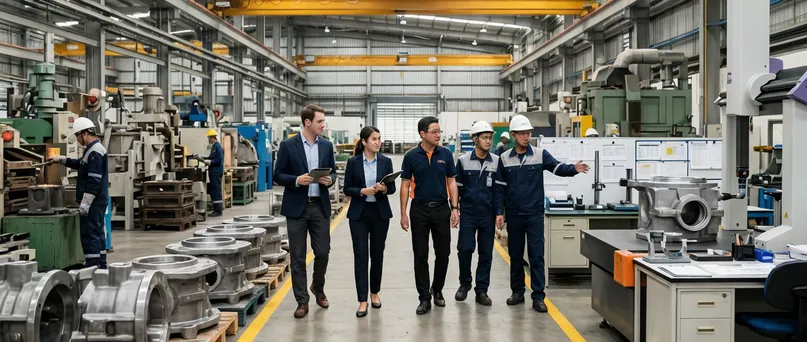
Factory audit walkthrough of production lines and quality control stations

We also accommodate factory audits from buyers who want to assess our capabilities before placing an order. You're welcome to visit, tour the production lines, review our QC processes, and inspect equipment during commissioning. Most distributors and large project contractors conduct supplier audits as part of their qualification process — we're set up to handle these visits. Contact us to schedule an audit or request SGS pre-shipment inspection for your order.

Buyer factory visit touring TZFoundry production lines and quality control processes
What Ships With Your Machine

Commissioning Reports & Documentation

Every machine ships with a commissioning report documenting the test results from that specific unit. This isn't a generic spec sheet copied from the product catalog — it's the actual measured performance data from your equipment.

For a molding machine, the commissioning report includes cycle time measurements (typically 60-90 seconds per cycle depending on mold size), compaction pressure readings at each station (verified against the rated pressure), hydraulic system pressure test results (tested at 1.5x operating pressure), and control system function verification (emergency stop response time, sensor operation, PLC program execution). For reclamation systems, we document throughput rates (tons per hour), separation efficiency (percentage of reusable sand recovered), and dust collection system performance (airflow and filtration efficiency).

You receive this report with the equipment. When you install the machine and run your own commissioning, you have a baseline to compare against. If your cycle time is 20% slower than our test results, you know something changed — maybe a hydraulic valve was damaged in transit, or the electrical supply voltage is lower than specified. The commissioning report gives you a reference point for troubleshooting.

Sample commissioning report showing actual measured performance data including cycle times and pressure readings
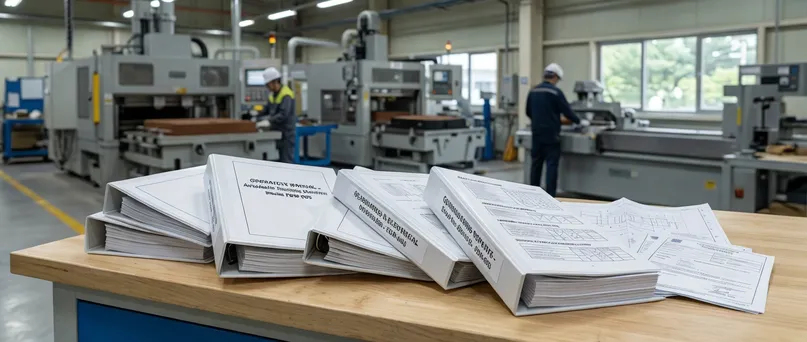
Complete documentation package including operation manuals, schematics, and commissioning reports
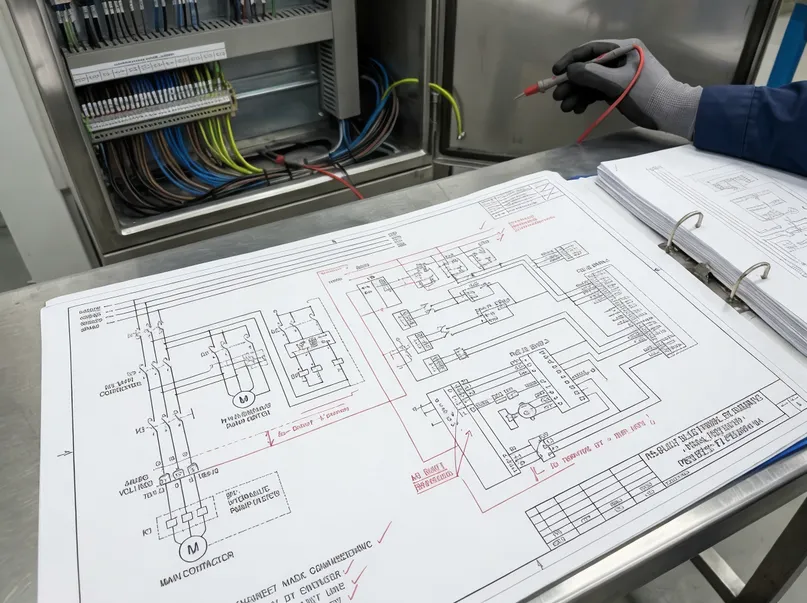
Electrical schematics showing actual as-built wiring for accurate troubleshooting and future modifications

The documentation package also includes operation manuals, maintenance schedules, spare parts lists, and electrical schematics. We provide these in English as standard, with Spanish, Arabic, and Russian translations available on request (common for Middle East and Latin American buyers). The manuals are specific to your equipment configuration — if you ordered optional accessories or custom modifications, they're documented in your manual, not just referenced as "available options."

Electrical schematics show the actual wiring as built, not just the design intent. If you need to troubleshoot a control issue or add a sensor later, you have accurate documentation of how the system is wired. We've seen too many suppliers provide generic schematics that don't match the actual machine — that's useless when you're trying to trace a circuit fault.

Common Questions

FAQ — Certification & Quality Questions

Which product lines does your ISO 9001 certification cover?

All three categories — clay sand processing lines, lost foam casting systems, and resin sand production lines. ISO 9001 is a quality management system certification that covers our entire manufacturing operation, not individual products. It means we have documented processes for supplier selection, production control, inspection procedures, and corrective action. When you order equipment from any of our product lines, it's manufactured under the same quality system.

The certification is audited annually by an accredited registrar. They review our quality manual, inspect production records, and verify that we're following our documented processes. If we weren't maintaining the system, we'd lose the certification.

Can you provide CE technical files and test reports?

Yes. We maintain technical files for all CE-marked equipment as required by the Machinery Directive. The file includes risk assessments (identifying hazards and the protective measures we've implemented), EMC test reports (demonstrating compliance with electromagnetic compatibility limits), and the declaration of conformity.

These documents are available upon request for buyers conducting due diligence or customs clearance. Most European buyers need the declaration of conformity for their import documentation. Compliance personnel sometimes request the full technical file to verify that we've properly assessed risks and implemented appropriate safeguards.

We don't publish the technical files publicly (they contain detailed design information), but we provide them to buyers under NDA when needed for compliance verification.

Do you support third-party factory audits?

Yes. SGS conducts annual audits of our quality management system, and we accommodate buyer-requested audits from SGS, Bureau Veritas, TUV, or other third-party inspection agencies. If your procurement process requires a supplier audit before qualification, we can arrange it.

Pre-shipment inspection services are also available. The inspector visits our facility before shipment, witnesses commissioning tests, reviews quality documentation, and verifies that the equipment matches your purchase order. They issue a certificate of inspection that you use for payment release. This is common for letter-of-credit terms or first-time orders where you want independent verification before releasing payment.

Factory visits from your own team are also welcome. Most distributors and project contractors prefer to see the facility in person before placing large orders. Contact us to schedule an audit or arrange third-party inspection.

What quality standards apply to foundry equipment exported to the EU?

CE marking under Machinery Directive 2006/42/EC and EMC Directive 2014/30/EU. The Machinery Directive sets essential health and safety requirements for industrial equipment — machine guarding, emergency stop provisions, protection against electrical shock, hydraulic pressure safety, and operator interface design. The EMC Directive limits electromagnetic emissions (so the equipment doesn't interfere with other machinery) and requires immunity to external interference (so nearby equipment doesn't disrupt operation).

Compliance is demonstrated through a technical file that includes risk assessments, test reports, and a declaration of conformity. We maintain these files for each product line and provide the declaration of conformity with every shipment to EU destinations.

CE marking is mandatory for machinery placed on the EU market. Customs will require the declaration of conformity, and your downstream customers may request the technical file to verify compliance with their facility's safety requirements.

How do I verify the quality of equipment before shipment?

Three options, depending on your risk tolerance and order size:

1

Review our commissioning report

Every machine ships with documented test results from that specific unit. The report shows actual performance data (cycle times, pressure readings, control system verification) measured during pre-shipment commissioning. This is included with every order at no additional cost.

2

Request SGS pre-shipment inspection

A third-party inspector visits our facility, witnesses commissioning tests, reviews quality documentation, and verifies that the equipment matches your purchase order. They issue a certificate of inspection for payment release. This is common for large orders or first-time purchases. Inspection fees are typically split between buyer and seller or negotiated into the contract terms.

3

Visit our factory for in-person inspection

You're welcome to inspect the equipment during commissioning before it's crated for shipment. Most buyers who choose this option are placing large orders (complete production lines) or want to assess our capabilities for long-term supply relationships. We can coordinate your visit to coincide with your equipment's commissioning schedule.

Contact us to discuss which verification method makes sense for your order.

Next Step

Request Certification Documents

Need to review our certification documents, test reports, or SGS audit records? We provide complete compliance documentation to support your procurement decision.

Three ways to move forward:

  • Request certification copies

    ISO 9001 certificate, CE declarations of conformity, SGS audit reports — we'll send the documents your compliance team needs for supplier qualification

  • Arrange pre-shipment inspection

    Coordinate SGS or other third-party inspection to verify equipment quality before shipment and payment release

  • Send an inquiry with your market's compliance requirements

    Tell us your destination market and any specific certifications or documentation your project requires — we'll confirm what we can provide

Complete certification document package ready for buyer review including ISO, CE, and SGS documentation