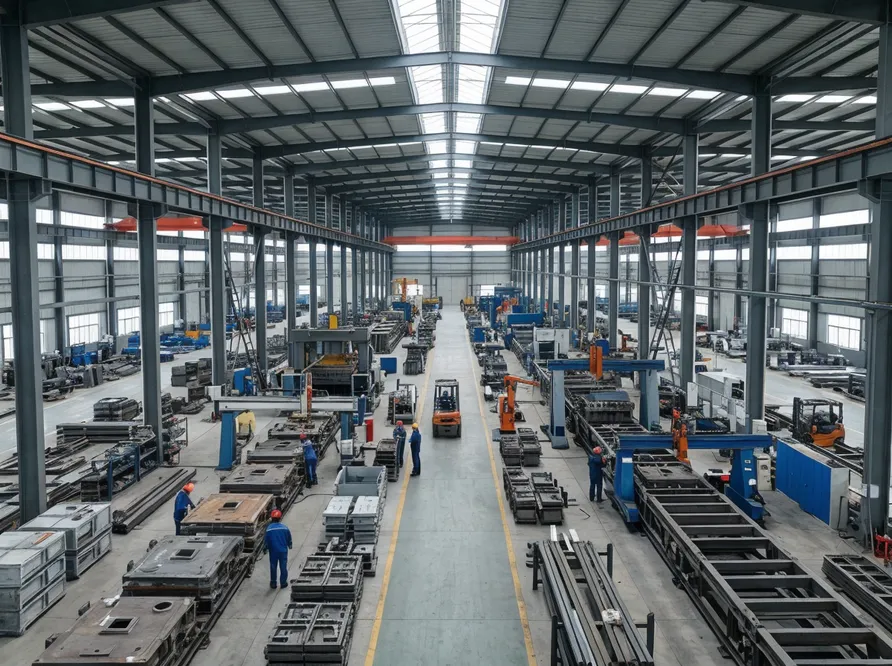
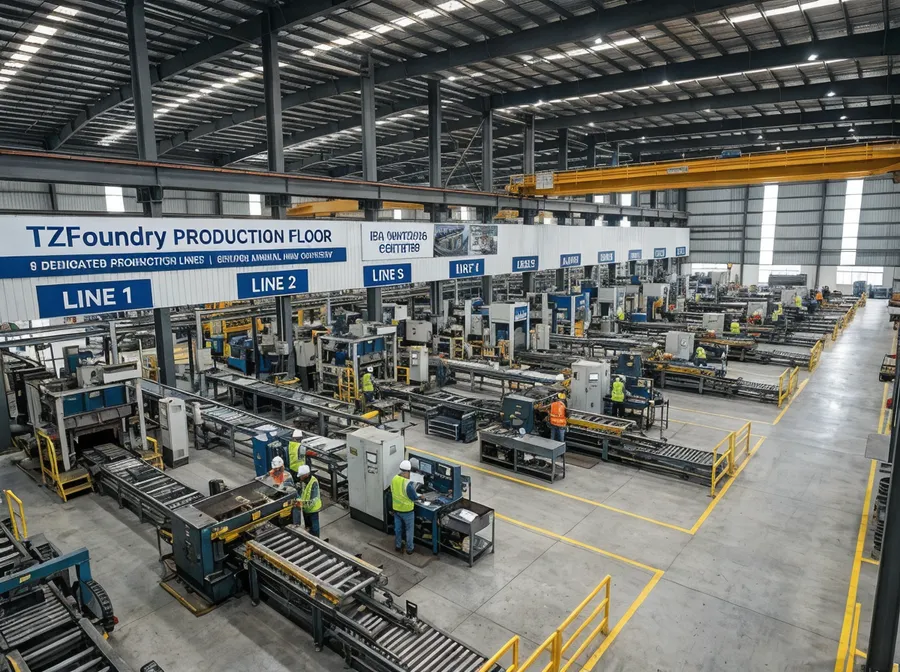
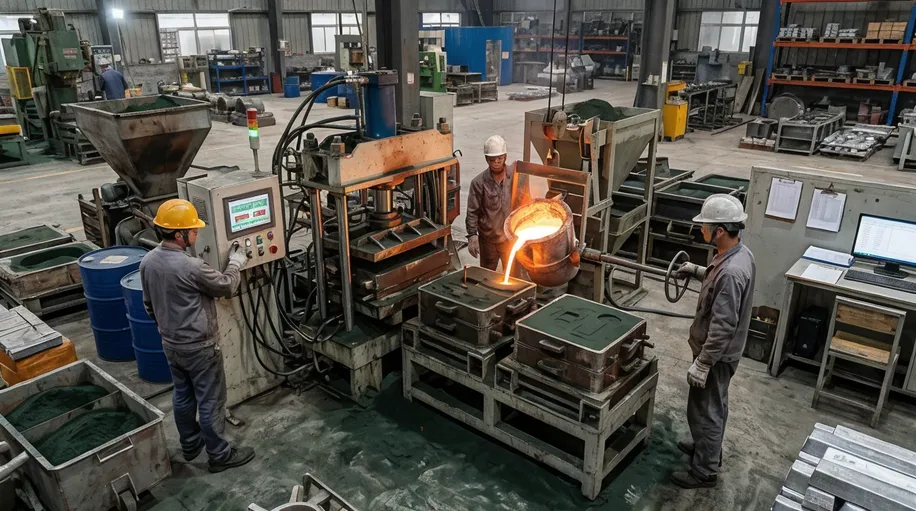
We manufacture foundry equipment for overseas buyers who need complete production line systems, not piecemeal components. Our facility in Qingdao runs 8 production lines across 15,000 square meters, building clay sand processing lines, lost foam casting systems, and resin sand production equipment.
Since 2010, we've shipped modular systems to foundries in North America, Europe, the Middle East, and Southeast Asia — buyers who need factory pricing, custom configurations, and delivery schedules they can plan around.
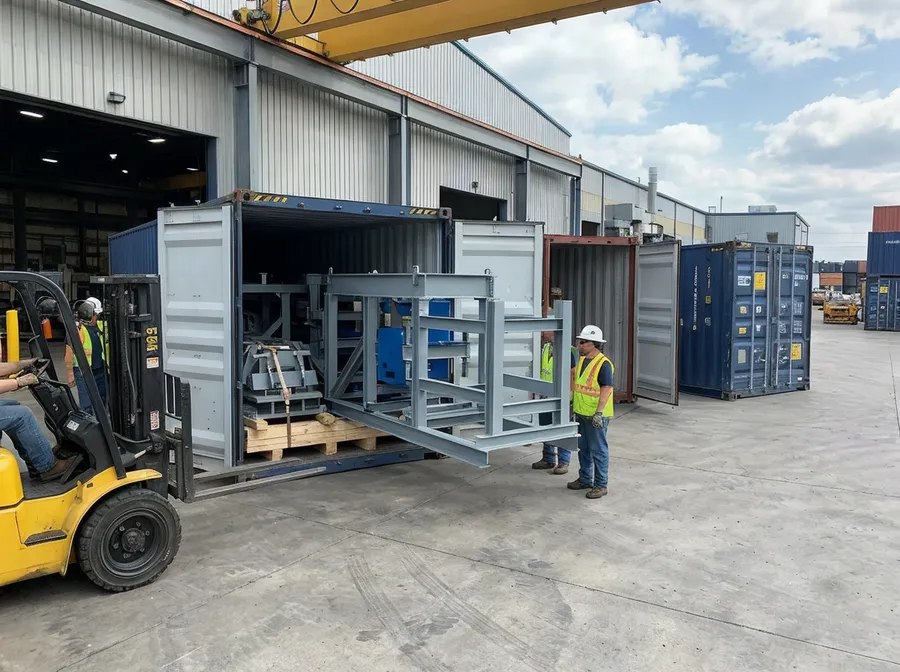
Each system ships in standard containers and installs as an integrated line. You're not assembling equipment from multiple suppliers or managing compatibility issues between components. Our in-house R&D team designs each line to work as a unit, which means your commissioning timeline shrinks and your production ramp happens faster.
We produce 500,000 units annually across 8 dedicated production lines. That capacity translates directly to predictable lead times for your orders — we're not scrambling to clear backlogs or pushing your delivery date because a larger customer jumped the queue. When you place a 5,000-unit order, we slot it into existing production flow without disrupting the schedule.
Our ISO 9001:2015 certification isn't wall decoration. Third-party auditors verify our quality management system twice a year, which means your equipment ships with documented traceability for every component. CE and SGS certifications handle EU market access and material compliance — if you're reselling into Europe, those marks reduce your regulatory workload. We've been through the audits, paid for the testing, and maintain the documentation systems that keep those certifications active.
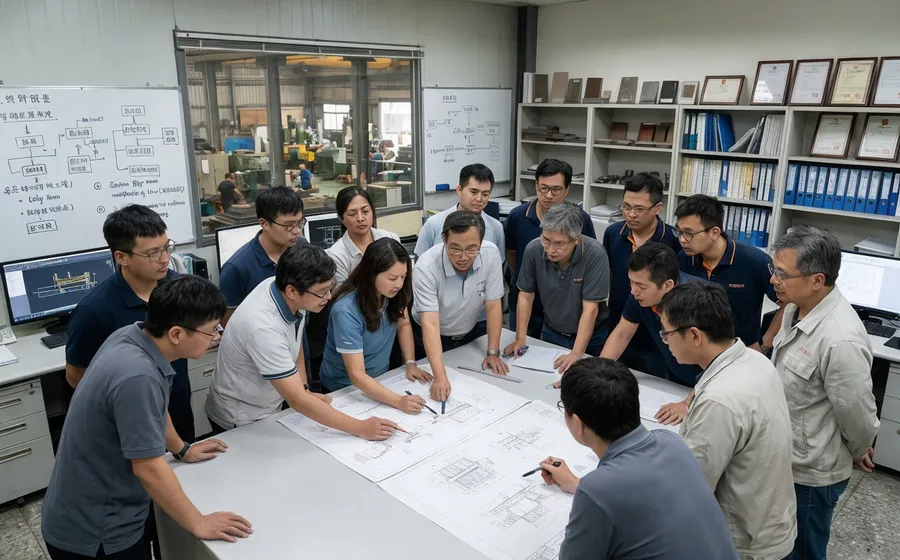
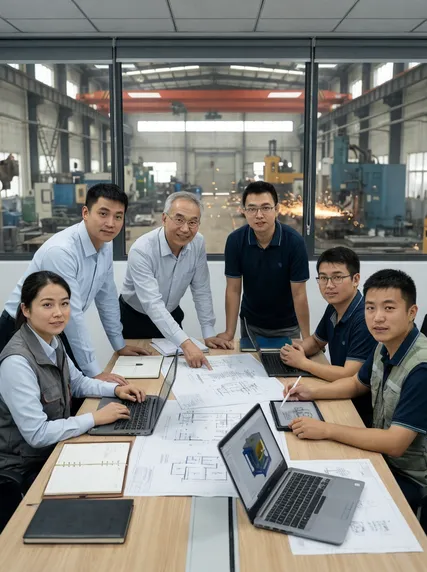
The 200-person team includes a 15-engineer R&D group that handles custom modifications. When a buyer needs a clay sand line adapted for high-silica sand or a lost foam system configured for aluminum casting instead of iron, we're not outsourcing the engineering work or guessing at compatibility. Our team has built enough variations over 15 years to know which modifications hold up in production and which create maintenance headaches six months later.
We started in 2010 building individual molding machines for domestic foundries. Export orders pushed us toward complete systems because international buyers needed integrated solutions with consistent performance across all components. By 2015, we'd shifted to fully automated lines — a European buyer needed 200 molds per hour with ±0.5mm tolerance across 12-hour shifts, and manual systems couldn't hold that spec. That PLC-controlled clay sand line is still running in their facility. The project taught us what export buyers actually need: repeatable output, remote diagnostics capability, and spare parts availability that doesn't require flying technicians across continents.
Our product range divides into clay sand processing, lost foam casting, and resin sand production. Each category ships as a modular system designed around standard 20-foot and 40-foot container dimensions, so your freight costs stay predictable and you're not paying for custom shipping arrangements.
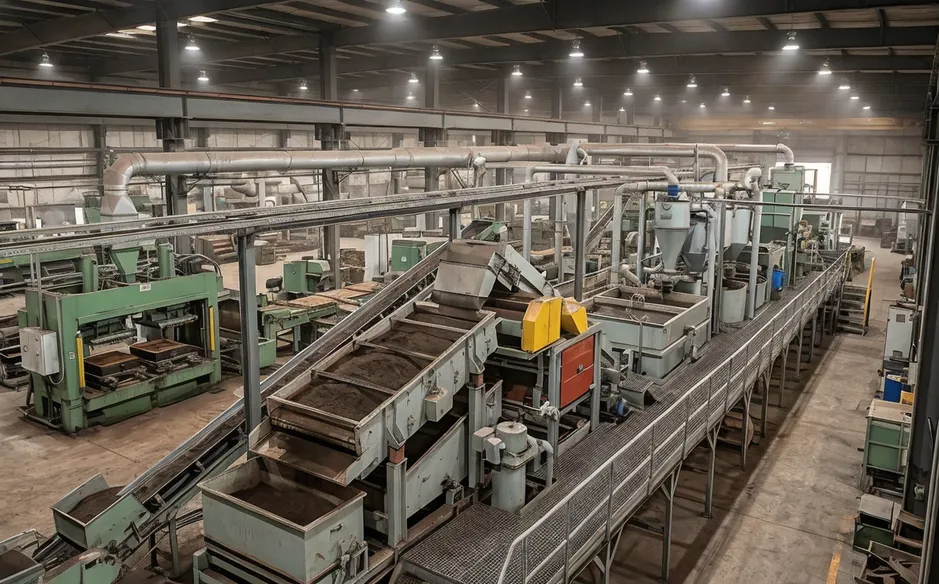
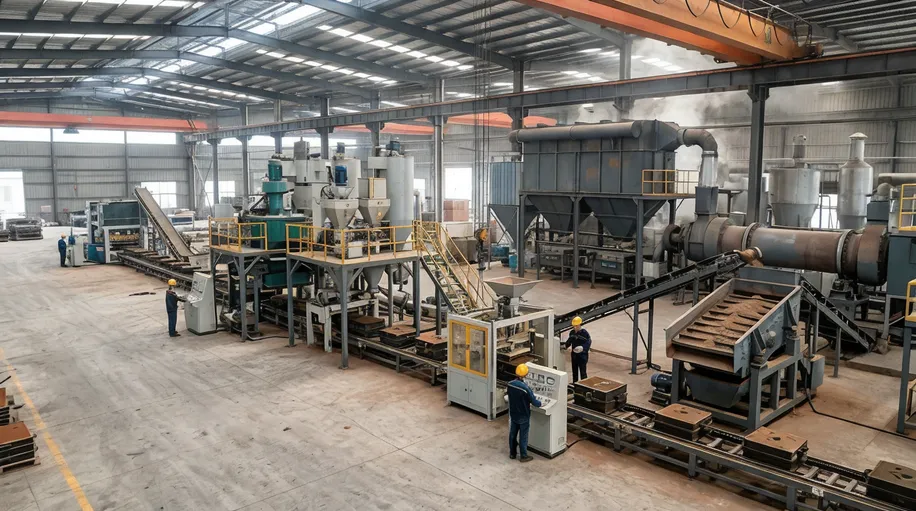
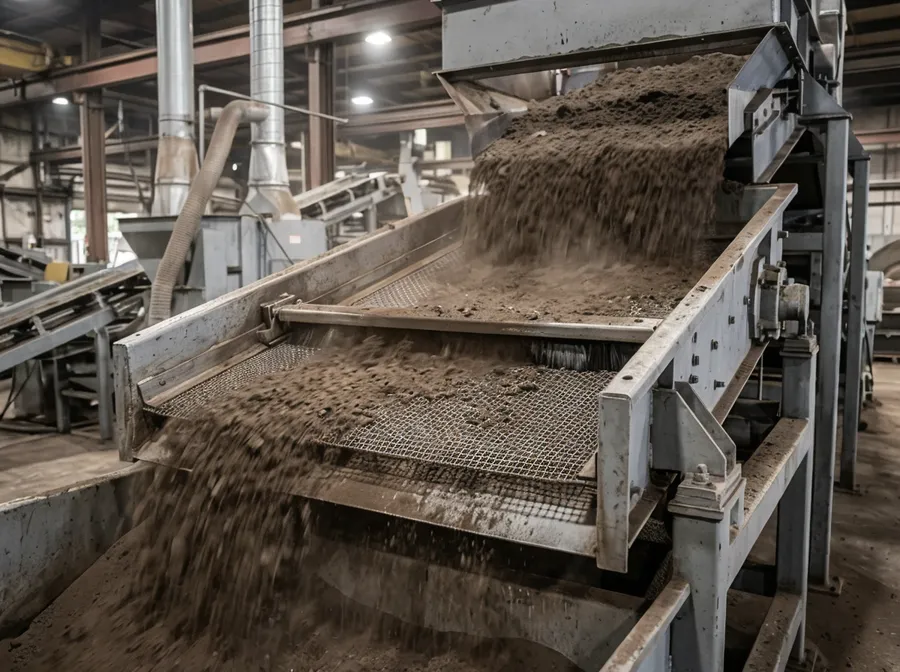
Clay sand processing lines handle molding, sand reclamation, and washing systems. These lines target high-volume production where sand reuse drives your per-unit cost down. A typical configuration processes 30-50 tons of sand per hour, reclaims 85-90% for reuse, and reduces your raw sand purchases by two-thirds compared to single-use systems.
The washing stage removes clay fines and contaminants that would otherwise degrade mold quality over repeated cycles. If you're running continuous production, the reclamation loop pays for itself in 18-24 months through reduced material costs.
Explore Clay Sand Lines
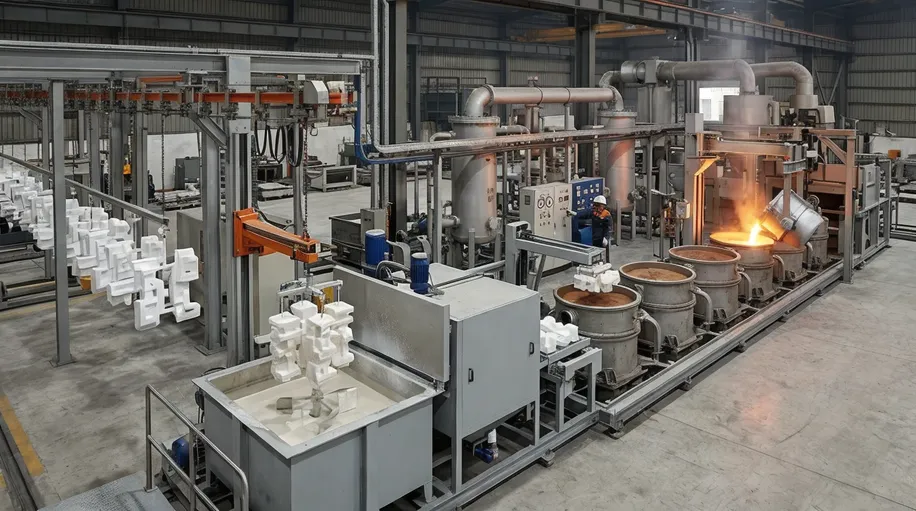
Lost foam casting lines include vacuum systems, coating equipment, and pattern handling. This equipment expands your product range into complex geometries that traditional molding can't produce economically. The vacuum system maintains consistent negative pressure across the casting process, which prevents gas porosity in the final part.
Coating equipment applies refractory layers to foam patterns with controlled thickness — too thin and you get metal penetration, too thick and you trap gases. Our systems hold ±0.2mm coating uniformity, which matters when you're casting parts with tight dimensional tolerances. Pattern handling automates the loading sequence, reducing labor costs and eliminating the manual damage that scraps 5-10% of foam patterns in hand-fed systems.
Explore Lost Foam Lines
Resin sand production lines cover mixing equipment, coating systems, and reclamation plants. These lines deliver precision casting with dimensional control that clay sand can't match. Resin binders create rigid molds that hold shape under molten metal pressure, so you're casting parts with ±0.5mm tolerances instead of ±2mm.
The mixing stage controls resin-to-sand ratios within 0.5% accuracy — critical because excess resin wastes money and insufficient resin causes mold breakage during pouring. Reclamation plants thermally strip used resin from sand grains, recovering 80-85% of sand for reuse. Without reclamation, resin sand becomes a disposal cost; with it, you're cycling the same sand base through 4-5 production runs.
Explore Resin Sand LinesEach line installs in phases if your capital budget or facility space requires staged deployment. We've shipped systems where the buyer started with core molding equipment and added reclamation modules six months later when production volume justified the investment. The modular design means you're not locked into an all-or-nothing purchase.
We've shipped to four regions — North America, Europe, the Middle East, and Southeast Asia — which means we've already solved the logistics problems you're worried about. Our systems fit standard container dimensions, so you're not paying for breakbulk shipping or dealing with port handling delays. A typical clay sand line ships in three 40-foot containers; lost foam and resin sand systems fit in two to four containers depending on configuration.
Remote diagnostics capability is built into every PLC-controlled system we've shipped since 2016. When a sensor throws an error code or a timing sequence drifts out of spec, your technician connects to our support team through a secure VPN link. We pull diagnostic logs, identify the fault, and walk your team through the fix without flying someone to your facility. That capability cuts your downtime from days to hours and eliminates the $5,000-$8,000 cost of emergency service calls for issues that don't require hands-on repair.
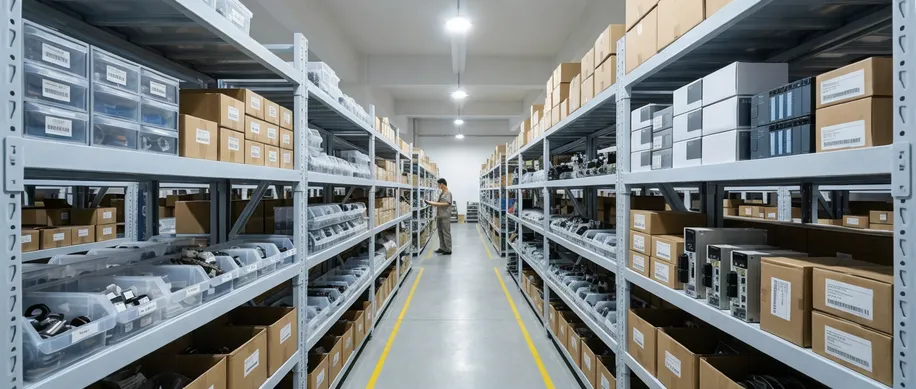
Spare parts availability matters when you're 8,000 kilometers from our factory. We maintain inventory for wear components — seals, bearings, sensors, hydraulic fittings — and ship via DHL or FedEx with 5-7 day delivery to most export markets. Critical components like PLC modules and servo drives ship with two-year warranties, and we stock replacements for equipment we sold 10 years ago. You're not hunting for obsolete parts or reverse-engineering replacements when a component fails.
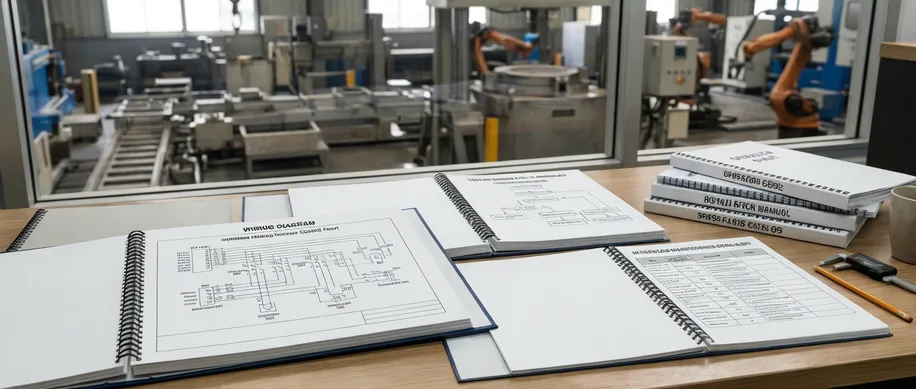
English documentation and communication are standard for export orders. Our technical manuals include wiring diagrams, maintenance schedules, and troubleshooting flowcharts in English. Installation supervision happens in English if you need our technician on-site for commissioning. We've worked with buyers whose local teams speak Spanish, Arabic, or French — they translate our English docs internally, which works better than us attempting machine translation into languages we don't verify.
Flexible MOQ means you're not forced into 50-unit orders when you need 10 units to test a new market. We've shipped single-line systems to buyers entering the foundry equipment space and 8-line installations to established distributors expanding capacity. Minimum order quantity flexes based on customization complexity — a standard configuration ships at lower MOQ than a heavily modified system, but we're not adding 40% premiums for custom work the way larger manufacturers do.
Custom configurations happen through our in-house R&D team. When you need a clay sand line adapted for a specific sand type, a lost foam system configured for non-ferrous casting, or a resin sand plant integrated with your existing material handling equipment, we're modifying proven designs rather than engineering from scratch. That approach reduces your risk — we know which changes work because we've tested them in our own facility before shipping to yours.
Production line integration accounts for your existing foundry layout. We've adapted systems to fit L-shaped floor plans, work around structural columns, and interface with overhead crane systems that weren't part of our original design. The engineering team reviews your facility drawings, identifies constraints, and proposes equipment placement that minimizes material handling distances and operator movement. You're not rearranging your entire facility to accommodate our equipment.
Timeline transparency starts at the quote stage. We specify production lead time, shipping duration, and installation window based on current order backlog and your delivery location. A standard clay sand line typically ships 60-75 days after deposit; custom configurations add 15-30 days for engineering and testing. We update you at production milestones — frame fabrication complete, electrical assembly done, factory testing passed — so you're planning installation crews and facility prep with accurate information, not guessing when equipment arrives.
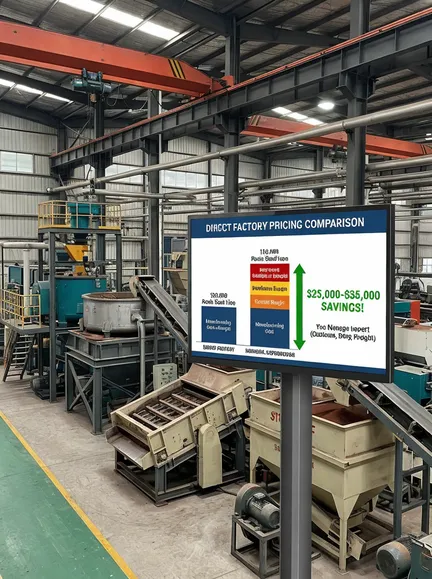
Direct factory pricing eliminates distributor markup. You're paying our manufacturing cost plus margin, not our cost plus distributor margin plus their margin. For a $120,000 resin sand line, that difference typically saves you $25,000-$35,000 compared to buying through regional distributors. The tradeoff is you're managing the import process — customs clearance, duty payments, inland freight — but most buyers at this purchase level already have freight forwarders handling that work.
Fifteen years manufacturing foundry equipment means we've seen enough production problems to design around them. Early clay sand lines had reclamation screens that clogged after 40 hours of operation — we switched to self-cleaning mesh in 2013 and haven't had a clogging failure since. Lost foam coating pumps used to cavitate when refractory slurry sat overnight — we added recirculation loops that keep material moving, and pump life tripled. These aren't innovations we're claiming credit for; they're fixes that came from watching equipment fail and redesigning the weak points.
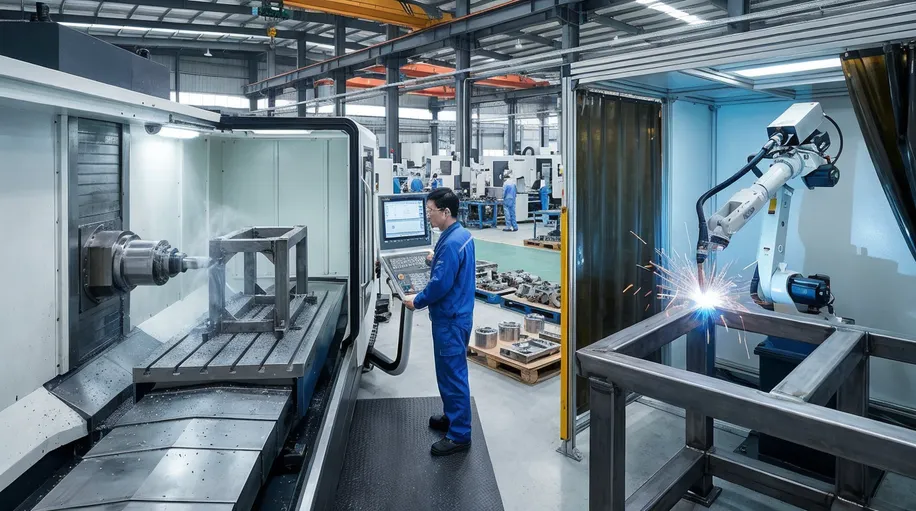
Advanced production equipment translates to consistent output quality. Our CNC machining centers hold ±0.05mm tolerances on frame components, which matters when you're assembling modular systems that need to align precisely during installation. Robotic welding produces uniform bead quality across structural joints — no weak welds that crack under vibration after six months of operation. Automated powder coating applies even finish thickness that resists corrosion in humid foundry environments better than manual spray application.
Strict quality control isn't a marketing phrase here. Every system goes through 72-hour factory testing before shipment — we run full production cycles with actual sand, resin, and casting materials to verify performance under load. Electrical systems undergo high-potential testing at 2x operating voltage to catch insulation faults that would cause failures in your facility. Hydraulic circuits run at 1.5x rated pressure to verify seal integrity. We document test results and ship them with your equipment, so you have baseline performance data for comparison during commissioning.
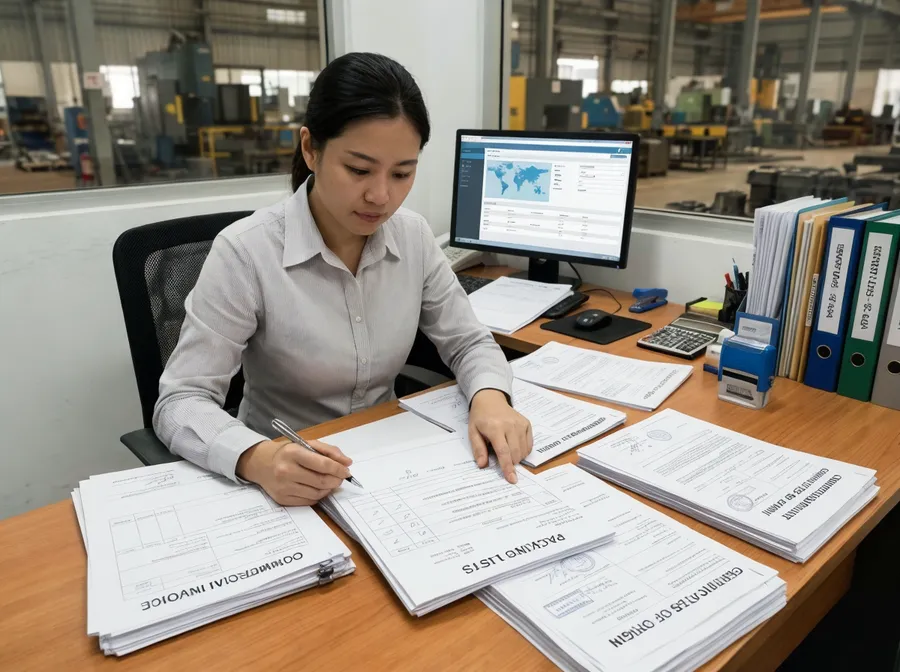
Professional export experience means we handle documentation that trips up factories new to international sales. Commercial invoices match HS codes to your destination country's tariff schedule. Packing lists detail every crate's contents with weights and dimensions your customs broker needs. Certificates of origin qualify for preferential duty rates under trade agreements. We've shipped enough systems to know which documents each market requires and how to fill them out correctly the first time.
The balance of scale and flexibility is what makes this factory work for international buyers. We're large enough that a 10-line order doesn't overwhelm our production capacity or force you into 6-month lead times. We're small enough that custom modifications don't require committee approvals or get lost in bureaucratic engineering review processes. When you need a system adapted for your specific application, you're talking to the engineers who will actually do the work, not a sales team that forwards requests to a separate technical group.
Tell us your production volume target, available facility space, and automation level you're aiming for. Those three inputs let us propose a system configuration that fits your operation. If you're processing 20 tons of sand per hour, we're recommending different equipment than if you're running 50 tons per hour. If you have 800 square meters of floor space, we're designing a different layout than if you have 2,000 square meters.
We typically respond to inquiries within 24 hours with preliminary system recommendations and budget pricing. Detailed quotes with equipment specifications, layout drawings, and delivery timelines follow within 3-5 business days after we review your facility information. If you need custom modifications, we'll outline engineering timeline and any testing requirements before finalizing the quote.
Contact us at sales@tzfoundry.com or via WhatsApp at +86 13335029477. If you're comparing multiple suppliers, send us the same specifications you're sending them — we'll quote on identical scope so you're making an apples-to-apples comparison. We're not interested in winning quotes by under-specifying equipment or hiding costs in vague line items. You'll get a clear breakdown of what's included, what's optional, and what you need to provide on your end.