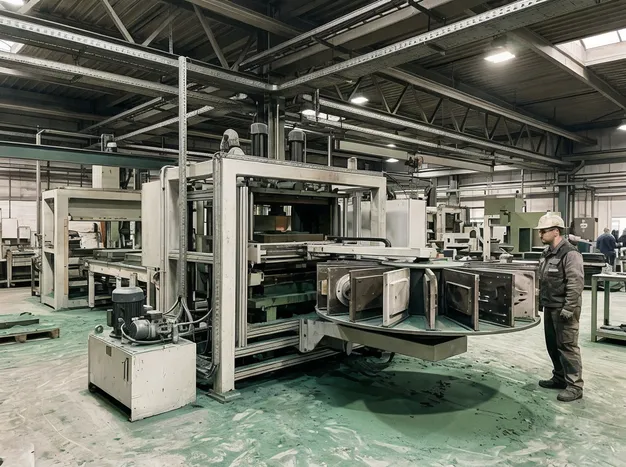
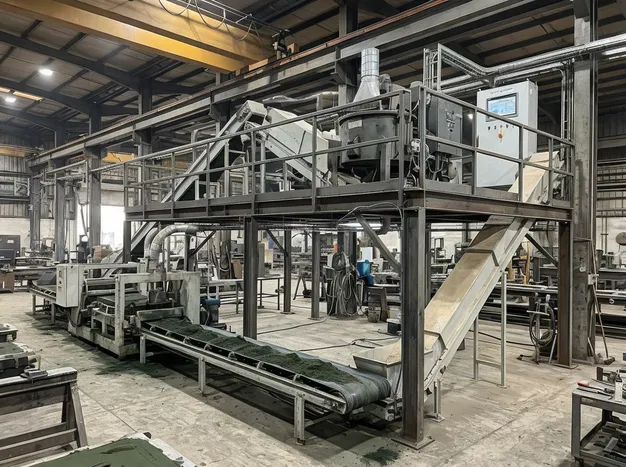
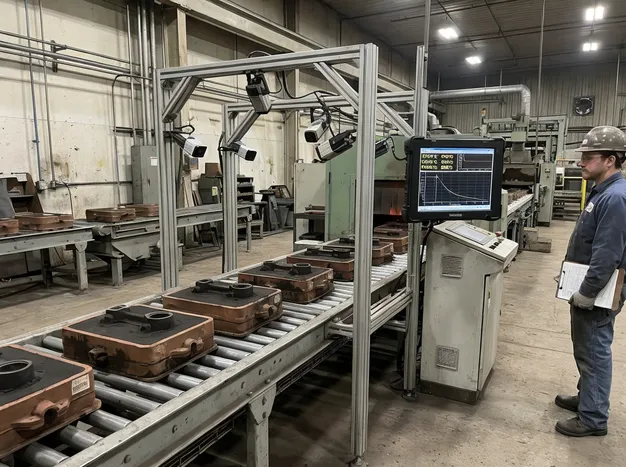
OEM & ODM Foundry Equipment Partner

OEM ODM Foundry Equipment

We manufacture foundry equipment to your specifications — whether you need a production line configured for your facility's space constraints or a standard system with your branding on the control panels.

Since 2010, we've built custom clay sand lines, lost foam systems, and resin sand equipment for buyers in North America, Europe, the Middle East, and Southeast Asia. Our 18-engineer team handles layout design, capacity scaling, and control system programming so your equipment fits your process requirements, not the other way around.

OEM vs ODM — Which Model Fits Your Project

The difference comes down to who designs the system.

Custom Build

OEM Model

You provide the capacity requirements and space constraints — we engineer the production line to match. You specify 150 molds per hour in a facility with 6-meter ceiling height, and our engineers configure the equipment layout, hydraulic systems, and control parameters accordingly.

Best When

Your facility has constraints that standard equipment can't accommodate — unusual ceiling heights, integration with existing sand reclamation systems, or alloy-specific process parameters that require control system modifications.

Lead time: 40–60 days
MOQ: 2–3 sets (to justify engineering time)
Standard Config

ODM Model

You select from our standard configurations — clay sand processing lines, lost foam casting production lines, or resin sand production lines — and we apply your branding to control panels, HMI interfaces, and documentation.

Best When

Most export buyers start with ODM because the engineering work is already done. You're buying a proven system that ships faster and costs less than a custom build.

Lead time: 25–40 days
MOQ: 1 set minimum

You Can Combine Both Models

We handle both models through the same facility and engineering team, so switching between them or combining elements — standard mechanical design with custom control programming, for example — doesn't create complications. The MOQ and lead time differences matter more than the label.

What We Can Adapt

Our customization work focuses on four dimensions. These aren't unlimited promises — they're the specific modifications our engineering team handles regularly based on 15 years of export projects.

Capacity Scaling

We configure conveyor speeds, hydraulic cylinder stroke lengths, and PLC timing parameters to hit your target output rate. The mechanical frame stays modular across capacity tiers — scaling happens through component selection (larger hydraulic pumps, wider conveyor belts, additional mixing chambers) rather than complete redesigns.

Production Ranges

50–500
molds/hr · Clay Sand
20–200
patterns/hr · Lost Foam
500–3,000
kg/cycle · Resin Sand

Space Adaptation

Standard production line layouts assume 8-meter ceiling height and linear floor plans. We've reconfigured vertical flaskless molding lines for 6-meter ceilings by adjusting the frame geometry and hydraulic cylinder placement. Horizontal layouts convert to L-shaped or U-shaped configurations when your facility has column spacing that blocks straight runs.

Equipment modules break down to fit 40HQ container dimensions (12.03m × 2.35m × 2.69m), so we design around those constraints from the start. A complete clay sand line typically ships in 2–3 containers — adding custom space adaptations doesn't change the container count unless you're working with unusually tight dimensional limits.

L-shaped and U-shaped production line layout configurations for constrained facility floor plans

Control System Localization

Siemens or Mitsubishi PLCs, your choice. HMI touchscreens display in English, Spanish, or Arabic depending on where your operators work. Remote diagnostics run through 4G modules that let your maintenance team pull error logs and adjust parameters without flying someone to the factory.

We program the control logic for your specific process — if you're running ductile iron with 3–5 minute shakeout times instead of gray iron's 2–3 minutes, the conveyor speeds and cooling zone dwell times get calculated accordingly. Control system modifications don't require mechanical changes, so lead times stay shorter than full custom builds.

Siemens PLC Mitsubishi PLC EN / ES / AR HMI 4G Remote Diagnostics

Process Integration

Adding a resin sand line to a facility that already runs clay sand molding means designing material flow to prevent cross-contamination, programming the control system to interface with your existing equipment, and calculating floor loading for mezzanine structures or elevated conveyors.

We've connected new molding lines to buyers' current sand reclamation systems by matching conveyor heights, belt speeds, and transfer chute angles. Integration projects need detailed facility information upfront — send us floor plans, equipment lists, and photos of connection points so our engineers can spec the interface components correctly.

What to Send Us

Floor plans Equipment lists Photos of connection points

What We Don't Customize

  • Foundational casting processes — we build sand molding equipment, not metal melting furnaces.
  • Proprietary coating formulations — lost foam coating chemistry is your specification; we build the application equipment.
  • Non-standard hydraulic pressures outside the 80–200 bar operating range — our cylinder seals and pump specifications are optimized for that window.
In-House Engineering

Engineering & Technical Support

Our in-house engineering team — 18 engineers, about 10% of total workforce — handles the technical work that turns your requirements into production-ready equipment. They're not sales engineers who hand off drawings to an external design firm. They work in the same facility where we manufacture the equipment, so they see how design decisions affect assembly, testing, and field performance.

Production Line Layout Optimization

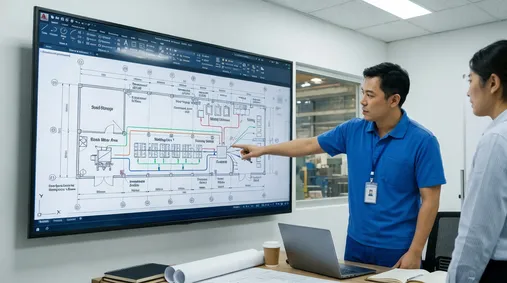
Engineer reviewing foundry production line layout CAD drawing with floor plan dimensions

Starts with your floor plan. Send us the dimensions, column spacing, overhead crane coverage, and utility connection points (compressed air, electrical panels, water supply). Our engineers map the material flow from sand storage through molding, shakeout, and reclamation, minimizing conveyor runs and transfer points.

They calculate floor loading requirements — a clay sand mixer with 2,000 kg batch capacity plus the structural frame and drive motors puts concentrated point loads on your slab.

If you're installing on a mezzanine or elevated platform, we'll specify the support structure requirements.

Control System Programming

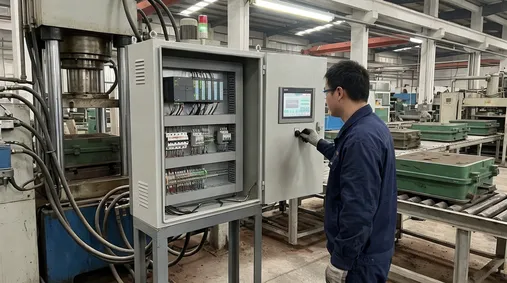
PLC control cabinet with programmed automation for foundry molding line

Adjusts equipment behavior to your casting process. The European buyer case — 200 molds per hour with ±0.5mm tolerance across a 12-hour shift — required PLC programming that synchronized hydraulic press timing, sand fill rates, and pattern extraction speeds to hold that spec consistently.

We program conveyor speeds and cooling zones based on your alloy composition. Ductile iron shakeout takes longer than gray iron because the casting retains heat differently.

Our engineers calculate the dwell time and adjust the conveyor indexing accordingly.

Integration Engineering

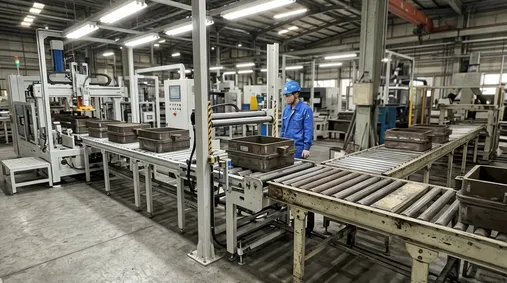
Integration zone connecting new automated molding line to existing conveyor system

Connects new equipment to your existing systems. If you're adding automated molding to a facility that currently uses manual flask handling, we design the transition zone where flasks transfer from your current conveyor to our molding line.

That includes matching conveyor heights (typically 800–1,000mm working height), synchronizing belt speeds, and programming proximity sensors that detect flask position.

We've interfaced with sand reclamation systems from three different manufacturers — the mechanical connection points vary, but the control logic follows similar patterns.

6-Stage Process

OEM/ODM Collaboration Process

The process runs in six stages from initial inquiry to commissioning support. Timelines below are ranges, not guarantees — actual duration depends on order complexity and production schedule.

1

Requirements Discussion

1–3 days

You provide production targets (molds per hour, casting weight range, alloy types), available floor space (dimensions, ceiling height, column locations), and any existing equipment that needs integration.

We ask clarifying questions about your process (sand type, binder system, shakeout method) to understand what configuration makes sense.

This happens via email or WhatsApp — most buyers send facility photos and rough sketches rather than formal CAD drawings at this stage.

2

Layout Design & Quotation

5–10 days

Our engineers produce CAD drawings showing equipment placement, material flow, and utility connections. The equipment list breaks down every component (molding press, sand mixer, conveyors, hydraulic power unit, control cabinet) with specifications and individual pricing.

Factory pricing means you're seeing our manufacturing cost plus margin, not distributor markup.

The quotation includes container loading plan (how many containers, estimated freight volume) and commissioning support scope. If your project needs custom engineering beyond standard layout work, we'll note that separately with the additional cost.

3

Sample / Trial Run

15–25 days (optional)

For custom configurations or buyers new to automated foundry equipment, we can run a trial production cycle at our facility. You send us your sand samples, binder specifications, and a pattern or core box.

We set up the equipment with your process parameters and produce test molds. This stage catches compatibility issues before bulk production — sand flowability problems, binder cure time mismatches, pattern extraction difficulties.

Most buyers skip this for standard ODM orders but request it for OEM projects with unusual process requirements.

4

Production

25–60 days

Standard production lines (our existing clay sand, lost foam, and resin sand configurations) take 25–40 days from order confirmation to completion. Custom configurations need 40–60 days because engineering changes require test runs and validation.

We send progress photos at key milestones — frame fabrication complete, hydraulic system assembled, control panel wiring finished, full system commissioning. You'll see your equipment running in our facility before it ships.

5

Quality Inspection & Packaging

3–5 days

Three-stage QC process: incoming inspection verified raw materials when they arrived; in-process inspection checked dimensional tolerances, weld integrity, and hydraulic pressure testing during assembly; pre-shipment inspection runs the complete system through production cycles.

The commissioning report documents test results from your specific equipment — measuring actual output rates, cycle times, and tolerance consistency, not generic spec sheets.

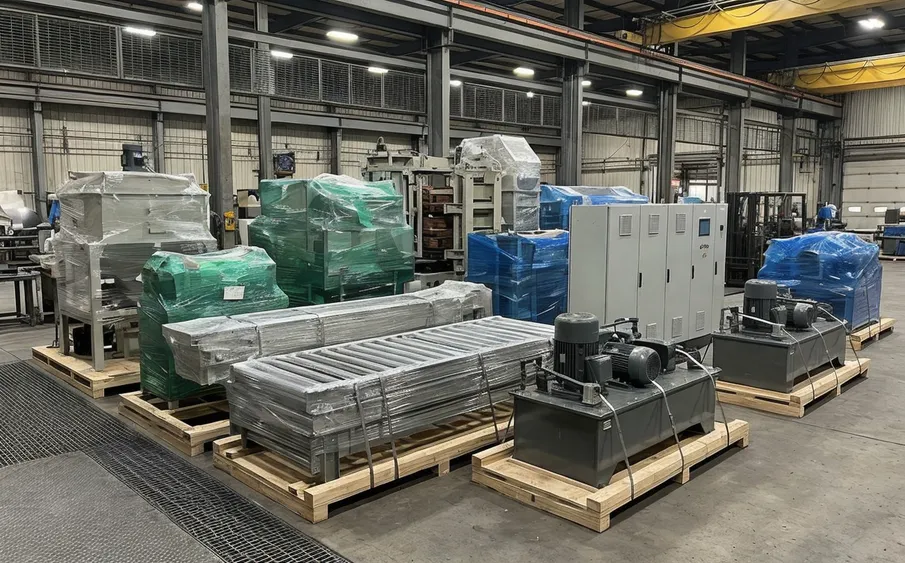
Modular crating breaks equipment into container-friendly sections with knock-down packaging for hydraulic units and control cabinets.

6

Commissioning Support

5–10 days post-delivery

Remote commissioning via video call is standard. Your installation team connects hydraulic lines, wires control panels, and runs initial test cycles while our engineer watches and provides instructions. This works as long as your team can read hydraulic schematics and use a multimeter — we've commissioned equipment in 14 countries this way.

On-site commissioning is available for large projects (complete production lines over $200,000) or when remote support hits technical barriers.

Spare parts kits ship with every order, covering first-year consumables: hydraulic seals, proximity sensors, solenoid valves, PLC I/O modules.

6
Stages
25–60
Day Production
14
Countries Commissioned
3-Stage
QC Process
Order Planning

MOQ & Lead Time

Standard Production Lines

Our existing clay sand processing line, lost foam casting production line, and resin sand production line configurations ship at 1-set minimum order quantity with 25–40 day lead times.

One set means a complete, functional production line: molding equipment, material handling conveyors, hydraulic power unit, electrical control system, and commissioning support. You're not buying individual machines that need separate integration work.

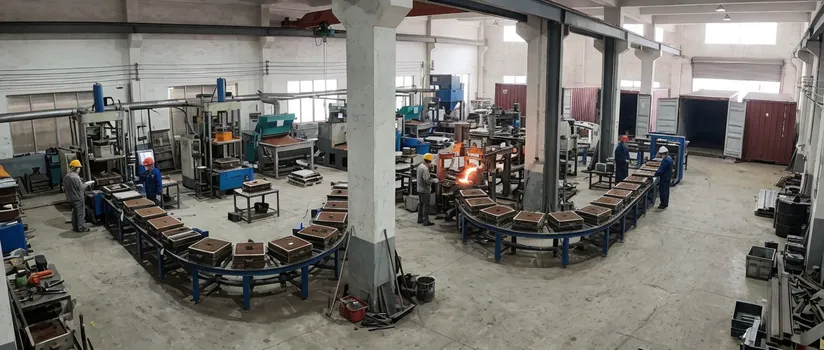
Complete standard production line ready for shipment at TZFoundry facility

Custom Configurations

Custom configurations have variable MOQ depending on engineering scope. The level of modification determines both minimum quantity and timeline.

1

Layout Adaptation Only

Rearranging standard modules to fit your floor plan — still ships at 1-set MOQ because the mechanical components don't change.

2+

New Capacity Tiers or Control Overhauls

Building a 350 molds/hour line when standard offerings are 200 or 500, or programming for alloy compositions outside our typical range — typically requires 2–3 sets minimum. The engineering time — layout design, PLC programming, test runs, validation — gets amortized across multiple units. Below that quantity, the per-unit cost becomes uneconomical for both of us.

Custom Order Lead Times: 40–60 Days

Lead times run 40–60 days for custom orders because engineering changes need validation. We don't ship modified equipment without running it through production cycles at our facility first.

A capacity scaling project might need three test runs to dial in the hydraulic timing and conveyor synchronization.

Control system modifications require bench testing, then integration testing with the mechanical equipment, then full-cycle commissioning.

Standard equipment skips those validation steps because we've already proven the configuration on previous orders.

Seasonal Scheduling

  • Chinese New Year (late January to mid-February): add 7–10 days to the timeline.

  • Golden Week (early October): add 7–10 days to the timeline.

  • Large orders (3+ complete production lines) may need staggered delivery if production capacity is committed.

We'll tell you the realistic schedule during quotation — no point in promising 30 days if the production slot isn't available.

1 Set

Standard MOQ

25–40

Days Standard Lead

40–60

Days Custom Lead

2–3

Sets Custom MOQ

Export Engineering

Modular Design for Export

Equipment breaks down into container-friendly sections because we've been shipping overseas since 2010 and learned what works.

Container-Friendly Disassembly

Structural frames disassemble at bolted joints — no welded assemblies that exceed container dimensions. Hydraulic power units and control cabinets ship as standalone modules that bolt to the main frame on-site.

Reference Sizing

A complete clay sand molding line (200 molds/hour capacity) fits in 2–3 forty-foot high-cube containers depending on configuration.

Knock-Down Packaging

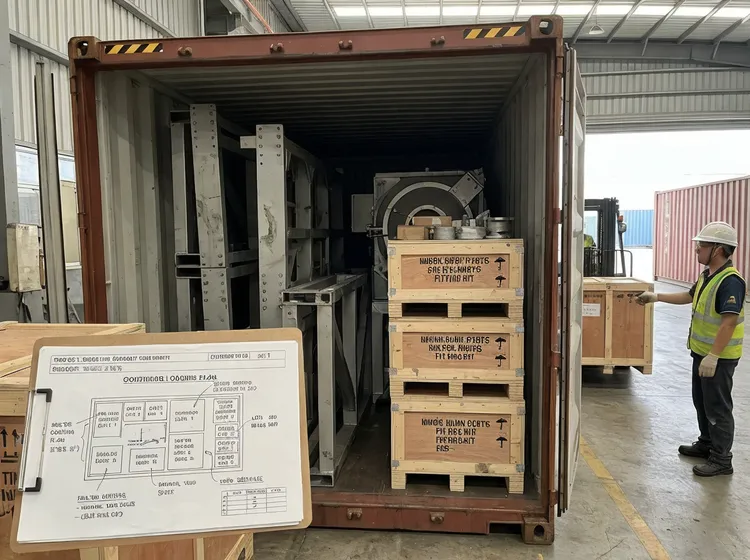
Assembled equipment creates dimensional weight charges (freight calculated by volume, not actual weight) that can double your shipping cost. We crate components in nested arrangements:

  • Conveyor sections stack inside frame members
  • Hydraulic cylinders pack alongside pump assemblies
  • Control panels ship with protective foam but minimal void space

Container loading plans show exactly how components fit, so you know the freight volume before ordering.

Easier Installation

Your team doesn't need specialized lifting equipment or factory-trained technicians. Most buyers' maintenance teams can handle installation if they've worked with industrial hydraulic systems before.

Hydraulic: Standard SAE flange fittings (O-rings and bolts included)

Electrical: Color-coded wiring diagrams with terminal block labels matching the schematic

Documentation: Assembly manuals with torque specs, hydraulic pressure settings, and PLC parameter lists

Modular foundry equipment packed into shipping containers with container loading plan

Reduced Freight Cost & Simplified Customs

Knock-down packaging reduces freight cost and simplifies customs clearance. Assembled equipment creates dimensional weight charges — freight calculated by volume, not actual weight — that can double your shipping cost. Our nested crating approach minimizes void space and maximizes container utilization.

Bolted Joints

No oversize welds

Nested Crating

Minimal void space

Loading Plans

Pre-order volume clarity

Full-Stack Engineering Team

In-House Engineering Capacity

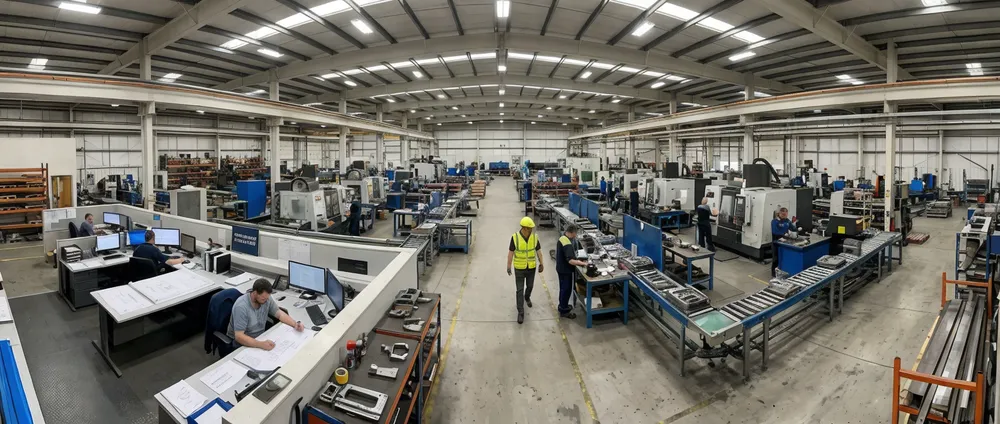
Eighteen engineers handle layout design, capacity configurations, and control system programming — not outsourced to design consultancies. They work in our 15,000 m² facility alongside the production lines, so they see how design decisions affect manufacturing, assembly, and field performance.

Real-World Proof: Speed of Execution

When a European buyer needed a vertical flaskless molding line adapted for 6-meter ceiling height, our mechanical engineers reconfigured the frame geometry and hydraulic cylinder placement in three days because they could walk to the fabrication shop and verify clearances with the actual equipment.

Integrated Project Delivery

In-house engineering means faster response times and better integration between mechanical, hydraulic, and electrical systems. When a Middle East buyer needed a resin sand line integrated with their existing clay sand facility, our engineers handled the complete scope:

  • Material flow design to prevent cross-contamination
  • Control system programming to interface with their current equipment
  • Floor loading calculations for their mezzanine structure

External consultants would have required multiple coordination meetings and revision cycles. Our team walked the project from layout to commissioning in six weeks.

Chief Mechanical Engineer

22 Years in Foundry Automation

Designed the modular frame system used across all product lines — standardized connection points, interchangeable hydraulic manifolds, and bolt patterns that let us reconfigure equipment without custom fabrication.

Electrical Engineering Lead

16 Years Programming PLCs

Wrote the diagnostic routines that let your maintenance team troubleshoot sensor failures without reading ladder logic.

QC Manager

18 Years Hydraulic Systems Testing

Came from hydraulic systems testing at a construction equipment manufacturer. Catches seal problems and cylinder misalignment during assembly, not after delivery.

TZFoundry 15,000 m² engineering facility with production lines and engineering workstations

15,000 m² facility — engineering, fabrication, and assembly under one roof

Scalable Production Architecture

Flexible Capacity Range

We build production lines from 50 to 500 molds per hour for clay sand systems, 20 to 200 patterns per hour for lost foam equipment. That range covers small foundries running 8-hour shifts with 400–500 molds daily and high-volume operations running 24-hour production with 10,000+ molds daily.

Entry Level

50–80 Molds/Hour

Small Foundry Configuration

  • Single-station molding presses
  • Manual pattern handling
  • Fits in one 40HQ container
  • 2–3 operators per shift

Ideal for market testing or low-volume specialty casting. Daily output: 400–640 molds on an 8-hour shift.

Popular
Mid-Range

150–200 Molds/Hour

Growth Configuration

  • Automated pattern loading
  • Dual molding stations
  • Integrated sand reclamation

Most common for established foundries expanding capacity. Balances automation investment with operational flexibility.

High Volume

300–500 Molds/Hour

Full Production Configuration

  • Continuous conveyors
  • Robotic pattern handling
  • PLC-controlled sand mixing with real-time moisture monitoring

For 24-hour operations producing 10,000+ molds daily. Maximum automation and throughput.

Modular Architecture = Scalable Investment

The mechanical architecture scales through component selection — larger hydraulic pumps, wider conveyors, additional mixing chambers — rather than complete redesigns. You're not paying for custom engineering when you need mid-range capacity.

Capacity flexibility matters when you're entering a new market or scaling production. Start with a 100 molds/hour line to test demand, then add a second line or upgrade to 200 molds/hour when orders increase.

Upgrade Path Without Replacement

Add Conveyor Sections

Extend material flow without changing existing line layout

Upgrade Hydraulic Power Unit

Higher throughput from the same mechanical frame

Reprogram PLC for Faster Cycle Times

Software-driven capacity gains without hardware changes

We've helped buyers scale from single-line operations to three-line facilities over 5–6 years as their business grew.

Clay Sand Systems

50 to 500 molds per hour. Covers small foundries running 8-hour shifts (400–500 molds daily) to high-volume operations running 24-hour production (10,000+ molds daily).

Lost Foam Equipment

20 to 200 patterns per hour. Scalable through the same modular component-selection approach — no complete redesigns required for capacity changes.

14 Countries Commissioned Remotely

Remote Commissioning Proven

We've commissioned foundry equipment in 14 countries via video call — North America, Europe, Middle East, Southeast Asia. Remote commissioning works when your installation team can read hydraulic schematics, use a multimeter, and follow systematic troubleshooting procedures. We don't need them to be PLC programmers or hydraulic engineers, just competent industrial maintenance technicians.

10-Day Commissioning Timeline

The process runs over 5–10 days depending on equipment complexity.

1

Day 1 — Receiving Inspection

Verify all components arrived and inspect for shipping damage.

2

Day 2–3 — Mechanical Assembly

Bolt frame sections, mount hydraulic cylinders, install conveyors.

3

Day 4–5 — Hydraulic Connections

Connect hoses, fill reservoir, bleed air, pressure test at 1.5× rated capacity.

4

Day 6–7 — Electrical Connections

Wire control cabinet to motors and sensors, verify voltage, test emergency stops.

5

Day 8–9 — System Commissioning

Load PLC parameters, run test cycles, adjust timing and pressures.

6

Day 10 — Production Validation

Run continuous cycles, measure output rate and tolerance consistency.

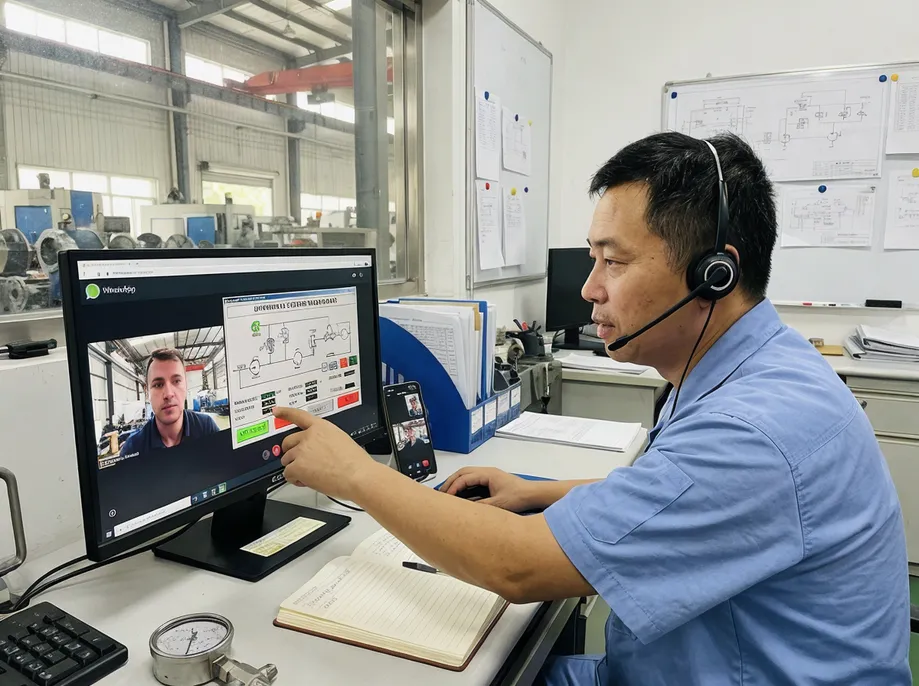
TZFoundry engineer guiding remote commissioning via video call, with PLC screen sharing and hydraulic system monitoring

Live Video Guidance

Our engineer watches via video call and provides real-time guidance. "Check the pressure gauge on the main hydraulic manifold — should read 120–140 bar when the press is at full stroke. If it's below 100, open the flow control valve another quarter turn."

We use WhatsApp video because it works reliably in most countries and doesn't require special software. Screen sharing lets us see PLC displays, error codes, and sensor readings when troubleshooting.

Spare Parts Kits Ship With Every Order

Remote commissioning depends on having replacement components available. First-year consumables ship alongside the equipment so your team can swap parts immediately instead of waiting for international shipping.

Hydraulic Seals

Cylinder rod seals, piston seals, O-rings for manifold connections.

Proximity Sensors

Detect mold position, pattern presence, conveyor indexing.

Solenoid Valves

Control hydraulic flow to cylinders.

PLC I/O Modules

Backup for failed input/output cards.

On-Site Commissioning Available

On-site commissioning is available for large projects — complete production lines over $200,000 or multi-line installations. Our engineer flies to your facility, handles installation supervision, trains your operators, and stays through the first production runs.

This makes sense when you're installing three clay sand lines simultaneously or integrating complex material handling systems that need on-the-ground coordination. Most single-line orders don't need on-site support if your team has industrial equipment experience.

Real Projects, Real Solutions

Typical Collaboration Examples

Every foundry has unique constraints. Here's how our engineering team has adapted standard equipment to solve real production challenges across three continents.

Vertical flaskless molding line adapted for low-ceiling European foundry with horizontal carousel pattern magazine
European Buyer Space Constraint Adaptation

6-Meter Ceiling? No Problem.

A foundry in Germany needed a vertical flaskless molding line but their facility had 6-meter ceiling height. Our standard design assumes 8 meters because the hydraulic press frame, pattern storage magazine, and overhead conveyor typically stack vertically.

Our engineers reconfigured the frame geometry — moved the pattern magazine from vertical storage to horizontal carousel arrangement, relocated the hydraulic power unit from overhead mounting to floor-level placement, and adjusted the press cylinder stroke length to maintain molding force within the reduced height envelope.

150

Molds/Hour

+12

Days Added

2-Set

MOQ Required

<15%

Cost Premium

Middle East Buyer System Integration

Dual Sand System, Zero Cross-Contamination

A Saudi Arabian foundry wanted to add a resin sand line to their existing clay sand facility. The challenge was preventing cross-contamination between the two sand systems while sharing floor space and overhead crane coverage.

Our engineers designed material flow with separate conveyor paths, calculated floor loading for the mezzanine structure they planned to build (resin sand mixer and coating equipment elevated above the clay sand molding area), and programmed the control system to interface with their current equipment.

Technical Integration Details

  • PLC communicates with existing sand reclamation system via Modbus protocol
  • Both lines share the same HMI touchscreen for monitoring
  • Integration engineering took 18 days
  • Trial production cycle run at factory using buyer's sand samples to verify coating application with their specific resin formulation
Dual sand system integration with mezzanine structure showing resin and clay sand conveyor paths in Saudi Arabian foundry
Extended cooling zone conveyor with infrared temperature monitoring for ductile iron casting line
North American Buyer Alloy-Specific Configuration

Ductile Iron Needs Longer Cooling

A U.S. foundry casts ductile iron components with 3–5 minute shakeout times, longer than the 2–3 minutes typical for gray iron. Standard conveyor speeds and cooling zone lengths don't provide enough dwell time — castings reach the shakeout station before they've cooled sufficiently, causing mold breakage and sand reclamation problems.

Configuration Adjustments

Conveyor Speed

Slowed from 12 m/min to 8 m/min

Cooling Zone

Extended with two additional conveyor sections

Alloy Parameters

3.6% C, 2.8% Si, 0.05% Mg — casting weight 15–40 kg

Smart Monitoring

PLC monitors mold temp via infrared sensors, adjusts speed dynamically

This configuration added one container to the shipment (the extended cooling conveyor) but eliminated the shakeout problems they'd experienced with standard equipment from another supplier.

Buyer Q&A

FAQ — OEM/ODM Common Questions

Straight answers to the questions buyers ask most often before placing an OEM or ODM foundry equipment order.

What is the minimum order quantity for OEM foundry equipment?

One set for standard configurations and layout adaptations. If you're buying our existing clay sand, lost foam, or resin sand production line designs with minor modifications — rearranging modules to fit your floor plan, changing control panel language, adjusting conveyor heights — the MOQ is 1 complete production line.

Custom capacity tiers or control system overhauls typically require 2–3 sets minimum because the engineering time — layout design, PLC programming, test runs — needs to be amortized across multiple units. We'll tell you the MOQ during quotation based on your specific requirements.

Standard config: MOQ 1 Custom engineering: MOQ 2–3

How long from inquiry to delivery for custom casting lines?

Total timeline runs 50–80 days from initial inquiry to operational equipment, assuming no delays in order confirmation or payment processing. Here's the breakdown:

5–10
Days
Quotation & layout design
40–60
Days
Production
5–10
Days
Commissioning support

Standard ODM configurations ship faster — 25–40 days production — because we're not doing custom engineering.

Lead times are subject to production schedule — if you're ordering during Chinese New Year or our capacity is committed to other projects, add 7–10 days. We provide realistic timelines during quotation, not optimistic promises that we can't meet.

What file formats do you need for custom equipment designs?

CAD drawings preferred — DWG, DXF, STEP formats — but we can work from production targets and space constraints if you don't have formal drawings.

Most buyers send us facility photos, rough sketches with dimensions, and a description of their process requirements. Our engineers handle the layout design — you don't need to hire an external design firm or produce detailed equipment specifications.

If you have existing equipment that needs integration, send us model numbers, photos of connection points, and any technical documentation you have. We'll figure out the interface requirements.

What to send us: Facility photos · rough sketches with dimensions · process requirements · existing equipment model numbers & connection-point photos · any technical documentation you have.

Can you integrate new equipment with our existing foundry systems?

Yes. Our engineers design material flow and program control systems to interface with existing equipment. We've connected new molding lines to sand reclamation systems from three different manufacturers, integrated resin sand mixers with existing clay sand facilities, and adapted conveyor systems to match buyers' current material handling equipment.

What We Need From You

Integration projects need detailed facility information — floor plans, equipment lists, photos of connection points, and any technical documentation for your current systems.

Control protocols: Modbus, Profibus, or discrete I/O depending on what your equipment supports

Mechanical integration: Matching conveyor heights, belt speeds, and transfer chute angles

Do you provide on-site installation for OEM orders?

Remote commissioning via video call is standard — your installation team follows our engineer's instructions to connect hydraulic lines, wire control panels, and run initial test cycles. This works for most projects as long as your team has industrial equipment experience (can read hydraulic schematics, use a multimeter, follow systematic troubleshooting procedures). We've commissioned equipment in 14 countries this way.

Remote Commissioning (Standard)

Included with every order. Your team follows guided instructions via video call. Requires basic industrial equipment experience — reading hydraulic schematics, multimeter use, systematic troubleshooting.

On-Site Commissioning (Available)

Available for complete production lines over $200,000 or multi-line installations. Adds engineer travel, accommodation, and daily rate to the project cost. Provides hands-on training and faster problem resolution.

What is included in the OEM quotation?

The quotation breaks down every component — molding press, sand mixer, conveyors, hydraulic power unit, control cabinet — so you can see exactly what you're paying for. Factory pricing means our manufacturing cost plus margin, not distributor markup.

Equipment list with specifications and individual component pricing

CAD layout drawings showing equipment placement and material flow

Factory pricing — manufacturing cost plus margin, no distributor markup

Container loading plan with estimated freight volume

Commissioning support scope — remote or on-site as needed

First-year spare parts kit included with the quotation

Custom engineering beyond standard layout work is noted separately with additional cost and timeline impact.

Quotations valid for 30 days from issue date, subject to raw material price fluctuations (steel plate, hydraulic components).

Get Started Today

Start Your OEM Project

Send us your production requirements — casting type, output rate, available floor space — and we'll provide equipment recommendations with factory pricing.

24-Hour Engineering Response

Our engineering team typically responds within 24 hours with preliminary layout options and a timeline estimate.

What to Include

Include facility photos or floor plans if you have them, along with any existing equipment that needs integration. The more detail you provide upfront, the more accurate our initial quotation will be.

Global Coverage

We work with buyers in North America, Europe, the Middle East, and Southeast Asia — time zone differences mean responses may come during your evening hours, but we typically reply within one business day.