ISO 9001:2015 Certified Manufacturer

Horizontal Flaskless Clay Sand Processing Line

A horizontal flaskless clay sand processing line forms and transports mold halves horizontally along a conveyor system, eliminating flask handling and vertical lift mechanisms. The core trade-off: you need 18–25 meters of floor length, but only 3–4 meters of ceiling clearance — half the height requirement of vertical flaskless systems. This configuration makes commercial sense when you're working in brownfield facilities with existing ceiling constraints, or when you're integrating with horizontal pouring lines and want to eliminate orientation changes in your material flow.

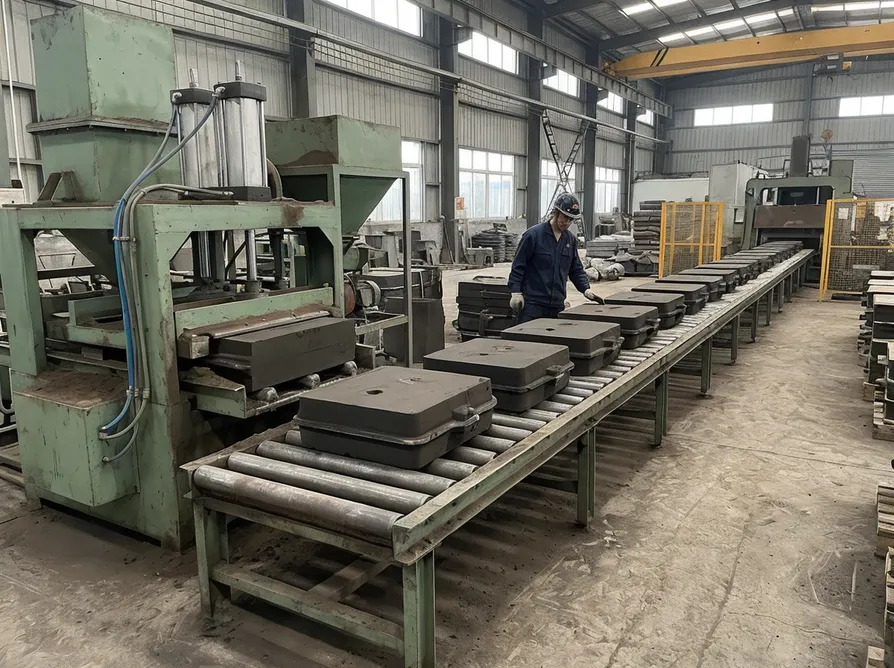
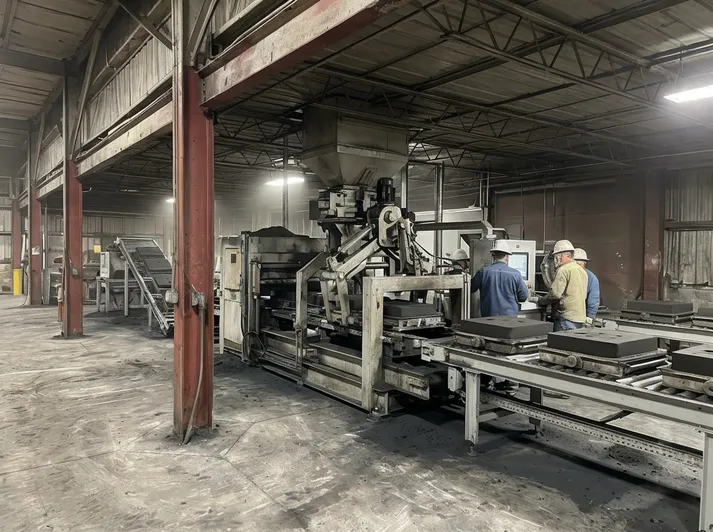
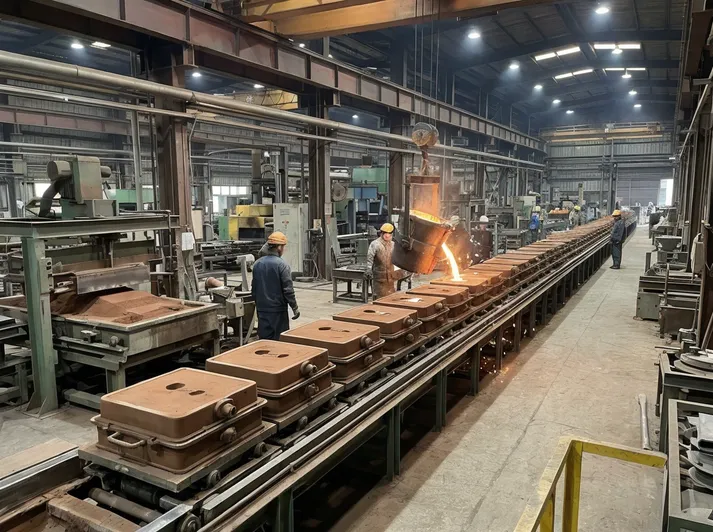
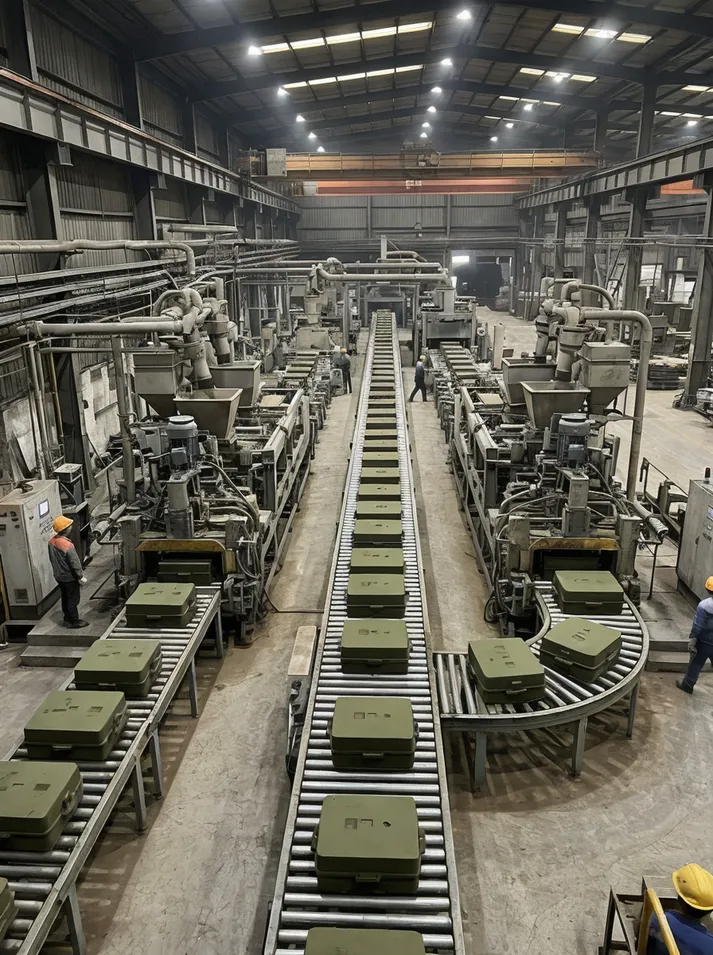
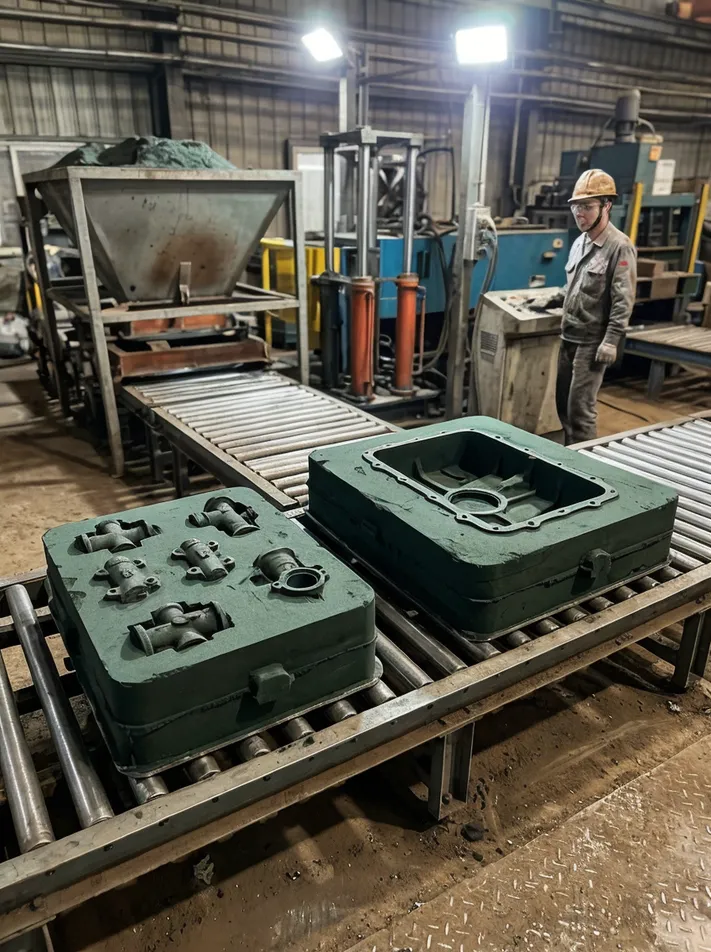
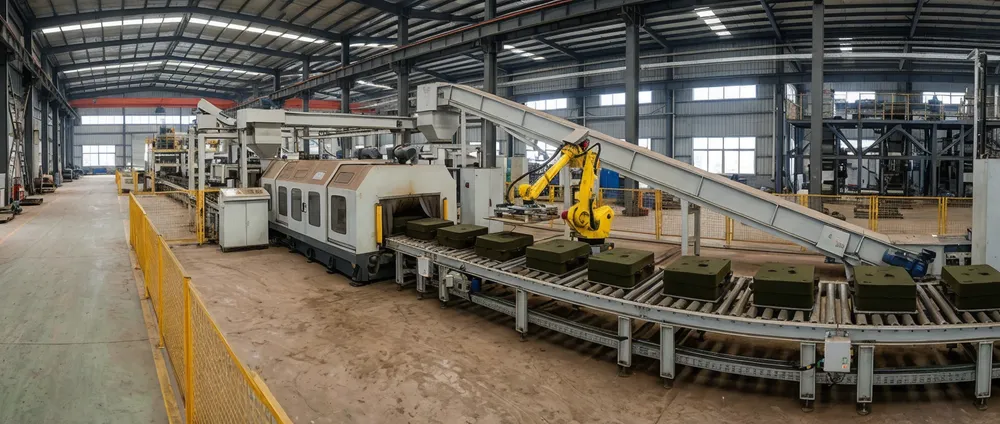
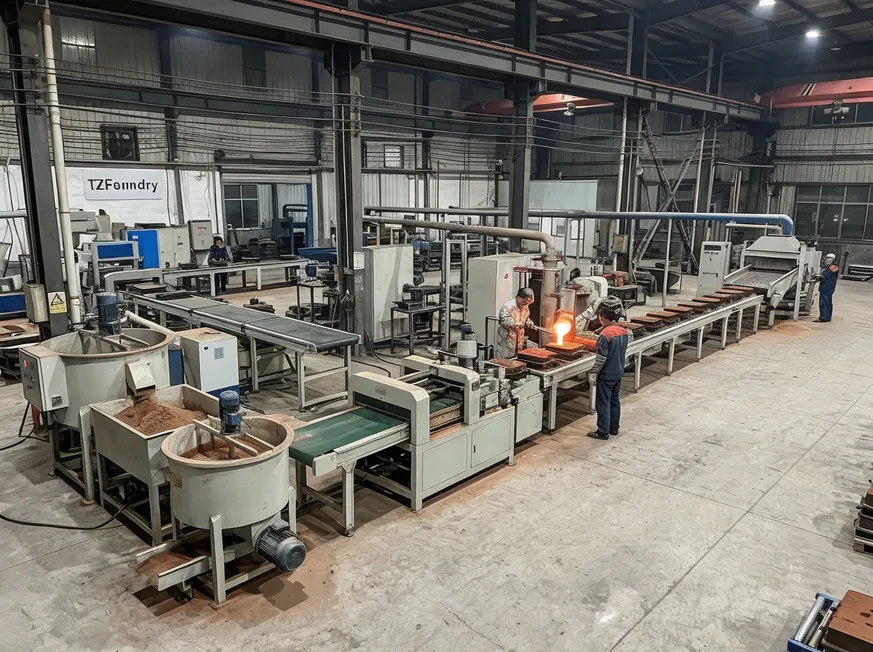
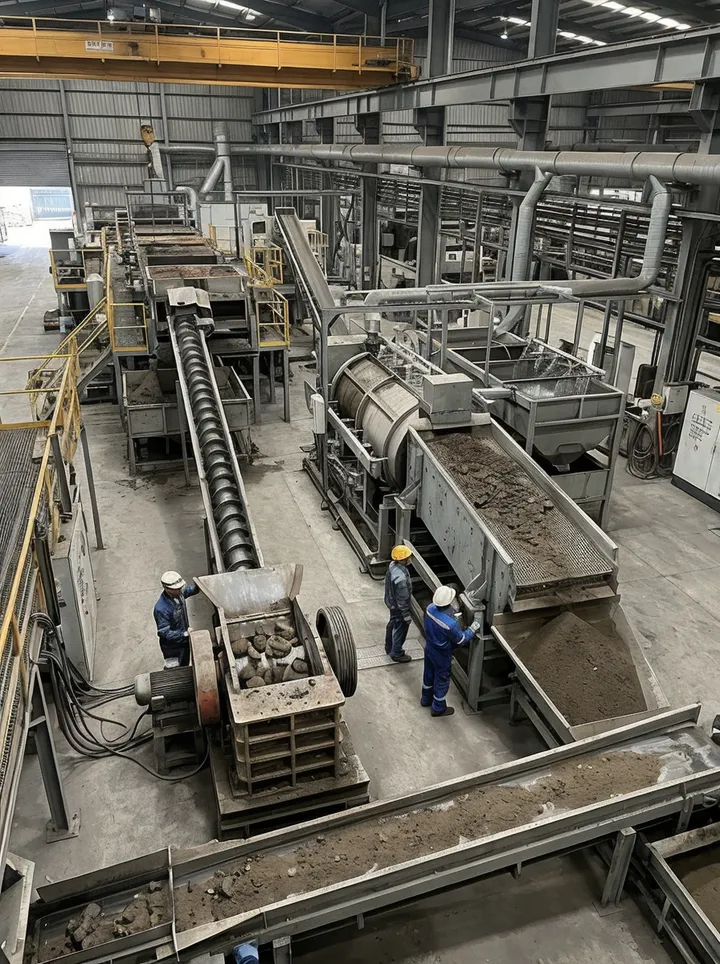
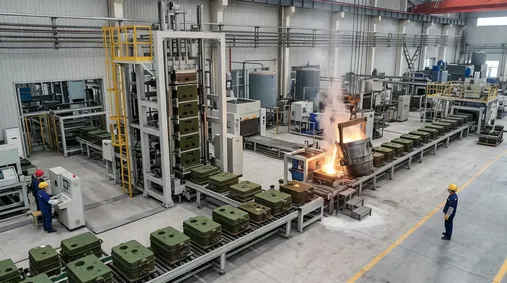
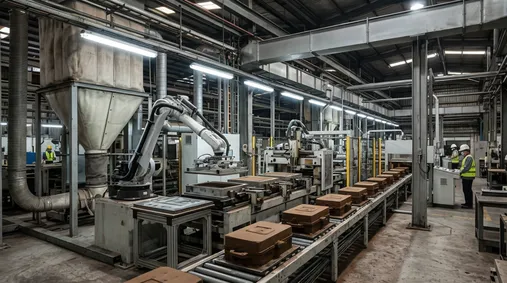
Horizontal flaskless clay sand processing line — conveyor-based mold transport system in factory setting

Why Horizontal Orientation Matters

The horizontal orientation affects more than just the footprint. It changes how you access the machine, how stable your molds stay during transport, and how you scale production.

3–4m Ceiling Clearance

Half the height requirement of vertical flaskless systems. Fits brownfield facilities with existing low-clearance ceilings without structural modification.

Waist-Height Access

Mold compaction happens at waist height, so pattern changes and maintenance access are simpler than reaching into a 6-meter vertical tower.

Fewer Drop Points

Conveyor-based mold transport is inherently more stable than vertical lifts — fewer points where molds can crack or misalign before pouring.

Horizontal Scalability

Scale to 150–200+ molds/hour by adding parallel molding stations along the same floor plane instead of stacking equipment vertically.

18–25m Floor Length

The footprint trade-off — you need linear floor space, but integration with horizontal pouring lines eliminates mold orientation changes in your material flow.

No Flask Handling

Flaskless design eliminates flask inventory, flask tracking, and the dedicated return conveyor that flask-based systems require.

Three Capacity Ranges, Modular Shipping

We've built horizontal flaskless lines for foundries across three production tiers. Each ships in standard containers and assembles on-site within days.

Job Shops

50–100

molds / hour

Designed for job shops with frequent product changes. Rapid pattern swap and manual override access for short-run flexibility.

Mid-Volume Production

100–200

molds / hour

PLC-controlled operation for consistent mid-volume output. Balances automation with pattern changeover speed.

High-Volume / 24/7

200+

molds / hour

Automotive and industrial casting operations running 24/7. Parallel molding stations and full automation for sustained throughput.

Shipping

2–3 × 40HQ

containers, capacity-dependent

Assembly

3–5 Days

on your factory floor

Commissioning

2–3 Days

to production-ready

Lead Time

45–60 Days

deposit to factory departure

What This Page Covers

This is a comprehensive decision-support page for foundry engineers and procurement teams evaluating horizontal flaskless molding configurations. Sections below address system comparison, specifications, applications, customization, floor planning, process control, and shipping logistics.

Configuration Comparison

Horizontal vs Vertical Flaskless Systems — Which Configuration Fits Your Foundry

The decision between horizontal and vertical flaskless configurations comes down to your facility's physical constraints and material flow layout. Both eliminate flask handling and deliver comparable mold quality — the difference is how they use your available space.

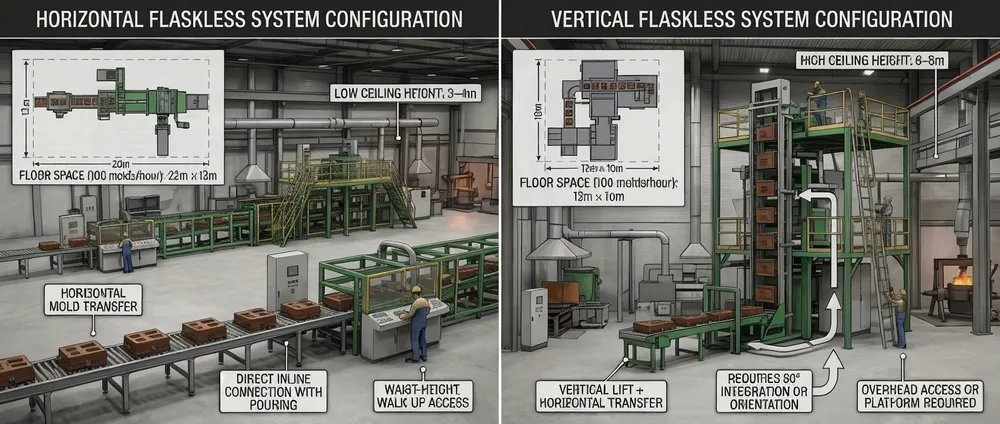
Side-by-side comparison of horizontal and vertical flaskless clay sand processing line configurations showing floor space and ceiling height differences
Floor space (100 molds/hour)
Horizontal
22m × 12m
Vertical
12m × 10m
Ceiling height requirement
Horizontal
3–4m
Vertical
6–8m
Throughput capacity range
Horizontal
50–200+ molds/hr
Vertical
50–150 molds/hr
Mold transfer method
Horizontal
Horizontal conveyor
Vertical
Vertical lift + horizontal transfer
Pattern change access
Horizontal
Waist-height, walk-up access
Vertical
Overhead access or platform required
Integration with horizontal pouring
Horizontal
Direct inline connection
Vertical
Requires 90° orientation change
Typical applications
Horizontal
Brownfield facilities, horizontal material flow, high-volume parallel lines
Vertical
Greenfield facilities with height clearance, limited floor space
Maintenance access
Horizontal
Ground-level access to all components
Vertical
Elevated platforms for upper components

When Horizontal Makes Sense

You're working in an existing building with 4–5 meter ceilings and can't justify the cost of raising the roof structure. Your pouring stations, cooling conveyors, and shakeout equipment already run horizontally, and adding a vertical molding system would create transfer bottlenecks. You're planning to scale to 150–200+ molds per hour eventually and want the option to add parallel molding stations without reconfiguring your entire layout.

When Vertical Makes Sense

Your floor space is constrained (you have 12 meters of length available, not 22), but you have 8+ meters of ceiling clearance. You're building a greenfield facility and can design the structure around the equipment. Your production volume stays in the 50–100 molds/hour range and doesn't require parallel molding stations.

From Our Production Floor

We run both configurations in our own test facility. The horizontal line handles our high-volume production runs (automotive castings, pump housings), while the vertical system runs smaller batches where floor space matters more than throughput. Most of our export buyers in North America and Europe choose horizontal because they're retrofitting existing foundries — the ceiling height constraint is fixed, but they can usually find 20–25 meters of floor length by relocating secondary equipment.

Not Sure Which Configuration Fits Your Layout?

Send us your floor plan dimensions (length, width, ceiling height) and target capacity — we'll recommend the optimal orientation and provide CAD drawings showing how the system integrates with your existing equipment. Most buyers start with a 30-minute technical consultation call where we review their space constraints and material flow.

Exploring vertical options? See Vertical Flaskless Clay Sand Processing Line
Technical Specifications

Horizontal Flaskless Line Specifications

Entry
50–100 molds/hour
Floor space 18m × 10m
Ceiling height 3–4m min
Power 45–65 kW
Compaction Hydraulic
Mold size 400–600 × 300–500mm
Pressure 0.6–0.8 MPa
Cycle time 45–60 sec
Automation Manual pattern change
Sand reclamation 3–5 t/hr
Conveyor speed 2–4 m/min
Mid-Range
100–200 molds/hour
Floor space 22m × 12m
Ceiling height 3–4m min
Power 85–110 kW
Compaction Servo-driven hydraulic
Mold size 400–800 × 300–600mm
Pressure 0.8–1.2 MPa
Cycle time 30–40 sec
Automation Semi-auto, PLC control
Sand reclamation 6–10 t/hr
Conveyor speed 4–6 m/min
High-Volume
200+ molds/hour
Floor space 25m × 15m
Ceiling height 3–4m min
Power 150–180 kW
Compaction Pneumatic or servo-driven
Mold size 500–1000 × 400–800mm
Pressure 1.0–1.5 MPa
Cycle time 18–25 sec
Automation Full auto, robotic patterns
Sand reclamation 12–18 t/hr
Conveyor speed 6–10 m/min

Specifications shown are industry-standard ranges for horizontal flaskless systems. Actual specifications vary by capacity, automation level, and mold size requirements. Contact us for detailed specs based on your production targets.

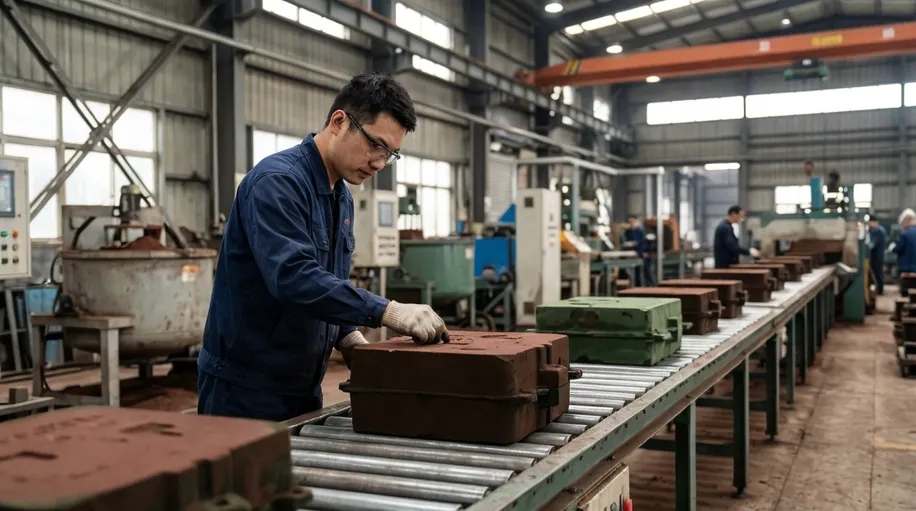
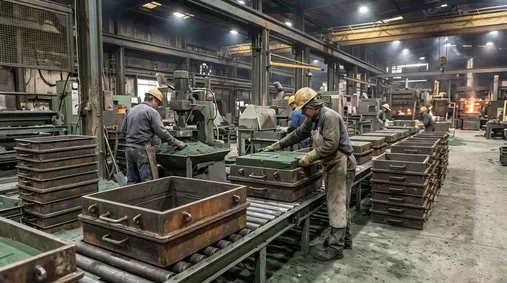
Operator visually inspecting mold halves at waist height on a horizontal flaskless conveyor line

Floor-Length Layout & Operator Access

The 18–25 meter floor length accommodates horizontal conveyor systems that eliminate vertical lifts and reduce maintenance points. Mold halves travel at waist height from compaction through cooling, so your operators can visually inspect every mold without climbing platforms or using mirrors to check overhead equipment. This matters more than it sounds — we've seen vertical systems where operators miss mold defects because they can't see the top surface until after pouring.

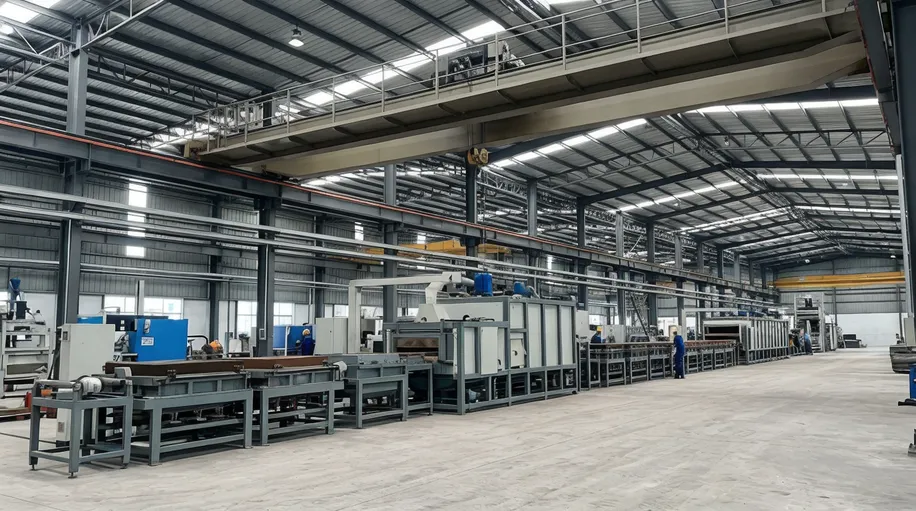
Horizontal flaskless line installed in a facility with 4.5-meter ceiling height showing overhead crane clearance

Constant Ceiling Clearance Across All Capacities

Ceiling height requirement stays constant across all capacity ranges because the equipment profile never exceeds 3 meters. If you're working in a facility with 4.5–5 meter ceilings, you have enough clearance for overhead cranes or gantry systems to handle pattern changes and maintenance lifts. Vertical systems need 6–8 meters minimum, which often means structural modifications to existing buildings (steel reinforcement, roof raising, new column spacing).

Get a Quote for Your Target Capacity

Send us your production volume requirements and available floor dimensions, and we'll spec a system that fits without wasting space or requiring building modifications.

Applications & Market Fit

Horizontal Configuration Applications — Market Segments & Layout Solutions

Brownfield Foundries with Ceiling Constraints

Most existing foundry buildings were constructed 20–40 years ago with 4–5 meter ceiling heights — adequate for manual molding equipment and overhead cranes, but insufficient for modern vertical flaskless systems that need 6–8 meters of clearance. Raising a roof structure costs $150–300 per square meter (steel reinforcement, new roofing, crane rail modifications), which adds $50,000–100,000 to a mid-size installation before you've even purchased the molding equipment.

Horizontal flaskless lines fit existing ceiling heights without structural modifications. We've installed systems in facilities built in the 1980s where the buyer's only alternative was relocating to a new building or continuing with outdated manual molding. The commercial benefit: you avoid the capital cost and 6–12 month timeline of building renovation, and you can redirect that budget toward higher-capacity equipment or additional automation.

Typical Order Pattern

Buyers start with one horizontal line to prove the ROI, then add a second line 18–24 months later once they've shifted their full production volume away from manual systems.

Upgrade Path Added Cost Timeline Impact
Raise roof for vertical system +$50K–100K +6–12 months
Horizontal flaskless (existing building) $0 structural No delay
Horizontal flaskless clay sand processing line installed in a brownfield foundry with low ceiling height, showing compact vertical clearance under existing roof structure

A horizontal flaskless line operating under a 4.5 m ceiling — no roof modification required.

Horizontal flaskless molding line integrated inline with a 28-meter pouring conveyor, demonstrating straight-line material flow without orientation changes

Inline layout: molds travel directly from compaction to pouring with zero transfer mechanisms.

Horizontal Material Flow Integration

Foundries with horizontal pouring lines, horizontal cooling conveyors, and horizontal shakeout systems create a natural material flow where molds move in a straight line from molding through finishing. Adding a vertical molding system breaks that flow — molds exit the vertical tower, transfer to a horizontal conveyor (introducing a 90° orientation change and a potential drop point), then continue through the rest of the process.

Horizontal flaskless molding eliminates the orientation change. Molds exit the compaction station already on the horizontal conveyor that feeds your pouring line, so there's no transfer mechanism, no additional floor space for a 90° turn, and no risk of mold damage during handoff.

Field Result — European Installation (2018)

We positioned the horizontal molding line inline with a 28-meter horizontal pouring line — molds travel directly from compaction to pouring without any handling.

+15%

Throughput increase from eliminating the transfer bottleneck

<1%

Mold breakage rate, down from 3–4% before conversion

Best-Fit Buyer Profile

This configuration works best for foundries running consistent product mixes where inline material flow delivers more value than the flexibility of batch processing. Typical segments:

  • Automotive component foundries — high-volume runs lasting days or weeks
  • Pump housing manufacturers — consistent geometries, steady throughput
  • Valve body casting operations — production runs measured in days or weeks, not hours

High-Volume Automotive & Industrial Casting

Long horizontal lines (20–25 meters) support 150–200+ molds per hour by running parallel molding stations along the same conveyor system. Each station operates independently — one can pause for pattern changes while the others continue production — but they all feed the same downstream pouring and cooling equipment. This scalability is difficult to achieve with vertical systems, where adding capacity means installing a second complete vertical tower with its own footprint and material handling.

Dual-Station Horizontal Line Configuration

We've built dual-station horizontal lines for buyers targeting 180–200 molds per hour. Each station runs at 90–100 molds per hour (well within the reliable operating range for servo-driven compaction), and the PLC coordinates pattern changes so at least one station is always producing.

Single 100-Mold/Hr Line — Two Shifts

160,000–180,000

molds per year (accounting for downtime & maintenance)

Dual-Station Line — Two Shifts

280,000–320,000

molds per year — buffer capacity for rush orders & new contracts

Automotive casting contracts often require 150,000–200,000 parts annually with tight delivery windows. A dual-station configuration gives you buffer capacity for rush orders and the ability to take on additional contracts without capital investment in a second complete production line.

Typical Order Pattern in This Segment

1–2 horizontal lines initially, with buyers returning 2–3 years later for expansion capacity once they've secured long-term supply contracts. Reorder pattern is predictable because automotive foundries plan capacity 3–5 years ahead based on vehicle platform lifecycles.

Dual-station horizontal flaskless molding line configured for high-volume automotive casting — parallel stations feeding a shared conveyor system

Design a Configuration for Your Foundry Layout

Send us your current foundry layout or production requirements — we'll design a horizontal line configuration that fits your space and throughput targets. Include photos or CAD drawings of your existing pouring and cooling equipment if you're integrating with current systems, and we'll show you exactly how the molding line connects to your material flow.

Configuration & Customization

Customization & Configuration Options for Horizontal Flaskless Lines

Mold sizing, depth, and automation tiers are fully configurable to match your casting application, part mix, and production volume targets.

Mold Size Ranges & Conveyor Width Adjustments

Mold size ranges are customizable within the constraints of horizontal orientation and conveyor width. Standard configurations handle 400–800 mm length × 300–600 mm width molds, which covers most gray iron and ductile iron casting applications — pump housings, valve bodies, automotive components, and machinery parts.

If you need larger molds — up to 1000 mm × 800 mm — we'll modify the conveyor width and compaction ram stroke, but this adds 2–3 weeks to the lead time for pattern plate fabrication and structural frame adjustments.

Smaller molds (under 400 mm × 300 mm) work fine on standard equipment; you're just not using the full conveyor width.

Standard Range

400–800 × 300–600 mm

Gray & ductile iron — pumps, valves, automotive

Extended Range

Up to 1000 × 800 mm

Modified conveyor & ram stroke — +2–3 weeks lead time

Compact Molds

Under 400 × 300 mm

Runs on standard equipment — no modification needed

Horizontal flaskless mold size range comparison — standard 400–800mm and extended 1000×800mm configurations

Mold Depth & Compaction Method Selection

Mold depth (the vertical dimension) typically runs 150–250 mm for horizontal systems. Deeper molds (250–350 mm) are possible but require higher compaction pressure to achieve uniform sand density at the bottom of the mold cavity, which means upgrading from hydraulic to servo-driven or pneumatic compaction.

We'll recommend the appropriate compaction method based on your mold geometry — send us your pattern drawings or current mold dimensions, and we'll spec the system accordingly.

Standard Depth: 150–250 mm

Hydraulic compaction — standard configuration, no upgrades required.

Deep Molds: 250–350 mm

Requires upgrade to servo-driven or pneumatic compaction for uniform sand density at full depth.

Custom Spec-Out Available

Send pattern drawings or current mold dimensions — we'll specify compaction method and system configuration.

Automation Levels — Three Tiers for Different Production Models

Horizontal flaskless lines scale across three automation tiers. Match the tier to your part mix, weekly pattern change frequency, and labor model.

1

Automation Tier 1

Manual Pattern Change + Hydraulic Compaction

Operator positions the pattern plate manually, initiates the compaction cycle via pushbutton, and removes the finished mold. Cycle time is 45–60 seconds per mold, and pattern changes take 8–12 minutes depending on pattern complexity.

This configuration works for job shops running 5–10 different mold designs per week where the flexibility of manual pattern handling outweighs the labor cost. Two operators per shift — one on molding, one on sand reclamation.

Cycle Time

45–60 sec

Pattern Change

8–12 min

Operators / Shift

2

Best For

Job shops — 5–10 designs/wk

Semi-Auto PLC Control Configuration

Servo-driven compaction with programmable pressure curves, automated sand feeding, and touchscreen pattern recipe storage. The operator still handles pattern changes manually, but the PLC manages compaction pressure, cycle timing, and sand moisture adjustment automatically.

30–40 sec/mold

Cycle time per mold with servo-driven compaction and automated sand feed

20+ Mold Recipes

Stored in the controller for instant recall — no manual parameter entry between changeovers

100–150 molds/hr

Ideal throughput range for mid-volume foundries running 3–5 core mold designs

2 Operators/Shift

Same headcount as manual — role shifts from direct control to exception handling and quality oversight

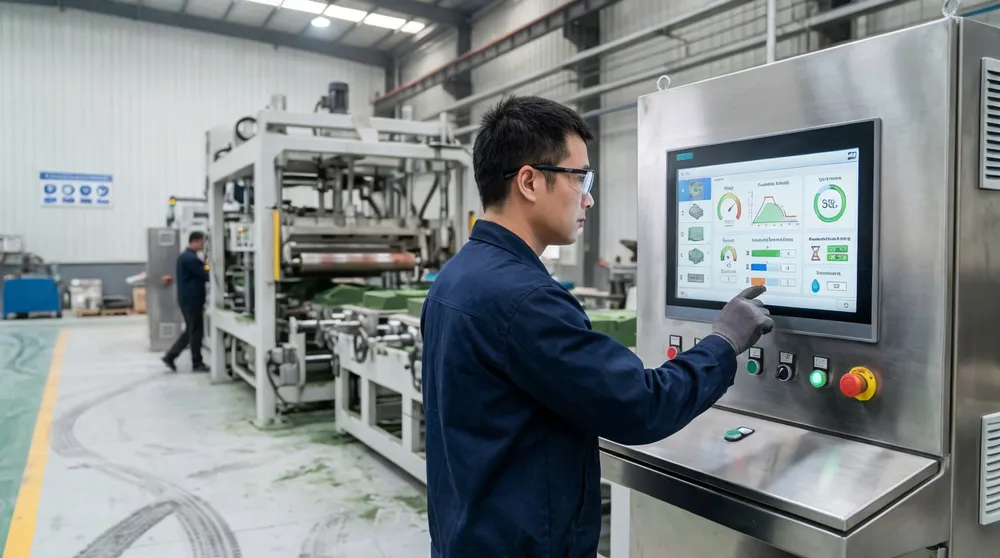
Semi-auto PLC control panel with touchscreen interface for horizontal flaskless molding line recipe management

Full Automation with Robotic Pattern Handling

Pneumatic or servo-driven compaction, robotic pattern change completing in under 60 seconds, zero-operator sand handling via enclosed conveyors, and predictive maintenance sensors on all rotating equipment. This configuration targets 200+ molds per hour operations running 24/7 with narrow product ranges of 1–3 mold designs.

Operational Profile

  • Robotic pattern change: completes in under 60 seconds — eliminates manual changeover downtime
  • Zero-operator sand handling: enclosed conveyors manage the full sand circuit without manual intervention
  • Predictive maintenance sensors: installed on all rotating equipment to flag wear before breakdowns
  • 3 operators per shift: one per molding station for parallel lines, one overseeing reclamation and quality checks

ROI Threshold

300,000+

molds annually

If your operation produces more than 300,000 molds per year, the labor savings and uptime improvement justify the full automation premium within 18–24 months.

Best fit: 200+ molds/hr, 24/7 production, 1–3 mold designs
Fully automated horizontal flaskless clay sand molding line with robotic pattern change and enclosed conveyors

Conveyor Configurations — Single-Line vs. Dual-Line

Your conveyor layout determines both maximum throughput and production resilience. Single-line conveyors serve most mid-volume operations, while dual-line configurations add redundancy and support 200+ molds per hour.

Parameter Single-Line Conveyor Dual-Line Conveyor
Throughput Capacity Up to 150 molds/hour 200+ molds/hour
Track Configuration Single conveyor track Two parallel tracks feeding the same downstream equipment
Redundancy No built-in redundancy — full stop on conveyor failure If one section fails, production routes through the other track during repairs
Best For Mid-volume operations, single-shift foundries High-volume 24/7 operations where downtime is unacceptable

Cooling Zone Length — Alloy-Dependent Calculation

Cooling zone length is adjustable based on your casting alloy and shakeout timing. Required cooling times before shakeout:

Gray Iron

8–12 minutes

cooling time before shakeout

Ductile Iron

12–18 minutes

cooling time before shakeout

We calculate the required conveyor length based on your specific cycle time and cooling requirements — the cooling zone scales with your production pace, not just the alloy.

PLC Control Options

Siemens S7-1200

Industry-standard PLC platform with wide global service coverage. Choose this if your maintenance team already works with Siemens hardware — familiar programming environment reduces commissioning time and simplifies spare-parts stocking.

Mitsubishi FX5U

Equivalent functionality to the Siemens option. The decision usually comes down to which brand your maintenance team is familiar with — both deliver the same control precision for horizontal flaskless molding cycles.

Interface Languages

English, Spanish, Arabic, Russian, Portuguese — operator HMI supports multi-language switching without reprogramming.

Remote Diagnostics

4G module or Ethernet connection — we can VPN into your PLC to review process data and troubleshoot issues without a site visit.

Data Logging

12 months of production data — batch parameters, cycle times, alarm history — for ISO 9001 traceability and process optimization.

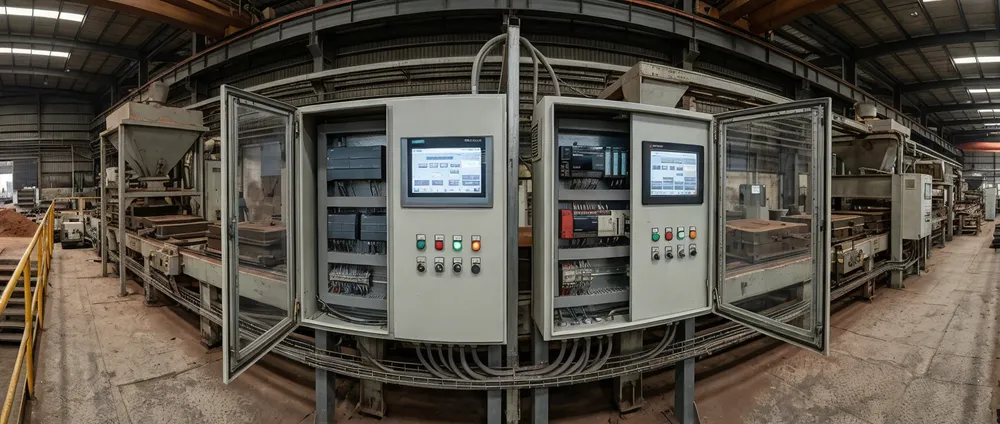
PLC control panel options for horizontal flaskless clay sand processing line — Siemens S7-1200 and Mitsubishi FX5U with multi-language HMI

MOQ & Lead Time Implications

No minimum order quantity — we'll build a single horizontal line if that's what your capacity planning requires. Lead times vary by configuration complexity:

45–60 days

Standard Configurations

  • Mold sizes within 400–800mm × 300–600mm
  • Siemens or Mitsubishi PLC
  • Manual or semi-auto operation
+2–3 weeks

Custom Mold Sizes

  • Mold sizes outside 400–800mm × 300–600mm range
  • Pattern plate fabrication modifications
  • Frame modifications required
+3–4 weeks

Full Automation

  • Robotic pattern handling integration
  • Third-party robotic system integration
  • Extended commissioning tests before shipment

Ready to Configure Your Horizontal Flaskless Line?

Tell us your specific mold size and automation requirements — we'll configure a system that matches your production needs and budget. Include your target cycle time, daily production volume, and whether you're running continuous production or batch campaigns, and we'll recommend the optimal automation level and conveyor configuration.

Installation Planning

Floor Space Planning & Integration Requirements for Horizontal Lines

Getting the foundation and footprint right before equipment arrives eliminates costly rework. Here's what your site preparation needs to cover — from slab thickness to anchor bolt placement to total floor area by production capacity.

Foundation & Structural Requirements

Foundation requirements start with a reinforced concrete slab at least 200 mm thick with rebar reinforcement — typically 12 mm rebar on 200 mm centers. Horizontal flaskless lines generate vibration from compaction rams (hydraulic or pneumatic cylinders cycling 40–60 times per hour) and from conveyor drive motors, so the foundation needs to absorb dynamic loads without cracking or settling.

If you're installing on an upper floor, check your building's load rating — a mid-volume system weighs 8–12 tons fully loaded with sand, and dynamic loads during compaction can spike to 1.5× static weight.

Pre-Shipment Documentation Package

TZFoundry provides foundation drawings with anchor bolt locations and load distribution maps as part of the pre-shipment documentation package. The drawings show exact bolt positions (typically M20 or M24 anchor bolts on 500–800 mm spacing), required embedment depth (150–200 mm), and point loads at each anchor location. Most buyers hire a local contractor to pour the foundation slab and install anchor bolts based on our drawings, then we bolt the equipment down during on-site assembly.

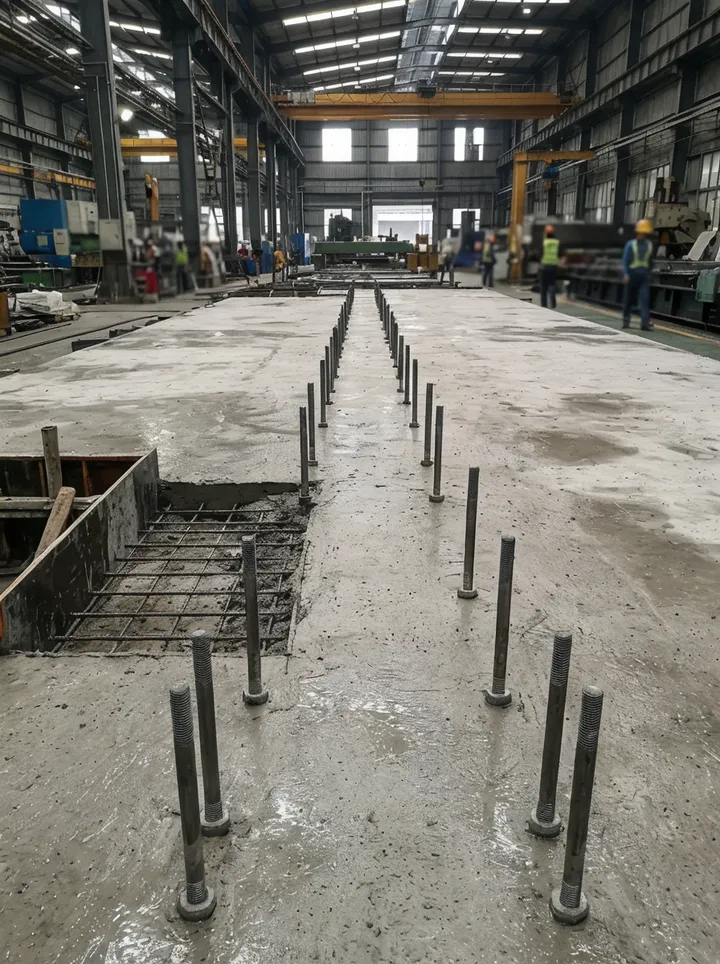
Reinforced concrete foundation slab with M20 anchor bolts positioned for horizontal flaskless molding line installation
200 mm
Min. Slab Thickness
12 mm
Rebar Diameter
M20–M24
Anchor Bolt Size
1.5×
Peak Dynamic Load Factor

Floor Space Footprint by Capacity

50–100 molds/hr
Entry Volume
180 m²
18 m × 10 m
  • Molding station, sand reclamation unit, conveyor system, and PLC cabinet included
  • Add 2–3 meters clearance on operator access side for pattern changes and maintenance
100–200 molds/hr
Mid Volume
264 m²
22 m × 12 m
  • Dual reclamation loops, longer cooling conveyor
  • Space for semi-auto or full-auto pattern handling equipment
200+ molds/hr
High Volume
375 m²
25 m × 15 m
  • Parallel molding stations, extended cooling zone
  • Automated sand transport with zero manual handling

Integration With Existing Sand Prep Equipment

These footprints assume you're integrating with existing sand preparation equipment (mixers, storage silos) located adjacent to the molding line. If you're installing a complete greenfield system, add another 100–150 m² for sand mixing and storage.

The horizontal layout advantage: you can position sand prep equipment alongside the molding line (parallel configuration) instead of upstream (series configuration), which reduces your total floor length requirement by 5–8 meters.

Ceiling Height Requirement

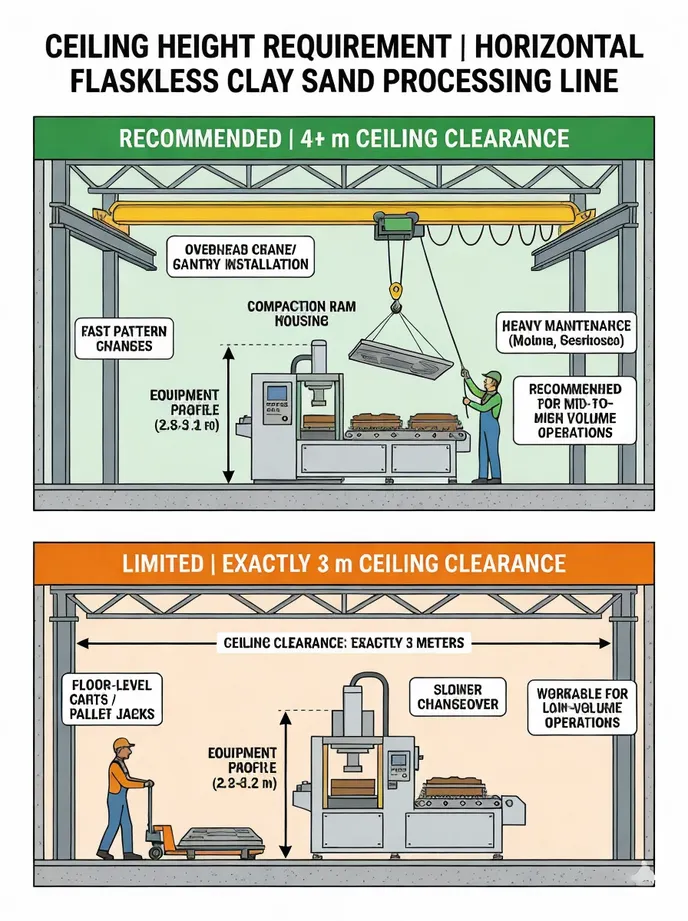
3–4 meters minimum. The equipment profile — from floor to the top of the compaction ram housing — is 2.8–3.2 meters depending on mold size. If you have 4+ meters of ceiling clearance, you can install an overhead crane or gantry system for pattern changes and heavy maintenance (motor swaps, gearbox removal). If you're limited to exactly 3 meters, pattern changes happen via floor-level carts or pallet jacks — slower but workable for low-volume operations.

Height Decision Guide

4+ meters clearance

Overhead crane/gantry for fast pattern changes & heavy maintenance — recommended for mid-to-high volume operations.

Exactly 3 meters clearance

Floor-level carts or pallet jacks for pattern changes. Slower changeover, but workable for low-volume operations.

Ceiling height clearance diagram showing 2.8–3.2 m equipment profile and recommended 4+ m clearance for overhead crane installation

Utility Connections

Three utility systems must be planned before installation. Each has specific capacity and quality requirements that affect long-term equipment reliability.

Electrical Service

Rated Power by Volume Tier

Small-batch 45–65 kW
Mid-volume 85–110 kW
High-volume 150–180 kW

Planning Note

Add 20% overhead for startup surge current. Most buyers install a dedicated circuit breaker and transformer for the molding line rather than tapping into existing foundry power — it simplifies troubleshooting and prevents voltage sags from affecting other equipment.

TZFoundry provides electrical schematics showing connection points, wire sizes, and breaker ratings with every system.

Compressed Air

For pneumatic compaction systems

Supply Requirements

  • Pressure: 0.8–1.0 MPa
  • Flow rate: 2–4 m³/min

Critical Detail

The compressor must be rated for continuous duty, not intermittent — the compaction cycle runs every 30–60 seconds, so air demand is constant.

Include an air dryer and filter to remove moisture and particulates. Contaminated air causes solenoid valve failures and cylinder seal wear.

Water Supply

For sand washing system

Standard Requirements

  • Pressure: 0.3–0.5 MPa
  • Flow rate: 50–80 L/min

Closed-Loop Option

With closed-loop water recycling, consumption drops to 5–10 L/min (makeup water only) — a 85–90% reduction in water usage.

Standard municipal water pressure (0.3–0.4 MPa) is sufficient. No booster pump required unless your facility pressure is unusually low.

Integration with Upstream & Downstream Equipment

Horizontal orientation simplifies integration because everything operates on the same plane. Sand preparation equipment (mixers, moisture control units) connects to the molding line via horizontal screw conveyors or belt conveyors — no bucket elevators or pneumatic transport required. Pouring stations position inline with the mold conveyor, so molds travel directly from compaction to pouring without transfer mechanisms. Cooling conveyors extend the molding line's conveyor system, and shakeout equipment (vibrating tables, knockout stations) connects at the end of the cooling zone.

Sand Prep Molding Pouring Cooling Shakeout

We've integrated horizontal molding lines with existing equipment from a dozen different manufacturers. The key compatibility point: conveyor height and speed. If your existing pouring line runs at 0.8 meters height and 4 meters per minute speed, we'll match those parameters so molds transfer smoothly between systems. Send us photos or specifications of your current equipment, and we'll design the interface connections before we start fabrication.

Horizontal flaskless molding line integrated with sand prep, pouring station, cooling conveyor, and shakeout equipment — all on the same plane

On-Site Assembly Timeline

1
Mechanical Assembly

3–5 days

  • Bolt together frame sections
  • Install conveyor modules
  • Connect hydraulic lines
  • Mount PLC cabinet
2
Commissioning

2–3 days

  • Electrical connections
  • PLC programming verification
  • Hydraulic pressure testing
  • First production run
Total Elapsed Time

6–8 days

From equipment arrival to first production mold. We send two technicians who stay on-site through commissioning and operator training.

Quality Engineering

Process Control & Quality Consistency in Horizontal Flaskless Systems

Compaction Pressure Consistency

Compaction pressure consistency in horizontal systems benefits from gravity-assisted sand distribution. When sand fills the mold cavity horizontally — flowing across the pattern surface rather than dropping vertically into it — you get more uniform density distribution before compaction starts. This means the compaction ram encounters consistent resistance across the entire mold surface, which reduces pressure variation.

Our servo-driven horizontal systems hold compaction pressure at ±2% of setpoint across an entire shift, compared to ±5% in some vertical systems where sand drops into the mold cavity and creates density gradients.

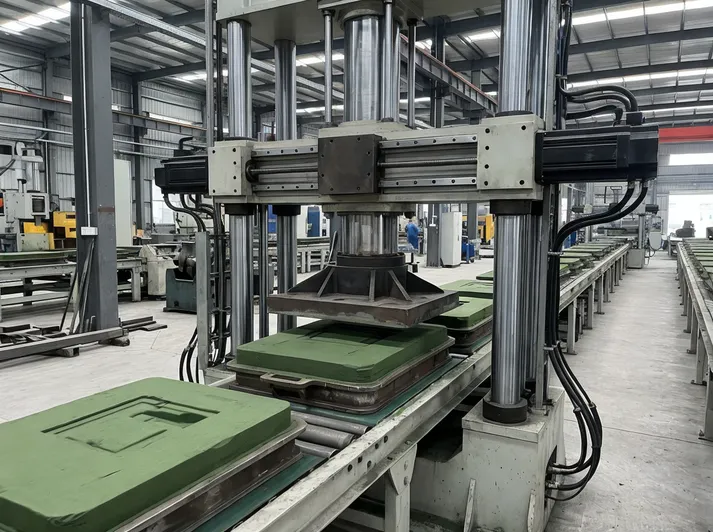
Servo-driven compaction ram delivering ±2% pressure consistency across horizontal mold surface
±2% Horizontal Pressure Var.
±5% Typical Vertical Var.

What ±2% Pressure Consistency Means for Your Castings

That ±2% pressure consistency translates to ±0.3mm dimensional variation in the finished mold (assuming your patterns are machined to proper tolerances). For most gray iron and ductile iron castings, that's well within acceptable limits.

For precision work — pump housings with machined sealing surfaces, valve bodies with tight bore tolerances, aerospace components — you need that level of consistency because every 0.1mm of mold variation shows up in the final casting dimensions.

±0.3mm Mold Dimensional Variation from ±2% pressure control

Mold Transfer Stability

Vertical System Transfer Risks

In a vertical system, molds exit the compaction tower via a lift mechanism (hydraulic or pneumatic), transfer to a horizontal conveyor, then continue to the pouring station. Each lift and transfer point is an opportunity for molds to crack, misalign, or drop if the timing or positioning is slightly off.

We've seen vertical systems where 2–3% of molds suffer minor damage during transfer — not enough to scrap the mold, but enough to create surface defects in the casting.

Horizontal System Advantage

Horizontal systems avoid this entirely. Molds form on the conveyor and stay on the conveyor through cooling and pouring. The only handling points are the initial pattern placement (manual or robotic) and the final mold removal after shakeout.

Eliminating the transfer points cuts your mold damage rate to under 1%, which reduces scrap cost and improves your effective throughput.

Why Transfer Damage Compounds at Volume

Production Rate 2–3% Damage
(Vertical w/ transfer)
<1% Damage
(Horizontal, no transfer)
Weekly Difference
100 molds/hr 2 damaged/hr → 80/week <1 damaged/hr → <40/week 40+ fewer
200 molds/hr 4 damaged/hr → 160/week <2 damaged/hr → <80/week 80+ fewer

At higher production rates, even a small percentage-point reduction in mold damage translates to significant weekly scrap savings and higher effective throughput.

PLC Monitoring Points Specific to Horizontal Configuration

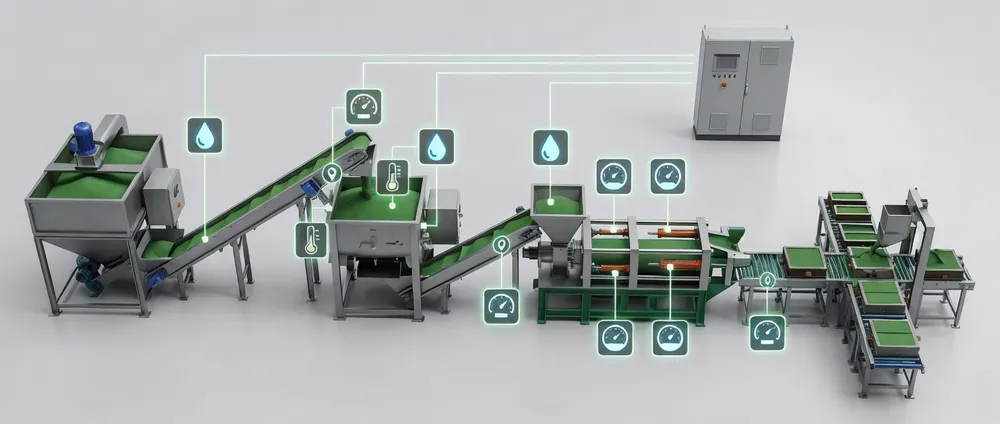
Horizontal flaskless lines rely on continuous closed-loop PLC monitoring at critical process stages. Each sensor point feeds real-time data back to the control system, enabling automatic correction before defects propagate downstream.

Moisture Sensors — 3 Locations

Sensors positioned at three critical checkpoints to maintain sand consistency throughout the preparation cycle:

  • Post-reclamation — sand exits the washing system
  • Post-mixing — after fresh clay addition
  • Pre-compaction — final check before sand enters the molding station

Target moisture range: 3–5% by weight. The PLC auto-adjusts water injection on the next batch cycle if moisture drifts outside tolerance.

Compaction Pressure Transducers

Transducers installed on each hydraulic or pneumatic cylinder. The PLC logs three parameters for every single mold produced:

  • Peak pressure
  • Hold time
  • Pressure decay rate

Auto-reject at >5% below target: any mold that falls more than 5% below target pressure shunts automatically to a reject conveyor instead of moving to the pouring station.

Temperature Monitoring

Installed on sand reclamation equipment — the attrition mill and cooling conveyor — to track heat generated during reclamation.

Sand temperature rises 15–20°C after reclamation due to friction heat and needs to cool back to ambient before remixing with fresh clay.

The PLC tracks sand temperature continuously and adjusts conveyor speed automatically to ensure adequate cooling time, preventing premature clay binder degradation.

Conveyor Speed & Position Sensors

Coordinate mold spacing and timing across the entire line to deliver consistent intervals to the pouring station.

The PLC maintains consistent mold-to-mold spacing — typically 500–800 mm depending on mold size — so pouring stations receive molds at predictable intervals.

PLC monitoring points diagram for horizontal flaskless clay sand processing line showing moisture sensor, pressure transducer, temperature probe, and conveyor sensor positions

Sand Reclamation Integration — Inline Horizontal Flow

Horizontal systems typically use inline reclamation where sand flows horizontally through crushing, screening, and washing stages — all on the same plane as the molding line. This eliminates the need to lift sand vertically between process stages, reducing energy costs and mechanical complexity.

Inline Reclamation Process Flow

1

Shakeout station exit — used sand exits the shakeout and enters a screw conveyor

2

Crushing — jaw crusher or impact mill breaks down compacted sand lumps

3

Screening — vibrating screens separate oversize particles from reusable sand

4

Washing — removes clay fines and metal contamination, returning production-ready sand

The entire reclamation process happens on the same horizontal plane as the molding line, so you're not lifting sand vertically between process stages — reducing wear on elevators and bucket conveyors.

Inline sand reclamation system integrated into horizontal flaskless clay sand processing line showing screw conveyor, jaw crusher, vibrating screen, and washing stages

Reclamation Efficiency: Inline vs Batch Systems

Inline Continuous
85–90%

Reclamation efficiency per pass. Sand moves continuously from shakeout through reclamation, minimizing binder hardening time.

Batch Processing
75–80%

Reclamation efficiency per pass. Sand accumulates in hoppers and processes in batches — clay binders have more time to harden and become difficult to remove.

The 10–15 percentage point advantage of inline reclamation translates directly to lower fresh sand purchasing costs and reduced waste disposal volume — a measurable operating cost difference at production volumes above 80 molds/hour.

Remote Diagnostics & Ongoing Technical Support

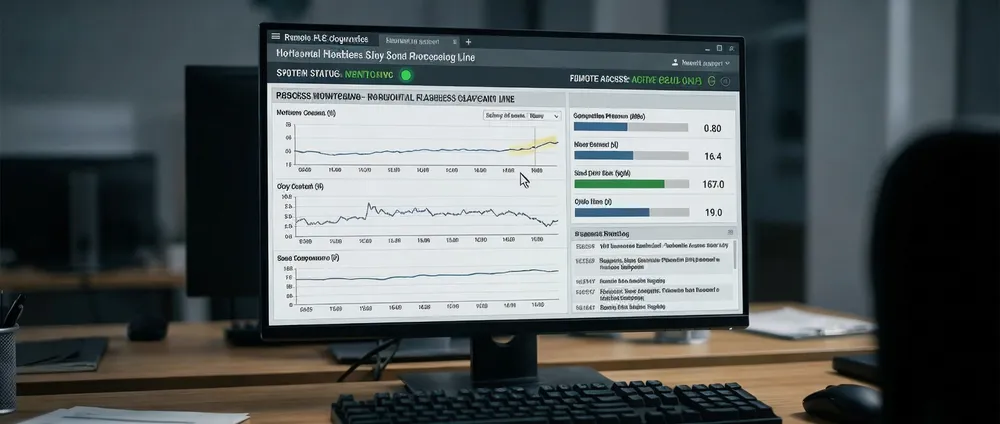
We provide VPN access to your PLC so our technicians can log in and review process data when you report an issue. The connection is read-only by default — we can view data and download logs, but we can't change setpoints or control equipment unless you grant write access.

Most troubleshooting happens remotely. When a buyer reports inconsistent mold strength, we pull the last 48 hours of moisture and clay content data, identify the parameter drift (often moisture creeping up due to a partially clogged water valve), and walk their maintenance team through the fix over a phone call. This cuts resolution time from days — waiting for a technician to fly to the site — to hours.

On-site visits are reserved for major component replacement (motor swaps, gearbox rebuilds) or capacity upgrades, not routine troubleshooting.

Response Times & Contact

China Business Hours (UTC+8)

Remote support response: 4–8 hours

Outside Business Hours

Inquiry response: 12–24 hours

Urgent Production Issues

WhatsApp direct to technical team: +86 13335029477

Remote PLC diagnostics interface showing real-time process data monitoring for horizontal flaskless clay sand processing line

Typical Remote Resolution Example

Issue Reported

Inconsistent mold strength across production run

Root Cause Found

Moisture creeping up — partially clogged water valve identified via 48-hour data review

Resolution

Maintenance team walked through the fix via phone — resolved in hours, not days

Logistics & Installation

Modular Shipping & On-Site Assembly for Horizontal Flaskless Lines

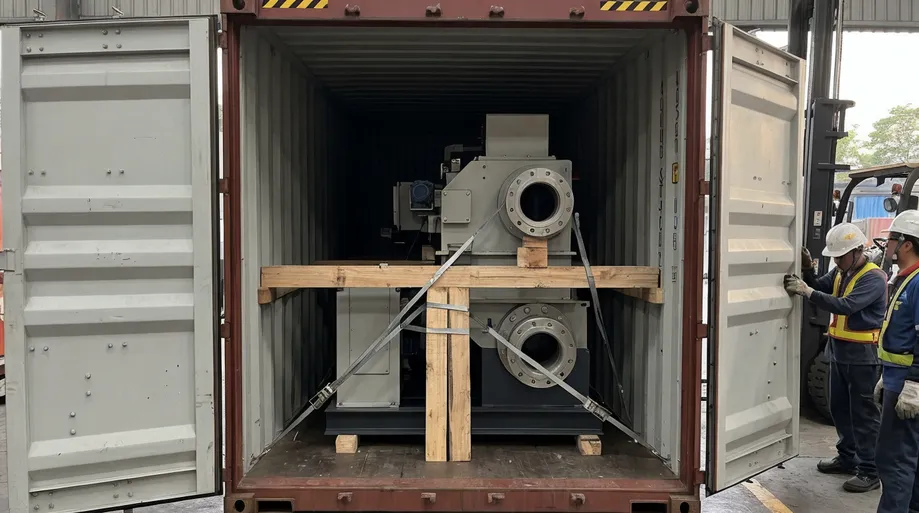
Horizontal flaskless systems ship in 2–3 containers (40HQ) depending on capacity and automation level. Equipment frames are engineered to break down into modules that fit 40HQ dimensions — 12.03 m length × 2.35 m width × 2.69 m height — without wasted space.

Typical Shipping Breakdown — Mid-Volume System (100–150 Molds/Hour)

1

Container 1

  • Main frame sections (compaction station structure, conveyor support frames)
  • Hydraulic power unit
  • Sand hopper and feeding system
Total weight: 8–10 tons
2

Container 2

  • Conveyor modules (drive units, belt sections, support rollers)
  • Cooling conveyor extension
  • PLC cabinet and electrical control panels
Total weight: 6–8 tons
3

Container 3 (if needed)

Required for high-capacity or full-auto systems:

  • Robotic pattern handling equipment
  • Secondary molding station (for parallel configurations)
  • Extended reclamation equipment
Total weight: 5–7 tons
Horizontal flaskless molding line modules packed into 40HQ shipping containers showing precision-fit arrangement

Bolt-Together Assembly — No Field Welding Required

Each module bolts together on-site using flanged connections with precision-drilled bolt holes, so alignment happens automatically when you tighten the fasteners. No field welding required — you don't need certified welders on your installation team, and you avoid the quality variability of field welds.

The modular design also simplifies future capacity upgrades. If you start with a single molding station and later want to add a second for parallel production, the additional station ships as a bolt-on module that integrates with your existing frame.

No Certified Welders Needed Upgrade-Ready Frame Design Auto-Aligning Flanged Connections

Container Optimization & Landed Cost Impact

Why packing density is a visible line item in competitive bidding

Container optimization matters because it directly affects your landed cost. Ocean freight charges by container, not by weight (up to the container's maximum payload). A 40HQ container costs $3,000–6,000 to ship from Qingdao to major ports in North America or Europe, depending on current freight rates.

2 Containers vs. 3 Containers

If we fit your complete system in two containers instead of three, you save $3,000–6,000 on ocean freight alone, plus another $500–1,000 on customs clearance and inland transport for the eliminated third container.

Perspective on Savings

Over the 10–15 year lifespan of the equipment, that's a minor savings in absolute terms. But for buyers comparing quotes from multiple suppliers, it's a visible line item that directly affects the purchase decision.

On-Site Assembly Process

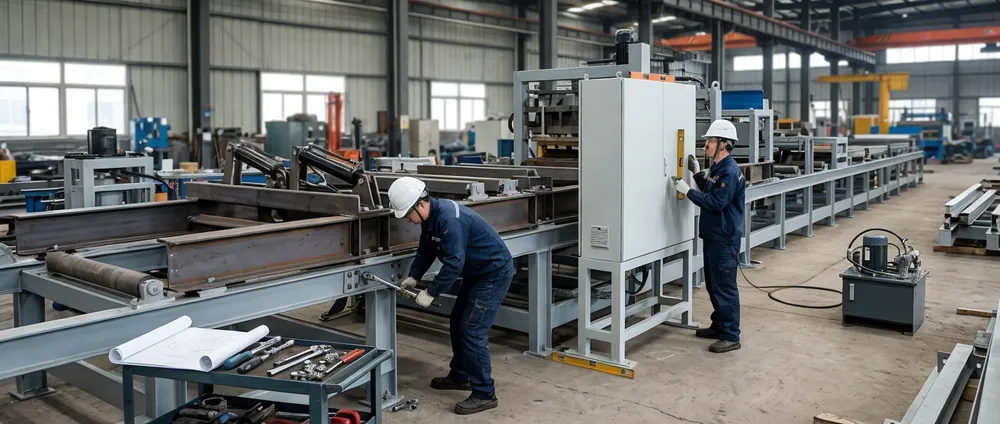
Our commissioning team — two technicians — arrives at your facility with hand tools, hydraulic test equipment, and PLC programming laptops. Here is the day-by-day assembly sequence from equipment arrival to independent production.

1–2

Day 1–2: Mechanical Assembly

Bolt together main frame sections, install conveyor modules, position hydraulic power unit and PLC cabinet. This phase is purely structural — no electrical connections yet, just mechanical component positioning and fastening.

3

Day 3: Hydraulic & Electrical Connections

Connect hydraulic lines (high-pressure hoses from power unit to compaction cylinders), run electrical cables from PLC cabinet to motors and sensors, mount operator interface (touchscreen HMI).

4

Day 4: System Testing & Verification

Hydraulic pressure testing — run the system at 1.5× rated pressure to verify seal integrity. Electrical continuity checks. PLC program verification to confirm all I/O points respond correctly.

5

Day 5: First Production Run

Load the system with sand, run 20–30 test molds, measure compaction pressure and cycle time, adjust PLC parameters if needed. This is real production validation, not a simulation.

Technicians assembling a horizontal flaskless clay sand processing line on site — mechanical frame joining and PLC cabinet positioning

Commissioning Process (Day 6–7)

Operator Training

  • Startup & shutdown procedures
  • Normal operation workflows
  • Parameter adjustment via HMI
  • Routine maintenance tasks
  • Basic troubleshooting

Documentation Handover

  • Operations manual
  • Electrical schematics
  • PLC program backup
  • Spare parts catalog

Final Performance Verification

Run the system at target capacity for 2–4 hours of continuous production to confirm it meets the agreed specification. This is the acceptance gate — if it doesn't hit the numbers, we stay until it does.

Total On-Site Timeline

6–8 Days from equipment arrival to independent production

Commissioned in 14 countries

Maintenance Team Prerequisite

The standard 6–8 day timeline assumes your maintenance team can read hydraulic schematics and use a multimeter. If your team doesn't have that background, plan for an extra 2–3 days of additional hands-on training built into the commissioning schedule.

Lead Time Breakdown — Order to First Production Mold

Total elapsed time from order placement to first production mold: 70–105 days. Here's how that breaks down across each phase.

1

Production

45–60 days

Fabrication, machining, assembly, and factory testing at our facility.

2

Ocean Freight

15–30 days

Depends on destination port and whether you're shipping during peak season.

3

Customs & Transport

3–5 days

Customs clearance and inland transport from port to your facility.

4

Assembly & Commissioning

6–8 days

On-site assembly, alignment, and commissioning to first production mold.

Need Faster Delivery?

Air freight is possible for small-batch systems (50–100 molds/hour configuration only) — cuts shipping time to 5–7 days but costs 4–5× more than ocean freight. Best suited for urgent replacement lines or fast-track greenfield startups where production downtime cost exceeds the freight premium.

Spare Parts Kit — Included With Every System

Every horizontal flaskless line ships with a first-year consumables kit covering the components most likely to need replacement during the first 12 months of operation:

Hydraulic Seals

For compaction cylinders

Proximity Sensors

For conveyor position detection

Solenoid Valves

For pneumatic controls

PLC I/O Modules

Backup units for control continuity

After Year One

After the first year, you'll order spare parts as needed based on your actual wear patterns — no guesswork, no forced inventory commitments.

Qingdao Facility Stock

High-wear components stocked and shipped via DHL or FedEx for 5–7 day delivery to most export markets.

Request Configuration & Pricing

Get a Quote for Your Horizontal Flaskless Line Configuration

Send us your foundry layout, target capacity, and ceiling height constraints — we'll recommend the optimal horizontal flaskless configuration and provide a detailed quote with CAD layout drawings showing exactly how the system integrates with your existing equipment.

What We Need From You

  • Available floor space (length × width) and ceiling height
  • Target production capacity (molds per hour)
  • Typical mold size range (length × width × depth)
  • Current equipment you're integrating with (pouring lines, cooling conveyors, shakeout systems)
  • Automation level preference (manual, semi-auto, or full automation)

What You'll Receive

  • System configuration recommendation (capacity, automation level, conveyor layout)
  • CAD drawings showing equipment placement and material flow
  • Detailed technical specifications (power requirements, utility connections, foundation requirements)
  • Complete pricing (equipment, shipping, installation support, spare parts kit)
  • Lead time estimate from order to commissioning

Start With a 30-Minute Technical Consultation

Most buyers start with a 30-minute technical consultation call where we review their space constraints and production targets. We'll walk through your facility layout (send photos or drawings), discuss your integration requirements, and recommend the configuration that delivers the best ROI for your specific situation.

Factory Address Tianzhuang Industrial Park,
Pingdu Zone, Qingdao, China

We typically respond within 24 hours with preliminary recommendations. Detailed quotes with CAD drawings follow within 3–5 business days after we receive your facility information and production requirements.

Get Your Custom Quote
15,000 m² facility | 8 production lines | Since 2010
ISO 9001:2015 | CE Compliant | SGS Compliant

Factory-direct pricing — you're buying from the manufacturer without distributor markup. We work directly with overseas buyers in North America, Europe, the Middle East, and Southeast Asia.