ISO 9001:2015 Certified Manufacturer

Vertical Flaskless Clay Sand Processing Line Floor Space Efficiency for Capacity Expansion

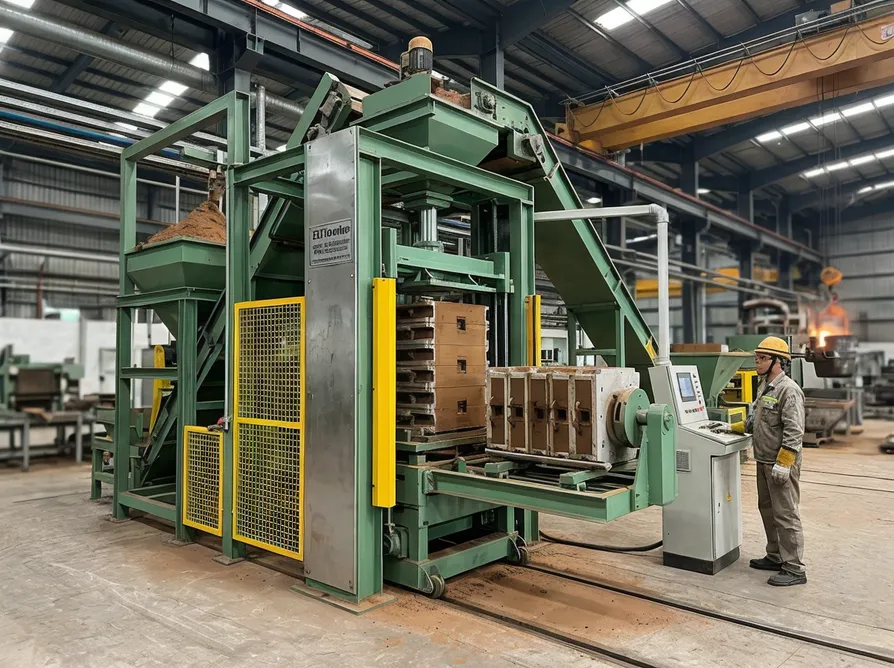
A vertical flaskless clay sand processing line forms and assembles mold halves in a vertical plane, then rotates them 90° for pouring. This orientation cuts floor space requirements by 40–50% compared to horizontal configurations at equivalent capacity.

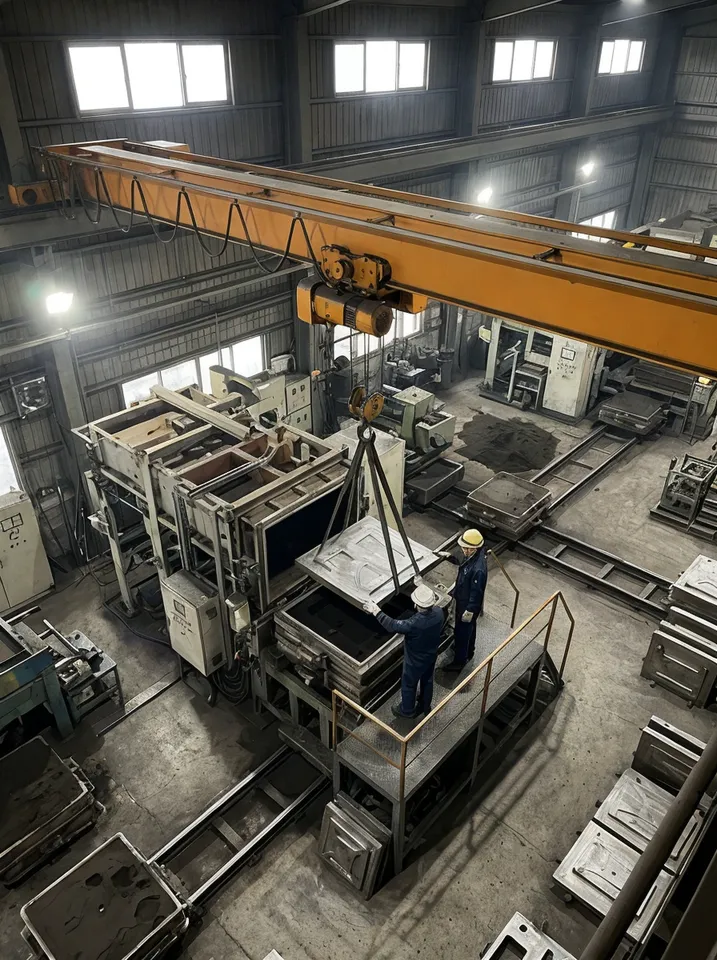
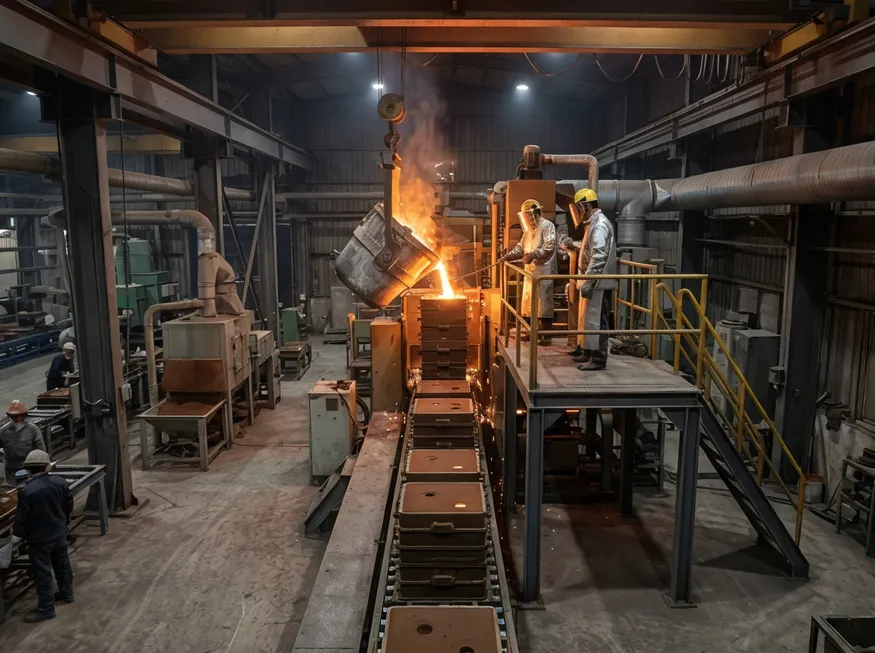
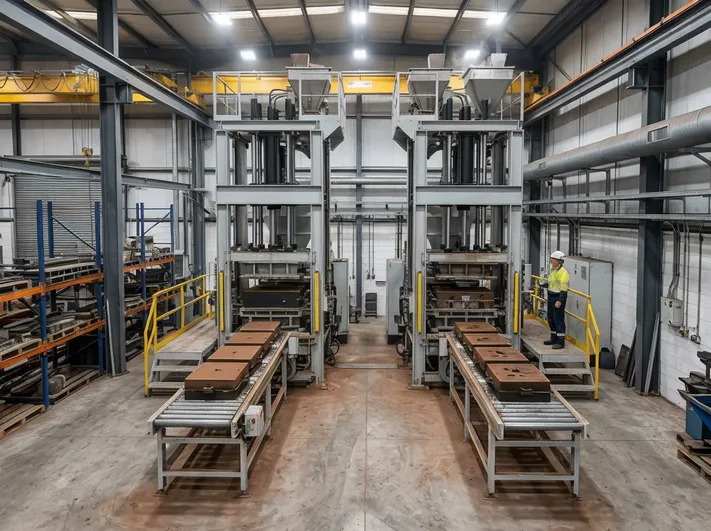
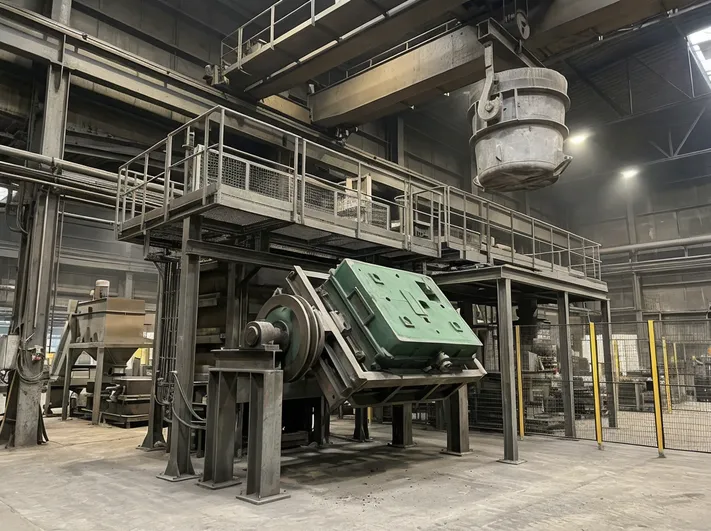
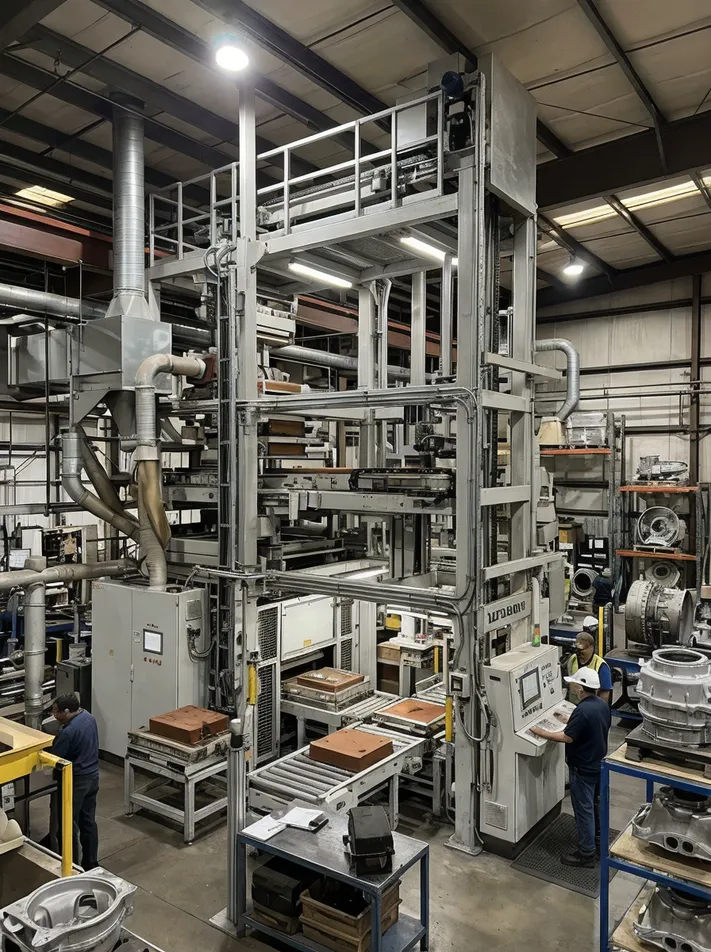
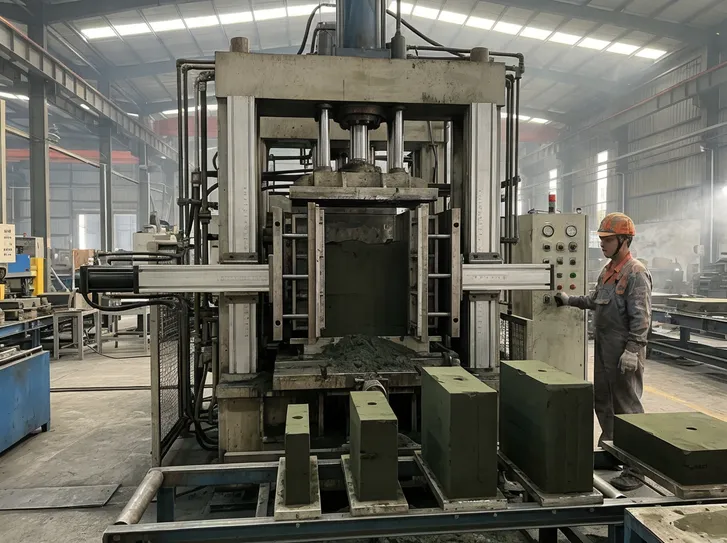
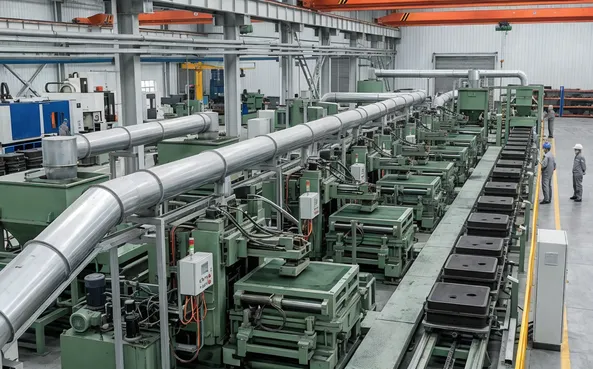
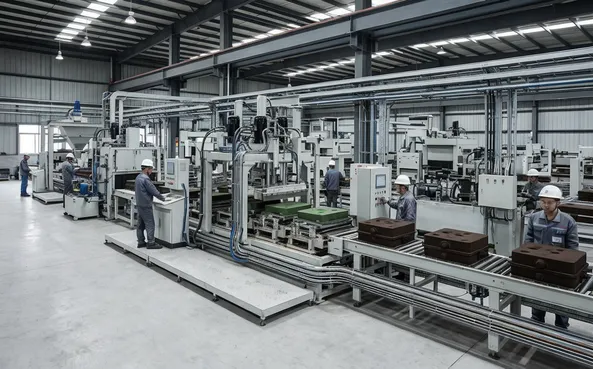
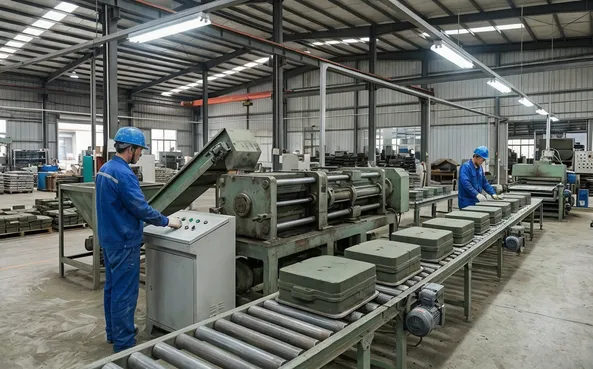
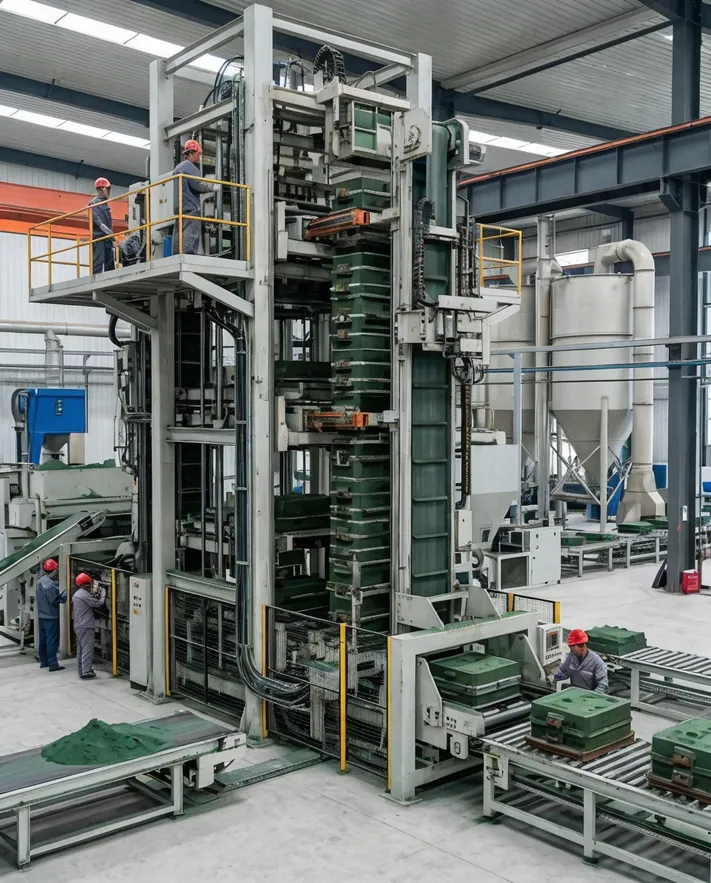
TZFoundry vertical flaskless clay sand processing line — compact vertical configuration for high-throughput foundry operations
80–150
Molds / Hour
40–50%
Smaller Footprint vs. Horizontal
25–35s
Cycle Time per Mold
15–20%
Lower Conveyor Power Draw

Why Vertical Orientation Matters for Your Expansion

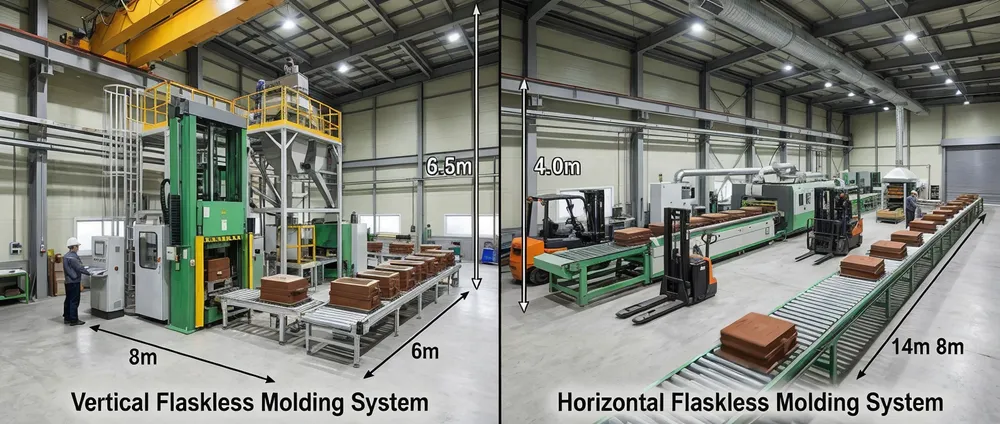
A vertical system producing 120 molds per hour fits in an 8 m × 6 m footprint, while a horizontal line delivering the same output needs 14 m × 8 m. That difference matters when you're expanding capacity within an existing building — the vertical configuration lets you add 100+ molds per hour without a $200,000+ facility expansion.

The vertical design works best for foundries with overhead crane systems already installed. Your ladle handling and pouring stations sit above the mold assembly level, so material flow aligns naturally with the vertical orientation. Sand returns to ground level via gravity-assisted conveyors, which cuts conveyor power consumption by 15–20% compared to horizontal systems that fight gravity to move sand back uphill to the mixer.

Flask-Free Operation

Vertical flaskless molding eliminates flask inventory and handling — mold halves form directly in the compaction chamber, get extracted, assembled, and rotated for pouring without metal flasks. Cycle time runs 25–35 seconds per mold (pattern insertion through mold ejection), faster than flask-based systems that add 10–15 seconds for flask handling.

Trade-off: Vertical systems require tighter sand moisture control (±0.5% vs. ±1.0% for flask systems) because there's no flask to provide lateral support during compaction. Our PLC-controlled moisture sensors handle this automatically in mid-volume and high-volume configurations.

View all clay sand processing line configurations to compare vertical, horizontal, and automatic options.

Configuration Data

Technical Specifications — Vertical Configuration Parameters

Parameter Specification
Production Capacity 80–150 molds/hour
Mold Size Range Width: 300–500 mm
Length: 400–700 mm
Height: 400–600 mm
Compaction Pressure 150–200 bar
Cycle Time 25–35 seconds
Vertical Stack Height 4.5–5.5 m
Minimum Ceiling Clearance 6.5 m
Floor Footprint 8 m × 6 m (typical)
Power Requirement 65–85 kW
Compressed Air 0.8–1.0 MPa, 2–3 m³/min
Sand Processing Rate 4–6 tons/hour
Floor Loading 8–12 tons concentrated load
Operators per Shift 2

Parameter Notes

  • Production Capacity — Depends on mold size and pattern complexity
  • Mold Size Range — Height is the constraint in vertical orientation
  • Compaction Pressure — Hydraulic or servo-driven system
  • Cycle Time — Pattern insertion through mold ejection
  • Vertical Stack Height — From floor to top of rotation mechanism
  • Ceiling Clearance — Includes maintenance access above equipment
  • Floor Footprint — For 120 molds/hour capacity
  • Power — Includes compaction, rotation, conveyors, PLC
  • Compressed Air — For pneumatic pattern changes (optional)
  • Sand Rate — Matched to molding output
  • Floor Loading — Requires reinforced concrete slab
  • Operators — One on molding, one on pattern/maintenance

Note: Specifications shown are industry-typical values for this equipment type. Actual specifications vary based on configuration and customization. Contact us for detailed specifications matching your requirements.

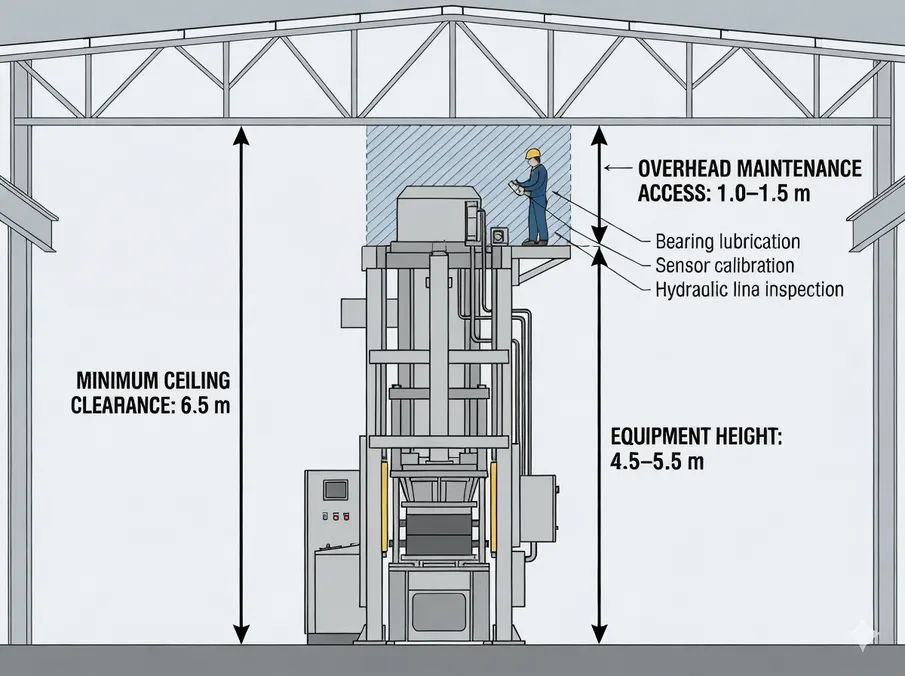
Vertical flaskless molding system stack height diagram showing 4.5–5.5 m equipment height plus 1.0–1.5 m overhead maintenance access within 6.5 m minimum ceiling clearance

Ceiling Clearance: 6.5 m Minimum

The 6.5 m ceiling clearance requirement is non-negotiable for standard configurations — the vertical stack needs 4.5–5.5 m, plus another 1.0–1.5 m for overhead maintenance access (bearing lubrication, sensor calibration, hydraulic line inspection).

We've adapted systems to 6.0 m ceiling facilities by reducing the maximum mold height from 600 mm to 500 mm, which lowers the stack height enough to fit. If your building has ceiling constraints, send us the exact clearance measurement and we'll confirm whether a modified vertical system works or whether you should consider a horizontal configuration instead.

Floor Loading — 8–12 Tons Concentrated

Concentrated floor loading (8–12 tons in an 8 m × 6 m area) requires a reinforced concrete slab at least 250 mm thick with rebar reinforcement. Horizontal systems distribute the same weight over a larger area, so they can sometimes work on standard industrial floors.

If you're installing on an upper floor or a slab that wasn't designed for heavy equipment, get a structural engineer to verify load capacity before ordering. We provide foundation drawings with load distribution maps as part of the pre-shipment documentation.

Min Slab Thickness

250 mm

Reinforcement

Rebar Required

Pre-Shipment Docs

Foundation Drawings Included

Orientation Comparison

Vertical vs. Horizontal — Choosing the Right Orientation for Your Facility

Both vertical and horizontal flaskless configurations deliver similar mold quality and cycle times. The choice comes down to your facility constraints and existing material handling systems.

Side-by-side comparison of vertical flaskless molding system (8m × 6m footprint, 6.5m ceiling) versus horizontal flaskless molding system (14m × 8m footprint, 4.0m ceiling)
Factor Vertical Flaskless Horizontal Flaskless
Floor Footprint 8 m × 6 m (120 molds/hr) 14 m × 8 m (120 molds/hr)
Ceiling Requirement 6.5 m minimum 4.0 m minimum
Material Flow Vertical stack, gravity-assisted sand return Horizontal plane, powered conveyors throughout
Crane Integration Requires overhead crane for pattern changes Can use floor-level handling equipment
Capacity Range 80–150 molds/hour optimal 60–180 molds/hour optimal
Capital Cost 15–20% premium vs. horizontal Base configuration
Installation Complexity Requires rigging for vertical assembly Simpler ground-level assembly
Maintenance Access Overhead access needed for bearings Ground-level access for most components
Sand Conveyor Power 15–20% lower (gravity assist) Higher (fighting gravity on return loops)

Choose Vertical If

  • Floor space is constrained and you can't expand your building footprint
  • You already have overhead cranes and elevated pouring stations installed
  • Your building has high ceilings (6.5 m+) but limited floor area
  • You're adding capacity to an existing facility and need to preserve floor space for downstream operations

Choose Horizontal If

  • Ceiling height is limited (under 6.0 m)
  • You don't have overhead material handling and don't want to install it
  • Your capacity needs exceed 150 molds/hour (horizontal scales better to 180+ molds/hour)
  • You prefer ground-level maintenance access for all components

Cost Premium Recovery — 18–24 Months

The 15–20% capital cost premium for vertical systems comes from the structural engineering required to handle asymmetric compaction loads on a cantilevered frame, plus the rotation bearing system that horizontal configurations don't need. Most buyers recover this premium within 18–24 months through avoided building expansion costs or by preserving floor space for revenue-generating equipment (additional melting furnaces, finishing stations, storage areas).

15–20%

Capital Cost Premium

18–24 mo

Typical Payback Period

40–50%

Smaller Floor Footprint

Replacement vs. New Installation

If you're replacing an existing horizontal system and already have the floor space allocated, there's no compelling reason to switch to vertical unless you're reclaiming that floor area for other uses. But if you're expanding capacity or setting up a new facility with space constraints, vertical orientation often delivers better return on investment despite the higher equipment cost.

Pre-Purchase Planning

Facility Integration Requirements — What Your Building Needs

Vertical flaskless systems have stricter facility requirements than horizontal configurations because the equipment extends upward rather than outward. Confirm these parameters before committing to a purchase.

Ceiling Clearance

6.5m

Minimum Floor-to-Ceiling Structure

This breaks down as 4.5–5.5 m for the vertical equipment stack (base frame, mold stations, rotation mechanism) plus 1.0–1.5 m for maintenance access above the rotation bearing.

Maintenance techs need to reach the top bearing housing for quarterly greasing and annual seal replacement — without adequate clearance, you're climbing ladders in awkward positions or shutting down for scaffolding setup every time you service the bearing.

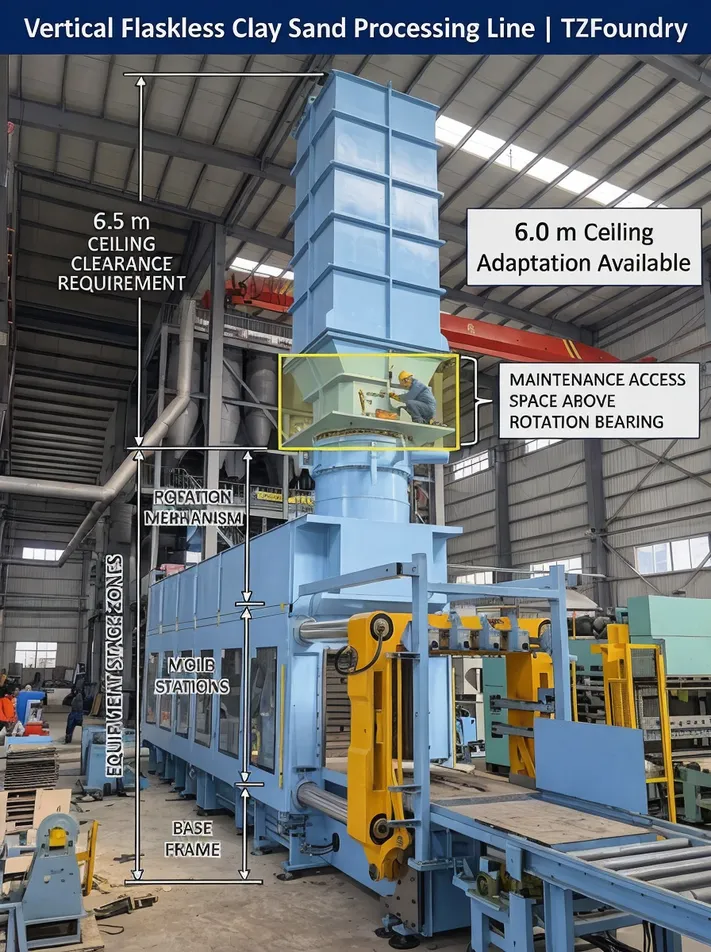
6.0 m Ceiling Adaptation Available

We've adapted vertical systems to 6.0 m ceiling facilities by reducing the maximum mold height capacity from 600 mm to 500 mm, which shortens the vertical stack enough to fit. This works if your casting designs stay under 500 mm height. If you need the full 600 mm mold capacity, you need the full 6.5 m clearance.

Send us your exact ceiling measurement and typical mold sizes — we'll confirm whether a modified system fits your constraints.

Vertical flaskless clay sand processing line showing 6.5 m ceiling clearance requirement with labeled equipment stack zones and maintenance access space above rotation bearing

Equipment stack breakdown: base frame, mold stations, rotation mechanism, plus overhead maintenance access zone.

Floor Loading

Concentrated Weight

8–12 tons

Within an 8 m × 6 m footprint

Static Load Density

250–330 kg/m²

Distributed across the equipment base area

Dynamic Load Spike

1.5× static

During compaction at 150–200 bar hydraulic pressure

Required Foundation Spec

You need a reinforced concrete slab at least 250 mm thick with rebar reinforcement. Dynamic loads during compaction — 150–200 bar hydraulic pressure slamming into the mold — can spike to 1.5× static weight for brief moments, which unreinforced concrete cannot absorb consistently.

Standard industrial floors (150 mm unreinforced concrete) won't handle this. You'll see cracking within 6–12 months of operation, and eventually the floor will settle unevenly, throwing the equipment out of alignment.

Upper-Floor Installation

If you're installing on an upper floor, get a structural engineer to verify load capacity. Most multi-story industrial buildings aren't designed for concentrated equipment loads above the ground floor.

We can provide foundation drawings and load distribution maps for your engineer's review before you commit to the purchase.

Overhead Crane Requirements

Overhead crane: 3–5 ton capacity, positioned to reach the mold station area. You'll use the crane for pattern changes — lifting pattern plates in and out of the molding chamber — and for maintenance tasks like removing the rotation mechanism for bearing service or lifting hydraulic cylinders for seal replacement.

Typical Service Intervals

  • Pattern changes: daily or weekly depending on product mix
  • Maintenance lifts: quarterly to annually

If You Don't Have an Overhead Crane

Bridge Crane

$15,000–$40,000

Building-mounted. Cost varies by span and capacity. Faster positioning, full travel range across the bay.

Gantry Crane

$8,000–$15,000

Portable frame with electric hoist. Cheaper upfront, but slower to position and limited to gantry travel range.

Recommendation: For high-mix foundries that change patterns frequently, a proper bridge crane pays back through reduced changeover time.

Overhead crane positioned at vertical flaskless mold station area for pattern changes and maintenance lifts

3–5 ton overhead crane reaching the mold station for daily pattern changes and quarterly maintenance.

Pouring Station Positioning

The mold assembly level sits 2.0–2.5 m above floor level after the molds rotate from vertical to horizontal orientation. Your pouring station needs to be at or above this height so ladles can pour into the molds without awkward angles.

Already Have Elevated Platforms?

If you already have elevated pouring platforms and ladle cranes, vertical orientation aligns perfectly with your existing material flow. No modifications required.

Currently Pouring at Floor Level?

You'll need to add elevated platforms or modify your ladle handling system to reach the 2.0–2.5 m mold assembly height.

Elevated pouring station at 2.0-2.5m height aligned with vertical flaskless mold assembly level

Pouring station aligned at mold assembly height (2.0–2.5 m above floor level).

Sand Return Conveyors

Used sand exits the mold at ground level after casting solidifies and the mold breaks apart, then travels via conveyor back to the reclamation system. Vertical systems use gravity-assisted return — sand drops from the mold breakout station down to a ground-level conveyor, which moves it horizontally to reclamation.

15–20% Less Conveyor Power

Compared to horizontal systems that have to lift sand back up to the mixer level.

Simpler Conveyor Routing

One horizontal run instead of the inclined sections that horizontal systems require.

Gravity-Assisted Drop

Sand drops from mold breakout station to ground-level conveyor — no mechanical lift needed at the return stage.

Need a complete sand return and reclamation setup? See our Clay Sand Reclamation Line for systems engineered to pair with vertical flaskless conveyors.

Tight Ceiling? We Can Work With That.

We've adapted vertical systems to 6.0 m ceiling facilities by reducing mold size range. Tell us your constraints and we'll confirm feasibility for your specific layout.

Discuss Your Facility Layout
Real-World Decision Support

Application Scenarios — When Vertical Configuration Protects Your Margin

Two vertical flaskless molding systems installed side-by-side in a compact 16m × 6m foundry bay, demonstrating space-efficient capacity expansion

Capacity Expansion Without Construction Costs

Case Study

Midwest Foundry — Automotive Contract Fulfillment

A Midwest foundry was running 80 molds per hour on an aging flask-based system and needed to hit 180 molds/hour to fulfill a new automotive contract. Their building had 7.2m ceilings but only 15m × 12m of available floor space — the rest was occupied by melting furnaces, finishing equipment, and shipping staging. A horizontal flaskless line producing 180 molds/hour wouldn't fit.

16m × 6m

Installed footprint
(two vertical systems)

180

Molds/hour combined
(90 each × 2 units)

$250K+

Building addition
cost avoided

We installed two vertical systems (90 molds/hour each) in a 16m × 6m footprint, leaving them 15m × 6m for a new induction furnace they added six months later. The alternative would have been a building addition at $250,000+ and 4–6 months of construction time. The vertical systems cost 18% more than equivalent horizontal capacity, but they avoided the construction cost and timeline entirely.

Why This Pattern Repeats

This scenario repeats across job shops and mid-volume foundries that grew into their existing buildings. You're profitable, you have more orders than capacity, but you can't afford to stop production for months while a building addition gets permitted and constructed. Vertical orientation lets you add capacity in the space you have, using equipment that installs in under a week.

Typical order pattern: 50–200 molds per production run, repeatable contracts with 2–4 week lead times. The faster you can expand capacity, the faster you capture revenue from those contracts.

Overhead Pouring Integration

Case Study

European Ductile Iron Foundry — Infrastructure Preservation

A European ductile iron foundry already had ladle cranes and elevated pouring platforms installed from their previous production line. They were replacing an old vertical molding system (different manufacturer, 30+ years old, parts no longer available) and wanted to keep their existing material handling infrastructure.

Height Alignment — Zero Modification Required

Our vertical flaskless system aligned with their overhead cranes and pouring platforms without modification — molds rotate to horizontal orientation at 2.3m height, which matched their existing ladle positioning. A horizontal system would have required either lowering the pouring platforms (expensive structural work) or adding conveyors to lift molds up to pouring height (added cost, added floor space, added maintenance).

When This Applies to Your Facility

When your facility already has overhead material handling, switching to a floor-level horizontal system throws away that investment. Vertical orientation preserves your existing crane capacity and pouring infrastructure, which matters more than the equipment cost difference.

This applies to foundries upgrading from older vertical systems or to facilities that cast large parts requiring overhead handling anyway — engine blocks, transmission housings, industrial pump bodies.

Vertical flaskless mold rotating to horizontal at 2.3m height beneath existing overhead ladle crane and pouring platform

High-Value Casting Production — When Floor Space Cost Justifies the Vertical Premium

An aerospace components foundry in the Southwest casts aluminum and magnesium parts for aircraft landing gear and structural components. Their facility sits in an industrial park where building expansion would cost $400+ per square meter (land acquisition, permits, construction). They needed to add 100 molds/hour capacity for a new contract.

Floor Space Cost Comparison

Horizontal System

112 m²

$44,800 in avoided construction cost

Vertical System

48 m²

$19,200 in avoided construction cost

The $25,600 difference exceeded the vertical system's capital cost premium — making vertical the cheaper option even before factoring in faster installation.

This math works when your floor space has high opportunity cost — either because building expansion is expensive, or because you can use the preserved floor space for other revenue-generating equipment. Typical order volumes in this scenario:

  • 50–200 molds per production run
  • $200–$2,000 per part — high-value castings
  • Repeatable contracts with aerospace or automotive OEMs

The vertical premium pays back through avoided construction costs or through additional capacity you can install in the preserved floor space.

Urban & leased facility note: Floor space efficiency also matters in urban facilities where zoning restrictions limit building expansion, or in leased facilities where you can't modify the building structure. Vertical orientation maximizes capacity within your existing four walls.

Vertical flaskless clay sand processing line installed in a compact aerospace foundry, demonstrating 48 m² floor footprint efficiency

Vertical configuration in a space-constrained aerospace casting facility — 57% smaller footprint than horizontal equivalent.

Not sure if vertical configuration fits your scenario?

Share your facility dimensions, target mold rate, and casting type. Our engineers will model whether vertical orientation protects your margin — or whether a horizontal flaskless system is the better fit.

Structural Engineering

Vertical Frame Engineering — How We Handle Compaction Loads in Vertical Orientation

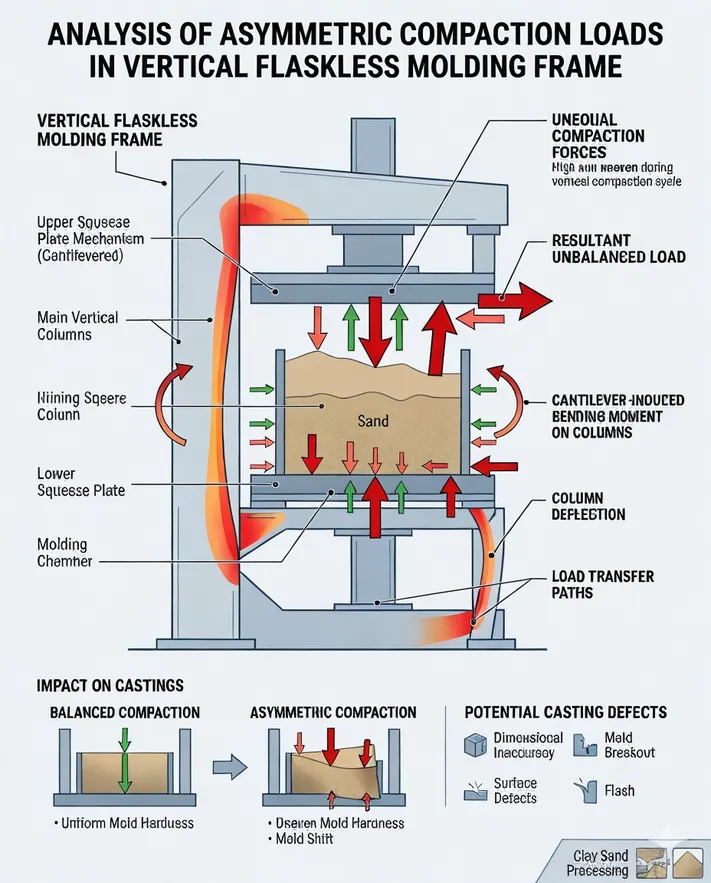
Vertical flaskless systems put asymmetric loads on the frame during compaction. When the hydraulic ram drives 150–200 bar of pressure into the sand-filled mold chamber, that force pushes against a cantilevered mold station — the chamber extends outward from the vertical frame rather than sitting between two support columns like horizontal systems. The frame has to resist bending and twisting under this repeated load: 80–150 times per hour, 12–16 hours per day, year after year.

Why This Matters for Your Castings

Mold halves need to align within ±0.3mm when they come together for assembly. If the frame flexes more than 0.5mm during compaction, you'll get misaligned molds and dimensional errors in your castings. Frame rigidity isn't an abstract engineering metric — it directly determines part quality.

Diagram showing asymmetric compaction loads on a vertical flaskless molding frame, with force vectors indicating how the cantilevered mold station transfers load to the main vertical columns

Asymmetric load distribution during vertical compaction cycle

Box-Section Steel Frame Construction

We use box-section steel frame construction with diagonal bracing between the vertical columns and the mold station support arms. The box sections (120mm × 120mm × 8mm wall thickness) provide torsional rigidity that prevents frame twist when compaction force hits off-center — which happens when mold patterns aren't perfectly symmetrical.

Diagonal bracing transfers the compaction load from the cantilevered arm back to the main vertical columns, which are anchored to the floor with eight M24 bolts embedded 300mm into the concrete foundation.

Box Section

120 × 120mm

8mm wall thickness

Floor Anchoring

8× M24 Bolts

300mm into concrete

Compaction Pressure

150–200 bar

Hydraulic ram rated

Max Deflection

< 0.5mm

At mold station mount

Deflection Testing at Factory Commissioning

1

Overload Test

We run the compaction system at 110% rated pressure with dial indicators positioned at four points around the mold chamber to measure frame deflection under peak stress conditions.

2

Measurement

Frame deflection is measured at the mold station mounting points. The pass threshold is less than 0.5mm deflection across all four measurement positions.

3

Remediation (if needed)

If deflection exceeds 0.5mm, we add reinforcement gussets or increase the diagonal brace cross-section until it passes. Every frame ships with verified rigidity certification.

Rotation Bearing System — Vertical-to-Horizontal Transition

The rotation bearing system handles the transition from vertical molding to horizontal pouring orientation. After the mold forms in the vertical chamber, a 180-degree rotation mechanism flips it to horizontal so it can receive molten metal. The bearing that enables this rotation sees peak loads during the flip (the mold's weight plus any residual sand in the chamber) and continuous loads while the mold sits in pouring position.

We spec the bearing for 1.5× peak calculated load, which gives you safety margin for overweight molds or sand buildup.

Sealed Bearings Since 2017

We switched to sealed bearings on the rotation mechanism after seeing dust contamination issues in high-production environments. The practical impact for your maintenance team:

Greasing Interval

Monthly → Quarterly

Cost Premium

~30% more

vs. open bearings

Service Life

2–3× longer

in foundry dust conditions

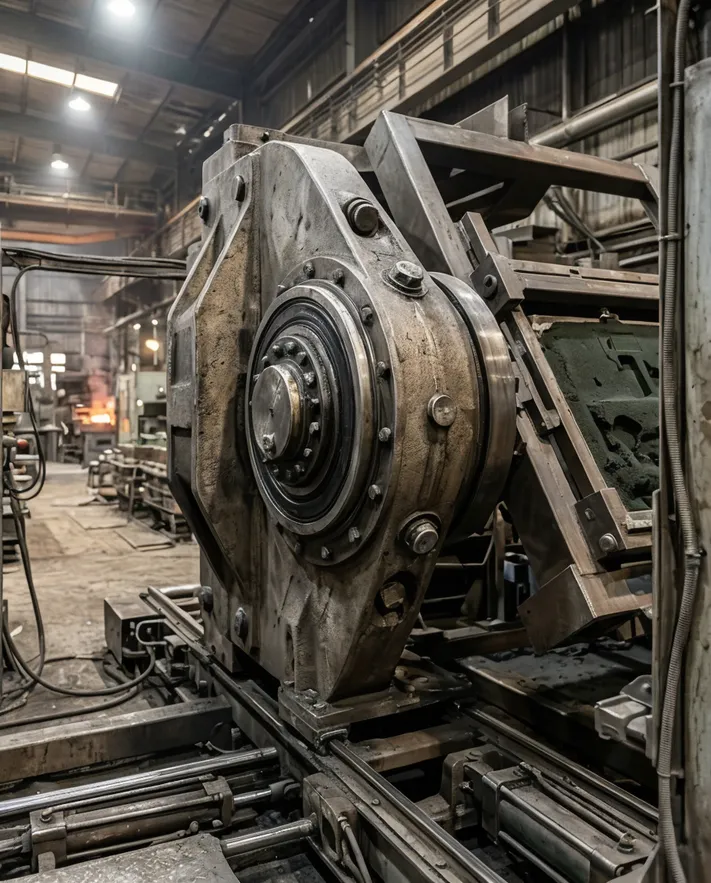
Close-up of the sealed rotation bearing mechanism that transitions molds from vertical molding position to horizontal pouring orientation

180° rotation mechanism with sealed bearing assembly

Gravity-Assisted Sand Flow — Less Hardware, Lower Power

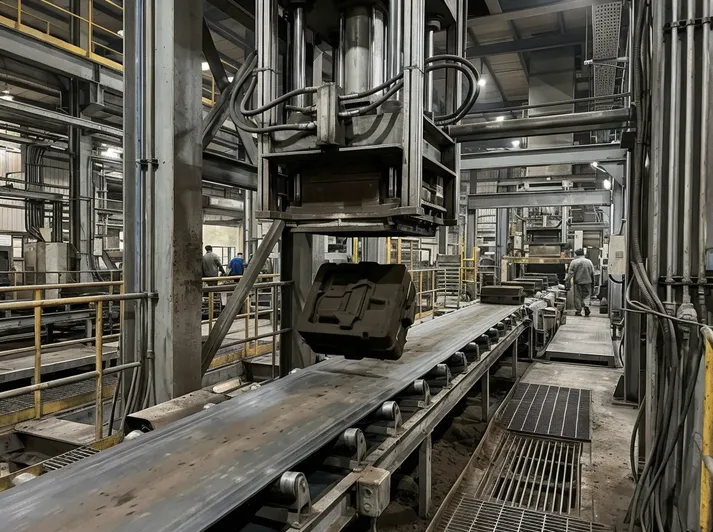
Sand flow in vertical orientation benefits from gravity assist. After compaction, the finished mold drops downward out of the chamber onto a transfer conveyor — no ejector pins or pneumatic pushers needed like horizontal systems use. Used sand from broken molds falls through a grate at the mold breakout station and lands on the return conveyor below.

This gravity-driven flow reduces conveyor power consumption by 15–20% compared to horizontal systems that have to lift sand back up to mixer level. It also simplifies the conveyor layout — fewer inclined sections, fewer transfer points, fewer places for sand to jam or spill.

Gravity-assisted sand flow in vertical flaskless molding — finished mold dropping from compaction chamber to transfer conveyor

Concentrated Footprint — Smaller Foundation, Lower Civil Cost

Vertical System
  • Floor loading: 8–12 tons concentrated in 48 m²
  • Fewer floor anchors required
  • Smaller reinforced foundation pad
  • Foundation cost: $2,000–$4,000
Horizontal System (equivalent capacity)
  • Floor loading: 10–14 tons spread across 112 m²
  • More floor anchors needed across wider area
  • Larger reinforced foundation pad
  • Foundation cost: $3,500–$6,000

Bottom line on civil work: The vertical frame's concentrated footprint means stricter per-square-meter floor loading — but the total foundation area and cost are both lower. Typical savings of $1,500–$2,000 on foundation prep versus a horizontal system of equivalent mold output.

Configuration & Options

Customization Options — Configuring Vertical Systems for Your Process

Mold Size Range

Width

300–500 mm

Adjustable range

Length

400–700 mm

Adjustable range

Vertical Height

400–600 mm

Orientation-critical

Mold size adjustment range for vertical flaskless clay sand processing line — width 300-500mm, length 400-700mm, height 400-600mm

Height is the constraint in vertical orientation — the taller the mold, the taller the vertical stack, and the more ceiling clearance you need. If your casting designs require molds taller than 600mm, you'll need a horizontal system instead.

Width and length ranges match what horizontal systems offer, so most casting designs fit within these limits.

Pattern Plate Mounting

Pattern plates mount to the compaction chamber via quick-change brackets. Mold geometry is defined by the pattern plate, not by the equipment itself, so you can run any mold shape that fits within the size envelope.

We provide mounting brackets compatible with standard pattern plate hole patterns (4-hole and 6-hole configurations). If your existing patterns use a different mounting system, send us a pattern plate drawing and we'll fabricate custom brackets.

Pattern Change Systems

Standard

Manual Changeover

8–12 min changeover time

Process: Operator uses the overhead crane to lift the old pattern out, positions the new pattern, and bolts it to the mounting brackets.

Best for: Low-mix foundries that change patterns weekly or less. Manual changeover is fine for these production profiles.

Optional Upgrade

Pneumatic Quick-Change System

60–90 sec changeover time
+$6,000–8,000

Process: Operator triggers a pneumatic release, the old pattern drops onto a staging cart, the new pattern slides into position on guide rails, and pneumatic clamps lock it in place.

Best for: High-mix production with pattern changes multiple times per shift. The pneumatic system pays for itself in reduced changeover downtime.

PLC Control Options

Siemens S7-1200 or Mitsubishi FX5U — your choice. Both PLCs offer the same core functionality: automated moisture control, compaction pressure monitoring, cycle time logging, and remote diagnostics via VPN. The difference is regional support.

Siemens S7-1200

Better replacement-part availability in Europe and North America. Recommended if your maintenance team already works within the Siemens TIA Portal ecosystem.

Mitsubishi FX5U

Stronger support network in Southeast Asia and the Middle East. Preferred when local integrators and spare-parts channels favor Mitsubishi.

Interface language options: English, Spanish, Arabic, Russian, and Chinese. The touchscreen HMI — a 10-inch color display — shows real-time process parameters, alarm history, and production counters at a glance.

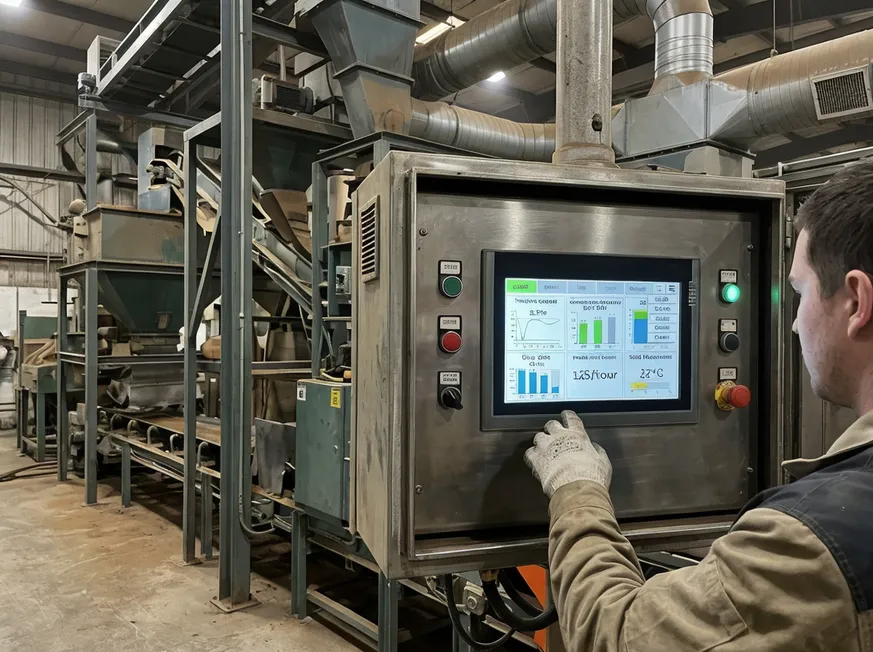
PLC control panel with 10-inch HMI touchscreen displaying real-time process parameters on a vertical flaskless clay sand processing line

20 Recipe Slots — Switch Products Without Manual Re-Calibration

PLC programming includes 20 recipe slots where you store different mold configurations: compaction pressure, dwell time, sand moisture target, and cycle timing. Operators recall recipes by name or number — no need to manually adjust parameters when switching between products.

We pre-program your initial recipes during commissioning based on your casting specifications, so you're running production-ready jobs from day one.

Sand Mixer Integration

Two architectures are available. Your choice depends on whether sand consistency or throughput speed is the tighter constraint.

Standard

Inline Continuous Mixer

Feeds sand directly to the molding station at a rate matched to your production speed. No batch delays — sand arrives continuously as the molding cycle demands it.

Best for: Most gray iron and ductile iron work where standard sand consistency is sufficient and maximum throughput matters.

Optional

Batch Mixer

Prepares sand in discrete batches, giving you tighter control over moisture and clay content. Adds 30–60 seconds to the cycle time while the batch mixes.

Best for: High-precision castings where sand consistency is critical and the slight cycle-time penalty is acceptable.

Mixer Capacity Sizing: 110–120% of Molding Output

We size mixer capacity to 110–120% of your molding output so you maintain buffer capacity during peak production and never starve the molding station for sand.

Worked example:

If your vertical system runs 120 molds/hour and each mold uses 25 kg of sand, you're processing 3 tons/hour. We'd spec a 3.5–4.0 ton/hour mixer to ensure uninterrupted sand supply at peak demand.

What We Cannot Customize

Structural height is fixed by mold size plus rotation clearance — if you need 600mm mold height, the vertical stack will be 5.2–5.5m tall. There is no way to compress that without reducing mold capacity.

Rotation mechanism uses a standardized bearing system — sealed double-row angular contact bearings rated for 1.5× peak load. We don't offer alternative bearing types because this design has proven reliable across 200+ installations.

Frame construction follows our standard box-section design with diagonal bracing. We can adjust dimensions to fit your floor space, but we won't change the structural approach — it's been validated through finite element analysis and field testing.

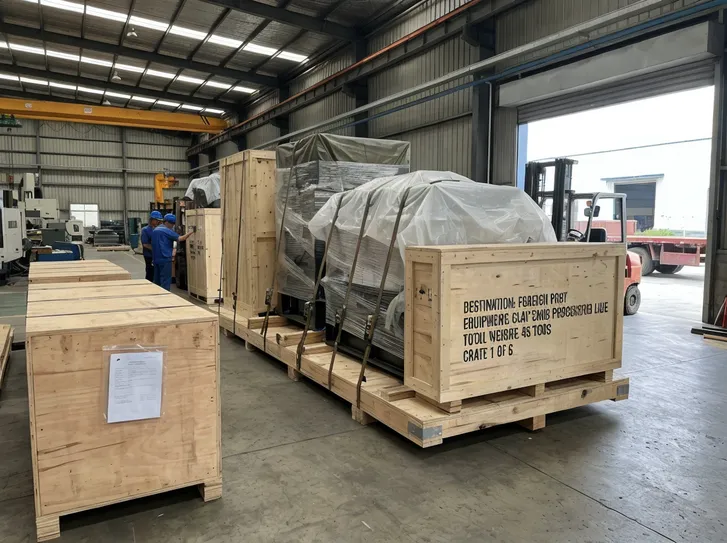
TZFoundry vertical flaskless clay sand processing line prepared for shipping at factory

MOQ & Lead Time

Minimum order quantity is 1 complete line — we don't sell individual components or partial systems.

Standard Delivery Timeline

Production 50–65 days from deposit to factory departure
Ocean Freight 15–30 days depending on destination

Hybrid Shipping Option

Air freight the control system and hydraulic components (5–7 days) while the structural frame ships via ocean. This hybrid approach saves 10–15 days off total delivery time and costs about 40% more than all-ocean shipping.

Modification Cost Breakdown

We're a vertical flaskless clay sand processing line manufacturer with in-house engineering, so custom configurations don't require outsourcing design work to third parties.

No Additional Cost

  • Motor voltage changes (380V, 415V, 440V, 480V)
  • Metric-to-imperial fastener conversions
  • Custom paint colors
  • PLC interface language

Adds to Cost

  • Non-standard mold sizes beyond our 300–700mm range (requires new pattern mounting hardware)
  • Special materials for corrosive environments (stainless steel frame instead of carbon steel)
  • Integration with third-party equipment we don't normally interface with (adds engineering time for control system programming)

Ready to Configure Your Vertical Flaskless System?

Contact us at sales@tzfoundry.com or WhatsApp +86 13335029477 with your mold size requirements and facility constraints. We'll confirm whether vertical configuration fits and provide a detailed quotation within 3–5 business days.

Setup & Commissioning

Installation & Commissioning — Vertical System Setup Sequence

Vertical systems require more installation planning than horizontal configurations because you're assembling equipment that extends upward rather than outward.

Overhead Clearance During Assembly

You need 7.5m temporary clearance to lift the vertical frame sections into position during installation. The frame ships in three sections:

1

Base Frame

2

Lower Column Assembly

3

Upper Column Assembly
with rotation mechanism

These sections bolt together on-site. Rigging the upper section requires lifting it 5.5–6.0m off the ground, then maneuvering it into alignment with the lower section — that operation needs 1.5–2.0m of clearance above the final installed height.

Critical Dimension Check

If your building has exactly 6.5m ceiling clearance, you cannot install a vertical system that will occupy the full 6.5m when complete. You need at least 7.0m to give the rigging crew working room.

Common workarounds for limited headroom:

  • Remove a roof panel or skylight during installation, then replace it after the frame is assembled.
  • Schedule installation before the roof goes on — works for new construction or building renovation projects.
  • If neither option works, you'll need to consider a horizontal system instead.

Crane Requirements for Installation

5-ton capacity minimum, positioned to reach the installation area. The heaviest lift is the upper column assembly with rotation mechanism at 3.5–4.2 tons depending on configuration.

Component Lift Weight
Upper column assembly with rotation mechanism 3.5–4.2 tons
Base frame 2.8–3.5 tons
Hydraulic power units 0.8–1.2 tons
Control cabinet 0.3–0.5 tons

No Permanent Overhead Crane?

You can rent a mobile crane for the installation period. Typical cost: $800–1,500 per day including operator.

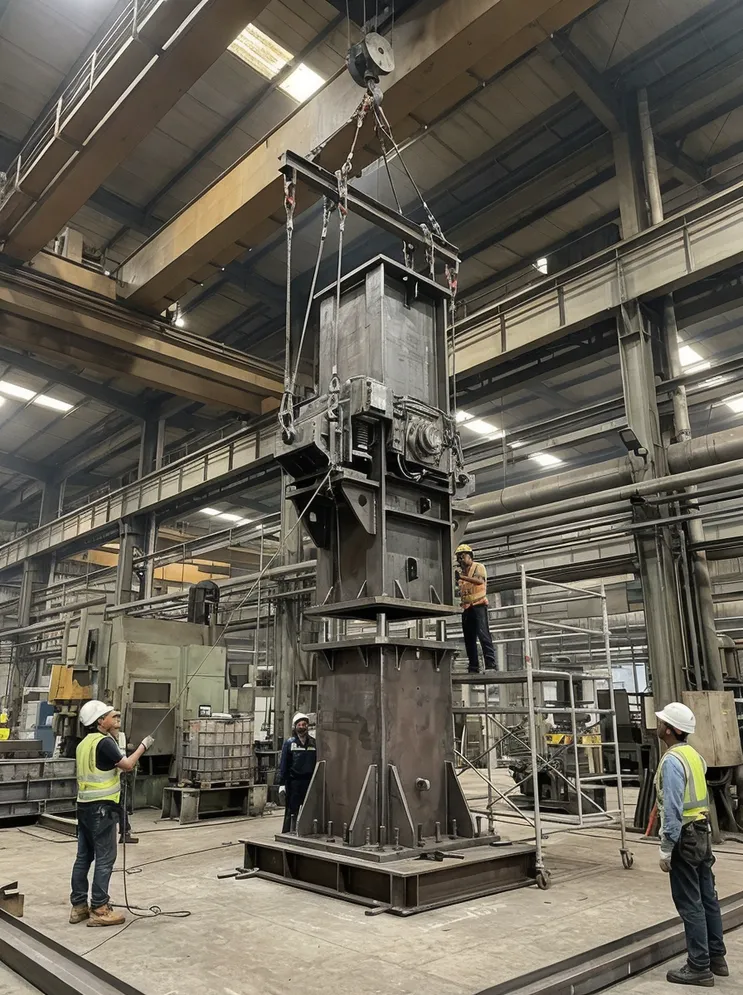
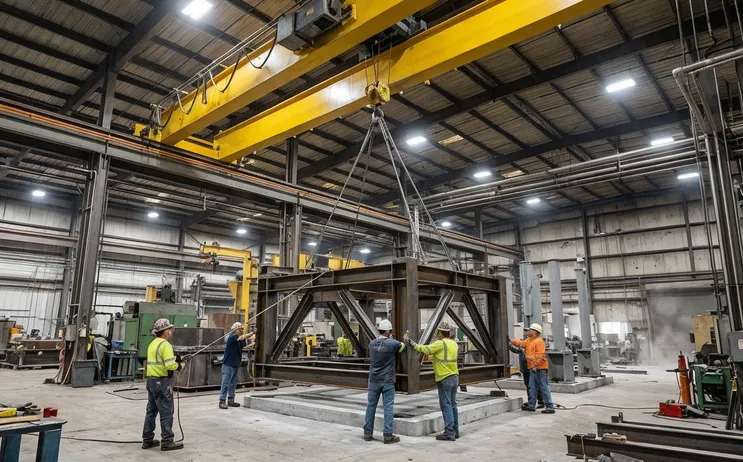
Vertical flaskless clay sand processing line frame sections being rigged into position during installation, showing the upper column assembly lifted above the lower section with overhead crane
5-ton crane positioning the base frame of a vertical flaskless clay sand processing system in a foundry facility with adequate ceiling clearance

Floor Anchors — Pre-Arrival Prep

Eight M24 anchor bolts embedded 300 mm into the concrete foundation, positioned according to the anchor bolt template we provide. The template ships 2 weeks before equipment departure so you can drill holes and install anchors before the equipment arrives.

Anchor Installation: 4–6 Hours

Drilling, cleaning holes, setting anchors with epoxy, and waiting for epoxy to cure.

If you skip this step and try to install anchors after the equipment arrives, you'll add 1–2 days to the installation timeline waiting for epoxy cure time.

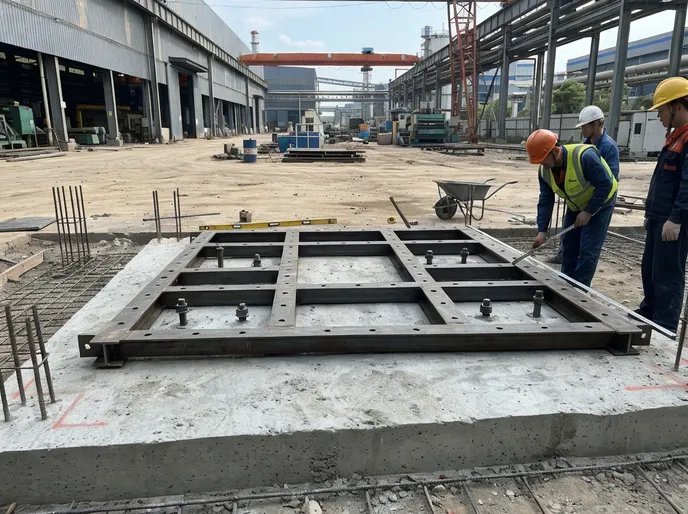
M24 anchor bolt template positioned on concrete foundation for vertical flaskless molding line base frame installation

Anchor bolt template supplied 2 weeks before equipment shipment — drill and set before arrival.

Assembly Sequence — 7-Step Build Order

Each step below is sequentially dependent — the previous module must be secured and verified before the next lift begins.

1

Position & Level Base Frame

Bolt base frame to floor anchors. Verify level across all axes.

4–6 hours
2

Lower Column Assembly

Lift and attach the lower column assembly to the base frame.

3–4 hours
3

Upper Column & Rotation Mechanism

Lift and attach the upper column assembly with rotation mechanism.

4–6 hours
4

Mold Stations & Compaction Cylinders

Install mold stations and compaction cylinders onto the frame assembly.

6–8 hours
5

Hydraulic Line Connections

Connect hydraulic lines from power unit to cylinders. Route and secure all hoses.

4–6 hours
6

Electrical Conduit & Control Wiring

Install electrical conduit and wire the complete control system.

8–12 hours
7

Sand Conveyors & Mixer Feed

Connect sand conveyors and mixer feed lines to the molding system.

4–6 hours

Total Assembly: 4–6 Days

Crew of 3–4 technicians

This assumes your foundation is ready, floor anchors are installed, and utilities (electrical service, compressed air, water supply) are roughed in to within 3 meters of the equipment location.

Commissioning Timeline — 2–3 Days After Assembly

Commissioning begins immediately after mechanical assembly is verified. Every subsystem is tested independently before running combined production cycles.

Hydraulic System Pressure Testing

Check for leaks, verify pressure reaches rated capacity across all cylinders and lines.

PLC Programming Verification

Confirm all sensors respond correctly and test alarm functions for every monitored parameter.

Sand Flow Testing

Run the system with sand but no patterns to verify conveyor speeds and mixer output match specification.

First-Mold Production

Run 10–20 test molds to validate compaction pressure, cycle time, and mold quality before full production handover.

Pre-Shipment Documentation — What Ships 2 Weeks Early

We provide critical installation preparation documents 2 weeks before equipment departure so your installation team can prepare the site without delays.

Rigging Drawings

Lift points, sling angles, and load weights for each major component — everything your crane operator and rigging crew need to plan safe lifts.

Anchor Bolt Templates

1:1 scale paper template or CAD file you can print — shows exact hole positions relative to a reference corner for precise M24 bolt placement.

Both document sets ship 2 weeks before equipment departure. Use this lead time to drill anchor holes, set epoxy anchors, verify utility rough-ins, and brief your rigging team — so assembly starts the day the equipment arrives on site.

Remote & On-Site Commissioning Support

Our commissioning engineer connects via video call (WhatsApp or WeChat) to guide your installation team through assembly steps, troubleshoot any fit-up issues, and verify that hydraulic and electrical connections are correct before powering up the system. This works well for buyers with experienced millwrights or maintenance technicians on staff.

Need Hands-On Help?

If your team doesn't have heavy equipment installation experience, we can send a technician to your facility for on-site commissioning. You cover travel costs, we cover labor.

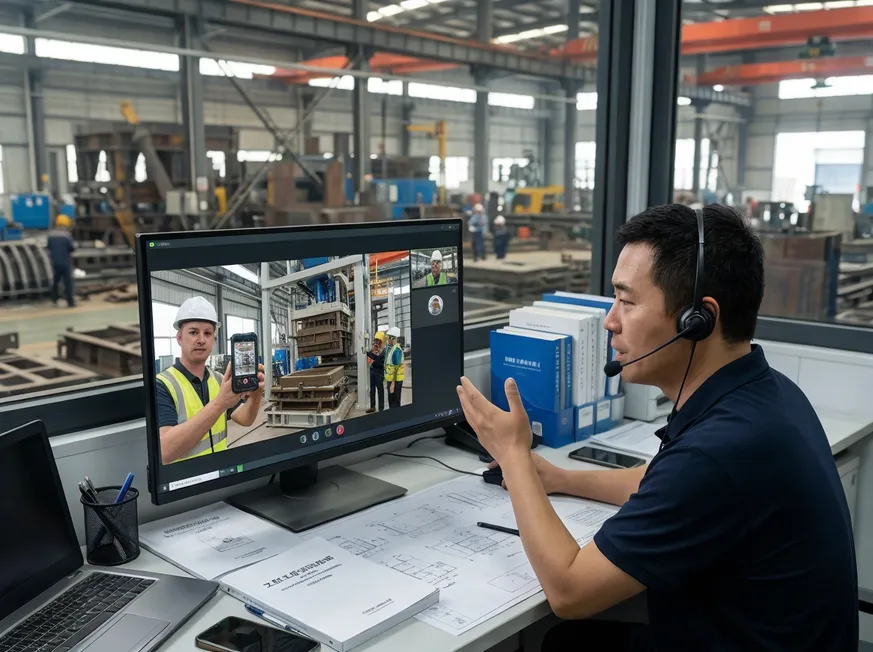
TZFoundry commissioning engineer providing remote video support during vertical flaskless line installation

Pre-Installation Preparation Checklist

Most installations go smoothly if you follow the preparation checklist. The installations that run into delays usually skipped one of these prep steps and discovered the problem after the equipment arrived.

Foundation Ready

Concrete foundation poured, cured, and level to specification before equipment arrives on site.

Floor Anchors Installed

Anchor bolt locations drilled and set per the foundation drawing provided with your order package.

Utilities Roughed In

Electrical, hydraulic, and compressed air supply lines stubbed out to the designated connection points.

Overhead Crane Available

Crane with sufficient tonnage rated for the heaviest module in the vertical system must be accessible during installation.

Rigging Equipment On Hand

Slings, shackles, and come-alongs for fine positioning must be available before unloading begins.

Don't Skip These Steps

Installations that run into delays almost always skipped one of these preparation steps and discovered the problem after the equipment arrived on site.

Ready to Plan Your Installation?

Get the full foundation drawing, utilities specification sheet, and installation timeline for your vertical flaskless line.

Request Installation Package
Technical Q&A

FAQ — Vertical Flaskless Technical Questions

Direct answers to the engineering and facility-planning questions we hear most from foundry teams evaluating vertical flaskless clay sand processing lines.

What is the minimum ceiling height for a vertical flaskless molding line?

6.5m minimum from floor to ceiling structure for standard configurations. This breaks down as:

1
Equipment Stack

4.5–5.5m for base frame through rotation mechanism

2
Maintenance Access

1.0–1.5m above the top bearing

Maintenance techs need to reach the rotation bearing housing for quarterly greasing and annual seal replacement — without adequate overhead clearance, you're working from ladders in awkward positions or setting up scaffolding every service interval.

Modified configuration available: We've modified systems to fit 6.0m ceiling facilities by reducing maximum mold height from 600mm to 500mm, which shortens the vertical stack enough to gain the clearance needed. This works if your casting designs stay under 500mm height. If you need full 600mm mold capacity, you need the full 6.5m clearance.

Send us your exact ceiling measurement and typical mold sizes — we'll confirm whether a modified system fits or whether you should consider a horizontal configuration.

Vertical vs. horizontal flaskless: which is better for limited floor space?

Vertical saves 40–50% of floor footprint at equivalent capacity. The numbers at 120 molds/hour:

Parameter Vertical Horizontal
Footprint at 120 molds/hr 8m × 6m (48 m²) 14m × 8m (112 m²)
Min. ceiling clearance 6.5m 4.0m
Relative capital cost 15–20% higher Baseline

That difference matters when you're expanding capacity within an existing building and can't add floor space.

Choose Vertical If:

  • Floor space is your constraint & you have ≥6.5m ceiling
  • You already have overhead cranes and elevated pouring stations
  • Vertical orientation aligns with existing material handling infrastructure

Choose Horizontal If:

  • Ceiling height is limited or below 6.5m
  • Floor space is available and you want to minimize capital cost
  • Floor-level material handling or ground-level maintenance access is a priority

Need a side-by-side comparison for your specific facility? See our full Horizontal Flaskless Clay Sand Processing Line page or general Flaskless overview.

Can vertical flaskless systems handle the same mold sizes as horizontal?

Width and length ranges are comparable — 300–500 mm width and 400–700 mm length for both configurations — but vertical height is limited to 600 mm vs. 800 mm for horizontal systems. The vertical stack height determines ceiling clearance requirements: taller molds need taller stacks, which need taller buildings. We cap vertical mold height at 600 mm because going taller pushes ceiling requirements above 7.0 m, which exceeds what most industrial buildings offer.

Dimension Vertical Flaskless Horizontal Flaskless
Width 300–500 mm 300–500 mm
Length 400–700 mm 400–700 mm
Height 600 mm max 800 mm max
Ceiling Clearance Driven By Stack height (capped at 6.5 m typical) Crane hook height

Decision rule: If your casting designs require molds taller than 600 mm, you need a horizontal flaskless system. For most gray iron, ductile iron, and aluminum castings, 600 mm height is sufficient. Check your largest mold dimensions before specifying vertical configuration.

What capacity range is vertical flaskless suitable for?

80–150 molds/hour is the sweet spot. Below and above that range, other systems deliver better economics.

<80 Below Range

Below 80 molds/hour, the capital cost premium over simpler molding methods — manual flask systems, basic flaskless configurations — doesn't justify the floor space savings.

You're paying 15–20% more for equipment that sits idle most of the time.

Better option → Manual flask or basic flaskless
Sweet Spot
80–150 Optimal Range

Matches mid-volume foundries running repeatable contracts with 2–4 week lead times.

Typical order pattern: 50–200 molds per production run, multiple runs per month.

Best fit → Vertical flaskless line
>150 Above Range

Above 150 molds/hour, automatic flaskless systems with parallel molding stations hit 180–250 molds/hour.

Pushing a single vertical station beyond 150 means cutting cycle time so aggressively that mold quality suffers.

Better option → Automatic flaskless system

Production mix matters: If you're doing high-mix low-volume work (10–30 molds per run, frequent pattern changes), the vertical system's throughput exceeds what you need. If you're doing true high-volume work (500+ molds per run, minimal pattern changes), automatic systems deliver better economics at scale.

How does vertical orientation affect sand reclamation integration?

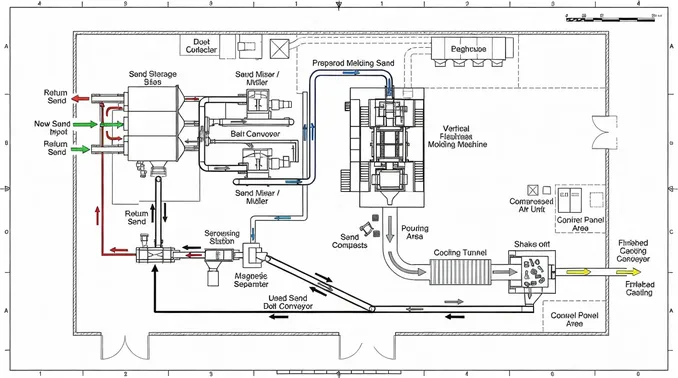
Vertical systems use gravity-assisted sand return, which simplifies conveyor routing and cuts power consumption by 15–20% compared to horizontal configurations. After casting solidifies and the mold breaks apart, used sand falls through a grate at the breakout station and lands on a ground-level return conveyor. That conveyor moves sand horizontally to your reclamation system (crusher, screens, mixer) without needing inclined sections or lift conveyors.

Horizontal systems have to lift sand from the mold breakout level back up to mixer level, which requires inclined conveyors or bucket elevators. Those inclined sections consume more power, create more dust (sand spills at transfer points), and add maintenance — belt tracking on inclines, bucket elevator chain tensioning. Vertical orientation eliminates those complications: sand flows downward naturally, and you only need horizontal conveyors at ground level.

The reclamation system itself (crusher, magnetic separator, screens, storage bins) connects the same way regardless of molding line orientation. The difference is in how sand gets from the molding line to reclamation — vertical makes that connection simpler and cheaper to operate.

Vertical Sand Return
  • Gravity-fed through breakout grate
  • Ground-level horizontal conveyors only
  • 15–20% lower power consumption
  • Fewer dust-generating transfer points
Horizontal Sand Return
  • Requires inclined conveyors or bucket elevators
  • Sand must be lifted back to mixer level
  • More belt tracking & chain tensioning maintenance
  • Higher dust from sand spills at transfer points

What crane capacity is needed for vertical flaskless operation?

3–5 ton capacity for pattern changes and maintenance tasks. Pattern changes — lifting pattern plates in and out of the molding chamber — happen daily to weekly depending on your product mix. Pattern plates typically weigh 200–800 kg depending on mold size and pattern complexity. A 3-ton crane handles pattern plates up to 600 kg with safety margin.

Maintenance lifts require higher capacity: removing the rotation mechanism for bearing service involves lifting a 2.5–3.5 ton assembly. Hydraulic cylinder replacement (annual seal service) involves lifting cylinders that weigh 400–600 kg each. A 5-ton crane handles all maintenance tasks with adequate safety margin.

If you're running low-mix production with frequent pattern changes, crane positioning and speed matter more than capacity — you want a bridge crane that covers the full molding area and moves quickly enough that pattern changes don't become a bottleneck. If you're running high-volume production with infrequent pattern changes, a slower gantry crane works fine because you're only using it occasionally.

Some buyers install a 3-ton jib crane for pattern changes (faster positioning, lower cost) plus a separate 5-ton bridge crane for maintenance lifts. That approach works if your facility layout allows two cranes without interference. Most buyers go with a single 5-ton bridge crane that handles both pattern changes and maintenance — simpler to operate, one piece of equipment to maintain.

Task Load Range Min. Crane Capacity
Pattern plate changes 200–800 kg 3 ton
Hydraulic cylinder replacement 400–600 kg each 3 ton
Rotation mechanism removal 2.5–3.5 ton assembly 5 ton

Most common setup: A single 5-ton bridge crane covering the full molding area handles both daily pattern changes and periodic maintenance lifts — one piece of equipment, no interference issues.

ISO 9001:2015 & CE Certified Manufacturer

Why TZFoundry for Vertical Flaskless Systems

We've built vertical flaskless clay sand processing lines since 2015, when a European buyer needed 120 molds/hour capacity in a facility with 7.0m ceilings but only 10m × 8m of available floor space.

A Decade of Vertical Expertise

That first project taught us how to engineer vertical frames that handle asymmetric compaction loads without flexing, and how to design rotation mechanisms that survive foundry dust conditions for years between bearing replacements.

The system we installed in 2015 is still running — the buyer added a second vertical line in 2019 and ordered a third in 2023.

2015 First Vertical Line
2019 2nd Line Added
2023 3rd Line Ordered
TZFoundry vertical flaskless clay sand processing line manufacturing facility in Qingdao

Facility Constraint Engineering

Our in-house engineering team adapts vertical systems to facility constraints we see regularly. We've completed installations across challenging environments that push standard equipment configurations past their design assumptions.

Low-Ceiling Installations

6.0m ceiling installations — we reduce mold height capacity to fit. We've done installations in buildings with 6.2m ceilings, routing components to clear every vertical millimeter.

Upper-Floor & Mezzanine

We provide foundation load maps for structural engineers. Completed installs on mezzanine floors rated for 400 kg/m² loading, ensuring equipment weight distribution stays within structural limits.

Overhead Obstructions

We route conveyors and hydraulic lines around existing crane rails, ductwork, and lighting. In one installation, we removed a roof panel during setup then replaced it afterward to get the frame in.

Certification & Manufacturing Scale

ISO 9001:2015 and CE certification cover our manufacturing processes and equipment safety. We run 8 production lines across 15,000 square meters in Qingdao, producing foundry equipment for buyers in North America, Europe, the Middle East, and Southeast Asia.

ISO 9001:2015 CE Certified 8 Production Lines 15,000 m² Facility

Modular Shipping in 40ft Containers

Vertical systems ship as modular sections that fit in standard 40-foot containers — keeping ocean freight costs reasonable and simplifying customs clearance:

  • Container 1: Base frame and lower columns
  • Container 2: Upper columns and rotation mechanism
  • Container 3: Hydraulic power unit and control system

Remote Commissioning & Pre-Shipment Support

Remote Commissioning Included

Our engineer connects via video call to guide your installation team through assembly, verify hydraulic and electrical connections, and troubleshoot any issues during first-mold production.

Site Prep Documents — 2 Weeks Before Shipment

We provide rigging drawings, anchor bolt templates, and foundation load maps 2 weeks before shipment so your team can prepare the site before equipment arrives.

Spare Parts Kits Ship With Equipment

Hydraulic seals, PLC I/O modules, proximity sensors, and conveyor belts — common wear items ship with the equipment so you have them on hand when you need them.

50–65 Day Lead Time

Lead time runs 50–65 days from deposit to factory departure. We maintain inventory of structural steel, hydraulic cylinders, and PLC components so we're not waiting on long-lead suppliers. Custom configurations (non-standard mold sizes, special voltage requirements, integration with third-party equipment) add 10–15 days for engineering and fabrication.

Get Your Vertical System Layout — Free

Send us your facility layout (floor dimensions, ceiling height, column locations, overhead obstructions) and production requirements (target molds/hour, typical mold sizes, casting types). We'll provide vertical system layout drawings showing equipment footprint, crane coverage requirements, conveyor routing, and utility connection points.

You'll see exactly how the system fits your building before you commit to the purchase. We typically respond within 24 hours with preliminary layouts and budget quotations.