Turkey sits between Europe and the Middle East with a foundry equipment supply base built on proximity, customs advantages, and regional service networks. If you're sourcing a lost foam casting production line from Istanbul or Ankara, you're betting on faster freight times and easier site visits over the factory-direct pricing you'd get from China. That trade-off makes sense for some buyers — and costs margin for others.
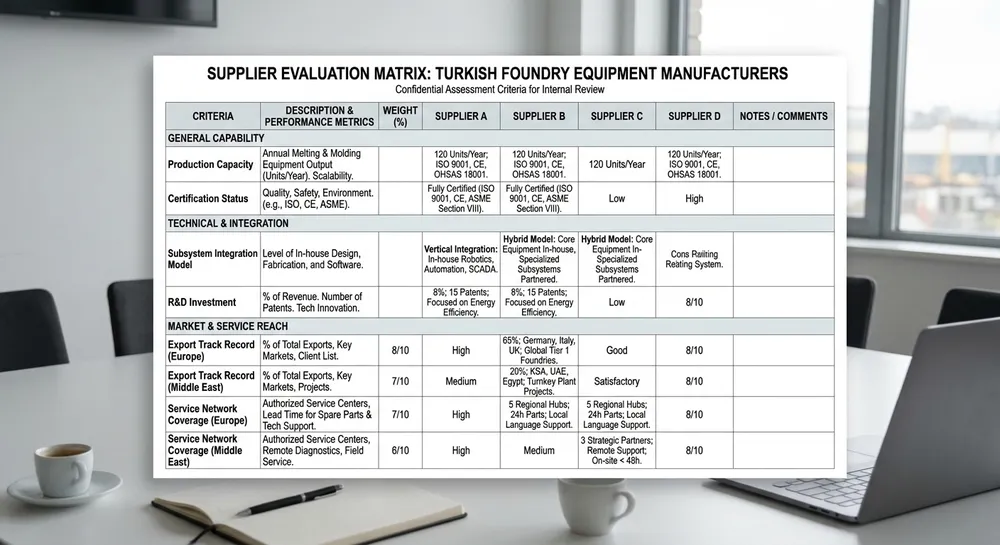
The Turkish foundry equipment market splits into three supplier models: importers who warehouse European or Chinese systems and add local service, fabricators who build structural components and integrate imported subsystems (vacuum pumps, PLC controls, coating applicators), and a smaller group of full-line manufacturers who design and produce complete EPC casting systems domestically. Most Turkish suppliers fall into the first two categories, which means you're often paying for assembly and distribution rather than manufacturing scale.
This article walks through how to evaluate Turkish suppliers, what the local market delivers well, and where a factory-direct China alternative like TZFoundry competes on full-line integration, certified capacity, and total landed cost.
Why European and Middle East Buyers Look at Turkey First
Geography drives the initial interest. Turkey-to-Germany freight runs 7-10 days by truck, Turkey-to-UAE ships in 5-7 days, and Turkey holds EU Customs Union status for industrial goods, which eliminates tariffs on machinery exports to European buyers. If you're in Poland, Greece, or Saudi Arabia, a Turkish supplier feels like the obvious local choice.
The second advantage is service proximity. A supplier in Bursa or Konya can send a technician to your facility in Romania or Jordan within 48 hours if a vacuum pump fails or a coating system needs recalibration. That responsiveness matters when downtime costs you $2,000 per hour in lost production. Chinese suppliers offer remote commissioning and video support, but they can't put an engineer on-site the next day.
The third factor is language and business familiarity. Turkish suppliers operate in English, handle European payment terms (letters of credit, 30-60 day invoicing), and understand CE marking requirements without needing translation. For buyers new to overseas sourcing, that reduces perceived risk.
But proximity and service convenience come with trade-offs: smaller production scale, reliance on imported subsystems, and higher unit pricing compared to factory-direct Chinese manufacturers who control the full production chain.

How to Evaluate Lost Foam Casting Line Suppliers in Turkey
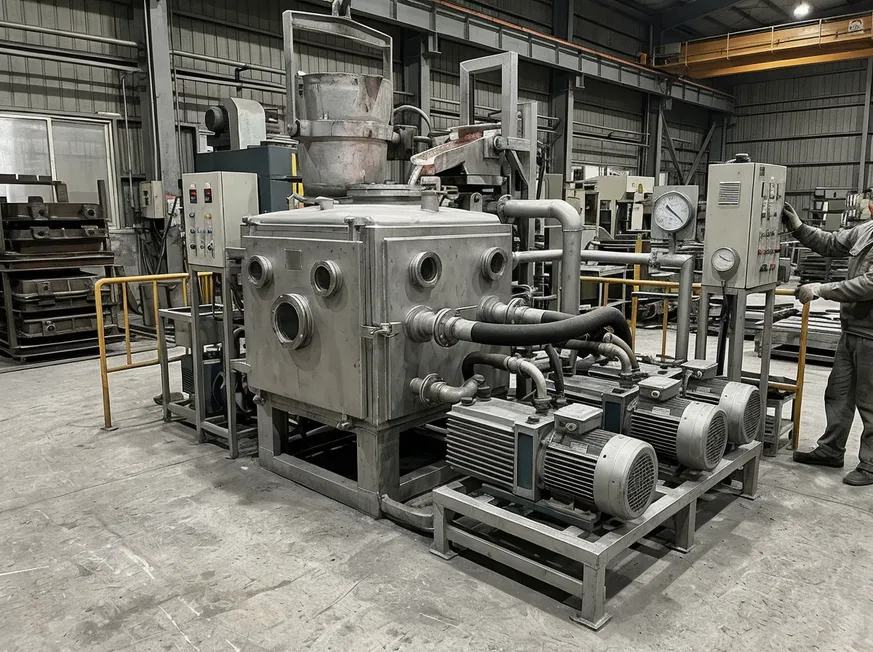
Start with production capacity and manufacturing model. Ask whether the supplier fabricates the vacuum chamber, coating tank, and pattern handling system in-house, or whether they assemble imported subsystems. A supplier who builds the structural steel components but sources vacuum pumps from Germany and PLC controls from Siemens is running an integration business, not a manufacturing operation. That's not inherently bad — integration can deliver quality systems — but it limits their ability to customize subsystem specs or reduce cost on repeat orders.
Check CE and ISO certifications with unit-specific documentation. CE marking is mandatory for machinery exports to the EU, but the depth of compliance varies. Request the technical file: risk assessment, EMC testing reports, and machinery directive documentation. ISO 9001 certification covers quality management, but verify whether it applies to manufacturing or just to trading and assembly operations. A supplier who holds ISO 9001 for their assembly workshop but outsources all fabrication is a different risk profile than a supplier who manufactures under ISO 9001 from raw steel through final commissioning.
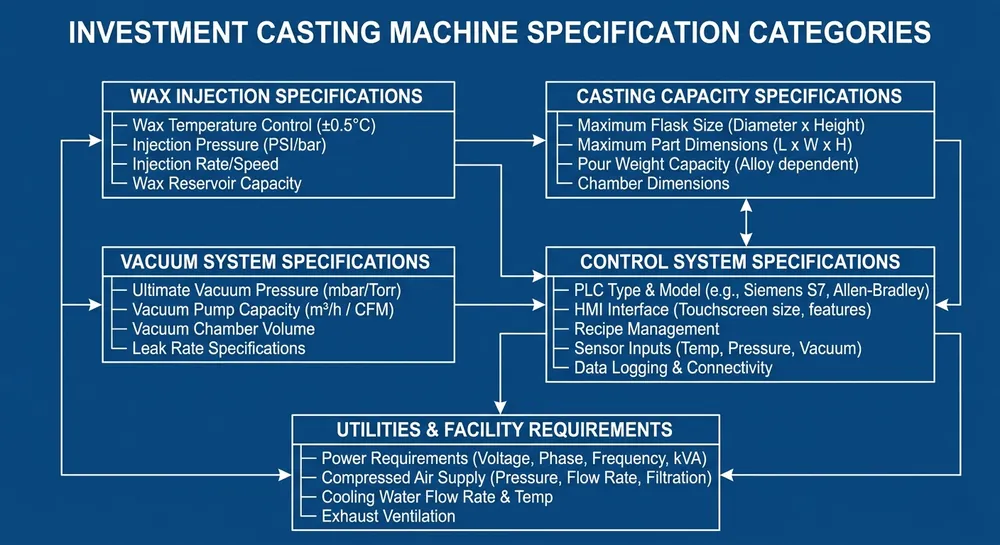
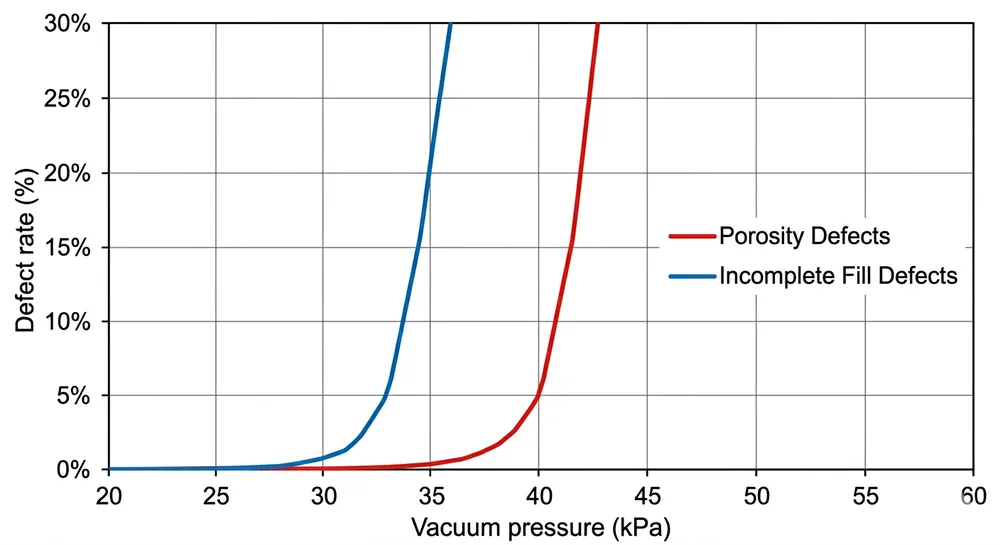
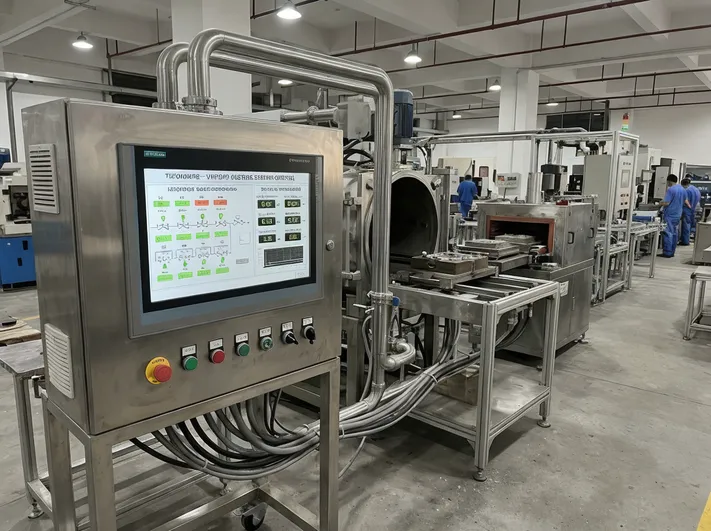
Verify vacuum system specifications and coating process control. Lost foam casting depends on maintaining 0.03-0.06 MPa vacuum pressure during metal pouring, and coating thickness must stay within 0.8-1.2mm to prevent carbon defects and misruns. Ask for vacuum pump capacity (m³/h), chamber leak rate specs, and coating applicator control method (manual, semi-automatic, or fully automated with thickness sensors). If the supplier can't provide these numbers or refers you to the subsystem manufacturer's generic datasheet, they don't control the process engineering.
Assess after-sales support structure and spare parts availability. A Turkish supplier's main advantage is service proximity, so verify whether they stock spare parts locally or order them from upstream manufacturers when you need a replacement vacuum pump seal or PLC I/O module. Ask about response time for on-site service, remote diagnostic capability, and whether their technicians are trained on the specific subsystems in your line (Siemens vs Mitsubishi PLC, Busch vs Becker vacuum pumps). A supplier who can't dispatch a qualified technician within 72 hours isn't delivering on the proximity value proposition.
Review export track record and reference installations. Request customer references in your target market (Europe or Middle East) with similar casting applications (ductile iron, aluminum, steel). A supplier who has commissioned lost foam casting equipment in Germany or Saudi Arabia understands export logistics, voltage/frequency requirements (50Hz vs 60Hz), and multilingual documentation. A supplier whose installations are all domestic Turkish foundries may struggle with export execution.
Turkish Lost Foam Casting Production Line Supplier Landscape
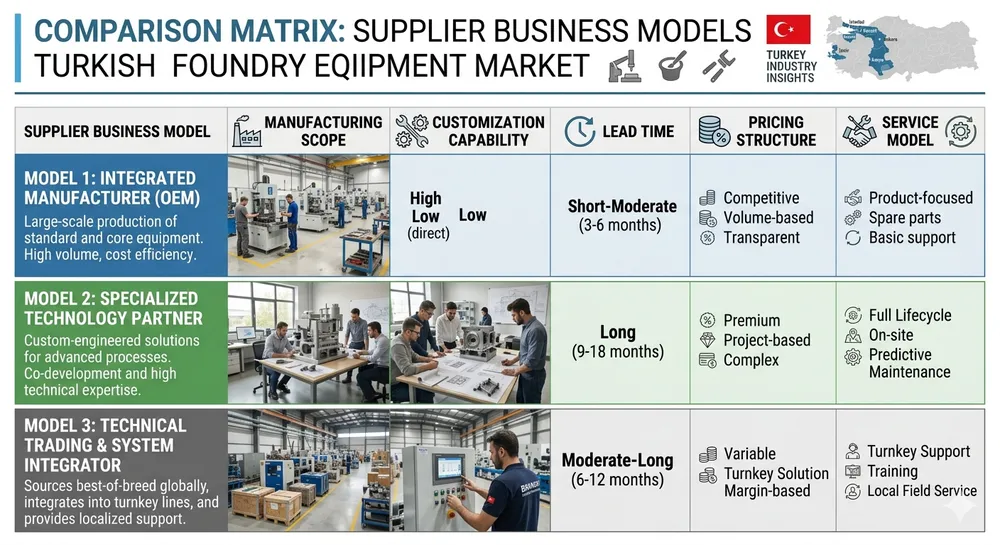
The Turkish foundry equipment supply base concentrates in industrial zones around Istanbul, Ankara, Bursa, and Konya. Most suppliers operate as regional distributors or system integrators rather than full-line manufacturers, which shapes their capabilities and pricing structure.
Importer-Distributors: These suppliers warehouse European or Chinese lost foam casting systems and provide local sales, installation, and service. They add value through faster delivery (stock on hand vs 60-90 day lead time from origin), local currency invoicing, and Turkish-language support. Unit pricing typically runs 20-35% above factory-direct import cost because you're paying for inventory holding, local overhead, and service network. This model works well for buyers who need equipment within 2-3 weeks or who value having a local service partner more than minimizing unit cost.
Fabrication-Integrators: These suppliers manufacture structural components (vacuum chambers, coating tanks, conveyor frames) in their own workshops and integrate imported subsystems (vacuum pumps, PLC controls, hydraulic units, coating applicators). They offer more customization flexibility than pure importers because they control the mechanical design, but subsystem performance and cost are constrained by their upstream suppliers. Pricing sits between importer-distributors and factory-direct manufacturers — you save on the distribution markup but still pay for subsystem procurement at commercial rates rather than OEM volume pricing.
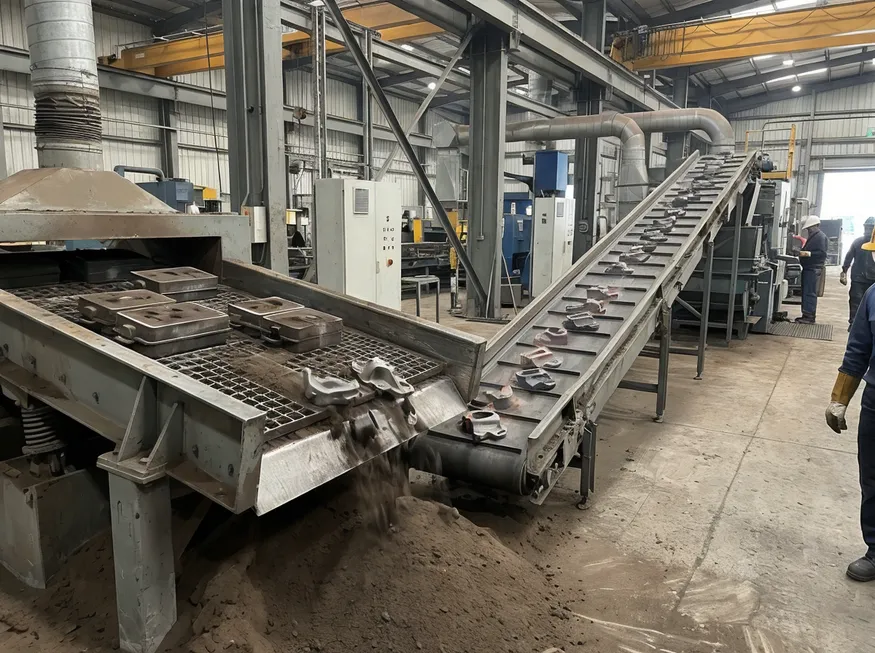
Full-Line Manufacturers: A smaller group of Turkish suppliers design and produce complete EPC casting systems domestically, including vacuum systems, coating equipment, and pattern handling automation. These suppliers compete more directly with Chinese factory-direct manufacturers on customization and lead time, but their production scale (typically 50-200 units annually vs 500,000+ for large Chinese manufacturers) limits their ability to match China pricing on standard configurations.
Most European and Middle East buyers encounter the first two supplier types when searching for Turkish foundry equipment. The challenge is distinguishing between a supplier who manufactures vs a supplier who assembles, because both present themselves as "manufacturers" in marketing materials. Request factory photos showing fabrication equipment (CNC machining centers, robotic welding stations, hydraulic test benches) rather than just assembly areas, and ask which components they produce in-house vs source from upstream suppliers.
Common Limitations When Sourcing from Turkish Suppliers
Production scale constrains customization flexibility and repeat-order economics. A Turkish integrator who builds 30-50 lost foam casting lines annually can't offer the same subsystem customization or volume pricing that a Chinese manufacturer running 500,000 units across 8 production lines delivers. If you need a vacuum system modified for 18-28 kg/m³ EPS density range instead of the standard 20-24 kg/m³, a small-scale supplier may need to special-order components from their upstream manufacturer, adding cost and lead time.
Subsystem sourcing creates dependency on European or Chinese component suppliers. Most Turkish integrators use German vacuum pumps (Busch, Becker), European PLC systems (Siemens, Schneider), and imported coating applicators. That's not a quality problem — these are proven components — but it means your Turkish supplier's pricing and lead time are constrained by their upstream suppliers' terms. A factory-direct Chinese manufacturer who produces vacuum chambers, coating tanks, and pattern handling systems in-house can adjust specs and pricing without negotiating with external vendors.
Limited full-line integration affects commissioning efficiency and long-term support. When your vacuum casting production line includes subsystems from four different manufacturers (German vacuum pump, Italian coating applicator, Chinese conveyor system, Turkish structural frame), troubleshooting becomes a multi-vendor coordination exercise. If coating thickness drifts out of spec and causes carbon inclusions in your castings, is that a coating applicator calibration issue, a vacuum pressure problem, or a pattern handling timing error? A supplier who integrates subsystems but doesn't manufacture them may need to escalate technical issues to upstream vendors, extending your downtime.
CE certification depth varies across suppliers. All Turkish suppliers exporting to the EU claim CE marking, but the underlying technical documentation and testing rigor differ. A supplier who conducts full EMC testing, risk assessment, and machinery directive compliance in-house can modify equipment specs and maintain CE compliance. A supplier who relies on subsystem manufacturers' CE certificates and assembles without additional testing may struggle if you need custom configurations that fall outside the original subsystem approvals.
Factory-Direct China Alternative: How TZFoundry Compares
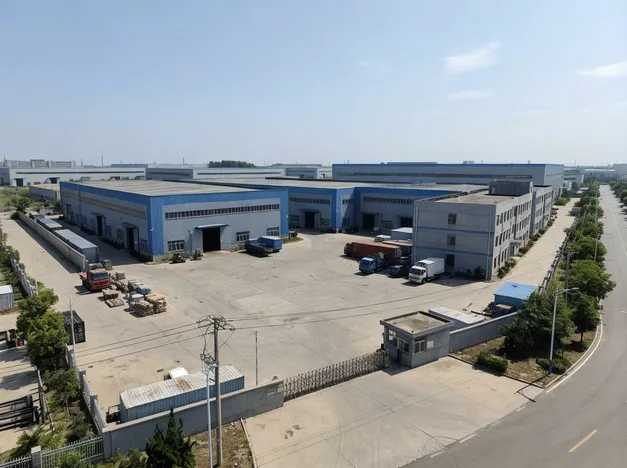
We manufacture complete lost foam casting production lines in Qingdao — vacuum systems, coating equipment, pattern handling automation, and control integration — across 15,000 m² with 8 production lines producing 500,000 units annually. That scale lets us control subsystem specs, customize configurations without vendor dependencies, and deliver factory pricing that stays competitive even after freight and duties.
Full-line integration vs subsystem assembly: We fabricate vacuum chambers, coating tanks, conveyor frames, and hydraulic systems in-house using CNC machining centers and robotic welding stations. Vacuum pumps and PLC controls are the only major subsystems we source externally, and we maintain dual-source relationships (Siemens/Mitsubishi for PLCs, approved pump manufacturers for vacuum systems) to avoid single-vendor dependency. When a Middle East buyer needed coating system modifications for 18-28 kg/m³ EPS density instead of our standard 20-24 kg/m³ range, we adjusted tank geometry, applicator nozzle specs, and drying time parameters without negotiating with external suppliers. A Turkish integrator would need to request custom components from their coating equipment vendor, adding cost and lead time.
Production capacity and repeat-order economics: 500,000 units annually across 8 lines means your 50-unit order doesn't queue behind capacity constraints, and repeat orders ship at the same lead time as initial orders. We've commissioned lost foam casting lines in 14 countries via remote video support, and the modular design fits 40HQ container dimensions (12.03m length, 2.35m width, 2.69m height) without wasted space. A complete EPC casting line typically ships in 2-3 containers depending on capacity configuration — that's the landed cost difference between viable and uneconomical for most buyers.
Triple certification with unit-specific documentation: ISO 9001:2015 covers our quality management from incoming steel inspection through final commissioning. CE certification applies to all equipment exported to European markets, with technical files including risk assessments, EMC testing reports, and machinery directive compliance documentation maintained in-house. SGS conducts annual factory audits and pre-shipment inspections for buyers who require third-party verification. Every machine ships with a commissioning report documenting the test results from your specific unit — if your coating system is rated for 0.8-1.2mm thickness consistency, the report shows the actual measurements we recorded during factory testing.
Remote commissioning and first-year spare parts: We commission equipment via video call — your installation team follows our engineer's instructions to connect hydraulic lines, wire control panels, and run initial test cycles. We've done this in 14 countries, and it works as long as your team can read hydraulic schematics and use a multimeter. Spare parts kits ship with every order, covering the consumables you'll need for the first year: hydraulic seals, proximity sensors, solenoid valves, and PLC I/O modules. That reduces total cost of ownership compared to ordering spare parts reactively from a Turkish integrator who may need to source them from upstream manufacturers.
Total Landed Cost Comparison Framework
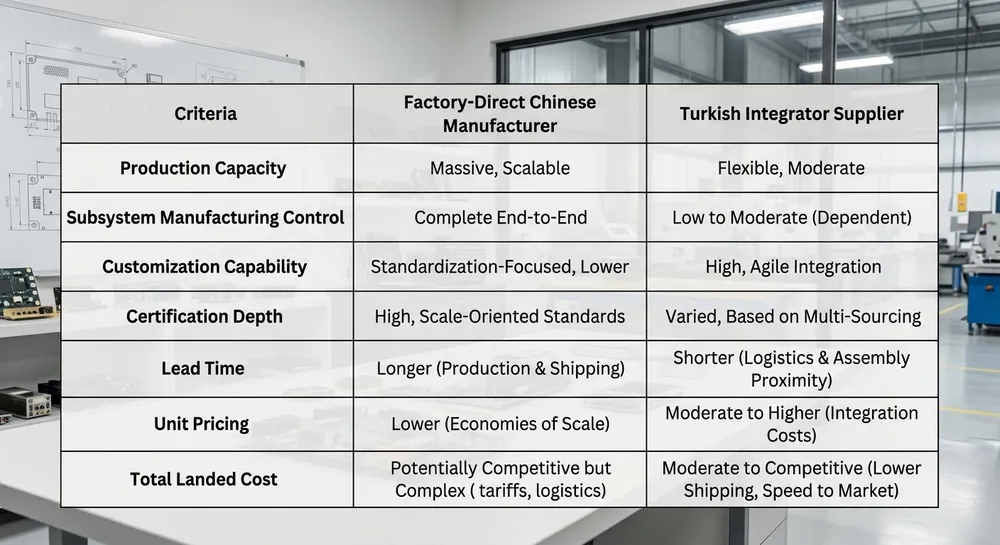
Unit price is only one component of total landed cost. Compare these five factors when evaluating Turkish suppliers vs factory-direct China sourcing:
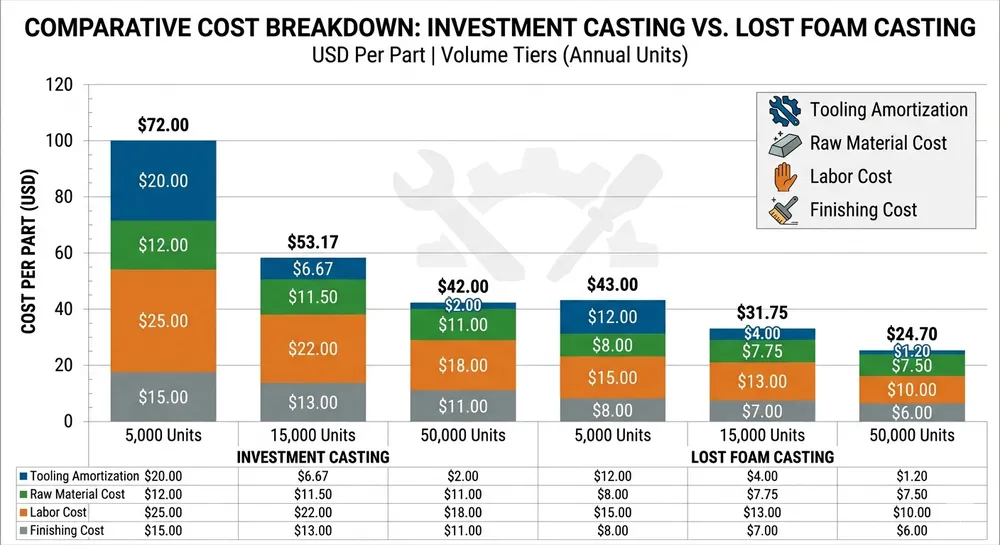
Unit price: Turkish importer-distributors typically price 20-35% above factory-direct China cost. Turkish fabrication-integrators price 10-20% above China factory-direct. Turkish full-line manufacturers price 5-15% above China factory-direct, depending on production scale and subsystem sourcing. TZFoundry factory pricing reflects manufacturing scale (500,000 units annually) and full-line integration (no distributor markup, no subsystem procurement premium).
Freight and duties: Turkey-to-Europe truck freight runs $2,000-3,500 per 40HQ container with 7-10 day transit. China-to-Europe sea freight runs $3,500-5,500 per 40HQ with 30-35 day transit. EU Customs Union eliminates tariffs on Turkish machinery exports to the EU, while China imports face 0-6% duty depending on HS code classification. For Middle East buyers, Turkey and China freight costs are similar ($2,500-4,000 per container), and both face 5% import duty in most Gulf markets. The freight advantage for Turkish suppliers is real but smaller than most buyers assume — it typically saves $1,000-2,000 per container, which matters more on small orders than on 50-unit production line installations.
Installation and commissioning: Turkish suppliers offer on-site commissioning with technicians who can arrive within 1-2 weeks of equipment delivery. TZFoundry provides remote commissioning via video call, which works for buyers with competent installation teams but requires more internal coordination. If your team lacks hydraulic and electrical experience, paying for on-site commissioning from a Turkish supplier may reduce your total project risk. If your team can follow technical instructions and troubleshoot basic issues, remote commissioning saves $3,000-5,000 in travel costs and delivers faster project completion (no waiting for technician availability).
Spare parts availability: Turkish suppliers stock common spare parts locally, which means 2-3 day delivery for vacuum pump seals, proximity sensors, or solenoid valves. TZFoundry ships first-year spare parts kits with every order, and subsequent parts orders ship from Qingdao with 7-10 day express delivery. The Turkish advantage is real for emergency replacements, but the cost difference is minimal for planned maintenance parts orders.
Warranty and long-term support: Turkish suppliers offer 12-24 month warranties with on-site service available throughout the warranty period. TZFoundry provides 12-month warranty with remote diagnostic support and video troubleshooting, plus on-site service available at buyer's cost if remote support doesn't resolve the issue. For buyers in Europe and the Middle East, the Turkish service proximity advantage is strongest during the first 12 months when commissioning issues and operator training needs are highest. After the first year, most production lines run with minimal support requirements, and the service proximity advantage diminishes.
Run the total landed cost calculation for your specific order size and location. For a 50-unit lost foam casting line shipping to Germany, the Turkish supplier's freight advantage ($1,500 saved) and tariff advantage (5% duty saved, ~$3,000 on a $60,000 order) total $4,500. If the Turkish supplier's unit price is 15% higher than TZFoundry factory-direct ($9,000 premium on a $60,000 order), the landed cost still favors factory-direct China by $4,500. The break-even point shifts based on order size, destination, and how much you value on-site commissioning vs remote support.
When to Source from Turkey vs When Factory-Direct China Delivers Better Value
Choose a Turkish supplier when:
- Your order is small (under 20 units) and freight cost per unit matters more than unit price
- You need equipment delivered within 2-3 weeks and can't wait for 60-90 day lead time from China
- Your installation team lacks hydraulic and electrical experience, and you need on-site commissioning support
- You're running a pilot project and want a local service partner available for troubleshooting during the first 6 months
- You're in a market where "Made in Turkey" or "Made in EU" carries procurement preference or regulatory advantage
Choose factory-direct China (TZFoundry) when:
- Your order is 30+ units and unit price becomes the dominant cost factor
- You need customization beyond standard configurations (modified vacuum system specs, coating thickness range adjustments, custom conveyor layouts)
- You're building a long-term supply relationship and want a manufacturer who controls the full production chain
- Your installation team can handle remote commissioning with video support
- You're optimizing for total landed cost over 3-5 years, not just initial purchase price
The decision isn't binary. Some buyers start with a Turkish supplier for their first small order to test the market, then shift to factory-direct China for repeat volume orders once they've validated demand and built internal installation capability. Others use Turkish suppliers for urgent replacement equipment and factory-direct China for planned capacity expansions.
Sourcing Decision Checklist
Before requesting quotes, clarify these five factors:
- Order size and repeat volume: Are you buying 10 units for a pilot project or 100 units for a full production line? Will you reorder annually or is this a one-time purchase?
- Installation capability: Does your team have hydraulic and electrical experience to handle remote commissioning, or do you need on-site support?
- Customization requirements: Are you buying a standard configuration or do you need modified vacuum specs, coating system adjustments, or custom conveyor layouts?
- Service priority: Is having a technician on-site within 48 hours worth paying 15-20% more for equipment, or can you manage with remote support and 7-10 day spare parts delivery?
- Total cost horizon: Are you optimizing for lowest initial purchase price or lowest total cost of ownership over 3-5 years?
Send us your production requirements (casting alloy, target output rate, available floor space, and installation support needs) and we'll provide a detailed quotation with factory pricing, shipping plan, and commissioning approach. Most buyers in Europe and the Middle East find that factory-direct China delivers better value once order size exceeds 30 units and they have competent installation teams. For smaller orders or buyers who need maximum service proximity, Turkish suppliers remain a viable option — just run the total landed cost calculation before committing.
Request a detailed quotation from TZFoundry at sales@tzfoundry.com or WhatsApp +86 13335029477. Include your casting alloy, target output rate, and available floor space so our engineers can provide a full-line proposal with factory pricing and shipping plan. For more information on our complete product range, visit our Lost Foam Casting Production Line category page or explore our OEM & ODM Services for custom configurations.

Zhang Peng leads lost foam casting systems at TZFoundry, where he has spent over 12 years engineering vacuum casting lines, coating systems, and foam pattern equipment for export foundries. He specializes in defect prevention and yield optimization across cast iron...