India's lost foam casting equipment market serves automotive foundries, pump manufacturers, and valve producers shifting from traditional sand casting to EPC (Evaporative Pattern Casting) for complex geometries. The supplier base concentrates in Gujarat, Maharashtra, and Rajasthan, but most manufacturers sell individual machines — vacuum chambers, coating tanks, pattern handling systems — rather than integrated production lines. If you're sourcing a complete lost foam line rated for 40-80 molds per hour, you'll find pricing data scattered across IndiaMART listings with limited technical depth on vacuum pump capacity, coating viscosity control, or EPS pattern density specifications.
The real sourcing question isn't "which Indian supplier ranks highest" — it's whether you're buying a complete turnkey system or assembling components from multiple vendors, and how that decision affects your defect rate, commissioning timeline, and total landed cost.
How to Evaluate Lost Foam Casting Equipment Suppliers — The Technical Criteria That Prevent Defects
Most buyers focus on vacuum chamber size and coating tank capacity. Those specs matter, but they don't predict whether your castings develop porosity at 12 hours into a production run or whether your coating system maintains 1.0-1.5mm thickness consistency across 500 patterns daily.
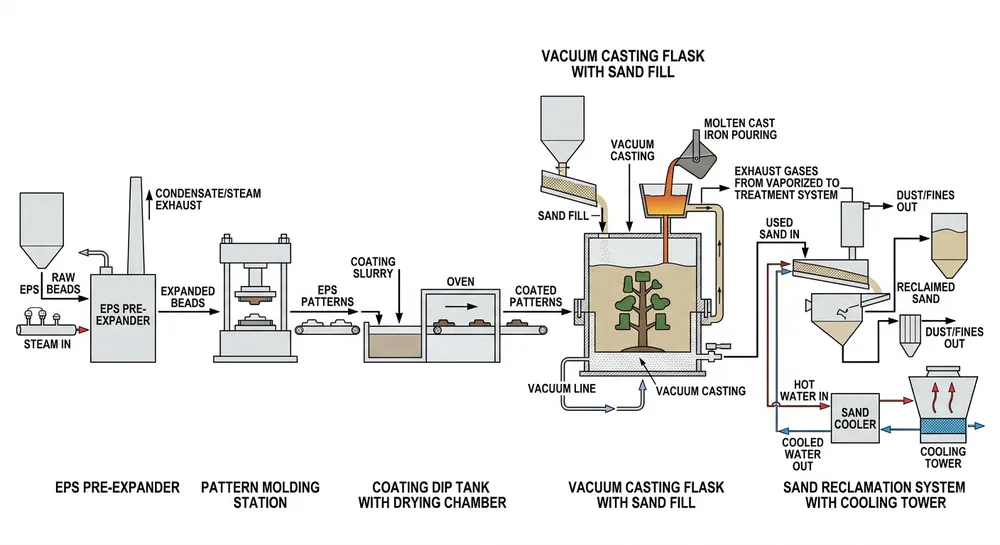
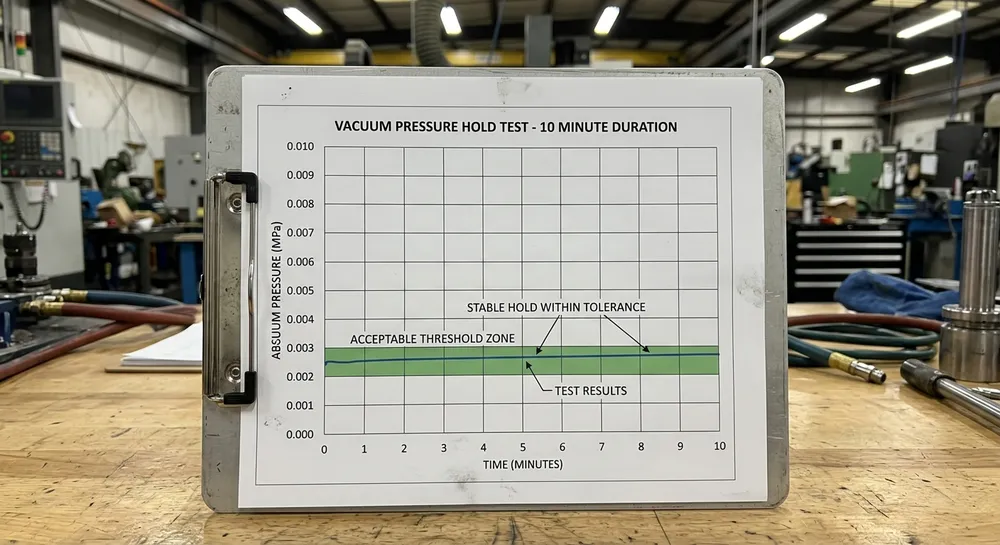
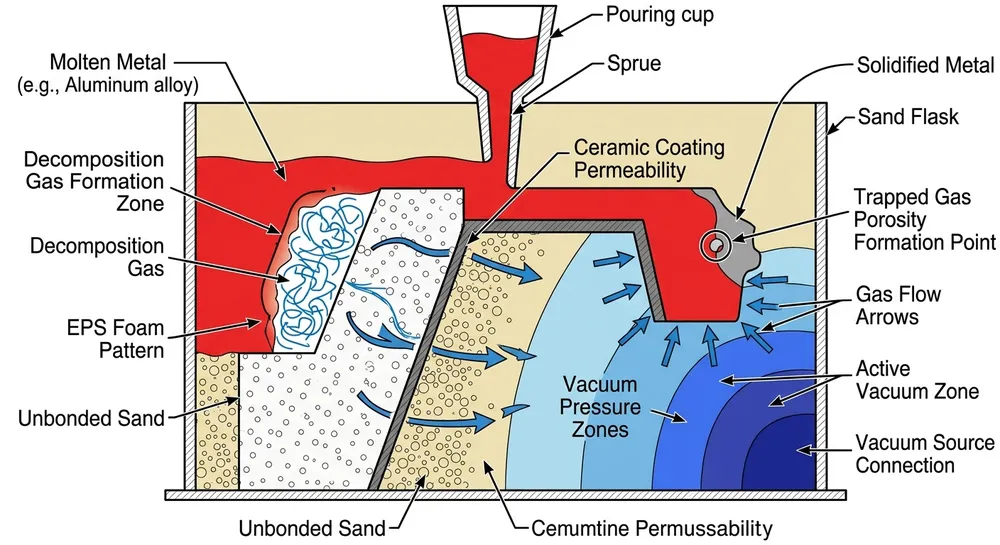
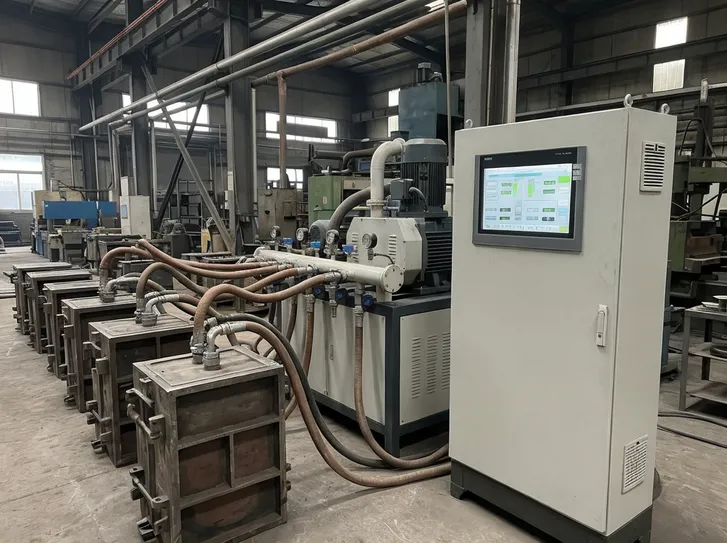
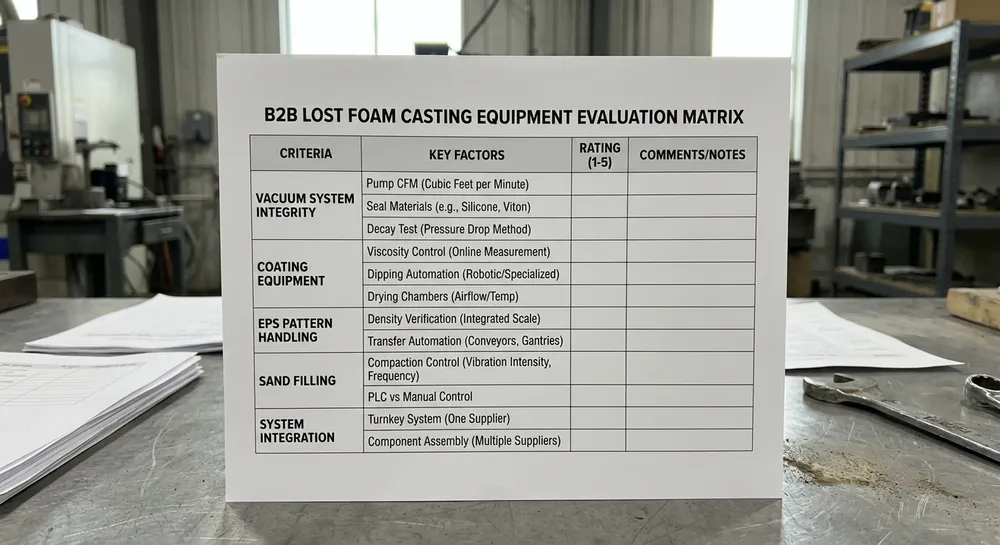
Vacuum system integrity and pump capacity: Lost foam casting requires sustained vacuum of 0.04-0.06 MPa during metal pouring to evacuate gasification products. Ask for vacuum pump specifications (CFM rating, ultimate vacuum level) and leak test procedures. We've seen systems where the chamber seals degrade after 3 months because the supplier used standard rubber gaskets instead of high-temperature silicone rated for continuous thermal cycling. Request vacuum decay test data — a properly sealed chamber should hold 0.05 MPa for 10 minutes with less than 5% pressure drop.
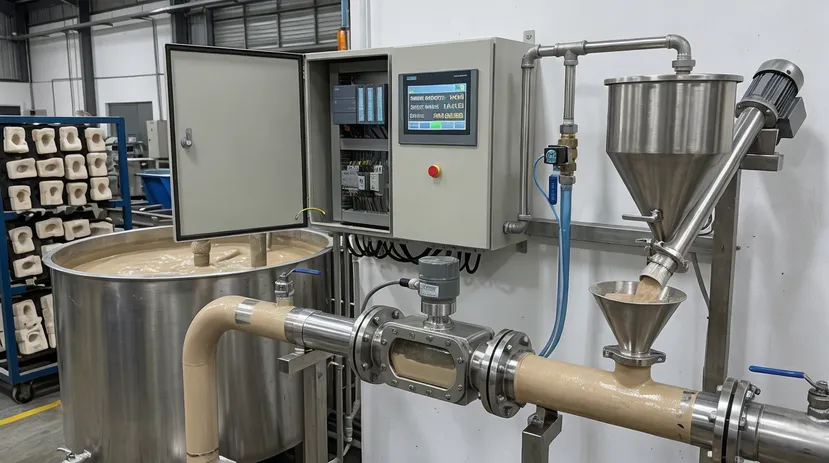
Coating equipment viscosity control and application consistency: EPS foam patterns need 0.8-1.5mm refractory coating thickness for clean castings. Too thin and you get metal penetration into the foam structure. Too thick and you trap gasification products that cause porosity. Your coating system should include viscosity measurement (Zahn cup or equivalent), automated dipping with controlled immersion time, and drying chambers with temperature and humidity control. Most Indian suppliers offer manual dipping tanks — functional for low-volume production but inconsistent when you're coating 200+ patterns per shift.
EPS pattern handling and density verification: Pattern density affects casting quality more than most buyers realize. We specify 18-24 kg/m³ EPS density for cast iron applications and 20-28 kg/m³ for aluminum. Lower density patterns collapse under coating weight. Higher density patterns don't gasify cleanly and leave carbon inclusions. Ask whether the supplier's pattern handling system includes density verification (we use water displacement testing on sample patterns before production runs) and whether their coating formulation adjusts for your specific EPS density range.
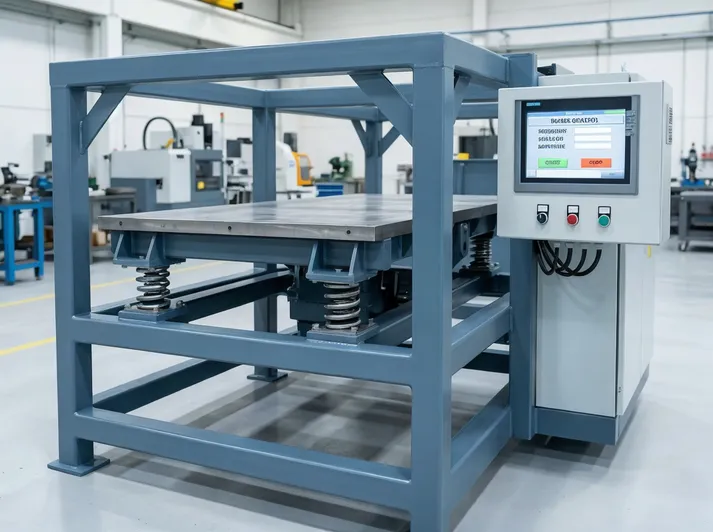
Sand filling and compaction control: Lost foam uses unbonded dry sand (typically silica sand with 50-70 AFS grain fineness) filled around the coated pattern. Compaction must be uniform — too loose and the pattern floats during pouring, too tight and you restrict gas evacuation. PLC-controlled sand filling systems with vibration compaction give you repeatable density. Manual filling with hand tamping introduces 15-20% variation in sand density, which shows up as dimensional inconsistency in your castings.
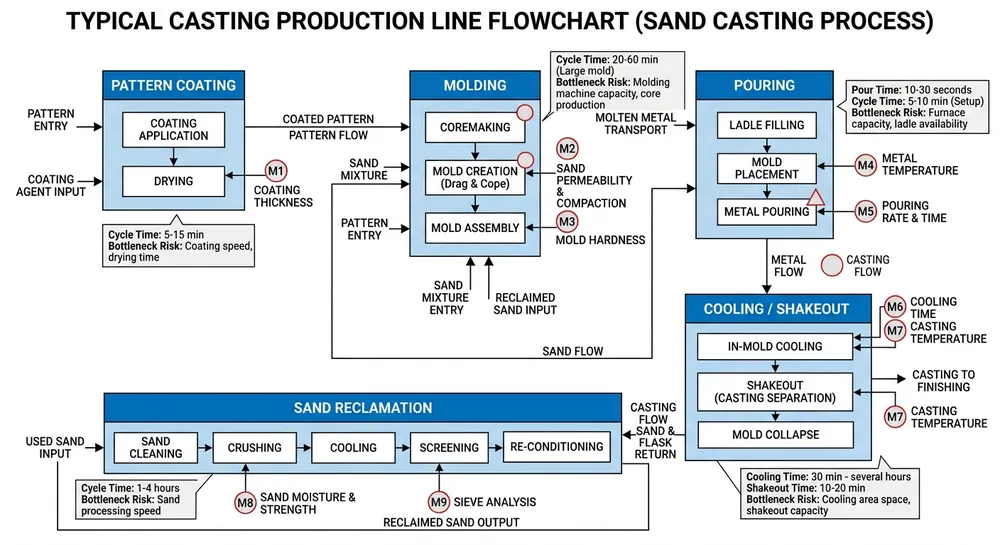
System integration vs. component assembly: This is where Indian suppliers split into two groups. Some sell you a vacuum chamber, a coating tank, and a sand filling station as separate machines — you're responsible for integrating controls, material flow, and process sequencing. Others provide turnkey lines with unified PLC control, automated pattern transfer, and synchronized vacuum-pour-cooling cycles. The integration cost difference is ₹15-25 lakh, but the defect rate difference is 8-12% in the first 6 months of operation.

The Indian Lost Foam Equipment Supply Landscape — Component Sellers vs. System Integrators
India's foundry equipment sector developed around traditional green sand and resin sand casting. Lost foam adoption started in the early 2000s for automotive applications (cylinder heads, engine blocks, manifolds), but the supplier base remains smaller and less specialized than clay sand or resin sand equipment manufacturers.
Component-focused fabricators (15-25 suppliers nationally): These shops build individual machines — vacuum chambers, coating tanks, pattern cutting equipment, sand handling systems. Typical capacity: vacuum chambers for 500-1500mm flask sizes, coating tanks handling 50-150 patterns per shift. Automation level: manual or relay-based controls with separate operation of each machine. Lead time: 45-75 days for standard vacuum chambers and coating equipment. Pricing: ₹8-18 lakh ($9,600-$21,600 USD) for a vacuum chamber with basic pump system, ₹5-12 lakh for coating equipment. Strength: lower upfront cost, flexibility to buy only the components you need. Limitation: you're responsible for system integration, process sequencing, and control synchronization — most buyers underestimate the engineering cost and commissioning time required to make separate machines work as a production line.
Mid-tier system assemblers (6-10 suppliers): These manufacturers source vacuum pumps, coating tanks, and sand handling equipment from component suppliers, then integrate them into semi-automated lines. Capacity range: 30-60 molds per hour for small to medium castings (up to 50 kg). Automation: basic PLC control (Siemens S7-200 or Mitsubishi FX series) with touchscreen HMI, but limited process monitoring — you get cycle start/stop and basic alarms, not real-time vacuum pressure logging or coating thickness verification. Lead time: 90-150 days. Pricing: ₹45-75 lakh ($54,000-$90,000 USD) for a complete line including vacuum system, coating equipment, pattern handling, and sand filling. Strength: single-source responsibility for commissioning, better process documentation than buying components separately. Limitation: coating systems typically use manual viscosity adjustment and dipping, which introduces batch-to-batch variation. Remote diagnostics usually not available — troubleshooting requires on-site visits.
Integrated line manufacturers (3-5 suppliers): These are the Indian suppliers competing on full automation, process monitoring, and export-ready documentation. Capacity: 60-100 molds per hour for medium castings, with PLC-controlled vacuum sequencing, automated coating application, and synchronized sand filling. Automation: Siemens S7-1200 or equivalent with distributed I/O, vacuum pressure monitoring, coating viscosity sensors, and data logging. Pricing: ₹1.2-2.0 crore ($144,000-$240,000 USD) for high-capacity lines with full automation. Strength: comparable process control to imported equipment, faster local commissioning for Indian installations, English documentation. Limitation: most focus on domestic automotive foundries — export experience to Middle East, Africa, or Southeast Asia is limited. Spare parts for vacuum pumps and coating system components often require 30-45 day lead time because they're sourced from third-party suppliers rather than stocked in-house.
The pricing spread reflects automation tier and system integration more than raw capacity. A 50 molds/hour line with manual coating and relay-based vacuum control costs ₹50-60 lakh. The same capacity with automated coating, PLC-controlled vacuum sequencing, and process data logging costs ₹1.1-1.4 crore. If your foundry produces castings for automotive OEMs or industrial equipment manufacturers with strict quality requirements, verify that the supplier can provide process capability data (Cpk values for coating thickness, vacuum pressure stability) — not all mid-tier manufacturers track this during commissioning.
Where Indian Local Supply Makes Sense — And Where Defect Rates Tell a Different Story
Local sourcing from Indian manufacturers offers real advantages for specific production scenarios. If you're operating a foundry in India producing 20,000-40,000 castings annually, domestic supply gives you faster installation, easier warranty service, and no import duty burden. Your maintenance team can source replacement vacuum pump seals or coating tank heaters from local distributors. Emergency service calls get answered in days, not weeks.
For foundries transitioning from green sand to lost foam on a limited budget, component-based sourcing makes economic sense. You can buy a vacuum chamber and coating tank for ₹15-25 lakh, integrate them with your existing sand handling equipment, and start producing lost foam castings without committing to a ₹1+ crore turnkey line. This works if your engineering team has experience with vacuum systems and coating process control.
But the local convenience trade-off shows up in three places:
System integration responsibility and commissioning risk: When you buy components from multiple suppliers, you own the integration risk. Vacuum pump sizing, coating tank capacity, sand filling rate, and pattern transfer timing must all synchronize. We've commissioned lines where the buyer purchased a vacuum chamber rated for 0.05 MPa but paired it with an undersized pump that couldn't maintain vacuum during the 8-12 minute pour cycle for large castings. The result: 18% scrap rate from porosity and carbon inclusions until they upgraded the pump. Turnkey suppliers eliminate this risk by sizing all components as a matched system, but Indian integrated line manufacturers charge ₹1.2-2.0 crore versus ₹50-70 lakh for component assembly — the integration premium is real.
Coating consistency and defect prevention: Manual coating systems introduce the most variation in lost foam production. Dipping time, drainage angle, and drying temperature all affect final coating thickness. We've tested patterns from manual coating operations and measured 0.6-2.1mm thickness variation across a single batch — that's enough to cause metal penetration on thin sections and gas entrapment on thick sections. Automated coating with viscosity control and programmed dipping cycles holds ±0.15mm consistency, but only the top-tier Indian suppliers offer this as standard equipment. Most mid-tier systems use manual dipping with operator-controlled immersion time.
Spare parts logistics and production continuity: Lost foam equipment uses specialized components — high-temperature vacuum pump seals, refractory coating mixers, EPS pattern cutting wire. Indian component suppliers often source these from third-party distributors, which means 30-45 day lead time for replacements. If your vacuum pump seal fails and you're waiting 6 weeks for a replacement, your lost foam line sits idle. We stock first-year consumables (pump seals, coating mixer blades, pattern handling conveyor belts, PLC I/O modules) with every line shipment because a ₹3,000 seal shouldn't stop a ₹1.5 crore production line for a month.
The honest trade-off: Indian local supply optimizes for domestic installations with engineering support available in-house. If you're operating in India, have experienced process engineers, and produce under 50,000 castings annually, component-based or mid-tier integrated systems make sense. If you're installing in export markets, need verified process capability data, or operate above 80 molds/hour sustained capacity, the factory-direct turnkey alternative deserves a landed-cost comparison.
Factory-Direct China Alternative — When Turnkey Integration and Process Control Shift the Economics
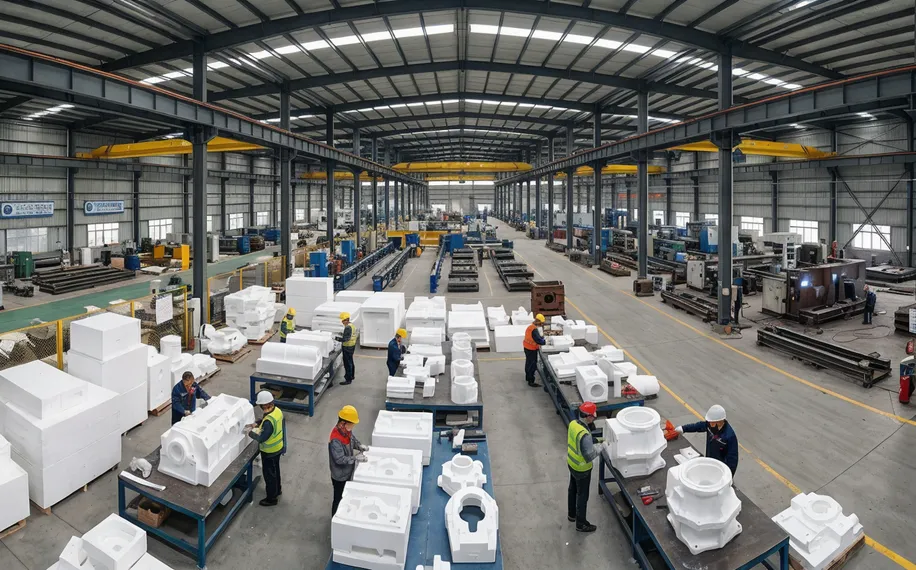
TZFoundry manufactures lost foam casting production lines at our 15,000 m² Qingdao facility — vacuum systems, coating equipment, EPS pattern handling, and sand filling lines for foundries producing cast iron, ductile iron, and aluminum castings. We're not competing with Indian suppliers on local service convenience. We're the alternative when your defect rate targets, process documentation requirements, or multi-site deployment make factory-direct turnkey sourcing economically smarter.
Complete system integration with matched components: Our lost foam lines ship as modular systems with vacuum chamber, coating equipment, pattern handling, and sand filling sized as a matched set. Vacuum pump capacity (we use rotary vane pumps rated for 150-300 CFM depending on chamber size) matches your pour cycle time and casting weight. Coating tank capacity and drying chamber throughput match your pattern production rate. Sand filling and compaction rates synchronize with your mold cycle time. This matters because undersized or mismatched components create bottlenecks that show up as defects, not just slower cycle times. (We learned this in 2016 when a buyer tried to save cost by specifying a smaller coating tank — their pattern queue backed up and they started rushing drying time, which caused coating adhesion failures.)
Automated coating with viscosity control and thickness verification: Our coating systems use programmable dipping with controlled immersion time (adjustable 15-60 seconds based on pattern geometry), automated drainage at specified angle, and forced-air drying chambers with temperature control (40-60°C depending on coating formulation). Viscosity monitoring uses Zahn cup measurement with automatic resin addition to maintain 18-25 seconds flow time. We coat test patterns during factory commissioning and measure thickness with ultrasonic gauge — if your spec calls for 1.0-1.5mm coating, the commissioning report shows actual measured thickness at 5 points per pattern. This level of process control is standard on our systems, not an upgrade option.
Vacuum system integrity with leak testing and pressure monitoring: Every vacuum chamber ships with high-temperature silicone seals rated for continuous operation at 150°C (standard rubber seals degrade in 3-6 months under thermal cycling). Vacuum pumps include oil mist filters and automatic oil level monitoring — pump failure from oil starvation is the most common vacuum system breakdown, and it's preventable with basic monitoring. We run leak tests at 0.05 MPa and document pressure decay over 10 minutes — acceptable decay is under 5%. Your chamber includes this test data in the commissioning report. Real-time vacuum pressure monitoring via PLC lets your operator see when vacuum drops below spec during pouring, which prevents you from completing a bad casting and discovering the defect after machining.
PLC control with process data logging: Control systems use Siemens S7-1200 or Mitsubishi FX5U PLCs (buyer's choice) with HMI touchscreen in English/Spanish/Arabic. Process parameters — vacuum pressure, coating viscosity, sand compaction density, cycle times — log to internal memory for quality traceability. If you produce castings for automotive or aerospace applications requiring process documentation, the PLC exports CSV files with time-stamped data for every mold. Remote diagnostics via 4G module (standard, not add-on) let us adjust vacuum timing, coating dip duration, or sand filling rate without flying an engineer to your site. We've optimized coating thickness for aluminum castings in Mexico and adjusted vacuum pump sequencing for ductile iron in Vietnam via remote login.
Container-optimized modular design: A complete 60 molds/hour lost foam line ships in 2-3 × 40HQ containers. Vacuum chamber, coating tank, pattern handling conveyors, and sand filling equipment break down into container-friendly sections, then bolt together on-site following our installation manual. This matters because container optimization directly affects your landed cost — modular design that fits standard containers costs 25-35% less to ship than equipment requiring custom crating and LCL freight.
Pricing structure and landed cost comparison: FOB Qingdao pricing for a 60 molds/hour lost foam line with vacuum system, automated coating, pattern handling, and sand filling: $115,000-$145,000 USD depending on chamber size and coating automation level. That's ₹96-121 lakh before import duties and logistics. Add 15-20% for duties and freight to Indian ports, and your landed cost sits at ₹110-145 lakh — comparable to Indian integrated line manufacturers but with automated coating, verified process capability data, and remote diagnostics as standard. For 80-100 molds/hour capacity with full automation, our pricing is $165,000-$195,000 FOB (₹138-163 lakh), landing at ₹159-195 lakh after duties — still within range of top-tier Indian suppliers but with turnkey integration and first-year spare parts included.
The factory-direct calculation shifts in your favor when:
- Your casting quality requirements demand process capability documentation: If you supply automotive OEMs, industrial equipment manufacturers, or export markets requiring ISO 9001 traceability, commissioning reports with actual test data (vacuum decay curves, coating thickness measurements, sand density verification) reduce your qualification risk. Indian mid-tier suppliers provide spec sheets; we provide measured performance data from your specific equipment.
- You're installing across multiple sites or export markets: Remote commissioning and multilingual documentation become critical when your installation team is in Thailand, Brazil, or Nigeria. Indian suppliers optimize for domestic service; we've commissioned lost foam lines in 14 countries via video call because our control systems include remote access as standard.
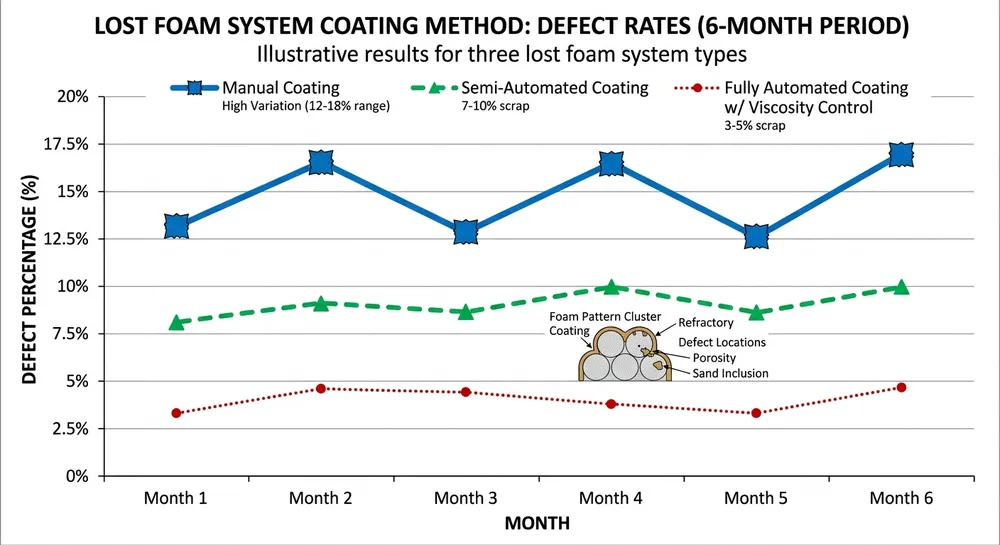
- Your defect rate targets require automated coating consistency: Manual coating systems run 12-18% scrap rates in the first 6 months until operators develop consistent technique. Automated coating with viscosity control starts at 3-5% scrap rate from day one. At 50,000 castings annually, the defect rate difference saves ₹18-25 lakh in scrap cost, which pays back the automation premium in 18-24 months.
- You're comparing total landed cost, not just FOB price: Indian domestic pricing looks attractive until you add the cost of integrating separate components, commissioning time (2-3 weeks for component assembly vs. 5-7 days for turnkey systems), and spare parts logistics. Our container-optimized design and included first-year spares kit often close the total-cost gap.
We're not the right choice for every buyer. If you need a basic vacuum chamber and coating tank for low-volume production (under 20,000 castings/year) and have in-house engineering to handle integration, Indian component suppliers make more sense. If you're installing one system in India with local service priority, domestic manufacturers offer faster on-site support. But if you're a foundry producing 50,000+ castings annually, need verified process control, or operate in export markets requiring remote commissioning, the factory-direct turnkey alternative deserves a detailed quote comparison.
Sourcing Decision Framework — Matching Equipment Tier to Your Production Reality
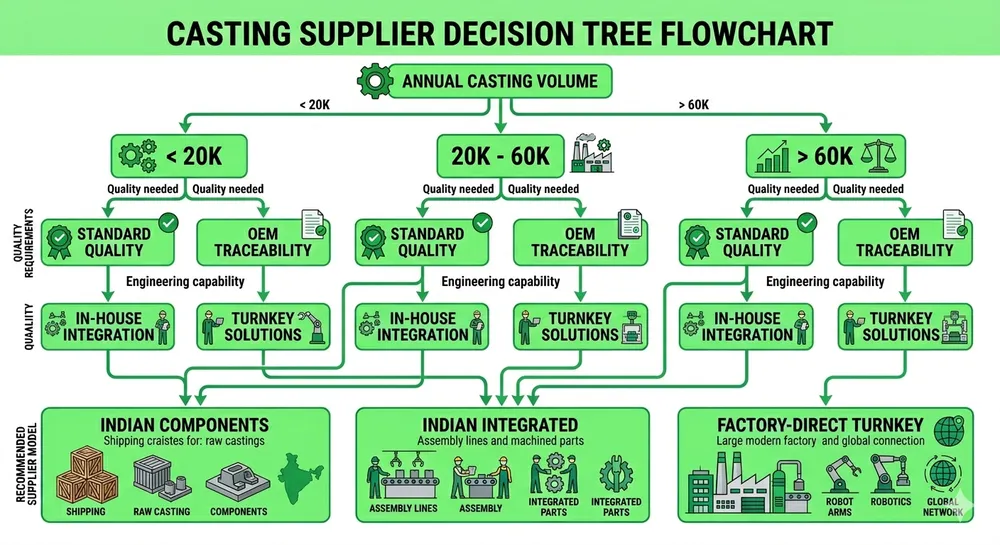
The right supplier choice depends on your annual casting volume, quality requirements, and engineering capability — not on a generic "best manufacturer" ranking.
Choose Indian component suppliers when:
- Annual production stays under 20,000 castings and you're running single-shift operation
- Your engineering team has experience integrating vacuum systems and coating equipment
- Upfront cost minimization matters more than automated process control
- You're operating in India with access to local spare parts distributors
- You need flexibility to upgrade individual components (vacuum pump, coating tank) without replacing the entire system
Choose Indian integrated line manufacturers when:
- Annual production is 30,000-60,000 castings and you need single-source commissioning responsibility
- Your foundry operates in India or near-regional markets (Bangladesh, Sri Lanka, Nepal)
- You prefer local-language support and on-site service visits for warranty issues
- Your casting applications are automotive or industrial (not aerospace or medical) with standard quality requirements
- Lead time for spare parts (30-45 days) is acceptable for your production continuity planning
Choose factory-direct China turnkey systems when:
- Annual production exceeds 50,000 castings and defect rate targets are under 5%
- You supply OEM customers requiring ISO 9001 traceability and process capability documentation
- You're installing across multiple countries and need remote commissioning capability
- Your casting applications require verified coating thickness consistency and vacuum integrity data
- You're comparing total landed cost (FOB + duties + logistics + commissioning + first-year spares) rather than just upfront price
- You need automated coating with viscosity control and PLC-based process data logging as standard, not upgrades
Hybrid approach for multi-product foundries:
- Source basic vacuum chambers and coating tanks from Indian component suppliers for low-volume specialty castings
- Source turnkey automated lines factory-direct for high-volume production (automotive, pump housings, valve bodies)
- Maintain relationships with both supplier types to match equipment tier to product economics
The mistake most buyers make is choosing based on supplier location rather than defect rate impact. A ₹60 lakh component-based system that runs 15% scrap rate costs more over 3 years than a ₹1.4 crore automated line (Indian or China-origin) running 4% scrap rate. Calculate the scrap cost at your production volume: 50,000 castings × 11% defect rate difference × ₹800 average casting value = ₹44 lakh annual scrap cost difference. The automation premium pays back in 18-30 months depending on your casting mix.
What to Ask Before You Commit to Any Lost Foam Equipment Supplier
These questions separate experienced lost foam manufacturers from general foundry equipment suppliers and help you verify process control capability before deposit payment:
For vacuum system verification: "What vacuum pump CFM rating and ultimate vacuum level does your system provide, and can you show me vacuum decay test data from a recent installation?" If the supplier only quotes chamber dimensions without pump specs, they're likely sourcing the vacuum system from a third party and may not understand sizing requirements for your casting weight and pour time.
For coating equipment capability: "How do you control coating viscosity and thickness consistency, and will you provide ultrasonic thickness measurements from test patterns during factory commissioning?" Generic answers about "refractory coating" without viscosity control methodology signal manual dipping systems that introduce batch variation.
For EPS pattern density control: "What EPS density range does your coating formulation handle, and how do you verify pattern density before coating?" This reveals whether the supplier understands the relationship between pattern density, coating adhesion, and gasification defects. We specify 18-24 kg/m³ for cast iron and adjust coating resin content accordingly — suppliers without this knowledge produce systems that work for one alloy type but fail when you switch applications.
For system integration level: "Is your lost foam line a turnkey system with unified PLC control, or are the vacuum chamber, coating equipment, and sand filling separate machines that I integrate?" This forces clarity on who owns commissioning risk and process synchronization. Turnkey systems cost more upfront but eliminate the 2-3 week integration and debugging period that component assembly requires.
For process data and traceability: "Does your control system log vacuum pressure, coating parameters, and cycle times for quality traceability, and can it export data for ISO 9001 documentation?" If you supply OEM customers, process data logging isn't optional — it's how you prove that every casting was produced within specification.
For spare parts logistics: "Do you stock consumable spares (vacuum pump seals, coating mixer components, pattern handling belts) in-house, or do they require third-party sourcing? What's typical lead time for a replacement vacuum pump?" This reveals whether a seal failure stops your line for 3 days or 6 weeks.
For remote support capability (if installing outside India): "How many international lost foam installations have you commissioned in the past 24 months, and do you offer remote diagnostics via PLC connection or require on-site visits?" Suppliers with limited export experience often underestimate the value of remote troubleshooting when your maintenance team is in a different time zone.
Send these questions to 3-4 suppliers and compare the specificity of their answers. Vague responses ("we customize to your requirements," "coating thickness depends on application") signal limited lost foam experience. Specific answers with pump CFM ratings, viscosity control methods, and commissioning test data signal manufacturing capability.
Moving from Supplier Screening to Process-Based Cost Comparison
You've identified 2-3 credible suppliers — Indian component-based, Indian integrated, or factory-direct turnkey. Now run the cost comparison that accounts for defect rate impact:
Build the full landed-cost model:
- FOB or ex-works price (equipment only)
- Integration cost (if buying components separately: engineering time, control system programming, commissioning debugging)
- Import duties (if applicable: typically 15-20% for foundry equipment into India)
- Freight and logistics (container vs LCL, port charges, inland transport)
- Commissioning cost (on-site engineer visit duration and daily rate vs remote video support)
- First-year spare parts (included vs separate purchase: vacuum seals, coating mixer blades, conveyor belts)
Calculate 3-year total cost including scrap:
- Upfront equipment cost (from landed-cost model above)
- Annual scrap cost (casting volume × defect rate × average casting value)
- Annual maintenance and consumables (vacuum pump oil, coating resin, wear parts)
- Spare parts lead time risk (local stock vs 30-45 day manufacturing: calculate cost of line downtime)
Compare defect rate impact honestly:
- Manual coating systems: expect 12-18% scrap rate in first 6 months, improving to 8-12% as operators develop technique
- Semi-automated coating: 7-10% scrap rate with operator-controlled viscosity adjustment
- Fully automated coating with viscosity control: 3-5% scrap rate from commissioning onward
At 50,000 castings annually with ₹800 average value per casting, the difference between 12% and 4% scrap rate is ₹32 lakh per year. Over 3 years, that's ₹96 lakh in scrap cost — more than the price difference between a ₹60 lakh component system and a ₹1.4 crore automated line.
Most buyers discover that the lowest FOB price delivers the highest 3-year total cost once you factor in scrap, integration time, and spare parts logistics. A ₹40 lakh price difference sounds significant until you calculate that 8% additional defect rate costs you ₹64 lakh in scrap over 3 years.
If you're comparing Indian integrated lines against our factory-direct turnkey pricing, send us your casting specifications (alloy type, weight range, target molds per hour, available floor space, installation country) and we'll provide a detailed quote with vacuum system sizing, coating equipment specs, container count, commissioning plan, and first-year spares list. Most buyers find that the landed-cost gap is smaller than the FOB difference suggests — and the defect rate difference is larger than supplier claims indicate.

Zhang Peng leads lost foam casting systems at TZFoundry, where he has spent over 12 years engineering vacuum casting lines, coating systems, and foam pattern equipment for export foundries. He specializes in defect prevention and yield optimization across cast iron...