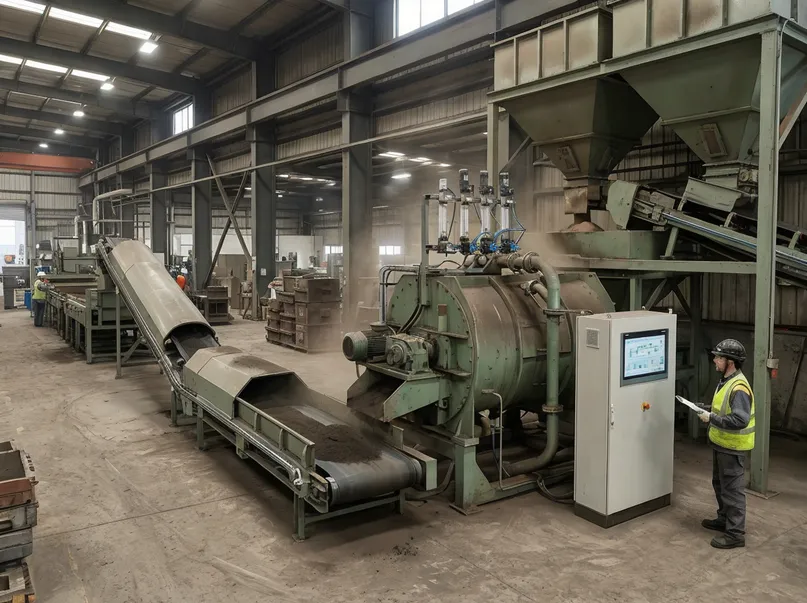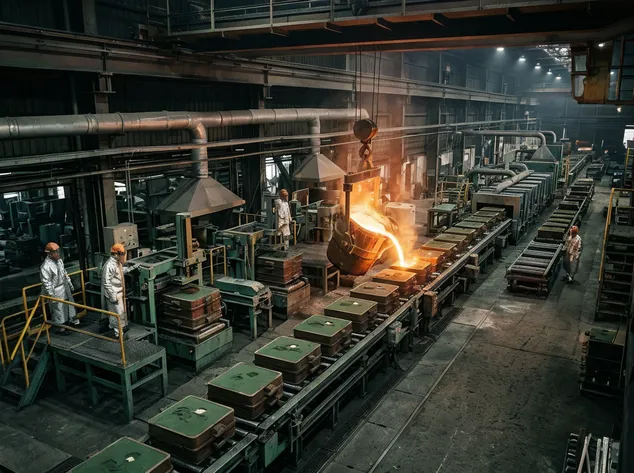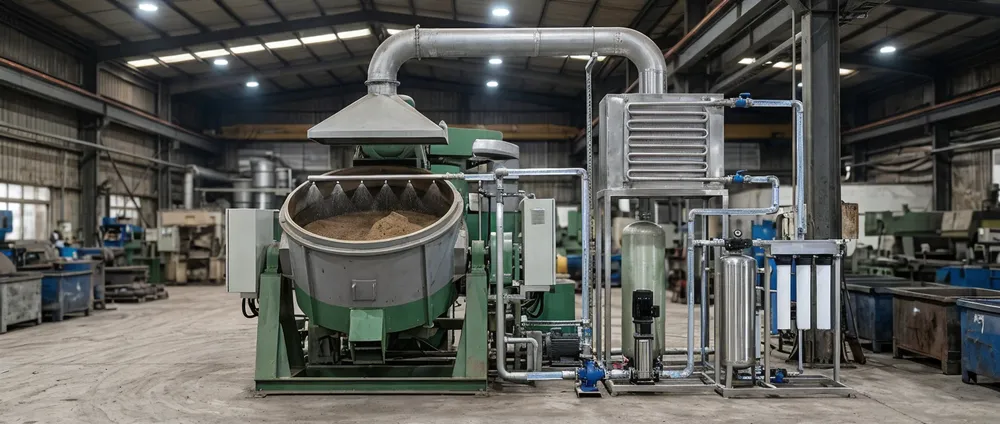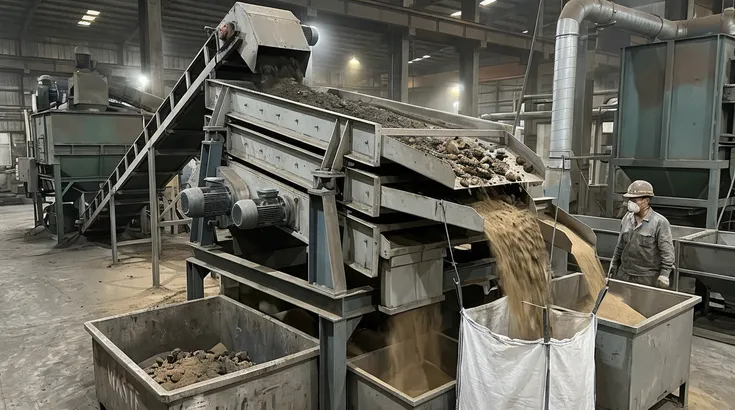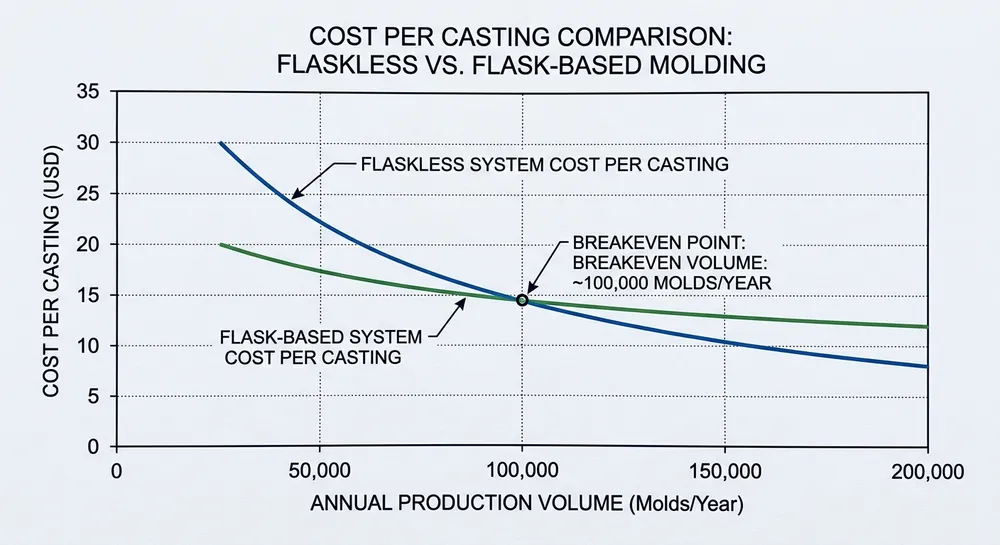
You're comparing two clay sand molding systems because the price gap is real — flaskless lines cost 40-60% more upfront than flask-based configurations. But the per-casting economics tell a different story. Flask-based systems carry flask inventory costs, handling labor, and storage overhead that accumulate with every mold you produce. Flaskless lines eliminate those recurring expenses, so the breakeven point depends entirely on your annual mold volume and floor space constraints.
I've commissioned both system types across 60+ foundry installations in four continents. The decision isn't about which technology is "better" — it's about which one gives you lower total cost of ownership for your specific production volume, casting weight range, and facility layout. Most export foundries hit the flaskless breakeven point between 80,000 and 120,000 molds per year, but that number shifts based on flask depreciation rates and labor costs in your region.
Quick verdict: If you're running above 100,000 molds annually with casting weights under 150 kg, flaskless systems deliver better per-casting economics within 18-24 months. Below that volume or with heavier castings requiring larger flask sizes, flask-based lines keep your landed cost lower. The rest of this article shows you the hidden cost structure behind that breakpoint and what to verify in your RFQ to avoid expensive mistakes.
The Real Cost Structure Behind Each System
The upfront price difference is obvious — a 200-mold-per-hour flaskless line costs $280,000-$350,000 FOB, while a comparable flask-based line runs $160,000-$220,000. But that's only the capital amortization component. The per-casting cost includes five other variables that shift the total ownership equation:
| Cost Component | Flaskless System | Flask-Based System |
|---|---|---|
| Capital amortization (5-year) | $0.28-$0.35 per mold | $0.16-$0.22 per mold |
| Flask inventory cost | $0 | $0.12-$0.18 per mold |
| Flask handling labor | $0 | $0.08-$0.15 per mold |
| Floor space requirement | 180-220 m² | 280-350 m² |
| Sand consumption | 5-8% waste | 8-12% waste |
| Compaction consistency | ±0.3 mm (hydraulic) | ±0.8 mm (manual/pneumatic) |
Flask inventory cost is the hidden expense most buyers miss during initial evaluation. A 500-flask inventory for a mid-volume foundry represents $45,000-$75,000 in tied-up capital, plus annual depreciation from handling damage and dimensional drift. We see 8-12% annual flask replacement rates in typical production environments — that's $3,600-$9,000 per year in recurring expense before you count storage racks, handling equipment, and inspection labor.
Flaskless systems eliminate that entire cost category. The mold box forms directly in the machine's compression chamber, ejects onto the pouring line, and the sand returns to reclamation after shakeout. No flask handling, no storage overhead, no depreciation tracking.

Floor Space Economics and Container Shipping Impact
Floor space translates directly to facility cost, especially for greenfield foundries or export buyers building new production halls. Flask-based lines need 30-40% more floor area because you're storing flask inventory, running flask handling conveyors, and maintaining inspection/repair stations.
A 200-mold-per-hour flask-based line typically requires:
- 120 m² for the molding line itself
- 80-100 m² for flask storage racks (500-800 flask inventory)
- 40-60 m² for flask handling and inspection area
- 40-50 m² for damaged flask segregation and repair
That's 280-330 m² total footprint. The equivalent flaskless line runs 180-220 m² because you're eliminating the entire flask logistics chain. At $150-$300 per m² construction cost (typical for industrial facilities in export markets), that's $15,000-$33,000 in avoided building expense.
Container shipping efficiency matters for export buyers. Flaskless systems ship in modular sections designed around standard 40-foot high-cube containers. A complete 200-mold-per-hour flaskless line fits in 3-4 containers. Flask-based systems need 4-5 containers for the line itself, plus 2-3 additional containers for the flask inventory if you're ordering a complete startup package. That's $8,000-$15,000 in extra freight cost before you factor in customs clearance and inland transport.
We built TZFoundry's modular flaskless design specifically for this reason — every major component breaks down to container-optimized dimensions without field welding or structural reassembly. The hydraulic compression unit, sand hopper, pattern mounting plate, and control cabinet all bolt together on-site with standard hand tools.
Compaction Consistency and Scrap Risk
Flaskless systems use hydraulic compression with closed-loop pressure control. You set the target compaction pressure (typically 0.6-0.8 MPa for standard clay sand), and the PLC holds that spec across every mold in a 12-hour shift. We measure ±0.3 mm dimensional consistency on the mold cavity surface when the system is properly calibrated.
Flask-based systems rely on pneumatic or manual compaction, which introduces operator variability. Even with experienced molders, you see ±0.8 mm variation across a production run. That tolerance spread shows up as casting dimensional drift, especially on thin-wall parts or complex core assemblies where sand density directly affects metal flow and solidification.
The commercial consequence: flaskless lines reduce scrap rates by 2-4 percentage points on precision casting work. If you're running 100,000 molds per year with an average casting value of $15-$25, that's $30,000-$100,000 in avoided scrap cost annually. The capital premium pays for itself through quality consistency alone on high-value casting portfolios.
Flask-based systems still deliver acceptable quality for general industrial castings where ±1.5 mm tolerance is sufficient. The lower capital cost makes sense when your casting mix doesn't justify the precision premium.
Sand Reclamation Efficiency Differences
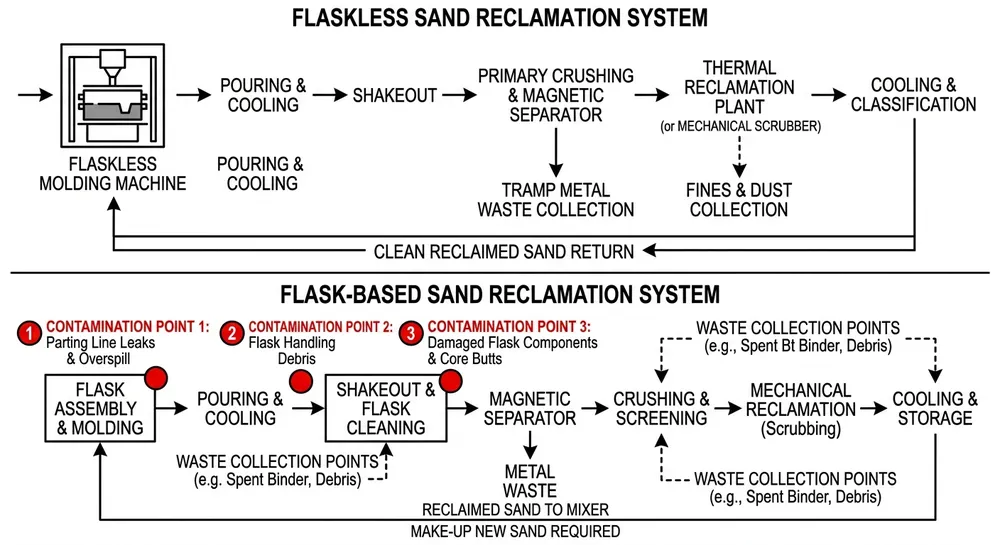
Flaskless molding produces cleaner sand return to the reclamation system. The mold ejects as a single compressed block, shakeout happens in a controlled environment, and the sand stream contains minimal flask debris or handling contamination. We typically see 5-8% sand waste (spillage, dust collection, unusable fines) on well-maintained flaskless lines.
Flask-based systems generate 8-12% sand waste because you're handling flasks manually or semi-automatically, sand spills during flask stripping, and you accumulate more contamination from flask surfaces and handling equipment. That 3-4 percentage point difference matters at scale — a foundry processing 500 tons of clay sand annually wastes an extra 15-20 tons with flask-based handling. At $80-$120 per ton for prepared clay sand (including bentonite, water control, and mixing), that's $1,200-$2,400 in annual material cost.
The reclamation system design also differs. Flaskless lines pair naturally with continuous reclamation systems because the sand return rate is steady and predictable. Flask-based lines often use batch reclamation because the sand return happens in surges as flasks get stripped. Continuous reclamation delivers better moisture control and more consistent sand properties, which feeds back into mold quality.
Production Volume Breakpoint Analysis
The crossover point where flaskless becomes cheaper depends on three variables: your annual mold volume, your regional labor cost, and your flask depreciation rate.
Scenario 1: High-volume automotive or pump housing foundry
- Annual volume: 150,000 molds
- Casting weight: 15-80 kg
- Labor cost: $8-$12 per hour
Flaskless total cost per mold: $0.85-$1.10 (capital amortization + sand waste + utilities) Flask-based total cost per mold: $1.15-$1.45 (capital + flask inventory + handling labor + sand waste)
Winner: Flaskless — saves $0.30-$0.35 per mold, or $45,000-$52,500 annually. Capital premium pays back in 18-22 months.
Scenario 2: Mid-volume general industrial foundry
- Annual volume: 60,000 molds
- Casting weight: 25-120 kg
- Labor cost: $5-$8 per hour
Flaskless total cost per mold: $1.20-$1.50 Flask-based total cost per mold: $1.10-$1.35
Winner: Flask-based — saves $0.10-$0.15 per mold at this volume. The flaskless capital premium doesn't amortize fast enough to overcome the lower entry price.
Scenario 3: Low-volume custom job shop
- Annual volume: 25,000 molds
- Casting weight: 10-200 kg (wide range)
- Labor cost: $6-$10 per hour
Flaskless total cost per mold: $1.80-$2.20 Flask-based total cost per mold: $1.30-$1.60
Winner: Flask-based — the capital amortization burden is too high at low volume. Flask-based systems also offer more flexibility for the wide casting size range typical in job shop work.
The breakeven volume sits around 80,000-120,000 molds per year for most foundries. Above that threshold, flaskless economics improve with every additional mold. Below it, flask-based systems keep your per-casting cost lower unless you have other drivers (floor space constraints, precision requirements, labor availability issues) that shift the equation.
Hybrid Scenarios: When to Run Both Systems
Some foundries run both system types for different part families. This makes commercial sense when your casting portfolio splits into two distinct volume/precision segments.
We've installed hybrid configurations for three types of buyers:
Type 1: High-volume core product + low-volume custom work Run flaskless for your repeating high-volume parts (pump housings, valve bodies, motor brackets) where the per-casting savings compound quickly. Keep a smaller flask-based line for custom orders, prototypes, and odd-size castings that don't justify flaskless setup time.
Type 2: Precision castings + general industrial castings Use flaskless for thin-wall, tight-tolerance work where compaction consistency prevents scrap. Run flask-based for heavy, simple castings where the quality premium doesn't matter.
Type 3: Capacity expansion without full facility rebuild Add a flaskless line to increase capacity without expanding your building footprint. The 30-40% floor space savings lets you fit additional capacity into existing facilities where flask-based expansion would require construction.
The hybrid approach only works if your production planning can efficiently route parts to the appropriate line. You need clear decision rules (volume threshold, tolerance requirement, casting weight range) and scheduling discipline to avoid underutilizing either system.
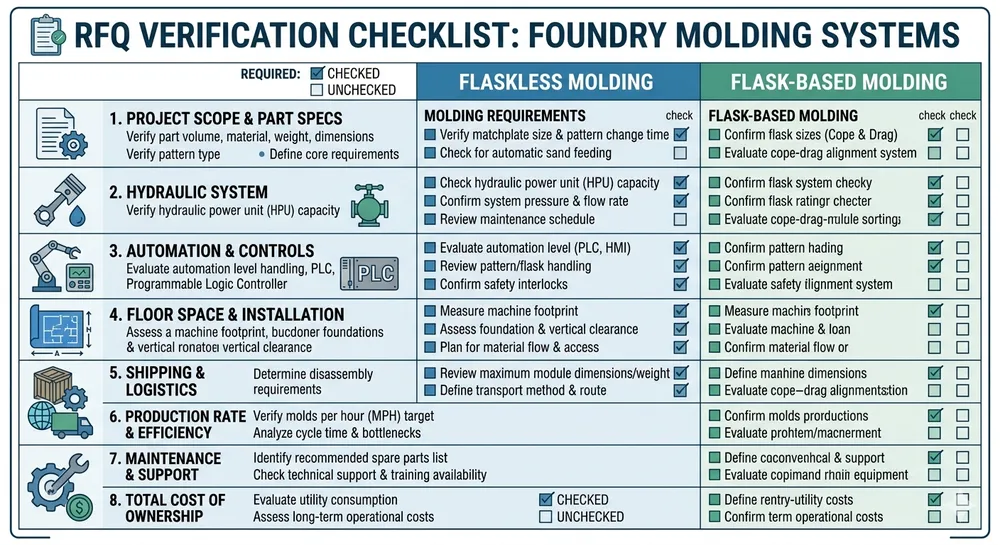
What to Verify in Your RFQ to Avoid Expensive Mistakes
Most foundries evaluate clay sand molding lines on headline specs — molds per hour, compaction pressure, pattern plate size. Those numbers matter, but they don't reveal the hidden cost drivers that determine your actual per-casting economics.
For flaskless systems, verify:
- Hydraulic system quality and control precision — ask for the pressure sensor spec, control loop response time, and documented pressure variation across a 1,000-mold production run. Cheap hydraulic systems drift under continuous operation, which destroys the compaction consistency advantage.
- Pattern plate mounting and changeover time — flaskless lines lose their efficiency advantage if pattern changes take 45-60 minutes. Look for quick-release mounting systems and ask for documented changeover times on similar installations.
- Sand hopper capacity and refill automation — undersized hoppers create production interruptions. Calculate your sand consumption per hour and verify the hopper holds at least 90 minutes of runtime at full speed.
- PLC brand and remote diagnostics capability — Siemens and Mitsubishi PLCs are standard for export equipment. Verify the supplier offers remote VPN access for troubleshooting. We've commissioned lines in 14 countries using remote diagnostics — it cuts downtime from days to hours when issues arise.
For flask-based systems, verify:
- Flask inventory sizing and depreciation assumptions — ask the supplier to include a complete flask inventory calculation in the quote. Verify they're accounting for 8-12% annual replacement rate, not just the initial purchase quantity.
- Flask handling automation level — manual flask handling kills the labor cost advantage. If you're running above 80 molds per hour, specify automated flask return conveyors and stacking systems.
- Compaction method and consistency data — pneumatic compaction is cheaper than hydraulic but less consistent. Ask for dimensional variation data from existing installations running similar casting types.
- Floor space layout and material flow — request a complete facility layout drawing showing flask storage, handling paths, and inspection areas. Most suppliers quote the molding line footprint only and underestimate the total space requirement.
For both system types, verify:
- Container loading plan and shipping cost — ask for a detailed container packing list and freight estimate to your port. Shipping cost differences can shift the landed cost comparison by 5-8%.
- Commissioning and training scope — verify whether the quote includes on-site startup, operator training duration, and remote support terms. Budget 2-3 weeks for proper commissioning on either system type.
- Spare parts package and lead times — ask for a recommended 12-month spare parts list with pricing. Hydraulic seals, pressure sensors, and PLC modules should be available with 2-3 week lead times maximum.
Making the Decision: Volume, Precision, and Floor Space
Your decision comes down to three hard constraints: annual mold volume, required casting tolerance, and available floor space.
Choose flaskless if:
- You're running above 100,000 molds per year consistently
- Your casting portfolio includes precision work requiring ±0.5 mm or tighter dimensional control
- Floor space is limited or expensive in your facility location
- Labor costs are high enough that flask handling becomes a significant expense
- You're building a greenfield foundry and can design the facility layout around a compact flaskless system
Choose flask-based if:
- Your annual volume is below 80,000 molds
- Your casting mix includes heavy parts (above 150 kg) or highly variable sizes that benefit from flask flexibility
- You need lower upfront capital investment and can absorb the recurring flask inventory and handling costs
- Your casting tolerance requirements are ±1.0 mm or looser
- You're expanding an existing facility that already has flask handling infrastructure
Consider a hybrid approach if:
- Your casting portfolio clearly splits into high-volume/precision parts and low-volume/general parts
- You're adding capacity to an existing flask-based facility but want better economics on your core product line
- You need to increase output without expanding your building footprint
The wrong choice costs you money every day for the next 10-15 years. A flaskless line purchased for low-volume work never amortizes its capital premium. A flask-based line running high-volume precision castings accumulates scrap cost and handling labor that compounds annually.
TZFoundry manufactures both system types in the same facility, which gives us an unbiased view of where each configuration makes commercial sense. We've installed flaskless lines for European automotive suppliers running 200,000+ molds annually, and we've installed flask-based lines for North American job shops producing 30,000-50,000 molds across 200+ different casting designs. The right system depends entirely on your specific production profile, not on which technology sounds more advanced.
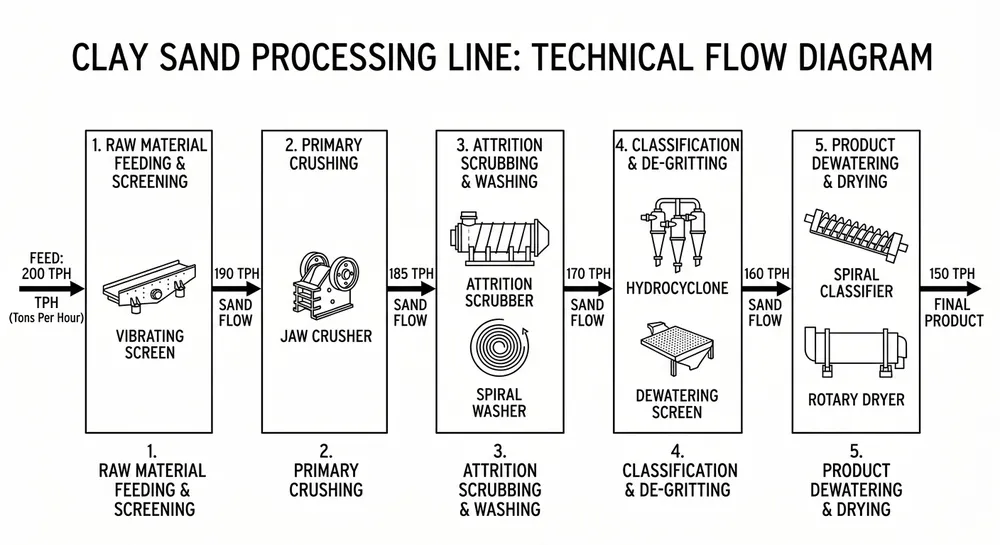
If you're evaluating clay sand molding systems and need help calculating your actual per-casting economics, send us your annual mold volume, typical casting weight range, and current floor space constraints. We'll run the total cost of ownership comparison for both configurations and show you where the breakeven point lands for your specific situation. You can also review our complete clay sand processing line specifications to see the detailed technical parameters for both flaskless and flask-based systems we manufacture.

Baocun Zhu is the Senior Clay Sand Process Engineer at TZFoundry in Qingdao. With over 14 years commissioning clay sand molding, reclamation, and preparation lines for export foundries, he turns floor-space constraints and throughput targets into working production systems. His...