You're running a resin sand line and watching 30-40% of your sand leave the facility as waste every month. A reclamation system would cut that number to 5-10%, but the choice between thermal and mechanical methods isn't just about recovery rate — it's about whether your binder chemistry, production volume, and utility infrastructure can justify the capital and operating cost difference.
Quick verdict: Mechanical reclamation handles furan and phenolic urethane sands at lower capital cost but leaves 0.5-1.2% residual LOI (loss on ignition), which limits reuse percentage in core sand. Thermal reclamation burns off binder residue to below 0.3% LOI and works with any resin chemistry, but energy cost runs 3-5x higher and you need natural gas or propane infrastructure. For foundries casting 200+ tons monthly with tight core sand quality requirements, thermal justifies itself. Below that volume or when making molds only, mechanical reclamation delivers better ROI.
How Each Method Actually Works
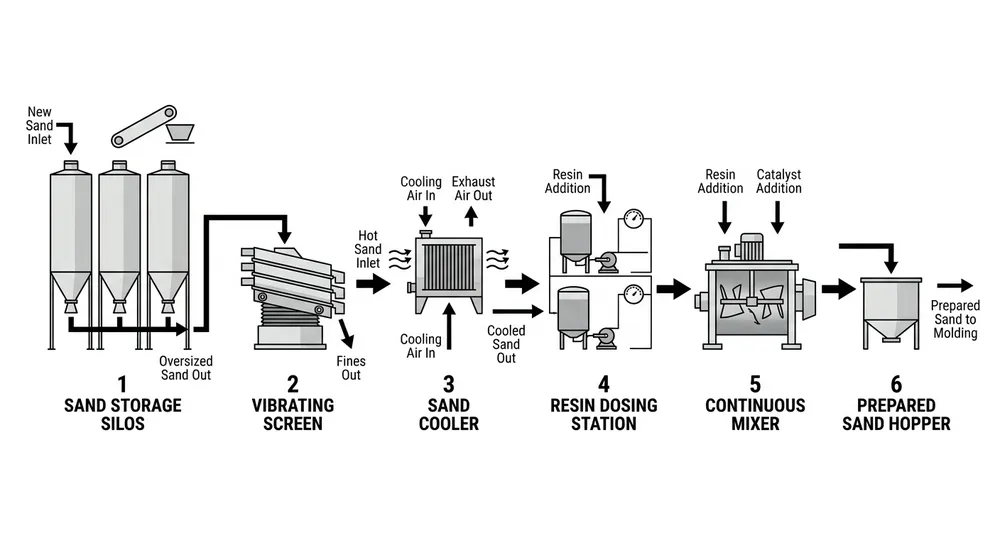
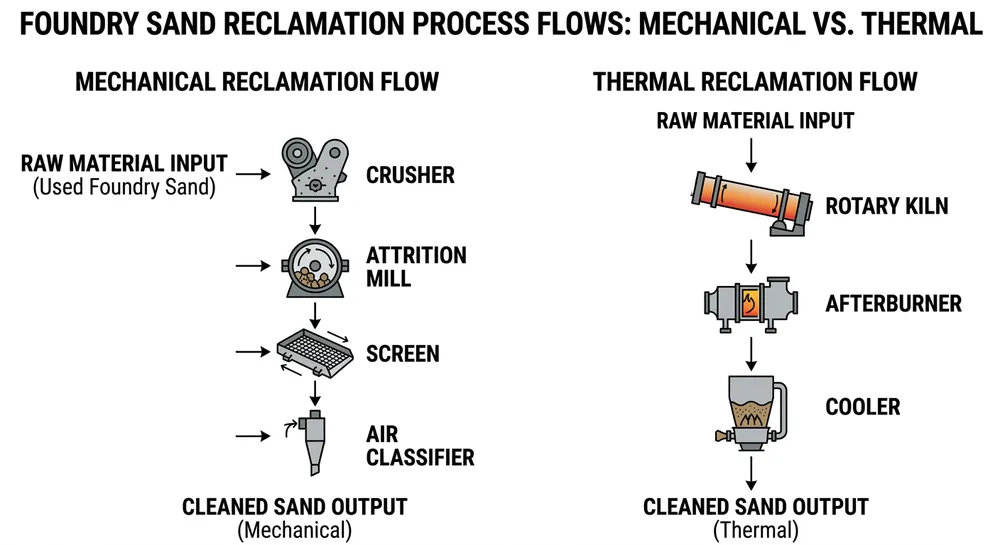
Mechanical reclamation crushes used sand through attrition mills or pneumatic impact chambers, then separates binder film and fines using vibrating screens and air classifiers. The process is purely physical — no combustion, no chemical treatment. Sand exits at 150-200°C from friction heat. You're left with reclaimed sand at 0.5-1.2% LOI depending on how aggressive you run the attrition stage (higher impact force removes more binder but also breaks more sand grains).
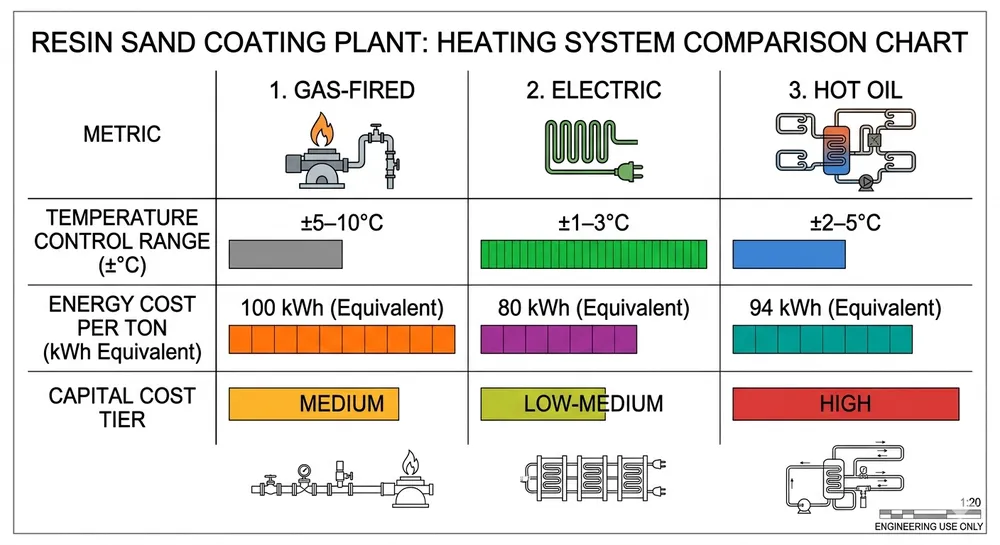
Thermal reclamation burns the sand in a rotary kiln or fluidized bed at 650-850°C. Binder residue combusts completely, leaving sand at 0.1-0.3% LOI. The process requires continuous fuel input (natural gas, propane, or diesel) and generates exhaust that needs afterburner treatment to meet emission standards. Sand exits the cooler at 40-60°C, ready for immediate reuse without further conditioning.
We've run both methods in our testing lab on the same furan-bonded silica sand input. Mechanical reclamation gave us 92% usable sand at 0.8% LOI. Thermal reclamation gave us 96% usable sand at 0.2% LOI. The 4-point recovery difference sounds small until you calculate it across 50 tons of sand circulation per day — that's 2 tons of additional new sand purchase every day with mechanical, or 730 tons annually.

Head-to-Head Performance Matrix
| Parameter | Mechanical Reclamation | Thermal Reclamation |
|---|---|---|
| Recovery Rate | 88-93% usable sand | 94-97% usable sand |
| Final LOI | 0.5-1.2% | 0.1-0.3% |
| Energy Cost per Ton | $2-4 (electric only) | $8-15 (fuel + electric) |
| Capital Cost (50 TPH) | $180,000-280,000 | $450,000-650,000 |
| Maintenance Frequency | Attrition chamber liners every 6-8 months | Refractory lining every 18-24 months |
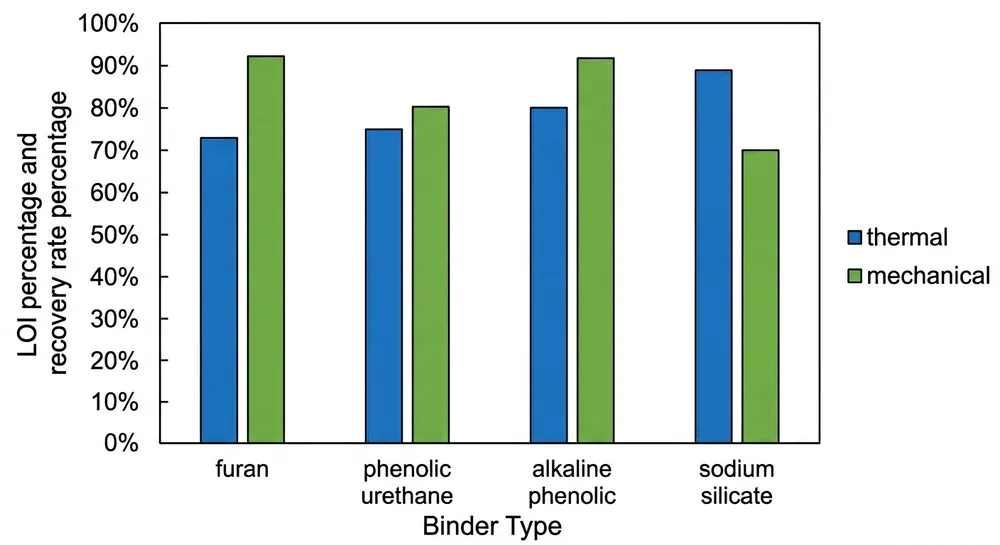
| Binder Compatibility | Furan, phenolic urethane (struggles with alkaline phenolic) | All resin binders including sodium silicate |
| Utility Requirements | 380V 3-phase, compressed air | 380V 3-phase, natural gas/propane, water cooling |
| Footprint (50 TPH) | 12m × 8m | 18m × 10m |
| Startup Time | 15-20 minutes | 45-60 minutes (kiln preheat) |
The capital cost gap is real — thermal reclamation costs 2.3-2.5x more upfront. But that number alone doesn't tell you which method fits your operation. The decision hinges on three downstream factors most buyers miss during initial equipment comparison.
The Hidden Cost Most Foundries Discover Too Late
Binder consumption creep with mechanical reclamation: When your reclaimed sand sits at 0.8% LOI instead of 0.2%, you're adding new sand to every batch to keep binder demand predictable. Most foundries target 20-30% reclaimed sand in mold mix and 10-15% in core mix when using mechanically reclaimed material. With thermally reclaimed sand, you can push 40-50% in molds and 25-30% in cores without adjusting binder dosage.
We tracked this across a 6-month period with a customer running phenolic urethane cores for ductile iron castings. Their mechanical reclamation line produced sand at 0.9% LOI. Core shop used 15% reclaimed sand, 85% new sand. Binder cost per ton of core sand: $42. When they switched to a thermal reclamation system (0.25% LOI), they increased reclaimed sand to 28% in the core mix. Binder cost per ton dropped to $38 because the cleaner reclaimed sand didn't interfere with catalyst reaction. At 180 tons of core sand monthly, that's $720 monthly savings — $8,640 annually — just from binder efficiency, before counting the new sand purchase reduction.
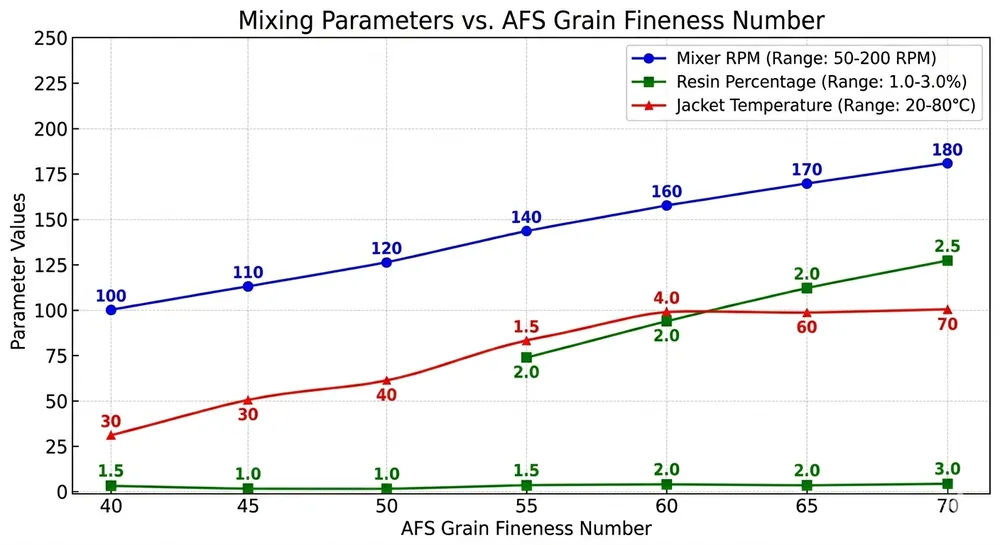
Grain size degradation: Mechanical reclamation breaks sand grains. Every pass through the attrition mill shifts your grain fineness number (GFN) upward by 2-4 points. If you start with AFS 50-55 new sand and reclaim it mechanically 3-4 times, you're looking at AFS 58-62 reclaimed sand. That finer sand needs more binder to achieve the same green strength, and it reduces mold permeability (more gas defects in heavy-section castings). Thermal reclamation doesn't touch grain structure — your AFS number stays stable across 8-10 reclamation cycles.
Alkaline phenolic binder incompatibility: Mechanical reclamation cannot handle alkaline phenolic or sodium silicate binders effectively. The binder film is too tough for attrition mills to remove without pulverizing the sand grains. If you're running these binder systems (common in steel casting and high-temperature aluminum alloy work), thermal reclamation is your only viable option. We've tested mechanical reclamation on alkaline phenolic sand and consistently hit 1.8-2.2% residual LOI with 15-18% sand loss to fines — economically unworkable.
Binder System Compatibility Map
Furan resin sand: Both methods work. Mechanical reclamation is the cost-effective choice for mold sand applications where 0.6-0.9% LOI is acceptable. If you're making cores with tight dimensional tolerance (±0.3mm or better), thermal reclamation's lower LOI gives more consistent catalyst reaction and less core distortion.
Phenolic urethane sand: Mechanical reclamation handles this well — the binder film is brittle enough to break off in attrition mills. Expect 0.5-0.8% final LOI. Thermal reclamation still performs better (0.15-0.25% LOI) but the cost premium is harder to justify unless you're running high core sand percentages.
Alkaline phenolic sand: Thermal reclamation only. Mechanical methods leave 1.5-2.5% LOI and destroy 12-18% of sand grains trying to remove the tough binder film. We don't recommend mechanical reclamation for this binder system.
Sodium silicate (CO₂ process) sand: Thermal reclamation only. The silicate binder forms a glass-like coating that mechanical attrition cannot remove. Thermal combustion at 750-800°C is required to break down the silicate structure.
When Hybrid Two-Stage Systems Make Sense
Some foundries run mechanical reclamation as the primary stage, then send 20-30% of that output through a smaller thermal unit for final cleaning. This approach works when:
- You're producing both molds and cores, and cores need cleaner sand than molds
- Your production volume justifies a 30-40 TPH mechanical line but only needs 8-12 TPH thermal capacity for core sand
- You want to reduce thermal reclamation fuel cost by pre-cleaning sand mechanically first
The two-stage configuration cuts thermal reclamation energy cost by 35-45% because you're not burning off the bulk binder residue — mechanical reclamation already removed 70-80% of it. Capital cost sits between single-method systems: roughly $320,000-420,000 for a 40 TPH mechanical + 10 TPH thermal hybrid line.
We've built three hybrid systems for North American ductile iron foundries in the past two years. All three were casting 300-450 tons monthly with 60% mold sand and 40% core sand demand. The hybrid configuration let them use mechanically reclaimed sand in molds (acceptable at 0.7% LOI) and thermally reclaimed sand in cores (required below 0.3% LOI for dimensional accuracy). Payback period ran 16-22 months versus buying all new sand.
Production Volume Decision Thresholds
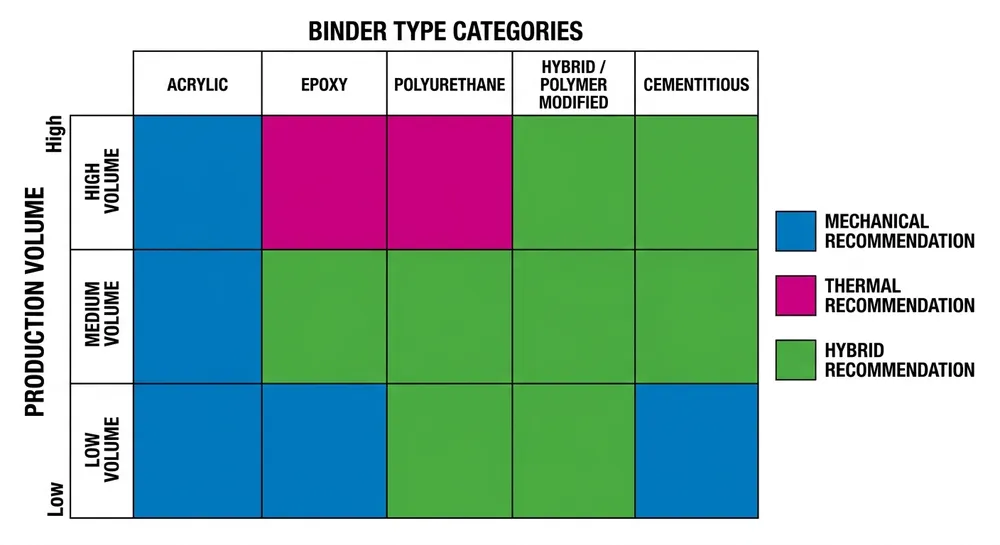
Below 150 tons monthly casting output: Mechanical reclamation or no reclamation. Thermal systems don't justify their capital and operating cost at this volume unless you're using alkaline phenolic or sodium silicate binders that force the choice.
150-300 tons monthly: Mechanical reclamation makes sense for furan and phenolic urethane operations. Thermal reclamation starts to pencil out if your core sand usage exceeds 35% of total sand consumption and you're seeing binder cost pressure.
300-600 tons monthly: Thermal reclamation or hybrid systems become viable. Run the math on binder savings and new sand reduction — most operations in this range hit 18-28 month payback on thermal systems.
Above 600 tons monthly: Thermal reclamation is the standard choice unless you're running mold-only production with furan binder. The sand circulation volume is high enough that the 4-6 percentage point recovery rate advantage pays for the higher operating cost.
Application Showdown: Three Real Scenarios
Scenario 1: Gray iron foundry, 220 tons monthly, furan mold sand only, no cores
- Sand circulation: 45 tons daily
- Current new sand cost: $32/ton delivered
- Binder: furan resin at 1.2% addition rate
Winner: Mechanical reclamation
At 90% recovery with mechanical reclamation, you're buying 4.5 tons of new sand daily instead of 45 tons. Annual new sand savings: $473,000. Mechanical reclamation capital cost: $240,000. Energy cost: $18,000 annually. Maintenance: $12,000 annually. Payback: 6.1 months.
Thermal reclamation would save an additional $28,000 annually in new sand (96% recovery vs 90%) but costs $520,000 capital and $65,000 annual energy. Payback: 38 months. Not justified for mold-only furan sand at this volume.
Scenario 2: Ductile iron foundry, 380 tons monthly, phenolic urethane cores (40% of sand), furan molds (60%)
- Sand circulation: 78 tons daily (31 tons core sand, 47 tons mold sand)
- Core sand quality requirement: below 0.4% LOI for dimensional stability
- Binder cost pressure: phenolic urethane at $2,850/ton
Winner: Hybrid system (mechanical for mold sand, thermal for core sand)
Mechanical reclamation handles the 47 TPD mold sand at 0.7% LOI — acceptable for mold applications. Thermal reclamation processes 31 TPD core sand to 0.25% LOI. Core sand reuse increases from 12% (with mechanical reclamation) to 28% (with thermal), cutting binder cost by $9,200 monthly. Hybrid system capital cost: $385,000. Payback: 19 months including new sand savings and binder efficiency gains.
Scenario 3: Steel casting foundry, 520 tons monthly, alkaline phenolic binder for both molds and cores
- Sand circulation: 95 tons daily
- Binder system: alkaline phenolic (mechanical reclamation incompatible)
Winner: Thermal reclamation (no alternative)
Alkaline phenolic binder forces thermal reclamation regardless of volume. At 95 TPD and 95% recovery, you're reducing new sand purchase from 95 tons daily to 4.75 tons daily. Annual new sand savings: $1,048,000 (at $32/ton). Thermal reclamation capital cost: $580,000. Energy cost: $142,000 annually. Maintenance: $28,000 annually. Payback: 6.8 months. The binder chemistry makes the decision for you.
What to Verify When Sourcing Reclamation Equipment
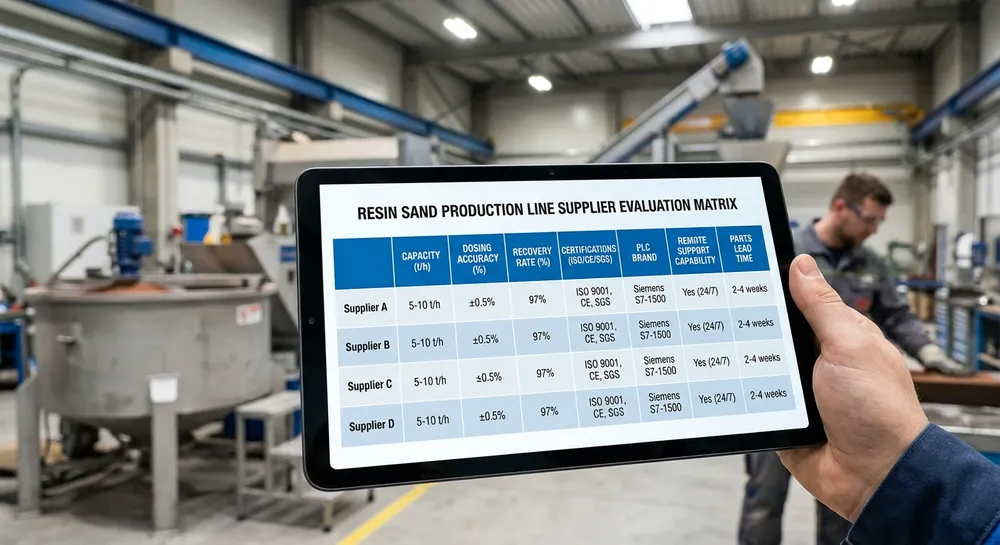
Recovery rate claims: Ask for test data on sand similar to yours — same binder system, same base sand type (silica, chromite, zircon). A vendor claiming "95% recovery" on furan sand might only deliver 87% on your alkaline phenolic sand. We run sample batches in our testing lab before quoting final performance specs, and we include that test report with your equipment proposal.
Final LOI specification: Get a contractual LOI guarantee, not a typical range. "0.3-0.8% LOI" is too wide — that spread determines whether you can use 15% or 35% reclaimed sand in your core mix. We guarantee final LOI within ±0.15% of the specified target when you provide representative sand samples for pre-shipment testing.
Energy consumption at your production rate: Vendors quote energy cost at nameplate capacity (50 TPH), but you might run 32 TPH average. Ask for energy consumption curves across the operating range. Our thermal reclamation systems include variable-speed combustion air blowers and modulating burners that cut fuel use by 18-25% when running below 70% capacity.
Maintenance consumables and replacement intervals: Mechanical reclamation wears attrition chamber liners, screen meshes, and pneumatic conveyor elbows. Thermal reclamation wears refractory lining, burner nozzles, and rotary kiln seals. Get a 24-month consumables cost estimate with part numbers and lead times. We ship first-year spare parts kits with every reclamation line (liners, screens, seals, sensors) so you're not waiting 8 weeks for a $340 part that stops production.
Emission compliance for thermal systems: If you're in North America or Europe, your thermal reclamation system needs afterburner treatment to meet VOC and particulate emission limits. Verify that the quoted system includes afterburner, baghouse filter, and stack monitoring — these add $85,000-120,000 to base equipment cost but are non-negotiable for permit compliance.
How TZFoundry Tests Your Sand Before We Build Your Line
We don't quote reclamation performance from a datasheet. Send us 50 kg of your used sand (after shakeout, before any cleaning), and we'll run it through our testing lab:
- Crush and screen to measure grain size distribution and breakage rate
- Run mechanical attrition test to determine achievable LOI and recovery percentage
- Run thermal combustion test at 700°C, 750°C, and 800°C to find optimal temperature for your binder system
- Measure final sand properties: LOI, AFS grain fineness, acid demand value, clay content
The test report shows actual recovery rate, final LOI, and energy consumption for your specific sand. That data goes into your equipment proposal as the guaranteed performance spec. If your sand behaves differently than typical furan sand (maybe you're adding 2% bentonite for mold strength, or your shakeout temperature is higher than standard), we catch that in testing instead of discovering it during commissioning at your facility.
Our reclamation systems ship with PLC programs tuned to your sand test results — attrition mill impact force, screen vibration frequency, kiln rotation speed, combustion air ratio. You're not buying generic equipment and hoping it works with your process. You're buying a system configured for your specific sand chemistry and production rate.
Utility Infrastructure Reality Check
Mechanical reclamation needs:
- 380V 3-phase electrical service (45-75 kW for a 50 TPH line)
- Compressed air at 6-8 bar for pneumatic conveying and air classifiers
- Dust collection system (baghouse filter, 8,000-12,000 CFM)
Thermal reclamation needs:
- 380V 3-phase electrical service (65-95 kW for a 50 TPH line)
- Natural gas or propane supply (850-1,200 m³/hour natural gas for 50 TPH)
- Cooling water (closed-loop system, 15-25 m³/hour circulation)
- Afterburner fuel supply (additional 180-250 m³/hour natural gas)
- Emission stack (12-15 meter height for dispersion)
If you don't have natural gas infrastructure, thermal reclamation requires propane tank installation and regular delivery — that's an ongoing logistics cost mechanical reclamation avoids. We've seen foundries in rural areas where propane delivery cost added $4-6 per ton to thermal reclamation operating cost, which changed the payback calculation enough to favor mechanical reclamation even though thermal would have delivered better sand quality.
The Real Payback Calculation
Don't just compare equipment purchase price. Calculate total cost per ton of reclaimed sand over 5 years:
Mechanical reclamation (50 TPH system, 90% recovery):
- Capital cost: $260,000
- Annual energy: $22,000
- Annual maintenance: $14,000
- Annual new sand reduction: 16,200 tons at $32/ton = $518,400 savings
- 5-year net savings: $2,412,000
- Cost per ton reclaimed: $5.80
Thermal reclamation (50 TPH system, 96% recovery):
- Capital cost: $590,000
- Annual energy: $138,000
- Annual maintenance: $26,000
- Annual new sand reduction: 17,280 tons at $32/ton = $552,960 savings
- 5-year net savings: $2,154,800
- Cost per ton reclaimed: $8.20
In this scenario, mechanical reclamation delivers better 5-year ROI despite lower recovery rate. But change two variables — increase binder cost sensitivity (cores instead of molds) and increase production volume to 400 tons monthly — and thermal reclamation wins because the binder efficiency gain and higher recovery rate compound at larger scale.
The decision isn't mechanical vs thermal in the abstract. It's mechanical vs thermal for your specific binder system, at your production volume, with your sand quality requirements, using your available utilities.
Send us your sand type, binder system, monthly casting tonnage, and mold-to-core ratio. We'll run the payback calculation with your actual numbers and recommend the reclamation configuration that delivers the shortest payback period. If mechanical reclamation fits your operation better than thermal, we'll tell you that — we build both types and our engineering team's job is to match the equipment to your process economics, not to upsell you into a more expensive system that doesn't pencil out.

Liu Haoran is the Resin Sand Production Line Technical Manager at TZFoundry. Over 11 years of hands-on work with furan, phenolic, and coated sand systems, he has commissioned 40+ resin sand lines for export buyers and developed binder dosing protocols...