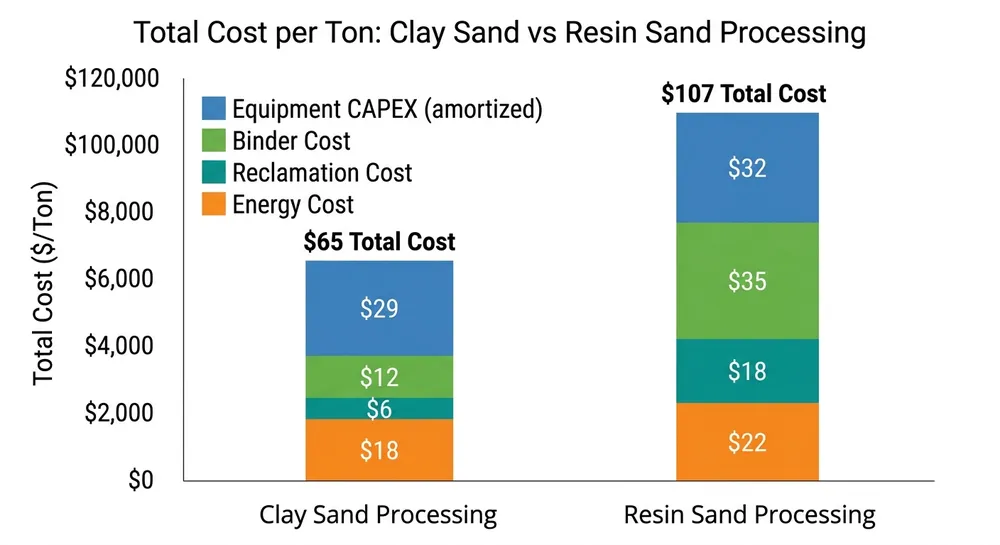
You're comparing clay sand and resin sand processing lines because someone told you resin sand gives better dimensional accuracy, and someone else told you clay sand costs less to run. Both statements are true. Neither one tells you which system actually delivers lower cost per casting in your facility.
After commissioning 60+ sand processing lines across four continents, I can tell you the answer depends on three numbers: your annual casting volume, your average casting weight, and your dimensional tolerance requirement. Get those numbers wrong and you'll spend the next five years subsidizing the wrong process.
Quick verdict: Clay sand wins on cost per casting for production volumes above 5,000 tons annually when dimensional tolerances stay above ±0.8mm. Resin sand wins for complex geometries requiring ±0.3mm tolerance or lower volumes where setup flexibility matters more than sand reclamation economics. The breakeven point sits around 3,000-5,000 tons per year depending on your casting mix and local binder costs.
The Real Cost Structure Nobody Shows You
Most comparisons stop at material unit price. That's the wrong starting point. Your cost per casting includes six components, and sand price is usually the smallest one.
| Cost Component | Clay Sand Processing Line | Resin Sand Processing Line |
|---|---|---|
| Equipment CAPEX | $180,000-$320,000 for 200 molds/hour capacity | $120,000-$220,000 for equivalent throughput |
| Sand cost per ton | $25-$45 (silica sand, no binder in base mix) | $25-$45 (same silica sand base) |
| Binder cost per ton of sand | $8-$15 (bentonite clay, 8-12% addition rate) | $45-$85 (resin + catalyst, 1.5-2.5% addition rate) |
| Sand reclamation rate | 92-96% recovery with mechanical reclamation | 85-90% recovery (thermal reclamation required for resin removal) |
| Labor per mold | 0.3-0.5 hours (automated compaction, longer setup) | 0.2-0.3 hours (faster mold assembly, more frequent sand mixing) |
| Energy cost per ton | $12-$18 (mixing, compaction, reclamation) | $22-$35 (mixing, curing, thermal reclamation) |
The equipment CAPEX difference surprises most buyers — clay sand lines cost more upfront because you need heavier compaction equipment and larger reclamation systems. A 200-mold-per-hour clay sand line ships in 3-4 containers. The equivalent resin sand line fits in 2-3 containers. That's a $4,000-$6,000 difference in freight cost before you even start production.
But CAPEX is a one-time cost. Binder cost is a per-ton recurring expense, and that's where the economics flip. Bentonite clay costs $8-$15 per ton of sand at 8-12% addition rate. Resin binder systems (furan, phenolic, or alkaline phenolic) cost $45-$85 per ton at 1.5-2.5% addition rate. You're adding less resin by weight, but the unit cost is 6-8x higher than bentonite.

Sand Reclamation Economics — The Hidden Multiplier
Sand reclamation rate determines how much fresh sand you buy every month. A 4% difference in recovery rate doesn't sound significant until you multiply it across 400 tons of sand circulation per month.
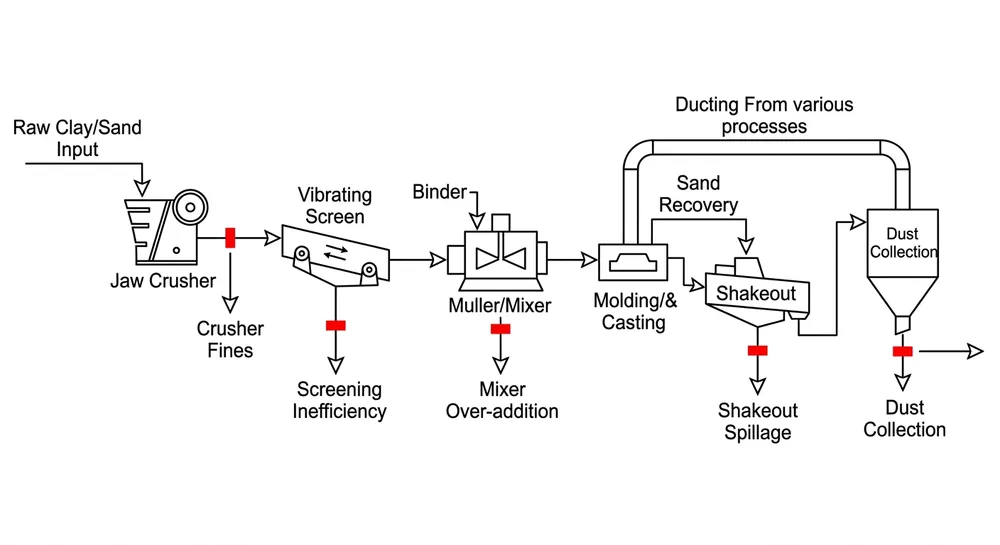
Clay sand reclamation runs mechanically — attrition mills break up used sand lumps, vibrating screens separate fines, and magnetic separators pull out metal contamination. We typically see 92-96% recovery rates on our clay sand reclamation lines. The 4-8% loss comes from sand fines that pass through the screen mesh and contaminated sand that fails quality checks.
Resin sand reclamation requires thermal processing to burn off the resin binder. You're running sand through a rotary kiln or fluidized bed at 600-800°C to decompose the organic binder. Thermal reclamation recovers 85-90% of the sand, but the energy cost is 3-4x higher than mechanical reclamation, and you lose more sand as fines during the thermal shock cycle.
Here's what that looks like in real numbers for a foundry running 400 tons of sand circulation monthly:
Clay sand system (95% reclamation rate):
- Fresh sand makeup: 20 tons/month
- Fresh sand cost: $600-$900/month
- Bentonite addition: 32-48 tons/month (8-12% of circulation)
- Bentonite cost: $3,200-$7,200/month
- Reclamation energy: $4,800-$7,200/month
- Total monthly sand system cost: $8,600-$15,300
Resin sand system (87% reclamation rate):
- Fresh sand makeup: 52 tons/month
- Fresh sand cost: $1,300-$2,340/month
- Resin binder addition: 6-10 tons/month (1.5-2.5% of circulation)
- Resin binder cost: $18,000-$34,000/month
- Thermal reclamation energy: $8,800-$14,000/month
- Total monthly sand system cost: $28,100-$50,340
The resin sand system costs 2.3-3.3x more to operate per month at the same sand circulation volume. That gap widens if your local resin supplier pricing sits at the high end of the range, or narrows if you're in a region with cheap natural gas for thermal reclamation.
Dimensional Tolerance and Surface Finish — Where Resin Sand Earns Its Premium
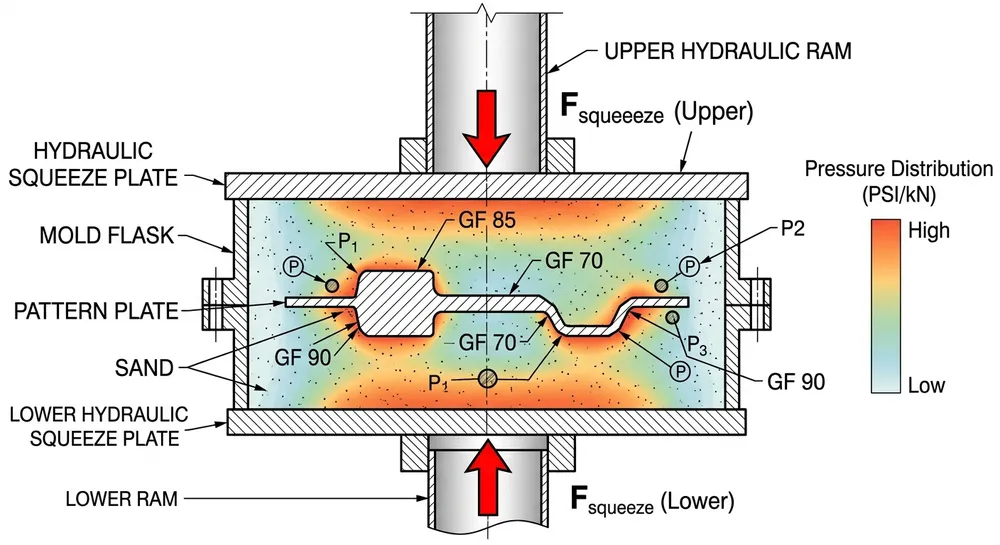
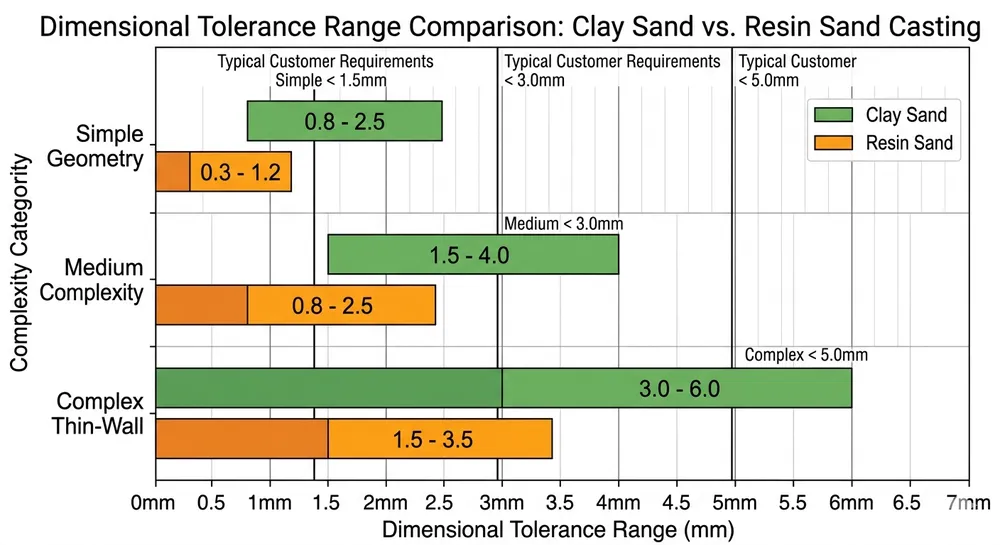
Resin sand delivers tighter dimensional control because the binder cures chemically instead of relying on mechanical compaction pressure. Clay sand molds depend on uniform compaction across the entire mold cavity — any pressure variation shows up as dimensional drift. We hold ±0.5mm tolerance on our PLC-controlled clay sand lines with servo-hydraulic compaction, but that's the practical limit for green sand technology.
Resin sand molds cure at room temperature after mixing, so you're not fighting compaction pressure variations. Dimensional tolerance sits at ±0.3mm for standard resin sand processes, and you can push to ±0.15mm with shell molding or hot-box processes. If your casting design requires machining stock under 2mm per side, resin sand is the only process that reliably holds the tolerance.
Surface finish follows the same pattern. Clay sand molds give you Ra 12.5-25 μm surface finish depending on sand grain size and compaction quality. Resin sand molds deliver Ra 6.3-12.5 μm because the resin binder coats each sand grain and prevents metal penetration into the mold surface. For castings that go directly to painting or plating without machining, resin sand cuts your finishing cost.
But here's the commercial question: does your customer specification actually require ±0.3mm tolerance and Ra 6.3 μm finish? Most structural castings, pump housings, and valve bodies run fine with ±0.8mm tolerance and Ra 12.5 μm finish. You're paying 2-3x more in sand system operating cost to hit a tolerance your customer didn't ask for.
Throughput and Flexibility — The Production Volume Crossover
Clay sand lines run faster once you're set up, but setup takes longer. Resin sand lines offer faster changeovers between different casting jobs.
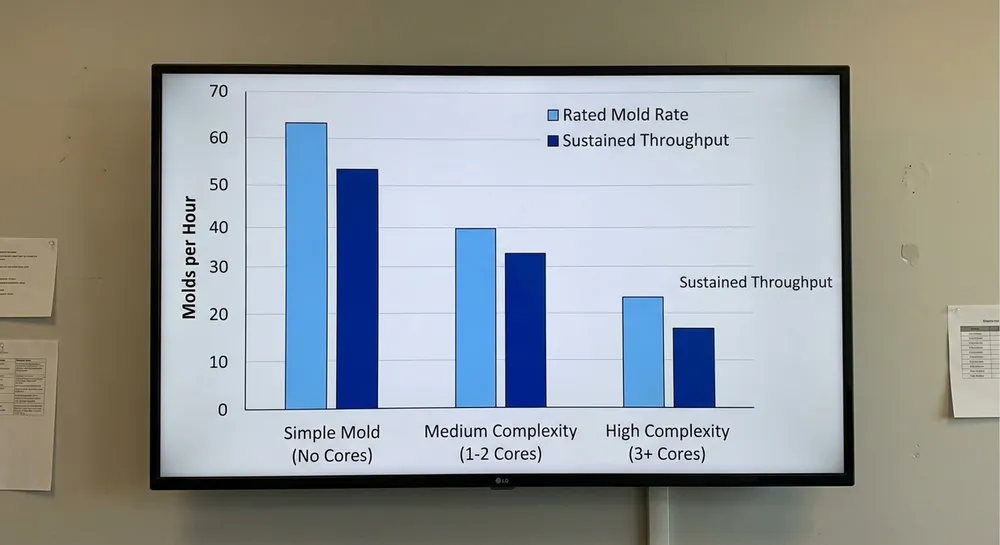
Our 200-mold-per-hour clay sand line needs 2-3 hours to stabilize sand properties (moisture content, compactability, permeability) when you start a production run. Once the sand system reaches steady state, you're running 180-200 molds per hour with consistent properties. For long production runs (500+ molds of the same casting), clay sand throughput wins.
Resin sand mixing happens batch-by-batch with 3-8 minute pot life after catalyst addition. You mix only what you need for the next 30-60 minutes of production, dump the molds, and mix the next batch. Changeover between different casting patterns takes 15-30 minutes because you're not waiting for sand system stabilization — just mix a fresh batch with the new pattern. For job shops running 50-200 molds per casting with frequent pattern changes, resin sand flexibility wins.
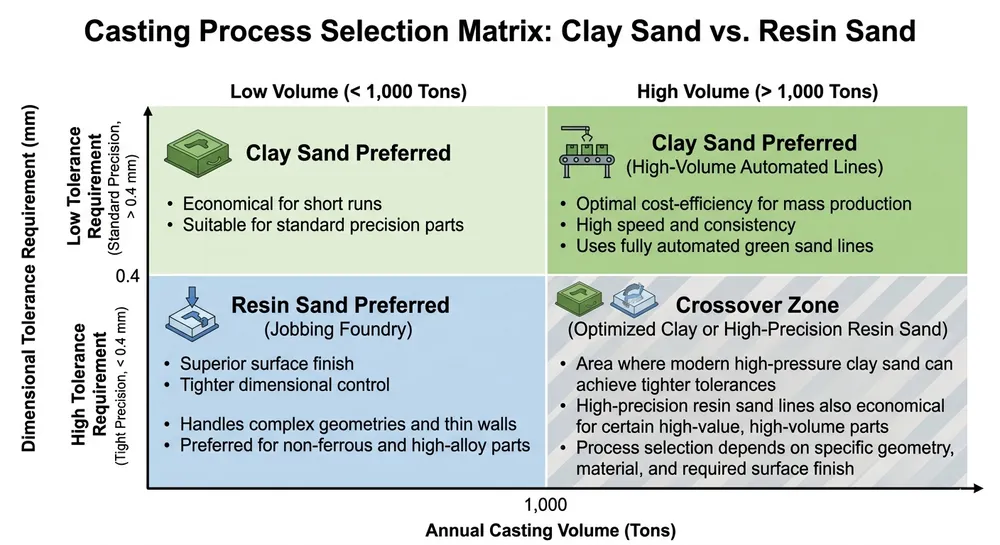
The volume breakpoint sits around 3,000-5,000 tons of casting output per year. Below that volume, you're not running enough tonnage to amortize the higher CAPEX and reclamation infrastructure of a clay sand line. Above 5,000 tons annually, the lower operating cost of clay sand pays back the equipment premium in 18-24 months.
Application Showdown — Which Process Wins for Your Casting Type
Let's run three real scenarios and declare the winner for each one.
Scenario 1: High-volume automotive brake components
- Annual volume: 12,000 tons
- Casting weight: 8-15 kg
- Dimensional tolerance: ±0.8mm
- Surface finish: Ra 12.5 μm (machined after casting)
- Production pattern: Long runs, 2,000-5,000 molds per pattern
Winner: Clay sand processing line
The volume justifies the CAPEX, the tolerance requirement doesn't demand resin sand precision, and long production runs eliminate the setup time disadvantage. At 12,000 tons annually, clay sand saves you $180,000-$420,000 per year in binder and reclamation costs compared to resin sand. Equipment payback happens in 12-16 months.
Scenario 2: Custom machinery housings for industrial equipment
- Annual volume: 800 tons
- Casting weight: 50-200 kg
- Dimensional tolerance: ±0.4mm (critical mounting surfaces)
- Surface finish: Ra 6.3 μm (painted finish, no machining)
- Production pattern: Short runs, 20-100 molds per pattern, 40+ different patterns per year
Winner: Resin sand production line
Low annual volume doesn't justify clay sand CAPEX and reclamation infrastructure. Tight tolerance and surface finish requirements push you toward resin sand anyway. Frequent pattern changes favor resin sand's faster setup. The higher per-ton operating cost is offset by lower equipment investment and better dimensional yield (fewer scrap castings from tolerance failures).
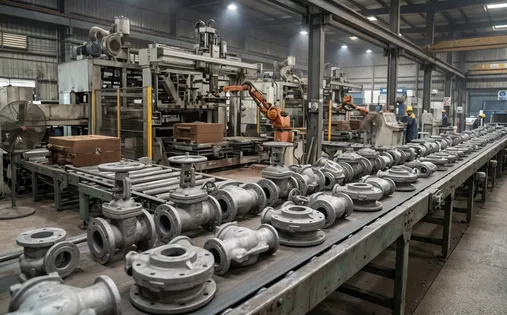
Scenario 3: Medium-volume pump housings and valve bodies
- Annual volume: 6,000 tons
- Casting weight: 12-35 kg
- Dimensional tolerance: ±0.6mm
- Surface finish: Ra 12.5 μm (machined sealing surfaces, as-cast body)
- Production pattern: Medium runs, 300-800 molds per pattern
Winner: Clay sand processing line (with qualification)
This is the crossover zone where both processes work commercially. Clay sand wins on operating cost — you'll save $90,000-$210,000 annually on binder and reclamation. But if more than 30% of your casting mix requires ±0.4mm tolerance or better, resin sand becomes the safer choice because you avoid the risk of dimensional scrap on tight-tolerance jobs.
We've installed both process types for foundries in this volume range. The decision usually comes down to your customer base: if you're supplying automotive or appliance OEMs with stable long-term contracts, clay sand makes sense. If you're serving industrial equipment builders with variable specifications and frequent design changes, resin sand gives you more flexibility.
Equipment Footprint and Installation — The Space Cost Nobody Budgets
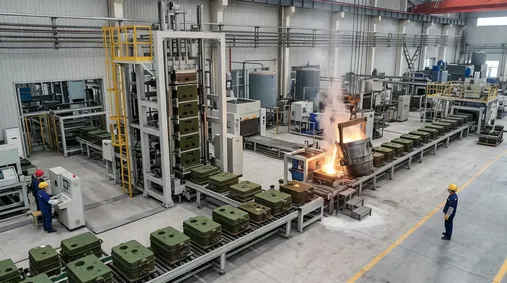
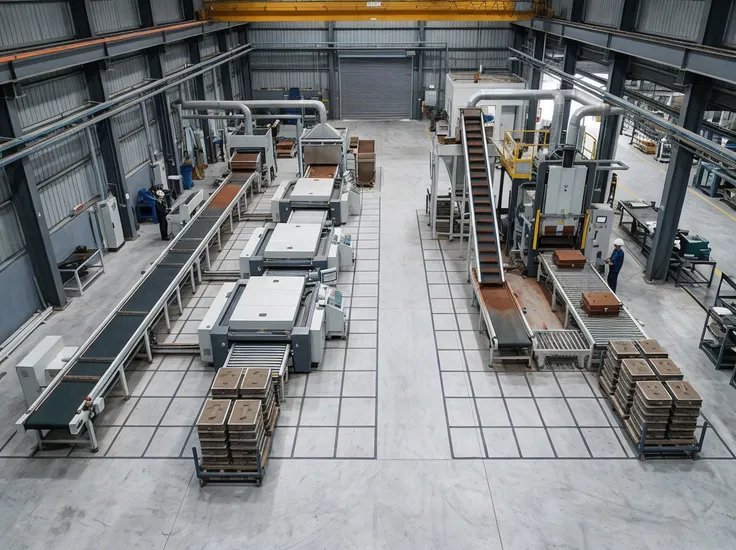
Clay sand processing lines need more floor space because you're running larger reclamation systems and sand storage silos. A complete 200-mold-per-hour clay sand line (molding, reclamation, sand preparation) occupies 450-600 m² of floor space. The equivalent resin sand line fits in 280-380 m² because you're not storing large volumes of prepared sand — you mix batch-by-batch as needed.
If you're adding capacity to an existing facility with limited floor space, that footprint difference might force your decision regardless of operating cost economics. We've seen buyers choose resin sand purely because they couldn't allocate 500 m² of continuous floor space for a clay sand system, even though the operating cost analysis favored clay sand.
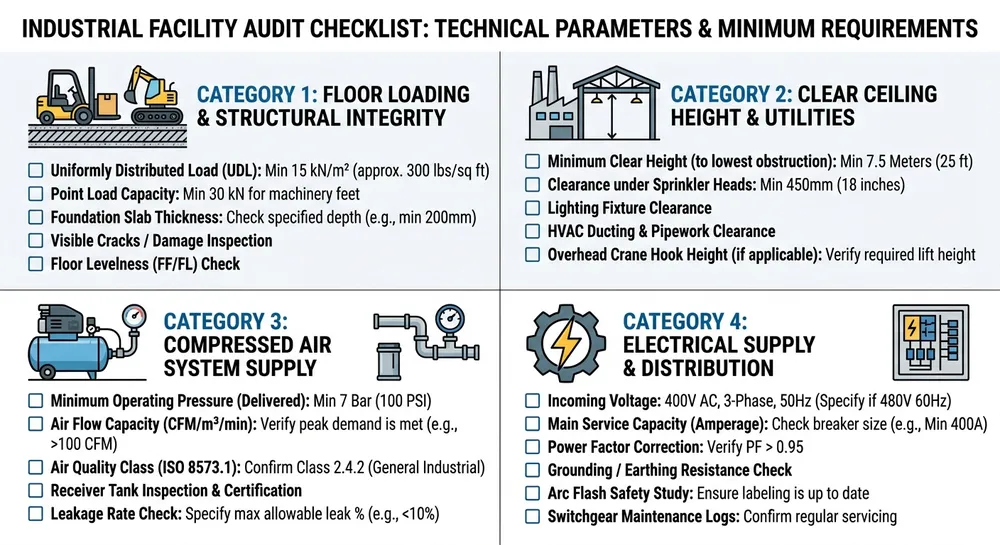
Foundation loading matters too. Clay sand mixers and compaction equipment generate significant vibration and dynamic loads. You need a reinforced concrete foundation (300-400mm thick) with isolation pads to prevent vibration transmission to adjacent equipment. Resin sand mixing equipment runs lighter with less vibration — standard industrial floor slabs (150-200mm) usually work without reinforcement.
What to Verify When Sourcing Either Process
Most foundry equipment suppliers will quote you a system without explaining the operating cost assumptions built into their proposal. Here's what you need to verify before you commit to either process.
For clay sand processing lines, ask for:
- Actual sand reclamation rate from a reference installation running similar casting types (not theoretical maximum recovery)
- Compaction pressure range and servo control specifications (this determines your dimensional consistency)
- Sand property testing frequency and acceptable variation ranges (moisture, compactability, permeability)
- Bentonite consumption rate per ton of sand circulation (not per ton of casting output — those are different numbers)
- Mixer capacity and batch cycle time (undersized mixers create production bottlenecks)
For resin sand production lines, ask for:
- Resin pot life at your facility's ambient temperature (pot life drops fast above 25°C)
- Catalyst metering accuracy and calibration procedure (±2% variation in catalyst ratio causes strength problems)
- Thermal reclamation energy consumption per ton of sand (this varies widely between rotary kiln and fluidized bed systems)
- Resin supplier qualification — can you source binder locally or are you locked into imports?
- Fume extraction requirements for resin mixing area (resin systems generate VOCs that need ventilation)
The most common mistake we see: buyers compare equipment CAPEX quotes without modeling the 5-year total cost of ownership. A $180,000 clay sand line that costs $9,000/month to operate beats a $140,000 resin sand line that costs $32,000/month to operate — but only if you're running enough volume to amortize the equipment difference. At 2,000 tons annually, the resin sand line wins. At 8,000 tons annually, the clay sand line wins by a large margin.
The RFQ Language That Gets You Accurate Quotes
When you request quotes for either process, specify these parameters to get comparable proposals:
Required specifications for clay sand line RFQ:
- Target production rate (molds per hour, not tons per year)
- Maximum flask size or mold box dimensions
- Required dimensional tolerance (±X mm)
- Annual sand circulation volume (not casting output — multiply your casting tonnage by 8-12x to estimate sand circulation)
- Available floor space and ceiling height
- Local bentonite clay supplier and delivered cost per ton
- Electrical supply (voltage, phase, available capacity)
Required specifications for resin sand line RFQ:
- Target production rate (molds per hour)
- Maximum mold size
- Required dimensional tolerance
- Preferred resin system (furan, phenolic, alkaline phenolic — if you don't know, ask for recommendations based on your casting alloy)
- Thermal reclamation or disposal method (affects equipment scope)
- Local resin supplier options and delivered cost per ton
- Ventilation and fume extraction requirements
The more specific your RFQ, the more accurate the operating cost projections you'll receive. Generic quotes based on "we need a sand processing line for 5,000 tons per year" give you equipment pricing but hide the operating cost differences that determine your actual cost per casting.
If you're comparing both processes and need help modeling the total cost of ownership for your specific casting mix and production volume, send us your annual tonnage, typical casting weight range, and dimensional tolerance requirements. We'll run the economics for both clay sand and resin sand configurations and show you where the breakeven point sits for your operation. Our engineering team has commissioned both process types across four continents — we'll tell you which one actually delivers lower cost per casting in your facility, not which one we'd prefer to sell you.

Baocun Zhu is the Senior Clay Sand Process Engineer at TZFoundry in Qingdao. With over 14 years commissioning clay sand molding, reclamation, and preparation lines for export foundries, he turns floor-space constraints and throughput targets into working production systems. His...