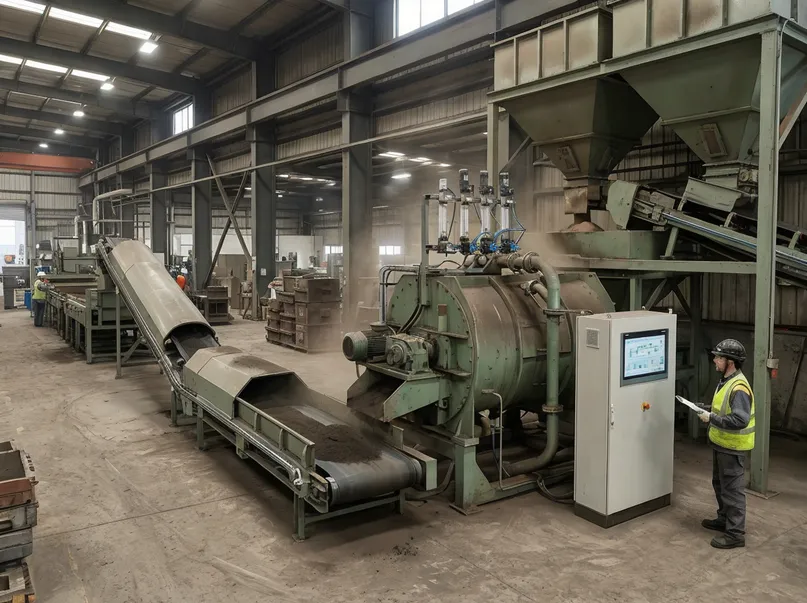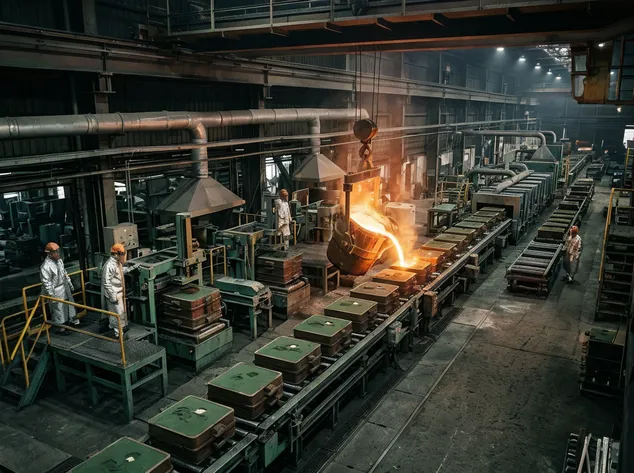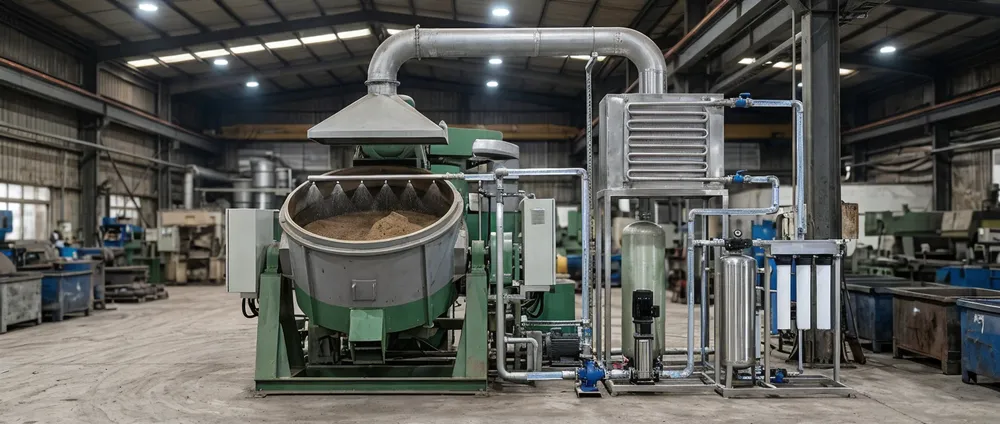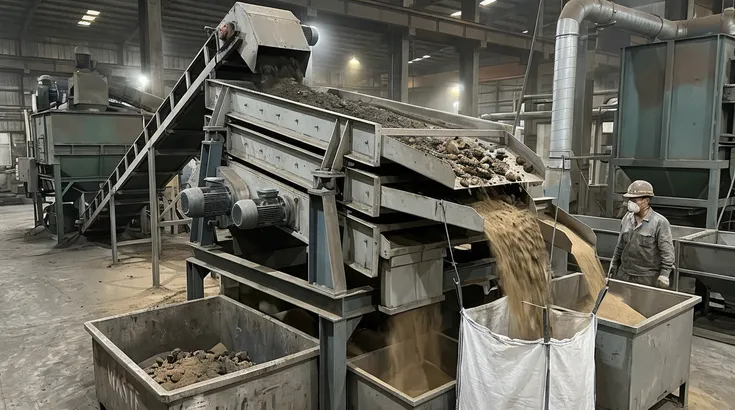
You're screening clay sand processing line suppliers because your current sand system can't hold the throughput or consistency your production schedule demands. The local supplier landscape in the USA offers established names with warehousing, service networks, and familiar communication — but those conveniences come with distribution markup that compresses your margin on every casting. This guide walks through 10 suppliers worth evaluating, the criteria that separate reliable vendors from spec-sheet sellers, and when factory-direct import becomes the smarter economics.
How to Evaluate Clay Sand Processing Line Suppliers
Before comparing supplier names, define what actually matters for your foundry's procurement decision. Clay sand equipment isn't a commodity purchase — the wrong line configuration costs you in sand waste, mold defects, and downtime that no service contract can fix.
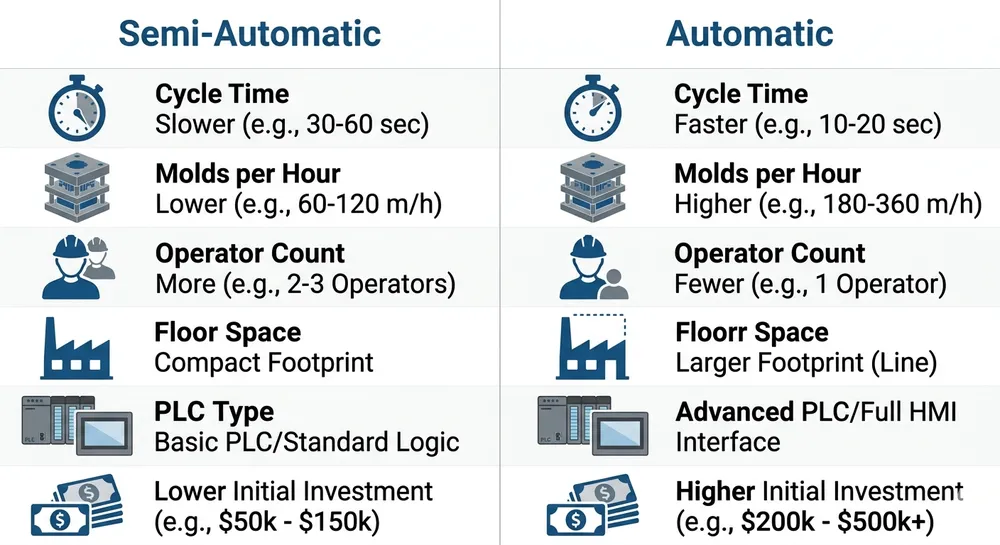
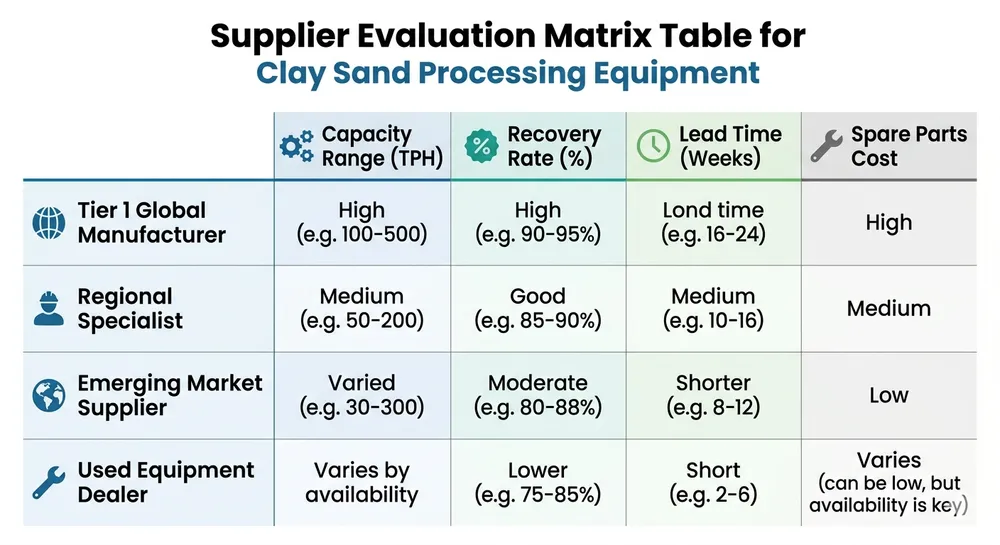
Capacity match and scalability. Your supplier should configure the line for your current throughput without over-speccing equipment you won't use for three years. We've commissioned lines from 40 molds per hour for job shops up to 250 molds per hour for automotive casting plants — the mixer capacity, reclamation recovery rate, and conveyor speeds need to align with your actual production plan. A 200-mold-per-hour line running at 80 molds per hour wastes floor space and capital.
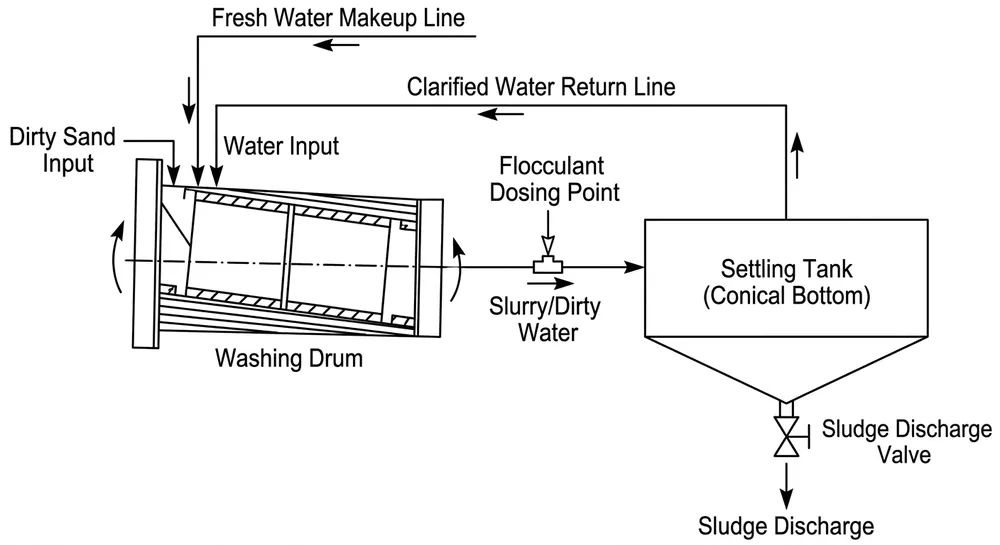
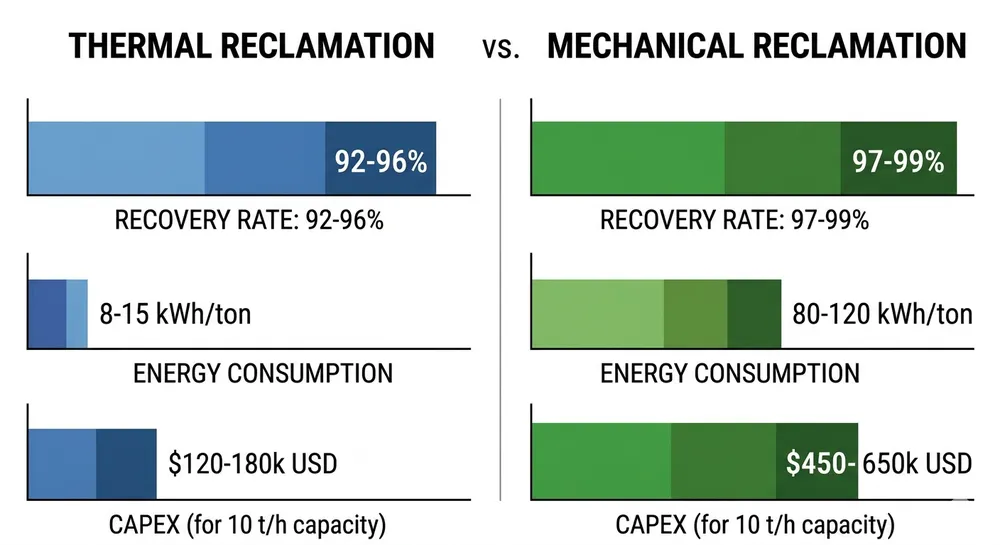
Sand reclamation recovery rate. This number determines your raw sand consumption and disposal cost. Reliable suppliers specify recovery rates with test data, not marketing claims. Look for 92-95% recovery on mechanical reclamation systems, 96-98% on thermal reclamation. If a supplier quotes recovery rates without explaining the screening mesh size, magnetic separator strength, or dust collection efficiency, they're guessing.
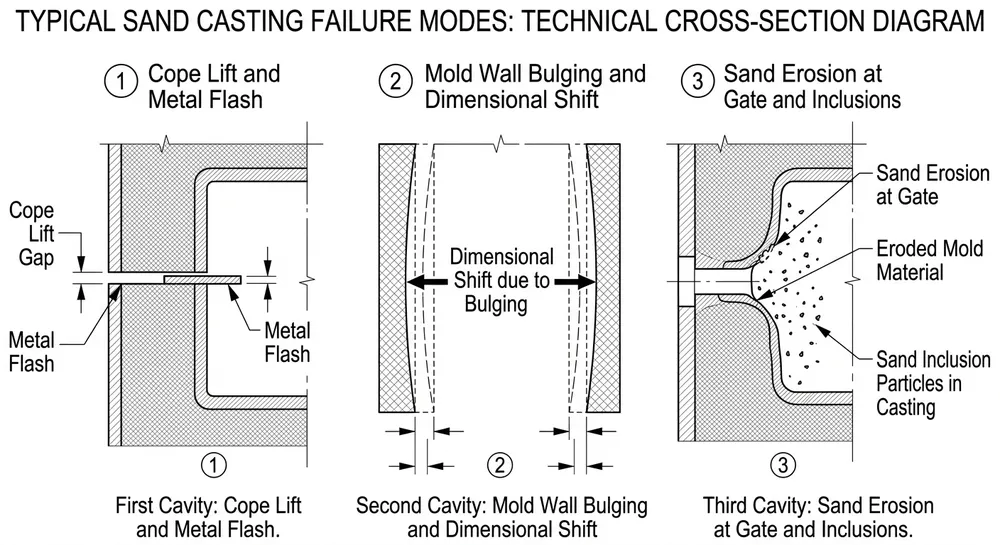
Compaction pressure consistency. Flaskless molding lines depend on ±2% compaction pressure tolerance across an 8-hour shift to prevent mold dimensional drift. Ask suppliers how their hydraulic systems maintain pressure stability — accumulator sizing, servo valve response time, and pressure sensor calibration intervals all matter. The most common cause of mold defects on high-speed lines is compaction pressure drift that shows up after 4-6 months of operation.
Moisture control precision. Clay sand molding requires 2.5-3.5% moisture content with ±0.2% tolerance. Automated moisture sensors and closed-loop water injection systems hold this spec reliably. Manual moisture adjustment creates batch-to-batch variation that your QC team will spend the next year chasing.
Lead time and commissioning support. Domestic suppliers typically quote 12-16 weeks for standard configurations, 20-24 weeks for custom layouts. Factory-direct import runs 14-18 weeks production plus 4-6 weeks ocean freight. The real variable is commissioning — does the supplier send an engineer to your facility, or do they hand you a manual and a phone number? Remote commissioning works if your maintenance team can read hydraulic schematics and troubleshoot PLC logic. If not, budget for on-site startup support.
Spare parts availability and cost. Hydraulic seals, proximity sensors, solenoid valves, and PLC I/O modules are consumables. Ask suppliers for a first-year spare parts list with pricing. Domestic suppliers stock common parts locally but mark them up 40-60% over factory cost. Factory-direct suppliers ship spare parts kits with the initial order, covering 12-18 months of operation at lower unit cost but longer replenishment lead time.

The USA Clay Sand Processing Line Supplier Landscape
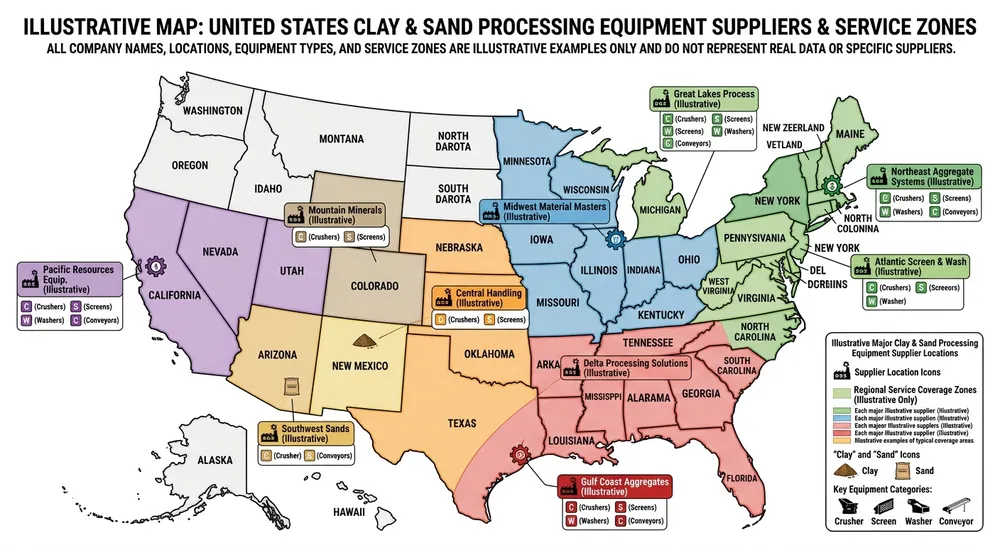
The domestic market splits into three supplier models: OEM manufacturers with US production facilities, authorized distributors representing overseas brands, and engineering firms that integrate components from multiple sources. Each model offers different trade-offs in lead time, customization flexibility, and landed cost.
1. Simpson Technologies (Bay City, Michigan)
Simpson operates a US manufacturing facility producing complete green sand systems including mixers, molding lines, and reclamation equipment. Their strength is integration with existing foundry automation — if you're running a Simpson molding line already, their sand processing equipment interfaces cleanly with your current controls. Lead times run 16-20 weeks for standard configurations. Their equipment targets mid-to-large foundries with 100+ molds per hour throughput requirements.
Official site: simpsongroup.com
2. Palmer Manufacturing & Supply (Elyria, Ohio)
Palmer manufactures sand mixers, aerators, and material handling equipment for foundries. They focus on continuous mixers for high-volume operations and batch mixers for job shops. Their equipment is built for heavy-duty cycles — we've seen Palmer mixers running 20+ years in gray iron foundries. Lead time typically 14-18 weeks. They don't manufacture complete processing lines, so you'll need to source reclamation and molding equipment separately.
Official site: palmermfg.com
3. Carrier Vibrating Equipment (Louisville, Kentucky)
Carrier specializes in vibratory sand reclamation systems, screening equipment, and material handling conveyors. Their sand reclamation units use vibratory separation instead of mechanical crushing, which reduces fines generation and improves sand grain shape retention. Good fit if you're upgrading reclamation on an existing line rather than buying a complete system. Lead time 12-16 weeks for standard models.
Official site: carriervibrating.com
4. Roberts Sinto Corporation (Lansing, Michigan)
Roberts Sinto is the US subsidiary of Sintokogio (Japan), offering complete foundry systems including clay sand molding lines, mixers, and reclamation plants. They manufacture some components domestically and import others from Japan. Their equipment leans toward automated, high-speed lines (150+ molds per hour). Lead times vary by component sourcing — 18-24 weeks is typical. Strong engineering support and commissioning services.
Official site: sinto.com
5. Eirich Machines (Gurnee, Illinois)
Eirich manufactures intensive mixers used in foundry sand preparation. Their mixers handle clay sand, resin sand, and specialty molding materials. The equipment is German-engineered with US assembly and support. Eirich mixers are known for short mixing cycles (90-120 seconds) and consistent sand property output. They sell mixers as standalone units, not complete processing lines. Lead time 14-20 weeks.
Official site: eirichusa.com
6. General Kinematics (Crystal Lake, Illinois)
General Kinematics produces vibratory equipment for sand cooling, screening, and reclamation. Their vibratory coolers reduce sand temperature from 150°C to 40°C before reclamation, improving sand property stability. They also manufacture vibratory shakeout systems that integrate with sand reclamation lines. Equipment is modular and can be added to existing systems. Lead time 10-14 weeks for standard units.
Official site: generalkinematics.com
7. Vulcan Engineering (Chattanooga, Tennessee)
Vulcan designs and builds custom sand systems for foundries, integrating components from multiple manufacturers. They handle layout engineering, equipment selection, installation, and commissioning. Good option if you need a turnkey solution tailored to unusual floor space constraints or specific casting processes. Lead time depends on component sourcing — typically 20-28 weeks total project duration.
Official site: vulcanengineering.com
8. Omega Foundry Machinery (Columbus, Ohio)
Omega supplies foundry equipment including sand mixers, molding machines, and material handling systems. They represent several overseas manufacturers and also refurbish used equipment. Their business model focuses on smaller foundries (under 50 molds per hour) where new equipment cost doesn't justify the capacity. Lead time varies by whether equipment is new, refurbished, or sourced from their overseas partners — 8-24 weeks range.
Official site: omegafoundry.com
9. Hunter Foundry (Schaumburg, Illinois)
Hunter manufactures molding machines and sand processing equipment, with a focus on flask-based and flaskless molding systems. Their sand mixers and handling equipment are designed to integrate with Hunter molding lines. If you're running Hunter molding machines, their sand processing equipment maintains consistent control system architecture. Lead time 16-22 weeks for standard configurations.
Official site: hunterfoundry.com
10. Loramendi USA (Waukesha, Wisconsin)
Loramendi is the US operation of the Spanish foundry equipment manufacturer, offering flaskless molding lines and sand processing systems. They manufacture some components in the US and import others from Spain. Their equipment targets automotive and heavy machinery casting foundries with high-volume, tight-tolerance requirements. Lead time 20-26 weeks depending on component sourcing.
Official site: loramendi.com
What Local Supply Gets You (and What It Costs)
Domestic suppliers offer real advantages that matter for certain procurement scenarios. Understanding when those advantages justify the price premium helps you make the right sourcing decision for your specific situation.
Faster emergency response. If a hydraulic pump fails on your sand mixer at 2 AM, a local supplier with regional warehousing can ship a replacement part for next-day delivery. That responsiveness prevents multi-day production shutdowns. For foundries running just-in-time casting schedules with no buffer inventory, local parts availability is worth paying for.
Easier communication and project coordination. Working in the same time zone with native English-speaking engineers simplifies technical discussions, layout reviews, and troubleshooting calls. If your maintenance team isn't comfortable reading translated manuals or coordinating over video calls with 12-hour time differences, domestic suppliers reduce communication friction.
Established service networks. Many domestic suppliers maintain field service teams or authorized service partners who can visit your facility for commissioning, training, and repairs. This matters most for foundries without in-house hydraulic or PLC expertise — you're buying access to their technical staff, not just equipment.
Shorter lead times on standard configurations. Domestic suppliers typically deliver standard equipment 2-4 weeks faster than factory-direct import once you account for ocean freight. For foundries expanding capacity to meet a specific contract deadline, those weeks can determine whether you win or lose the business.
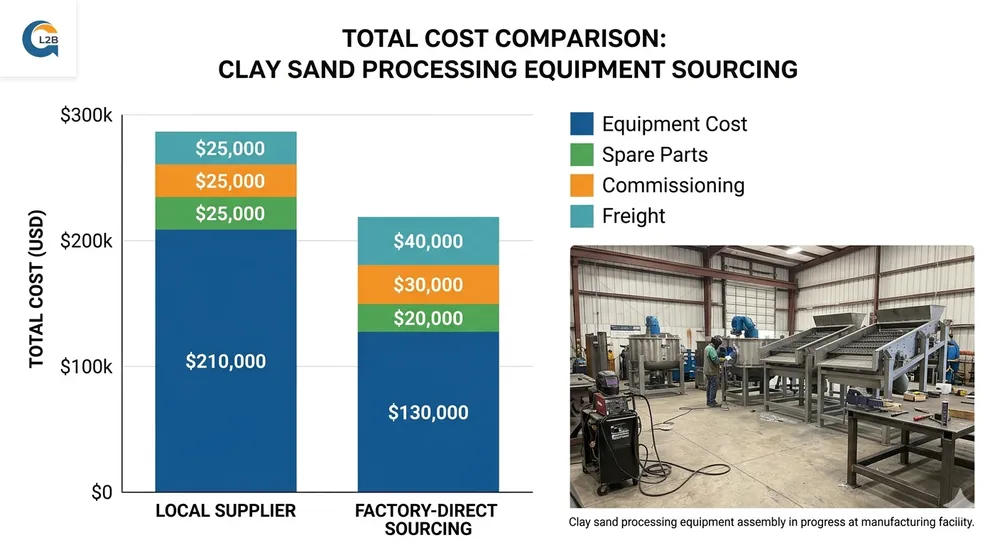
The cost of these conveniences shows up in three places. First, equipment pricing runs 30-50% higher than factory-direct equivalents due to distribution markup, domestic labor costs, and smaller production volumes. A complete clay sand processing line (mixer, molding machine, reclamation system) that costs $280,000 factory-direct might quote at $400,000-$450,000 through a domestic supplier.
Second, spare parts carry 40-60% markup over factory cost. A hydraulic seal kit that costs $180 from the factory might list at $290-$320 through a domestic distributor. Over a 10-year equipment lifespan, spare parts spending can exceed 25% of initial equipment cost — that markup compounds.
Third, customization flexibility is limited by what the supplier's production facility or supply chain can accommodate. If you need a sand mixer configured for 18-22 kg/m³ EPS density range instead of the standard 20-24 kg/m³, a domestic supplier might quote 8-12 weeks extra lead time and engineering charges. A factory with in-house engineering adjusts the mixer paddle design and control parameters as part of standard production.
When Factory-Direct Import Changes the Economics
For foundries buying clay sand processing equipment on repeat procurement cycles, factory-direct sourcing shifts the cost structure in ways that improve long-term economics. The trade-off isn't "cheap equipment with no support" versus "expensive equipment with good support" — it's a different risk-reward calculation based on your order volume, technical capabilities, and margin targets.
Landed cost advantage at volume. A complete clay sand processing line (continuous mixer, flaskless molding machine, mechanical reclamation system, dust collection) costs $280,000-$320,000 factory-direct including ocean freight and customs clearance. The same capacity configuration through a domestic supplier quotes $400,000-$450,000. That $120,000-$130,000 difference funds a lot of spare parts inventory and remote commissioning support. For foundries buying multiple lines or upgrading equipment every 5-7 years, the cumulative savings compound.
Customization without engineering surcharges. We configure clay sand lines for specific casting processes as part of standard production — adjusting mixer capacity, compaction pressure ranges, reclamation screen mesh sizes, and control system parameters to match your alloy type and mold cycle time. Domestic suppliers often quote customization as engineering change orders with 15-25% adders. Factory engineering teams treat configuration as normal production work, not special projects.
First-year spare parts kits included. Every line we ship includes hydraulic seals, proximity sensors, solenoid valves, PLC I/O modules, and wear parts covering 12-18 months of operation. You're not calling a distributor at markup pricing for consumables — you have them in your maintenance crib from day one. After the first year, you order replenishment parts directly at factory cost with 3-4 week ocean freight lead time.
Remote commissioning reduces installation cost. We've commissioned clay sand lines in 14 countries via video call — your installation team connects hydraulic lines, wires control panels, and runs initial test cycles while our engineer guides them through startup procedures. This works if your maintenance staff can read hydraulic schematics and use a multimeter. You avoid $8,000-$12,000 in travel expenses and per-diem costs for on-site commissioning. If your team needs hands-on support, we send an engineer — but most foundries with experienced maintenance crews handle remote startup without issues.
Container-optimized modular design. Our clay sand processing lines ship in 2-3 × 40HQ containers depending on capacity. Equipment frames break down into sections that fit container dimensions without wasted space — that's the difference between $18,000 and $28,000 in freight cost for a complete line. Domestic suppliers often ship assembled equipment on flatbed trucks, which works fine for regional delivery but doesn't help if you're a distributor sourcing for multiple locations.
The factory-direct model makes the most sense for three buyer profiles. First, foundries with in-house maintenance teams capable of reading technical documentation and troubleshooting hydraulic and electrical systems — you don't need hand-holding during commissioning. Second, foundries buying on repeat cycles where the cumulative cost savings justify building a direct relationship with the manufacturer. Third, distributors and equipment resellers who need factory pricing to maintain competitive margins in their local markets.
It's the wrong choice if you need emergency same-day parts delivery, if your maintenance team lacks hydraulic and PLC troubleshooting skills, or if you're buying a single line for a 20-year service life where the upfront cost difference doesn't matter as much as local service availability.
TZFoundry's Factory-Direct Clay Sand Processing Lines
We manufacture complete clay sand processing systems at our Qingdao facility — continuous mixers, flaskless molding lines, mechanical and thermal reclamation systems, and dust collection equipment. Since 2010, we've commissioned 60+ clay sand lines across North America, Europe, the Middle East, and Southeast Asia. Our equipment runs in gray iron foundries, ductile iron plants, and aluminum casting facilities from 40 molds per hour up to 250 molds per hour capacity.
Our clay sand lines ship as modular systems in 2-3 × 40HQ containers. A typical 120-mold-per-hour configuration includes a 2-ton continuous mixer, vertical flaskless molding machine with servo-hydraulic compaction, mechanical sand reclamation system with 94-96% recovery rate, and pulse-jet dust collection. Total landed cost runs $285,000-$310,000 depending on customization requirements and destination port.
ISO 9001:2015 + CE + SGS certified. Three-stage QC from incoming materials through final commissioning. Every hydraulic system pressure-tested at 1.5× rated capacity before installation. Every control system commissioned under load in our factory — the test report that ships with your equipment shows the actual cycle time and compaction pressure consistency we measured on your specific line, not generic spec-sheet claims.
Remote commissioning with video support. Your installation team connects hydraulic lines, wires control panels, and runs initial test cycles while our engineer guides them through startup procedures via video call. We've commissioned equipment in 14 countries this way. If your team needs on-site support, we send an engineer — but most foundries with experienced maintenance crews handle remote startup without issues.
First-year spare parts kits included. Hydraulic seals, proximity sensors, solenoid valves, PLC I/O modules, and wear parts covering 12-18 months of operation ship with every line. After the first year, you order replenishment parts directly at factory cost with 3-4 week ocean freight lead time.
Custom configuration without engineering surcharges. We adjust mixer capacity, compaction pressure ranges, reclamation screen mesh sizes, and control system parameters to match your casting process as part of standard production. If you're running ductile iron with 3-5 minute shakeout times, we calculate conveyor speeds and cooling zone lengths accordingly. If your facility has 6-meter ceiling height instead of our standard 8-meter design assumption, we configure the molding machine for vertical clearance constraints.
Our clay sand processing lines work best for foundries with in-house maintenance teams capable of hydraulic and PLC troubleshooting, foundries buying on repeat procurement cycles where cumulative cost savings matter, and distributors who need factory pricing to maintain competitive margins. If you need same-day emergency parts delivery or if your maintenance team lacks technical troubleshooting skills, a domestic supplier with local warehousing and field service makes more sense for your operation.
For more details on clay sand molding equipment and process optimization, see our clay sand processing line category page.
Choosing the Right Sourcing Route for Your Foundry
Your supplier decision depends on three variables: order urgency, technical capabilities, and procurement economics.
Choose local suppliers when:
- You need equipment delivered in under 12 weeks for a specific contract deadline
- Your maintenance team lacks hydraulic and PLC troubleshooting experience and needs hands-on commissioning support
- You're buying a single line for a 15-20 year service life where upfront cost difference matters less than local parts availability
- Emergency same-day parts delivery prevents costly production shutdowns in your just-in-time casting schedule
Choose factory-direct when:
- You're buying multiple lines or upgrading equipment on 5-7 year cycles where cumulative cost savings compound
- Your maintenance team can read hydraulic schematics, troubleshoot PLC logic, and handle remote commissioning
- You need custom configurations (non-standard capacity, special alloy requirements, floor space constraints) without engineering change order surcharges
- You're a distributor or equipment reseller who needs factory pricing to maintain competitive margins in your local market
The wrong decision costs you either in upfront capital (overpaying for local convenience you don't need) or in operational friction (underestimating the support requirements for factory-direct equipment). Most foundries we work with start with a trial order on a single line to test our remote commissioning process and spare parts logistics before committing to larger equipment upgrades.
If you're evaluating suppliers for a clay sand processing line upgrade, send us your production requirements (casting type, target output rate, available floor space, and ceiling height). We'll provide equipment recommendations with factory pricing, container loading plan, and commissioning timeline. Email sales@tzfoundry.com or WhatsApp +86 13335029477 with your project specs.

Baocun Zhu is the Senior Clay Sand Process Engineer at TZFoundry in Qingdao. With over 14 years commissioning clay sand molding, reclamation, and preparation lines for export foundries, he turns floor-space constraints and throughput targets into working production systems. His...